

Polymarket Posts First Monthly Volume Decline Since August
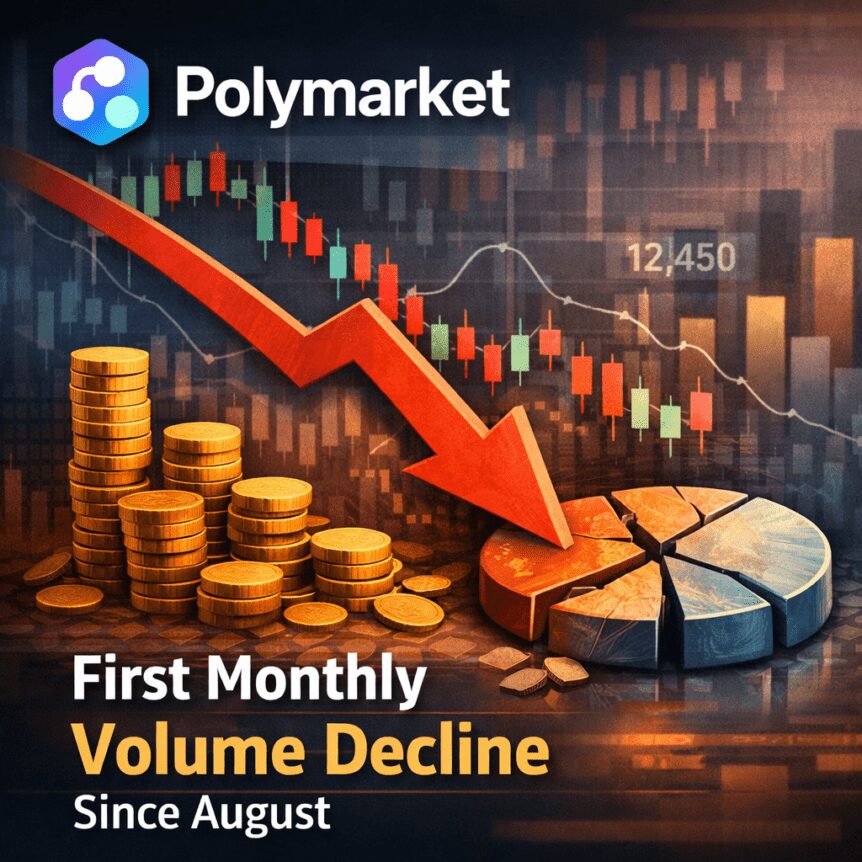
April brought a subtle retreat in Polymarket’s monthly trading activity, marking the first month-over-month decline since August as competition within the prediction-market space intensifies. Combined volume on Polymarket and its US trading app surpassed $10.2 billion in April, slipping from more than $11.2 billion in March, according to Dune Analytics data.
In contrast, Kalshi published a stronger showing for the month, with trading volume climbing roughly 13% to about $14.8 billion. Overall, the broader prediction-market sector moved higher, with total monthly volume reaching about $29.8 billion in April from around $26.5 billion in March — an increase of roughly 12.4%.
The shift occurs as Polymarket continues its bid to reintegrate US users amid heightened regulatory scrutiny that followed the sector’s rapid growth during the 2024 elections. At the same time, an array of new entrants is reshaping the landscape for event-based markets.
Last week, Prophet, an AI-native prediction market, launched its first live trading tranche, introducing an AI model that acts as the counterparty using real capital. Separately, MoonPay unveiled an AI-powered tool to assist traders with strategies on prediction markets, signaling a broader push toward AI-assisted decision-making in this space.
Related context: Dutch users still access prediction markets despite Polymarket’s US restrictions, underscoring how different regulatory regimes shape participation across regions.
Polymarket eyes US expansion as prediction markets face heightened scrutiny
Polymarket has been pursuing a path back into the US market after exiting in 2022 as part of a settlement with the US Commodity Futures Trading Commission (CFTC), which barred the platform from serving US residents on its main global exchange. To regain a foothold, Polymarket rolled out a dedicated US app in December 2025, a stand-alone product that operates separately from the main platform and its liquidity pool.
Still, the platform and the broader sector are under intensifying regulatory glare. Senior lawmakers and enforcement officials have raised concerns about insider trading in prediction markets, particularly on geopolitically sensitive topics such as war and energy prices. Earlier this year, lawmakers urged the CFTC to curb potential insider trading and to ensure federal restrictions apply to government insiders engaging with prediction-market platforms.
In parallel, state authorities have begun to push back against prediction-market operators. Wisconsin Attorney General Josh Kaul filed lawsuits in April against Kalshi, Polymarket, and other prediction-market platforms, alleging violations of state sports-betting laws. The evolving legal landscape suggests a continued tension between innovative market formats and compliance requirements across jurisdictions.
The regulatory narrative matters for investors and users because it influences who can participate, how much liquidity flows, and which platforms can sustain long-term growth. For Polymarket, the path forward hinges on clarifying US access while maintaining liquidity and trust with a global user base.
AI-enabled rivals and the reshaping of the prediction-market map
The April volume data illustrate a more contested market where incumbents and newcomers alike vie for share. Kalshi’s surge highlights how a platform with established regulatory compliance frameworks continues to attract substantial activity, even as others experiment with AI-driven models and new business lines.
Prophet’s live-trading tranche represents a notable development: an AI model stepping into the counterparty role could alter risk dynamics, pricing efficiency, and user trust if it scales and proves robust in various event types. MoonPay’s AI tooling signals a broader fintech push into strategy automation, potentially lowering barriers to entry for non-professional traders and expanding participation.
As the sector experiments with AI-driven participation and more sophisticated counterparty models, the relative appeal of human-only versus AI-assisted decision-making remains a live question for traders. For Polymarket and similar platforms, the challenge is balancing innovation with regulatory compliance and ensuring that liquidity remains robust enough to support meaningful markets across a broader set of events.
A broader takeaway for readers is that the trajectory of prediction markets now hinges not only on appetite for event-risk betting but also on how policymakers, regulators, and market participants negotiate insider trading safeguards, cross-border access, and platform accountability. The signals from April suggest continued growth in overall activity, but with a more complex regulatory and competitive backdrop that could shape which platforms emerge as durable players in the next cycle.
What to watch next: whether Polymarket’s US-enabled offering can regain traction amid ongoing scrutiny, how AI-native entrants perform at scale, and which regulatory actions—if any—reshape the permissible contours of prediction-market activity in the United States and abroad. The evolving policy environment and the competitive dynamic between traditional and AI-enhanced platforms will likely define the pace and direction of adoption in the months ahead.
Data and context: the April activity figures and the broader market movements come from Dune Analytics data, with citations to related coverage on regulatory developments and platform updates referenced in the article.
References and further reading:
- Dune Analytics data on monthly trading volumes
- Polymarket CFTC approval and US platform strategy
- Prophet launches AI-powered prediction market with live trading tranche
- MoonPay unveils AI tools for prediction-market strategies
- Senator Elizabeth Warren and colleagues seek action on insider trading
- Wisconsin Attorney General targets Kalshi and Polymarket in regulatory actions
This article was originally published as Polymarket Posts First Monthly Volume Decline Since August on Crypto Breaking News – your trusted source for crypto news, Bitcoin news, and blockchain updates.


You May Also Like
RTS Link Singapore–JB (2026): Fares, Stations & Opening

Sterling Weakens As Dollar Soars On Geopolitical Escalation And Bailey’s Cautious Stance




