

Crypto Fear & Greed Index Plunges: Navigating the Chilling ‘Extreme Fear’ Zone at 24
BitcoinWorld
Crypto Fear & Greed Index Plunges: Navigating the Chilling ‘Extreme Fear’ Zone at 24
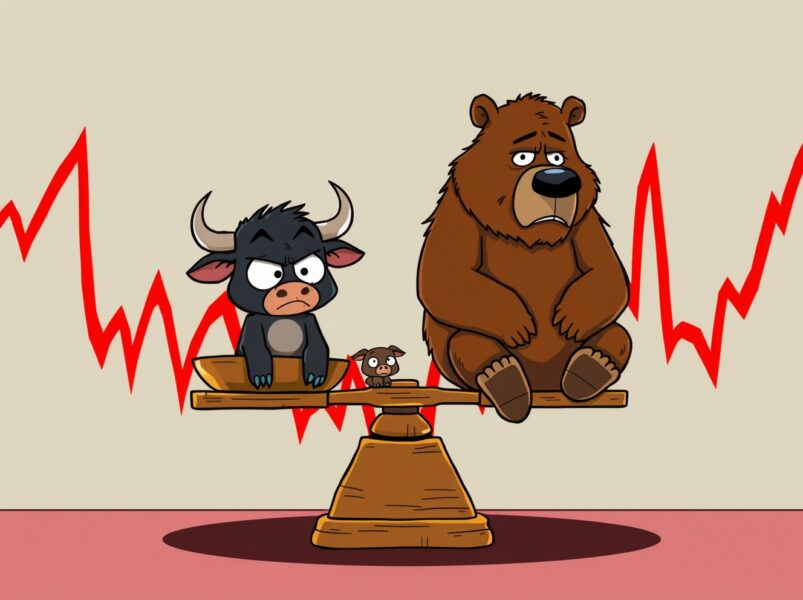
Global cryptocurrency markets continue to grapple with profound uncertainty as the benchmark Crypto Fear & Greed Index registers a score of 24, firmly entrenched in the ‘extreme fear’ category for another day. This critical sentiment gauge, a composite of volatility, social data, and market metrics, provides a stark, quantitative snapshot of prevailing investor psychology. Consequently, understanding its current reading and historical context becomes essential for navigating today’s complex digital asset landscape.
Decoding the Crypto Fear & Greed Index at 24
The Crypto Fear & Greed Index, maintained by data provider Alternative, currently sits at 24. This represents a marginal one-point increase from the previous day’s reading. However, the index remains deep within its ‘extreme fear’ band, which encompasses scores from 0 to 25. The tool operates on a scale from 0 to 100, where 0 signifies maximum fear and 100 indicates maximum greed. It synthesizes data from six core components to generate its daily score. For instance, market volatility and trading volume/momentum each contribute 25% to the final calculation. Meanwhile, social media sentiment and survey data each account for 15%. Finally, Bitcoin’s dominance share of the total crypto market cap and trends in Google search interest for ‘Bitcoin’ each make up 10% of the index.
This multi-faceted methodology aims to move beyond pure price action. It captures the emotional and behavioral drivers that often precede major market movements. The current score of 24, therefore, signals more than just falling prices. It reflects high volatility, potentially declining trading volumes, negative social media chatter, and reduced mainstream search interest. Historically, prolonged periods in ‘extreme fear’ have often preceded significant market bottoms, though this pattern is not a guaranteed predictor. Market analysts consistently monitor this divergence between price and sentiment for potential turning points.
Historical Context and Market Sentiment Analysis
Placing the current reading of 24 into a historical framework reveals its significance. The index has experienced dramatic swings since its inception. For example, it peaked near 95 during the bull market euphoria of late 2021. Conversely, it plummeted to single digits during major crises like the COVID-19 market crash of March 2020 and the collapse of the Terra-Luna ecosystem in May 2022. The present ‘extreme fear’ reading, while concerning, is not unprecedented. It suggests a market environment similar to other major corrective phases in cryptocurrency history.
Several concurrent factors typically contribute to such a low sentiment reading. Firstly, increased price volatility, especially sharp downward movements, directly impacts the index’s calculation. Secondly, a decline in spot trading volume can indicate a lack of buyer conviction. Thirdly, negative sentiment on platforms like Twitter and Reddit amplifies the fear narrative. Furthermore, a rising Bitcoin dominance rate often occurs during risk-off periods as capital flees from altcoins to the perceived relative safety of Bitcoin. The table below illustrates typical index ranges and their common market interpretations:
| Index Range | Sentiment Label | Common Market Characteristics |
|---|---|---|
| 0-25 | Extreme Fear | High volatility, panic selling, negative news cycle. |
| 26-46 | Fear | Cautious trading, consolidation, uncertainty. |
| 47-53 | Neutral | Balanced momentum, low directional conviction. |
| 54-74 | Greed | Increasing FOMO, strong bullish trends. |
| 75-100 | Extreme Greed | Speculative frenzy, potential market top. |
Expert Perspectives on Prolonged Fear
Financial behavioral analysts often reference the Fear & Greed Index as a contrarian indicator. Dr. Elara Vance, a behavioral economist specializing in digital assets, notes, ‘Sustained periods of extreme fear, like the current 24 reading, frequently create conditions for value accumulation. However, investors must distinguish between systemic fear driven by structural issues and cyclical fear within a healthy market correction. The index’s components help with that analysis.’ Meanwhile, veteran traders caution against using the index in isolation. They emphasize combining sentiment data with on-chain analytics, such as exchange flow data and holder composition, to form a more complete picture. The current environment suggests a market dominated by short-term speculators exiting, while long-term holders may be accumulating, a classic sign of a fear phase.
The Mechanics and Impact of Market Sentiment
The calculation of the index relies on verifiable, real-time data streams. The 25% weight given to volatility compares current Bitcoin price swings to historical averages. Similarly, the 25% market volume/momentum component analyzes trading volume and the strength of recent price movements. The social media analysis scans posts for sentiment and volume, while surveys provide a direct pulse of community outlook. The 10% weight for Bitcoin dominance measures its market share relative to all other cryptocurrencies. Finally, Google Trends data for ‘Bitcoin’ searches indicates mainstream attention levels. A low score across most of these metrics, as seen now, creates a reinforcing loop of negative sentiment that can suppress prices independently of fundamental news.
This sentiment impacts market behavior in tangible ways. For instance, developers may see reduced engagement on their platforms. Additionally, project funding rounds can become more challenging. Retail investors often delay entry plans during such phases. Conversely, institutional players with longer time horizons may view this as a strategic accumulation window. The market’s structure itself can change, with derivatives markets seeing shifts in funding rates and open interest. Therefore, the index acts as a barometer for the overall health and risk appetite within the crypto ecosystem, influencing decisions far beyond simple buy or sell orders.
Conclusion
The Crypto Fear & Greed Index reading of 24 offers a clear, data-driven signal that investor sentiment remains severely negative, categorizing the market in a state of extreme fear. This analysis stems from a composite of volatility, volume, social data, and search trends. While historically such depths of fear have sometimes marked cyclical lows, they also reflect real market stress and risk aversion. Navigating this environment requires a focus on fundamentals, robust risk management, and an understanding that market sentiment is a powerful, yet fleeting, force. Monitoring the index’s trajectory from this extreme fear zone will provide critical clues about the market’s next psychological phase.
FAQs
Q1: What does a Crypto Fear & Greed Index score of 24 mean?
A score of 24 places the market sentiment firmly in the ‘Extreme Fear’ category (0-25). This indicates high levels of investor anxiety, typically accompanied by elevated volatility, negative social media sentiment, and potential panic selling.
Q2: How is the Crypto Fear & Greed Index calculated?
The index is calculated using six factors: volatility (25%), market volume/momentum (25%), social media sentiment (15%), surveys (15%), Bitcoin’s market dominance (10%), and Google search trends for ‘Bitcoin’ (10%).
Q3: Is extreme fear a good time to buy cryptocurrency?
Historically, prolonged periods of extreme fear have sometimes preceded market recoveries, leading some to view them as potential buying opportunities for long-term investors. However, it is not a timing tool and should be used alongside fundamental and technical analysis.
Q4: How often does the Crypto Fear & Greed Index update?
The index is typically updated once per day, reflecting a composite of data from the previous 24-hour period.
Q5: Has the index been lower than 24 before?
Yes. The index has fallen into single digits during major market crises, such as the March 2020 COVID-19 crash and the May 2022 Terra-Luna collapse, indicating even more severe fear than the current level.
This post Crypto Fear & Greed Index Plunges: Navigating the Chilling ‘Extreme Fear’ Zone at 24 first appeared on BitcoinWorld.
You May Also Like

CME Group to launch options on XRP and SOL futures
Trump Family Crypto Tie Deepens Scrutiny as Alt5 Fires Auditor
