PA Daily News | Meta acquires AI company Manus; Dragonfly partner says BTC will surpass $150,000 by the end of 2026
Today's top news highlights:
Media reports indicate that Alan Tam's son, Tam Hiu-fung, works as a senior software engineer at Web3 and was previously responsible for the NFT game CryptoKitties.
Dragonfly Partner: BTC will break $150,000 by the end of 2026, but its market share will decline.
Manus founder Xiao Hong's social media bio includes the tag "BTC holder".
Lighter announced the launch of its infrastructure token, LIT, with the ecosystem allocating 50% of the token.
The total market capitalization of tokenized stocks has risen to $1.2 billion, a record high.
Billionaire Grant Cardone announced plans to launch the world's largest real estate Bitcoin company in 2026.
Macro
Cicely LaMothe, deputy director of the SEC's Corporate Finance Division, is retiring after developing crypto guidelines.
According to The Block, Cicely LaMothe, the Deputy Director of the Corporate Finance Division at the U.S. Securities and Exchange Commission (SEC), is retiring after playing a key role in shaping the agency's approach to cryptocurrency regulation. The SEC announced LaMothe's retirement in a statement on Monday. The SEC stated that over the past year, LaMothe was involved in drafting several important employee statements concerning cryptocurrencies, including a statement clarifying that Memecoin is not a security and a statement explaining the agency's stance on staking. In addition to cryptocurrency-related matters, LaMothe also led policy recommendations for draft prospectuses submitted by companies.
Opinion
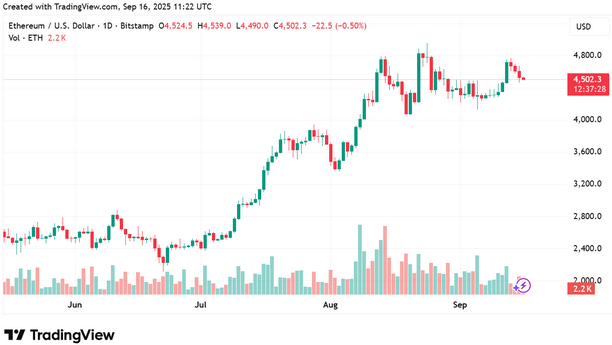
Analysis: Ethereum's "triangle" pattern is approaching a critical point; 2026 may bring confirmation of its direction.
Matrixport's chart analysis today states that in the previous cycle, Ethereum attracted incremental funds driven by expectations of smart contract platform ecosystem expansion and the "programmable money" narrative, propelling its price to new heights in 2020-2021. At the peak of sentiment in 2021, the market even anticipated reaching $10,000. However, the upward trend failed to continue. After retreating from its highs, Ethereum entered a long period of consolidation, generally trading within a large triangle pattern. Over the past few years, it has primarily exhibited range-bound trading with no clear trend. Structurally, the price twice attempted to break out of the range (once downward and once upward), but both attempts failed to sustain, and the price quickly returned to the range. Until a direction is confirmed, the market will likely remain range-bound. The current triangle pattern is clearly converging, with the price action space continuously compressing, and the structure is nearing its end. As this long consolidation gradually completes, 2026 may become a crucial window for Ethereum to choose a direction and enter the next phase of its price movement.
Yi Lihua: The Federal Reserve will gradually ease monetary policy, and the力度 (intensity/scale) will increase. The company has sufficient funds to repay leverage and buy on dips.
Liquid Capital founder Jack Yi posted on the X platform, stating: "The Federal Reserve will gradually ease monetary policy, and the scale will increase. This is the second time this has happened since the pandemic. The first was the massive easing during the March 12th pandemic, which led to a major bull market. This round is also characterized by easing. With institutions locking up Bitcoin and Ethereum, the asset allocation structure has changed, and any subsequent rise will inevitably face a short squeeze. Short sellers are organizing online attacks against me, trying to influence public sentiment, but this is a futile effort. The company has sufficient funds to repay leverage and buy on dips. Short sellers who close their positions early will suffer small losses, while those who close later will suffer large losses. The short seller alliance has collapsed."
Dragonfly Partner: BTC will break $150,000 by the end of 2026, but its market share will decline.
Dragonfly Managing Partner Haseeb shared his predictions for 2026, with the following key points: BTC will break $150,000 by the end of the year, although its market share will decline. Fintech public chains such as Tempo, Arc, and RobinhoodChain may underperform market expectations; in contrast, Ethereum and Solana will exceed expectations, and top developers will continue to choose neutral infrastructure public chains. A major tech company (such as Google, Facebook, or Apple) will launch or acquire a crypto wallet in 2026. Three major Perp DEXs will occupy 90% of the market share in this sector, with other projects only able to compete for the remaining 10%. Equity investment will grow rapidly, accounting for more than 20% of total DeFi investment by the end of the year. The supply of stablecoins will increase by about 60% in 2026, with USD stablecoins maintaining a share of over 99%, and USDT's dominance slightly declining to about 55%. The Clarity Act will officially become law, but will require significant negotiation. Prediction markets will develop rapidly, but 90% of prediction market products will be ignored and gradually disappear by the end of the year. The main applications of artificial intelligence in the field of encryption are still limited to software engineering and security, while other applications are still in the prototype stage.
Delphi Digital: GameFi funding has dropped by over 55% year-on-year this year, while Web 2.5 games are quietly rising in popularity.
Delphi Digital stated, "2025 was a challenging year for GameFi. Funding declined by over 55% year-over-year. The most anticipated launches underperformed, and market enthusiasm was low. But the overall situation is more complex. We are witnessing the quiet rise of Web 2.5 games. These games treat blockchain as pure infrastructure, often completely skipping the token stage and competing solely on actual revenue. Studios like Fumb Games, Mythical Games, and Wemade/Wemix are consistently generating substantial revenue while leveraging blockchain in their unique ways. Blockchain has improved profit margins, enhanced user engagement, or introduced new revenue streams. While native Web3 games generated six- to seven-figure revenues this year, the player base is small and rife with bots. Once incentives fail, the fun disappears, though some teams are experimenting with new models to address this issue. Web 2.5 studios can now leverage the advantages of blockchain without forcing users into speculation or making excuses for poor user experiences. The widespread adoption of stablecoins should accelerate this trend. Small transactions, global payment channels, and engagement-based reward mechanisms will all become more convenient."
Framework Ventures co-founder: In 2026, the market will focus on mainstream tokens, and institutions will continue to flock to high-quality DeFi projects.
Vance Spencer, co-founder of Framework Ventures, wrote: "2025 may not be the year the crypto industry anticipates to be glorious, but it is very likely a necessary transitional year for the industry's continued development. The industry has largely moved away from memes, NFTs, low-circulation, high-FDV projects, and the overall consumer-oriented narrative. I predict that token issuance will sharply decrease in 2026, the market will focus more on mainstream assets (ETH, BTC), and institutional funds will continue to flow into DeFi blue-chip projects with reasonable value capture mechanisms. This buying power may far exceed expectations, especially with the combined effect of continuous buybacks and high financial self-discipline at the protocol layer. The future direction of the industry is clear: stablecoins, real-world assets (RWA), lending and capital markets, and asset management will become dominant. We will solve many problems in the cryptocurrency field through meticulous cultivation, reducing blind expansion, and compliant operations. This is a bullish pattern, but rebound, surge, and exit opportunities will be highly concentrated."
Project Updates
Media reports indicate that Alan Tam's son, Tam Hiu-fung, works as a senior software engineer at Web3 and was previously responsible for the NFT game CryptoKitties.
According to Lianhe Zaobao, Howard Tam, the 75-year-old son of renowned Hong Kong singer Alan Tam, has recently made outstanding achievements in the technology field, including cryptocurrency. He is currently a senior software engineer at a Web3 startup, focusing on developing digital wallets and cryptographic protocols. Previously, while working at the Canadian game company Axiom Zen, Howard led the development of "CryptoKitties," the world's first NFT game based on the Ethereum blockchain. After its launch, the game accounted for over 16% of the Ethereum network's transaction traffic.
Lighter has announced that LIT token trading is now available, following the completion of its airdrop distribution.
Lighter announced on its X platform that LIT token trading is now available. Previously, the Lighter Discord Chinese community administrator announced that the airdrop had been completed and token trading would soon be open.
Gate founder Dr. Han released his 2025 year-end open letter: The platform remains the world's second-largest spot trading platform and among the top three in futures trading, accelerating the implementation of Web3.
According to an official announcement, Dr. Han, founder of Gate.com, a leading global cryptocurrency exchange, released a year-end open letter focusing on Gate.com's achievements over the past year and sharing his assessment of the Web3 industry's maturation and long-term strategic thinking. This year also marks Gate.com's 12th anniversary. Looking back on the platform's development, Gate.com has made continuous breakthroughs in trading volume and compliance: its spot trading volume and liquidity rank second globally, while its contract trading volume and overall strength remain among the top three globally. Simultaneously, Gate.com has been advancing its compliance strategy in key markets such as Dubai, Europe, Australia, and the United States, laying a solid foundation for long-term international development. In the open letter, Dr. Han pointed out that 2025 is a crucial turning point for Web3, moving it from concept to real-world application. As blockchain infrastructure, user experience, and the compliance environment mature, Web3 is moving beyond niche technology circles and entering broader real-world use cases. Gate.com will continue to promote the integration of Web3 into everyday scenarios such as investment, wealth management, payments, and digital asset management in a more seamless and tangible way. Looking ahead to 2026, Gate aims to connect the entire digital economy with a unified Gate App. Dr. Han stated that Gate is not pursuing the fastest growth, but rather a more stable and sustainable approach, accompanying more users as they move towards the next stage of Web3.
Star releases its 2025 year-end letter: System stability, security, and transparency are the foundation for financial freedom.
OKX founder and CEO Stephen Star released his 2025 year-end letter, stating that financial freedom is not about having no rules, but rather about having a reliable, verifiable, and selectable financial system that withstands the test of time. In 2025, despite multiple periods of extreme market volatility, OKX maintained stable system operation, processing a peak of 1.72 million transactions per second on October 11th, with order latency maintained at 20 microseconds. Star pointed out that OKX maintained a 3%–5% asset redundancy throughout the year, continuously issuing Proof of Reserves (PoR), and maintaining a reserve ratio of over 100% for its main assets. Simultaneously, OKX continued to invest in security, anti-fraud, self-custody, and compliance market expansion. In 2025, the platform's global trading volume increased by 16% year-on-year, DEX trading volume increased by approximately 262%, and the number of global users exceeded 120 million.
Lighter announced the launch of its infrastructure token, LIT, with the ecosystem allocating 50% of the token.
Lighter announced the launch of its infrastructure token, LIT, on the X platform, outlining its structure, vision, and roadmap for use cases. All value created by Lighter products and services will belong entirely to LIT holders. Lighter operates in the US, and the token is directly issued by its Class C company, which will continue to operate the protocol at cost. Tokens are allocated 50% to the ecosystem and 50% to the team/investors. The first and second quarters of the points campaign in 2025 have generated 12.5 million points, which will be immediately airdropped, representing 25% of the fully diluted value. The remaining 25% of tokens in the ecosystem will be used for future points campaigns and, to a lesser extent, for partnerships and growth initiatives. Both team and investor tokens have a one-year vesting period, followed by three years of linear vesting. Specifically, the allocation is 26% for the team and 24% for investors. LIT holders will gain access to financial products that generate risk-adjusted returns, improve execution efficiency, and enhance capital efficiency. The infrastructure for executing financial transactions and verifying their fairness and correctness will be tiered based on LIT staking and increasingly decentralized. Market data access and price validation are also crucial components of the infrastructure required for future finance. Financial data providers and subscribers will use LIT as a fee token, and staking will incentivize the provision of verifiable data for trading and risk management.
Manus founder Xiao Hong's social media bio includes the tag "BTC holder".
Manus founder Xiao Hong's bio on his Jike account includes the tag "BTC holder." Previously, it was reported that Meta acquired Butterfly Effect, the company that develops the AI application Manus, for billions of dollars; this was Meta's third largest acquisition to date. Following the acquisition, Butterfly Effect will continue to operate independently, and founder Xiao Hong will become a vice president of Meta.
edgeX: TGE will be delayed until March 31st at the latest.
Decentralized derivatives trading platform edgeX confirmed during yesterday's Community Call that its project TGE will be delayed, with the latest possible date being March 31st. edgeX is reportedly an order book-based perpetual contract exchange incubated by Amber Group.
Bitmine plans to launch its commercial Ethereum validator network, MAVAN, in 2026.
According to official sources, Bitmine is currently partnering with three staking service providers and plans to launch its commercialized MAVAN (Made in the USA Validator Network) in 2026. As of December 28, 2025, the total amount of ETH staked by Bitmine was 408,627 (approximately $1.2 billion). Bitmine Chairman Tom Lee predicts, "When all of Bitmine's ETH is staked by MAVAN and its staking partners, ETH staking fees will reach $374 million annually." Furthermore, Bitmine's annual shareholder meeting will be held on January 15, 2026, to vote on four key proposals, including: 1. Electing eight directors for the next year; 2. Approving amendments to the company's articles of incorporation to increase the number of authorized ordinary shares; 3. Approving the 2025 comprehensive incentive plan; and 4. Approving, on a non-binding advisory basis, a special, performance-based compensation arrangement for the executive chairman.
Ethereum validator entry queue size rose to about twice the size of exit queue for the first time in six months, indicating a rebound in staking demand.
According to Cointelegraph, the size of the Ethereum validator entry queue has surged to almost double the size of the exit queue for the first time in six months. This growth indicates a rebound in staking demand, primarily driven by digital asset treasury companies such as BitMine, and possibly supported by the Pectra upgrade.
Important data
Two whales shorted $3.5 million worth of LIT on HyperLiquid with 3x leverage.
According to Onchain Lens monitoring, whale accounts are shorting LIT tokens (Lighter's native token) on the HyperLiquid platform. Specifically, whale "0x47e" deposited $2 million USDC and opened a 3x leveraged short position in LIT; whale "0xd6b" deposited $1.5 million USDC and also opened a 3x leveraged short position in LIT.
The "1011 insider whale" has deposited another 112,894 ETH, worth $332 million, into Binance.
According to Lookonchain monitoring, the "1011 flash crash short-selling insider whale" holding $749 million in long positions in BTC, ETH, and SOL has deposited another 112,894 ETH (worth $332 million) into Binance.
A certain address opened a long position of 300 BTC 7 hours ago, becoming one of the top 5 long positions in Hyperliquid BTC.
According to on-chain analyst @ai_9684xtpa, address 0x931…ae7a3 opened a long position of 300 BTC 7 hours ago, becoming one of the top 5 long positions in Hyperliquid BTC. Currently, this $26 million BTC long position has an average opening price of $87,965.3, a floating loss of $239,000, and a liquidation price of $86,073.7. The account holder also set a stop-loss and take-profit range of $79,419-$109,496, meaning a stop-loss at $79,419 and a take-profit at $109,496.
The total market capitalization of tokenized stocks has risen to $1.2 billion, a record high.
According to Cointelegraph, data from Token Terminal shows that the total market capitalization of tokenized stocks has climbed to a record $1.2 billion, driven by strong growth in September and December. Token Terminal stated, "Tokenized stocks today are like stablecoins in 2020," highlighting that the market is still in its early stages. In 2020, stablecoins were still in their infancy, but this year they have grown into a $300 billion industry. Other industry insiders have likened tokenized stocks to the DeFi boom of early 2020, pointing to the potential for more global stocks to be on-chain, benefiting from faster settlement speeds, 24/7 trading, and divisible ownership.
BlackRock's first tokenized money market fund, BUIDL, has paid out over $100 million in dividends.
According to Finance Feeds, BlackRock's first tokenized money market fund, BUIDL, has paid out over $100 million in dividends since its launch, indicating that tokenized securities have moved beyond the pilot and proof-of-concept stages and are now being used in practice. The fund reportedly invests in short-term dollar-denominated instruments such as U.S. Treasury bonds, repurchase agreements, and cash equivalents.
Financing/Acquisition
Meta's multi-billion dollar acquisition of Manus, the company that develops AI applications, has a butterfly effect.
According to Jinshi News, Meta acquired Butterfly Effect, the company that develops the AI application Manus, for billions of dollars. This is Meta's third-largest acquisition since its inception, second only to WhatsApp and ScaleAI. Prior to the acquisition, Manus was reportedly raising a new round of funding at a valuation of $2 billion. Liu Yuan, a partner at ZhenFund and an angel investor in Butterfly Effect, said the acquisition negotiations were completed in a very short time, lasting only about ten days. Manus and Meta Platforms (META.O) each released statements on their respective websites announcing Manus's joining Meta, but the statements did not disclose specific details of the transaction.
Institutional holdings
Metaplanet disclosed that it spent approximately $451 million to purchase 4,279 Bitcoins in Q4.
According to official sources, Japanese listed company Metaplanet purchased 4,279 bitcoins in the fourth quarter of 2025 for approximately $451.06 million, at a price of about $105,412 per bitcoin. As of the beginning of 2025, its bitcoin return has reached 568.2%. As of December 30, 2025, Metaplanet held 35,102 bitcoins.
Billionaire Grant Cardone announced plans to launch the world's largest real estate Bitcoin company in 2026.
According to a video shared by CarbonSilicon AI co-founder @KKaWSB, billionaire Grant Cardone, CEO of real estate investment firm Cardone Capital, has just announced that he will launch the world's largest real estate Bitcoin company in 2026, aiming to become the next Michael Saylor. He stated, "We will create the world's largest publicly traded Bitcoin treasury company. We will use the cash flow from real estate—monthly rental income, and depreciation—to buy Bitcoin. Since March of this year, we have completed five transactions. We will accumulate 3,000 Bitcoins by the end of next year. This is the new model: real estate plus Bitcoin. It's like Michael Saylor's model, but we have real cash flow."
You May Also Like

BFX Presale Raises $7.5M as Solana Holds $243 and Avalanche Eyes $1B Treasury — Best Cryptos to Buy in 2025

XRP Price Prediction – Will It Hit $100 by 2026 and $500 by 2030?