

Must Watch
Nobel Peace laureate Maria Ressa and Cambridge Analytica whistleblower Chris Wylie, at Navigating an AI Future, a Rappler sit-down conversation on World Press Nobel Peace laureate Maria Ressa and Cambridge Analytica whistleblower Chris Wylie, at Navigating an AI Future, a Rappler sit-down conversation on World Press
Maria Ressa warns Trump’s narrative warfare is more insidious than Duterte’s
MANILA, Philippines – Rappler CEO and The Nerve Head of Global Strategy Maria Ressa said US President Donald Trump’s “narrative warfare” during his second term is far more insidious than what she experienced during former president Rodrigo Duterte’s term in the Philippines from 2016 to 2022.
In an interview with Amanpour & Company on Tuesday, February 10, Ressa talked about data forensics firm The Nerve’s latest report that investigated the first 100 days of Donald Trump’s second term.
The report investigated the dominant online narratives and themes surrounding Trump and his administration; the actors and networks pushing, amplifying, or contesting these narratives; the public’s engagement and emotional response to key policies and political events; and platform-specific discourse dynamics.

“What we’re seeing here is the same thing that we lived through in the Philippines, which is narrative warfare up top in the first 100 days of Trump 2.0. It was 143 executive orders that didn’t just act as policy or dismantle institutions like USAID (US Agency for International Development) in the physical world; they were content triggers in the virtual world,” Ressa said during the interview.
The Nerve’s report argues that the Trump administration’s actions, particularly the record-high 143 executive orders in the first 100 days, were not meant for open debate in a common civic forum but were instead content triggers in the virtual world, built to erode democratic safeguards and intensify divisions until shared reality collapses.
“If you don’t look at the data, you miss that cumulative effect, the way people’s behavior changed,” Ressa said.
She described the moment as a tipping point, arguing that once a meta-narrative is seeded in a closed system and amplified opportunistically, it can overwhelm everything else. She said countries from the United Kingdom to France, Germany, Canada, and Australia are already showing signs of the strain. Democratic leaders, she added, are “standing on wood that is being eaten by termites,” a structure that will eventually collapse unless the underlying forces are confronted. That, she said, is the effect of narrative warfare.
The Nobel laureate said that all of this became possible because the public information ecosystem’s design is determined by Big Tech for profit, and that the end goal of those who wage this narrative warfare is for civic engagement to dissipate, by dismantling institutions and causing people to be unable to tell fact from fiction.
“We lived through this in the Philippines under Rodrigo Duterte in 2016. It took him six months. I think our report posits to you that in America, it happened within 100 days,” Ressa said.
She explained that the biggest change from 2016 to today is the fusion of State with Big Tech. The dismantling of safety measures on social media, such as fact-checking programs, which had been demanded by advocates like her, signaled a shift further away from platform accountability.
In January 2025, Meta announced that it was scrapping its fact-checking program in the US. It officially ended on April 7, the same year.
Not an accident
The Nerve coins the “deconstruction model,” where governance does not operate within the existing democratic framework but functions primarily to redefine reality in a way that destroys constitutional checks and balances on executive power. This marks a move away from the traditional “persuasion model,” in which a president’s proposals were vetted and debated by institutional gatekeepers such as the press, Congress, and the courts, within a shared public sphere where legitimacy depended on persuasion and broad consensus.
“What happened here with a deconstruction model is the gatekeepers, institutional gatekeepers, the press, Congress, legislature, think tanks, the academics, all of the discussion that goes around a policy… is completely thrown out,” Ressa said.

In the deconstruction model, each executive order acts as a content trigger, which gets amplified by a decentralized network of influencers. These influencers then reframe the event for their politically aligned communities, and are later on reinforced by platform algorithms that reward emotional behavior.
“This isn’t an accident. There’s a deliberate political strategy that leverages direct unmediated communication to bypass traditional checks and balances,” Ressa said.
She referred to the economic model fuelling all these activities on Big Tech platforms, particularly the creator economy, which provides financial incentives for those who can bring in more engagement and activity online.
Ressa also criticized the technological architecture of social media platforms, which is designed to reward emotional reactions, and called Meta CEO Mark Zuckerberg the “bigger dictator.”
“He’s not elected. He determines what billions of people around the world see and feel and influences the way we act insidiously,” Ressa said.
A safety issue
Ressa argued that if governments want to curb the influence of social media companies, they need to stop treating the issue primarily as a free-speech debate and instead frame it as a matter of public safety.
“This is by design harmful to us,” she said.
Reiterating the 10-point plan to address the information crisis she drafted with fellow Nobel laureate, Russian journalist Dmitry Muratov, back in 2022, she called to stop surveillance for profit, stop coded bias, and treat journalism as an antidote to tyranny.
“Because think about the system that Big Tech created. Social media, first. And now we can talk about chatbots separately…. What Big Tech did is it rewarded telling you everything you want to hear without any guardrails in place,” Ressa said.
She said the next phase must be rebuilding a shared reality grounded in facts, arguing that only then can societies hold civil policy debates, disagree productively, and continue learning.
“If we don’t fix the public information ecosystem, everything we do downstream will collapse because we live in toxic sludge,” Ressa said. – Rappler.com
The Nerve published “First 100 days of Trump 2.0: Narrative warfare and the breakdown of reality” in January 2026. Download the report for free.
Market Opportunity
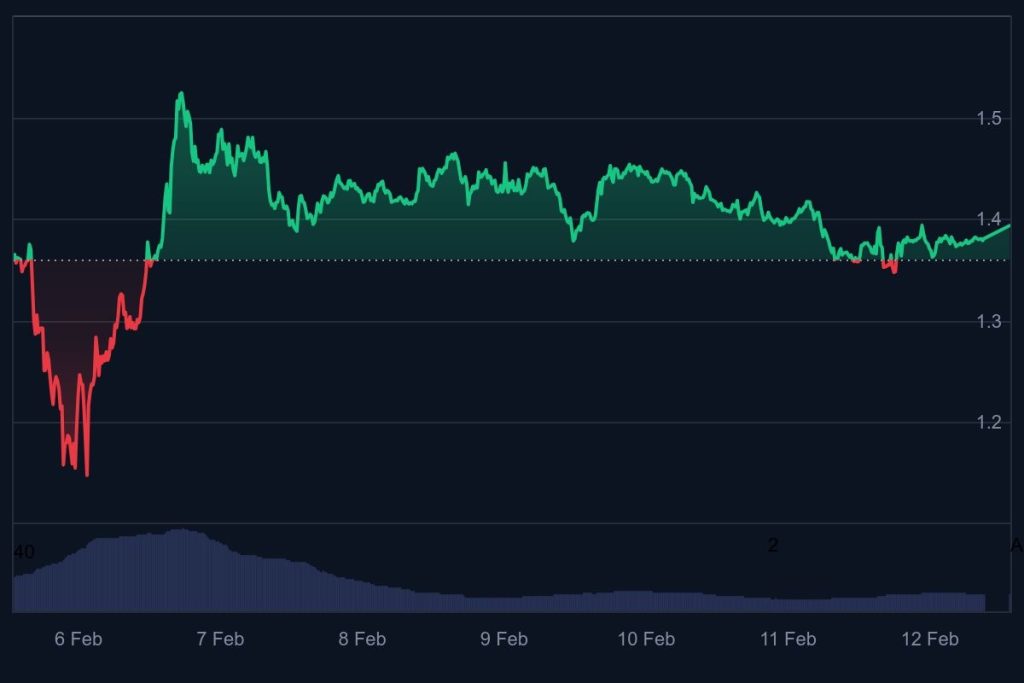
OFFICIAL TRUMP Price(TRUMP)
$3.325
$3.325$3.325
USD
OFFICIAL TRUMP (TRUMP) Live Price Chart
Disclaimer: The articles reposted on this site are sourced from public platforms and are provided for informational purposes only. They do not necessarily reflect the views of MEXC. All rights remain with the original authors. If you believe any content infringes on third-party rights, please contact service@support.mexc.com for removal. MEXC makes no guarantees regarding the accuracy, completeness, or timeliness of the content and is not responsible for any actions taken based on the information provided. The content does not constitute financial, legal, or other professional advice, nor should it be considered a recommendation or endorsement by MEXC.
You May Also Like

WLFI Expands Into Forex With World Swap Launch
The post WLFI Expands Into Forex With World Swap Launch appeared on BitcoinEthereumNews.com. World Swap aims to fuse banking access with blockchain rails in the
Share
BitcoinEthereumNews2026/02/13 20:31

Usdt stablecoin could challenge Bitcoin leadership
The post Usdt stablecoin could challenge Bitcoin leadership appeared on BitcoinEthereumNews.com. Analyst Mike McGlone has sparked new debate by suggesting the USDT
Share
BitcoinEthereumNews2026/02/13 20:40
XRP Price News: While Thailand Approves Crypto As Underlying Asset, XRP Attempts Recovery and SUI Targets $1 But Traders Are Moving To DeepSnitch AI As Demand Rises Amid 300x Moonshot Rumors
Thailand’s government has officially approved the Finance Ministry’s proposal to allow digital assets to be used as underlying assets in the country’s derivatives
Share
Captainaltcoin2026/02/13 20:00