She earns in naira, saves in dollars, and refuses to stay in one country long enough to get bored. This is how Olayinka Oke built a life across three countriesShe earns in naira, saves in dollars, and refuses to stay in one country long enough to get bored. This is how Olayinka Oke built a life across three countries
Digital Nomads: Olayinka Oke saves $368 monthly to live in three countries a year
For feedback or concerns regarding this content, please contact us at crypto.news@mexc.com
Olayinka Oke has travelled to 23 of Nigeria’s 36 states, exploring her nomadic curiosities from humble beginnings before she began branching out of the country and, eventually, Africa.
Before Ghana, Malta, Sierra Leone, and Kenya, there were shorter trips across Nigeria. She would wait for a public holiday, take two extra leave days, book a hotel or Airbnb, and disappear for four days. Sometimes, it was a quick weekend stop in Ekiti, in southwestern Nigeria. Other times, Kano, in the far north.
At the time, international travel still felt distant for Oke.
But in 2017, she crossed Nigeria’s borders for Accra, Ghana, for the first time. That trip changed something.
“Even though Ghana is a lot similar to Nigeria, there was—I don’t know the word for it—but my eyes just opened to the fact that there’s actually a lot more to life than the country where you live,” said Oke.
Now, she saves a little over ₦500,000 ($368) every month into a travel fund to finance the frequent travel lifestyle she describes as requiring “meticulous planning.”
In March, she was in Kenya for the month, working remotely from different high‑brow parts of Nairobi and taking a side trip to Lamu, off Kenya’s coast. Later this year, she plans to visit several European countries and at least one Asian country, preferably Thailand, she said.
Oke, a chemical engineering graduate from Ladoke Akintola University of Technology (LAUTECH) in Ogbomosho, Oyo State, leads data management and governance at Nigeria LNG Limited (NLNG), one of the country’s biggest gas producers.
She said her urge to travel came from a restless dislike for routine and a desire to keep experiencing new places instead of staying in one environment long enough to get bored.
“There’s always the point of wanting to be in a saner clime,” Oke said. “Every time you run into a low‑quality problem in Nigeria, you tell yourself that, ‘if I were living outside Nigeria, this wouldn’t be a problem.’”
Her full‑time job is based in Nigeria, but over the last few years, she has steadily built a life that assumes she will live in at least three other countries every year, one month at a time.
Get The Best African Tech Newsletters In Your Inbox
Select your country Nigeria Ghana Kenya South Africa Egypt Morocco Tunisia Algeria Libya Sudan Ethiopia Somalia Djibouti Eritrea Uganda Tanzania Rwanda Burundi Democratic Republic of the Congo Republic of the Congo Central African Republic Chad Cameroon Gabon Equatorial Guinea São Tomé and Príncipe Angola Zambia Zimbabwe Botswana Namibia Lesotho Eswatini Mozambique Madagascar Mauritius Seychelles Comoros Cape Verde Guinea-Bissau Senegal The Gambia Guinea Sierra Leone Liberia Côte d'Ivoire Burkina Faso Mali Niger Benin Togo Other
Select your gender Male Female Others
Subscribe
Oke, the traveller
Oke first worked in the oil and gas sector, including a stint at Halliburton, the multinational oilfield services firm with operations in Nigeria, between 2014 and 2016.
She then moved into banking as a data professional at tier-2 lender, Union Bank, from 2016 to 2021, before transitioning fully into the energy side of data, first at Easy Solar and now at NLNG.
Oke traces her deliberate nomadic life to two moments: that first Ghana trip and later, a job that pushed her to move to Sierra Leone. For a while, the change showed up mainly as tourism. She travelled when she could afford it, mostly for short stays.
The shift from tourist to temporary resident came in 2022, when she got an offer from Easy Solar. The company sells renewable energy products to last‑mile users on a pay‑as‑you‑go (PAYG) basis in Sierra Leone and Liberia.
She said she started as a commercial data analyst, working remotely at first, but the role came with a condition: at some point, she would have to move to Freetown, the capital city of Sierra Leone.
“I eventually moved to Sierra Leone in 2023,” she said. “Sierra Leone is not like Europe, which is a lot more developed; in fact, I would say Sierra Leone is a bit less developed than Nigeria, but the way things were just different was very interesting to me.”
Oke poses for a photo at the ‘I Love Salone’ sign in Freetown, Sierra Leone. Image Source: Olayinka Oke
While she spent about a year in Sierra Leone, the stay was long enough for daily details to matter more than the idea of “moving abroad.” The first shock came from housing and groceries.
Rents in the parts of Freetown where expatriates and professionals clustered were quoted in dollars, and her two‑bedroom apartment, shared with a flatmate, cost about $600 a month. Groceries, too, were often more expensive than she expected, partly because many products were imported, she said.
Food and convenience became the biggest pressure points. In Lagos, Oke prefers to order almost everything online and can go weeks without leaving her house when working remotely.
Oke hiking the Leicester Peak, a mountain in Sierra Leone’s Western area. Image Source: Olayinka Oke
In Freetown, that setup simply did not exist. There were restaurants with Instagram pages, but no central food‑delivery platforms, she said.
She had to ask colleagues how people managed. Eventually, she settled into the local workaround: finding a trusted bike rider who acted as a personal dispatch, buying items from different places, and bringing them over.
The Malta cameo, sacrifice, and returning home
In the middle of her Sierra Leone stint in 2023, she applied on LinkedIn for a data analyst role at a Malta-based gaming company.
She got the offer while she was still with Easy Solar, and kept working for the company as the Malta process moved ahead.
Oke left Sierra Leone around June and returned to Lagos, continuing to work remotely for Easy Solar until it was time to travel. In September, she flew to Malta to start the in‑country stages of her new role.
She said the gaming company sponsored her visa, paid for her flight, and put her up in a hotel for the first two weeks while she looked for an apartment.
Oke at the Gozo International Kite and Wind Festival, held in October 2023. Image Source: Olayinka Oke
The Maltese visa system, she explained, works in stages: on arrival, a new employee gets an approval in principle and a tourist visa to enter the country, and the actual work permit only comes after medical tests, a registered address, and a stack of documentation.
Before she could clear all those requirements, she had to return to Nigeria to deal with a personal matter. She did not complete the work‑permit process and never formally resumed at the Maltese gaming company.
“It was a difficult decision to make, definitely, because I had been trying to leave Africa for quite some time, and it was a good opportunity, seeing that it was through a sponsored job,” Oke said. “But then, it was a sacrifice that I had to make, and it was a difficult decision, but I made it anyway.”
She used the remaining time on her entry visa to stay in Malta for six weeks before coming back to Lagos. She did not resign from Easy Solar until she got her job with NLNG in December 2023.
Oke in Malta, 2023. Image Source: Olayinka Oke
“The job that I got after I came back is fantastic. The career that I’m building is fantastic as well,” she said. “So I don’t have any regrets about coming back.”
How she plans and pays for travels
Oke’s senior data role at NLNG enables her to afford a travel lifestyle; she was clear-eyed about that.
Every month, before anything else, she removes a fixed amount from her income and moves it into a dedicated travel fund held in US dollars.
She chose dollars because travelling almost always costs in dollars, and she did not want her plans to erode every time the naira moved, she said.
“The fixed amount that I put into that fund every month is a little over ₦500,000 [$368],” she said. “And if you put a little over ₦500,000 [$368] in 12 months, that comes to between ₦6 million and ₦8 million [$4,416–$5,888].”
Yet sometimes, that base is not always enough for month-long stays. She also supplements that fund with money that arrives outside her regular salary, a bonus or anything else, goes into the fund.
“That’s the only way I can be able to do the three countries in one month, which I want to do this year,” she said.
Within the fund, she works to a cap, she added. She does not spend above a certain amount per trip, but there is no penalty for coming in under it. Whatever is left rolls over.
What is non-negotiable is the order of operations: Oke locks in flights and accommodation costs up to two months before departure. This gives her wiggle room to be more flexible on food and experience curation budgets, which are typically not fixed, she said.
On a typical trip, she budgets $400 to $500 a week for food and activities, excluding shopping. Return flights usually run between $1,000 and $1,050 when booked early. To save cost, she flies economy unless her employer is covering the ticket, she said, laughing.
NLNG’s hybrid policy is the other enabler. At NLNG, Oke holds a senior role that comes with a hybrid work policy and generous paid leave. That structure is now at the centre of how she travels.
“The role is hybrid officially; we have a number of days in a year for which we can work from anywhere, and the number of days where we need to be in the office,” she said. “In addition, my paid time off is actually 30–32 working days in a year.”
She uses those “work from anywhere” days, plus her annual leave and public holidays, to create month‑long stays outside Nigeria.
When she joined, the remote‑work quota was more generous than it is now, she said, but even after the company reduced the number of days staff can work from anywhere, Oke still combines what is left with leave days to make monthly trips like Kenya possible.
Her employers always know where she is. Oke is careful about that, she said, and never hides the fact that she is outside the country when she is. During her month in Kenya, for example, a colleague asked if she could represent the company at an event. She declined.
“I was like, sorry, I’m out of town,” she said.
The request did not escalate into a conflict, partly because she had booked the trip within the rules, with her employer’s acknowledgement.
Oke in Lamu, Kenya, March 2026. Image Source: Olayinka Oke
For Oke, this is a non‑negotiable part of the lifestyle: build travel around formal leave and company‑approved remote days, make sure managers know when she will be unavailable in person, and enforce clear boundaries when she is on leave.
Get The Best African Tech Newsletters In Your Inbox
Select your country Nigeria Ghana Kenya South Africa Egypt Morocco Tunisia Algeria Libya Sudan Ethiopia Somalia Djibouti Eritrea Uganda Tanzania Rwanda Burundi Democratic Republic of the Congo Republic of the Congo Central African Republic Chad Cameroon Gabon Equatorial Guinea São Tomé and Príncipe Angola Zambia Zimbabwe Botswana Namibia Lesotho Eswatini Mozambique Madagascar Mauritius Seychelles Comoros Cape Verde Guinea-Bissau Senegal The Gambia Guinea Sierra Leone Liberia Côte d'Ivoire Burkina Faso Mali Niger Benin Togo Other
Select your gender Male Female Others
Subscribe
What the countries actually cost
Across Sierra Leone, Malta, Kenya, and Nigeria, Oke has built her own cost-of-living index, and some of what she has found cuts against the obvious assumptions.
Housing follows the expected order: Malta is the most expensive place she has lived, followed by Nairobi, then Freetown, with Nigeria still the cheapest despite years of rent inflation, she said. But groceries move the other way.
“With groceries and most other things, it almost seems [as if] Nigeria is the most expensive compared to all the places I’ve lived,” she said.
Nairobi surprised her most: food, fruit, and transport all came in below what she pays at home.
“I did not believe it,” Oke said. “All the time I either bought food or even fruits, I would try to compare with the prices in Nigeria. Even the cost of transportation—things like boats, all of those—were a lot cheaper in Nairobi.”
While earning power, budgeting, and planning her leave days carefully enable Oke to afford the nomadic lifestyle she first dreamt about in 2017 on that Ghana trip, she said a major blocker to doing more is the Nigerian passport.
She only travels to countries that do not require visas, offer e‑visas, or have predictable approval processes, and she uses easier destinations to build the travel history that makes tougher applications more likely to succeed.
She also watches what she calls “cycles”: stretches when a country relaxes visa rules for Nigerians, often reflected when travel agencies begin to heavily promote trips there, she said.
Japan was on her list for this year. She dropped it when she found out she would have to physically send her passport to the embassy in Abuja, Nigeria.
Next on her list is Europe, where she plans to explore at least two countries, taking advantage of the mobility ease in the continent, she said.
After that, she plans to go to Asia. What makes this possible for Oke, she said, is first, a strong desire to change her environment often, because she “gets bored easily in one place.”
Her travel fund, built over four years, also eases the financial cost that comes with travelling on short notice.
“Affordability is a function of priorities. So when you start travelling, start small—small trips to Ghana here and there—and you will appreciate travelling,” Oke said.
“What [then] happens is that travel goes a bit higher on your priority list, to the point [where you begin] budgeting for it.”
*Exchange rate used, $1 = ₦1,359
What did you think of this edition, and what would you love to read next on Digital Nomads? Share your thoughts and ideas with us here.
Disclaimer: The articles reposted on this site are sourced from public platforms and are provided for informational purposes only. They do not necessarily reflect the views of MEXC. All rights remain with the original authors. If you believe any content infringes on third-party rights, please contact crypto.news@mexc.com for removal. MEXC makes no guarantees regarding the accuracy, completeness, or timeliness of the content and is not responsible for any actions taken based on the information provided. The content does not constitute financial, legal, or other professional advice, nor should it be considered a recommendation or endorsement by MEXC.


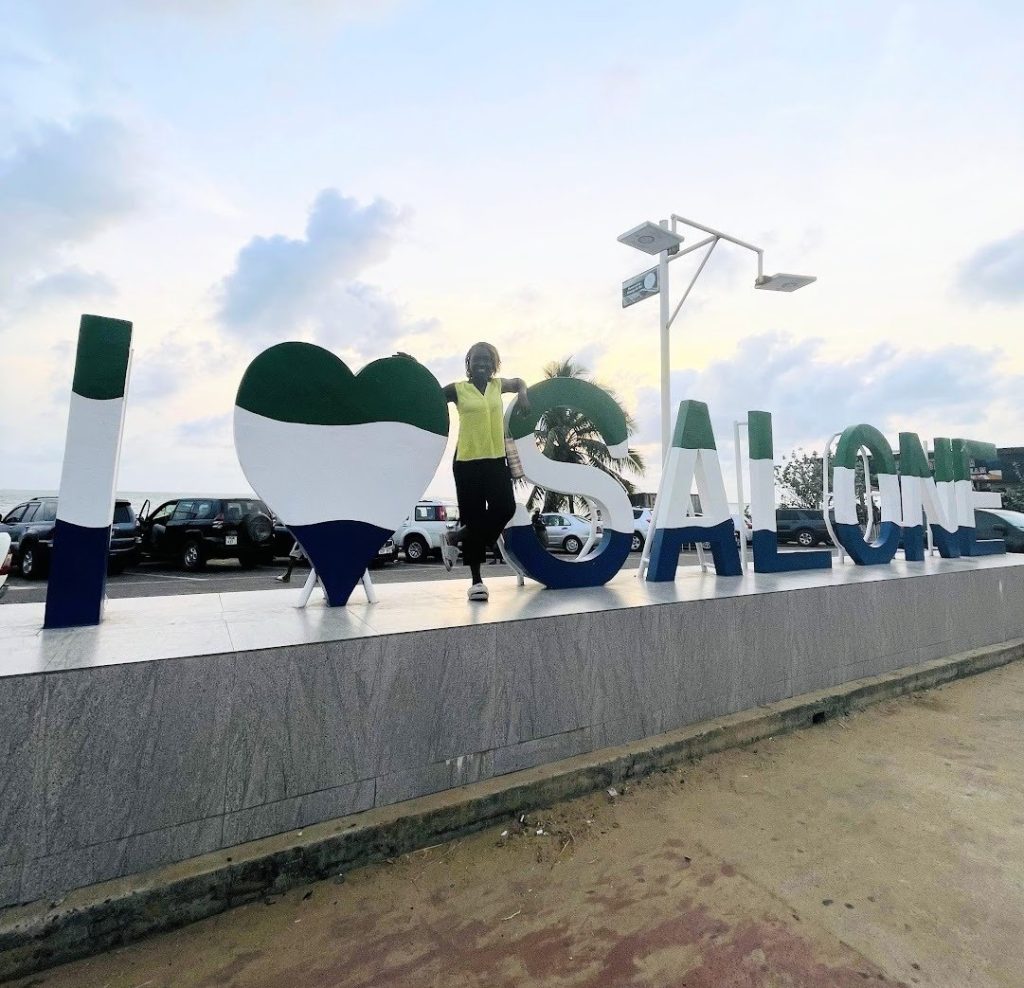 Oke poses for a photo at the ‘I Love Salone’ sign in Freetown, Sierra Leone. Image Source: Olayinka Oke
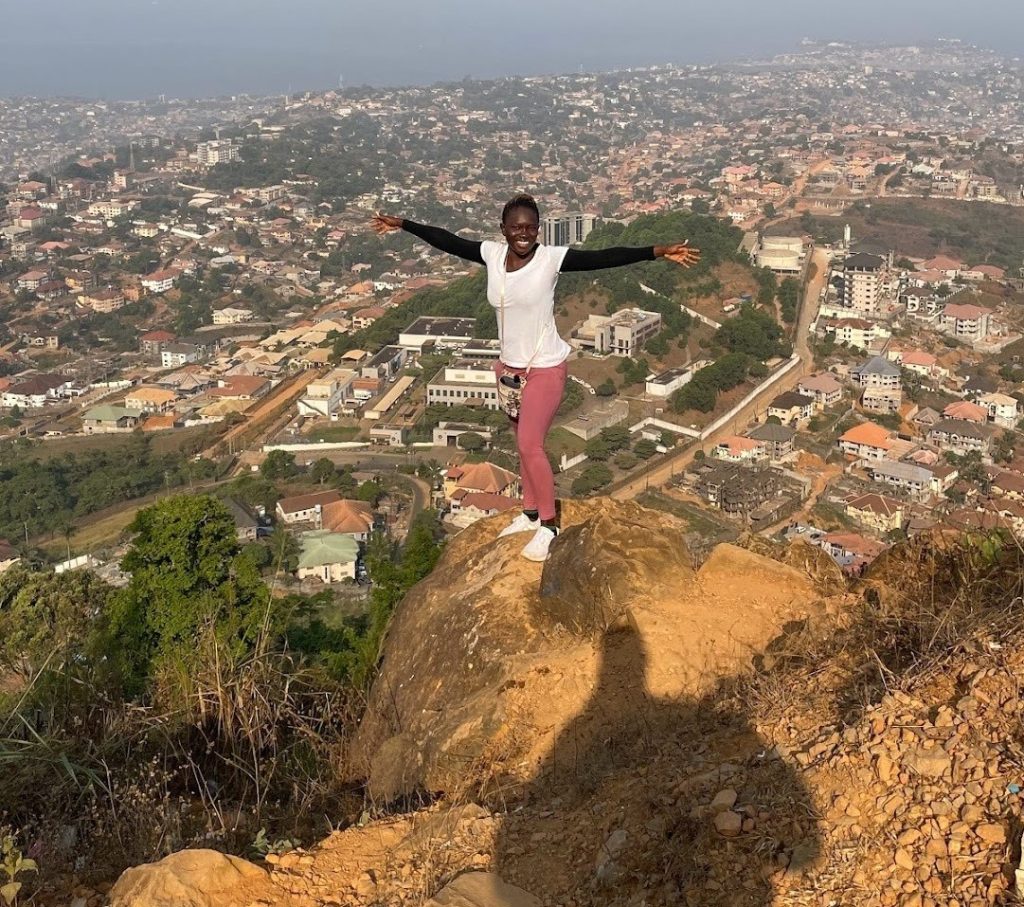 Oke hiking the Leicester Peak, a mountain in Sierra Leone’s Western area. Image Source: Olayinka Oke
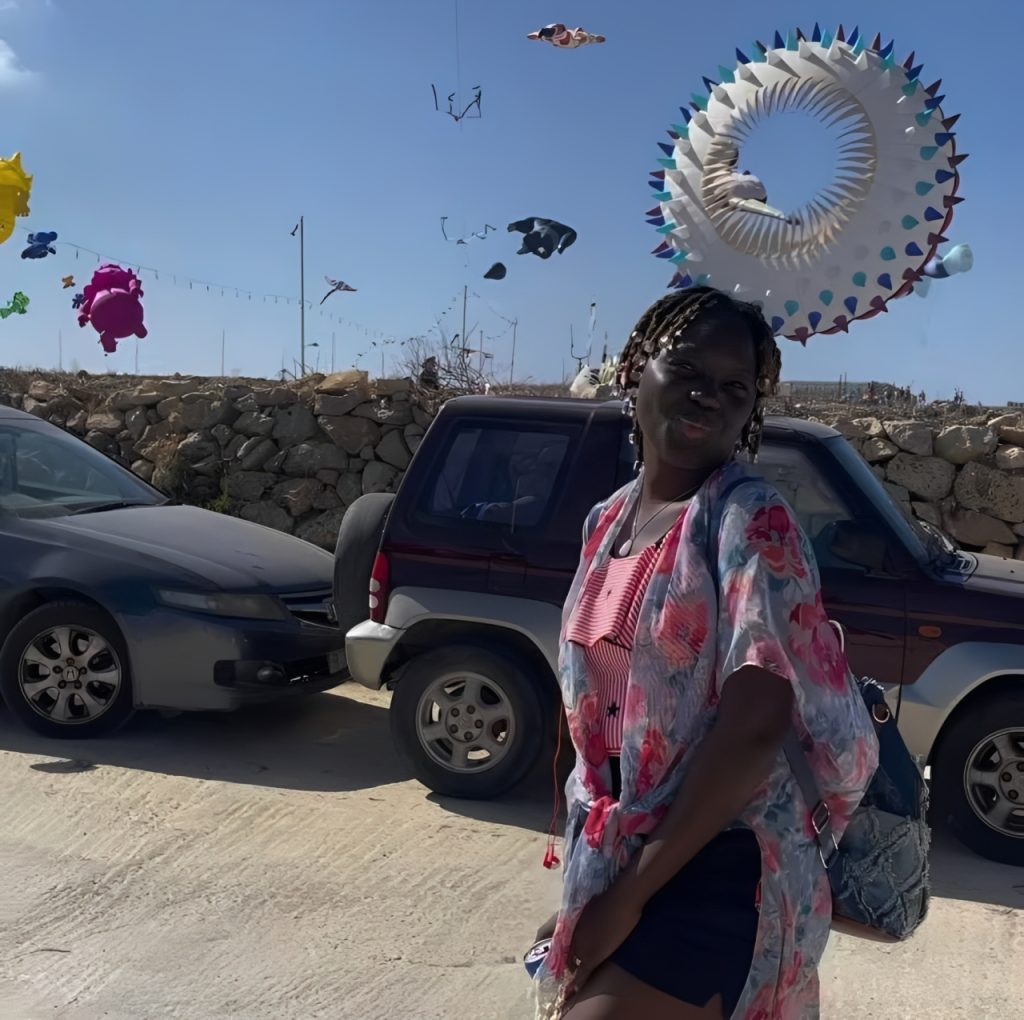 Oke at the Gozo International Kite and Wind Festival, held in October 2023. Image Source: Olayinka Oke
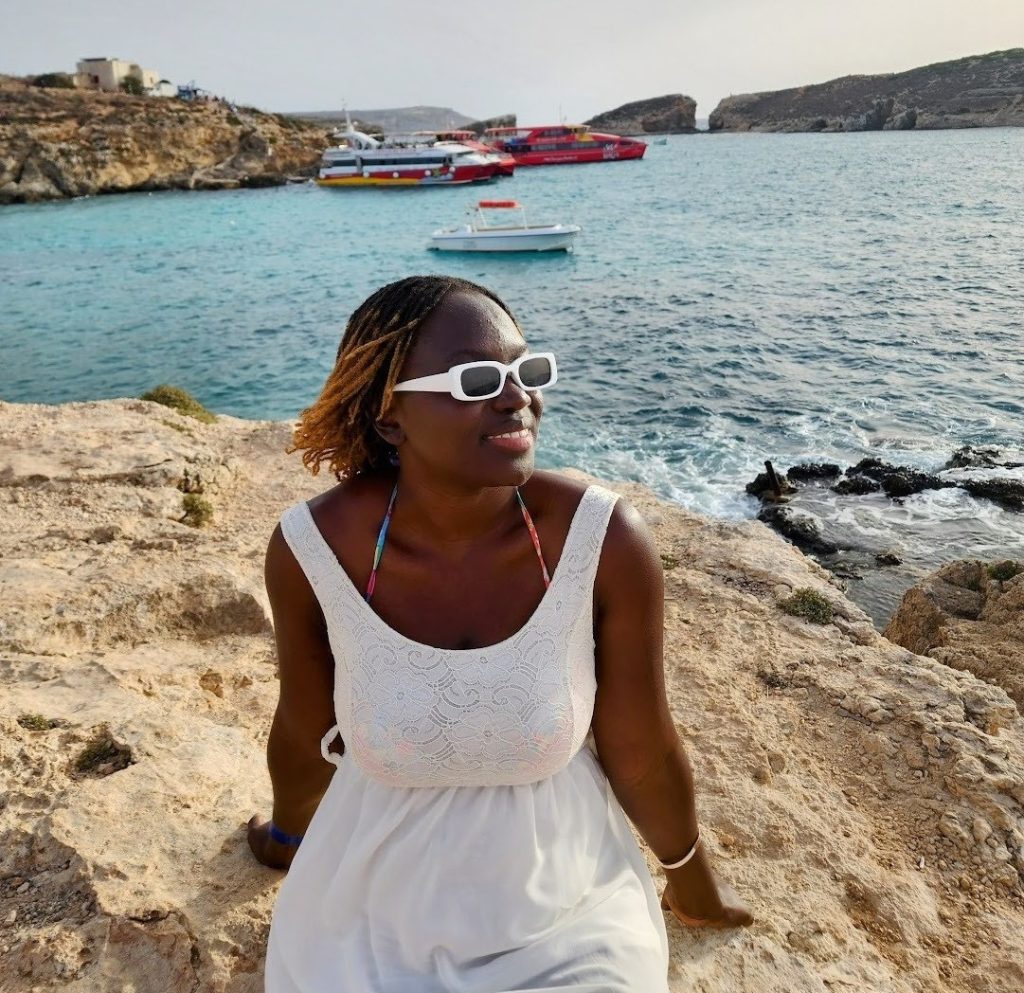 Oke in Malta, 2023. Image Source: Olayinka Oke
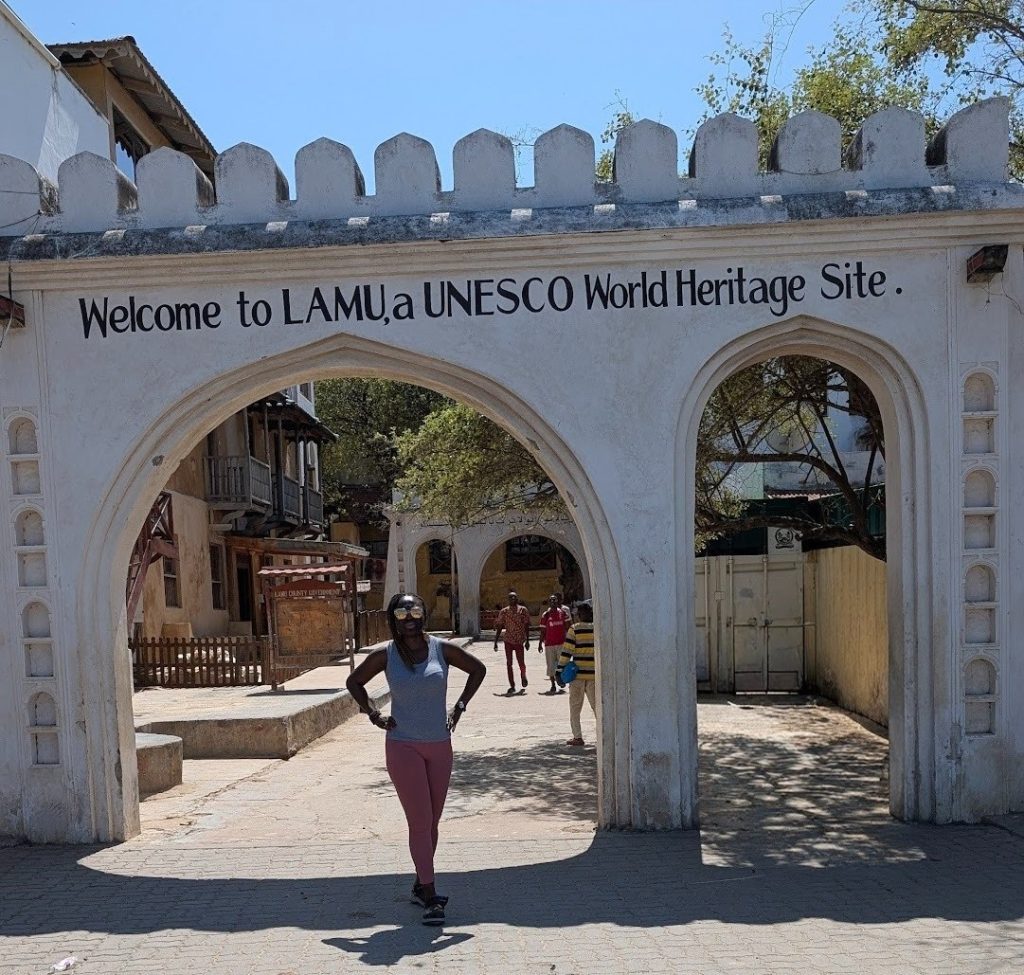 Oke in Lamu, Kenya, March 2026. Image Source: Olayinka Oke








