

Must Read
PRESIDENT MARCOS. President Marcos in Malacañang.PRESIDENT MARCOS. President Marcos in Malacañang.
[Between Islands] Why the Marcos state visit to Japan is anchored in everyday trust
For feedback or concerns regarding this content, please contact us at crypto.news@mexc.com
TOKYO, Japan – Every morning at 6:30, as the trains begin shaking Tokyo awake, I slip out of our apartment and walk to a nearby park. What started as a way to clear my head from the mountain of legal work waiting on my desk slowly turned into something else. Around the large man-made pond, a small group of elderly neighbors gathers each morning for Radio Taiso, Japan’s radio exercise routine. They move in sync to the old piano melody playing softly from a mobile phone speaker—some with perfect form, others wobbling slightly, all of them smiling through it.
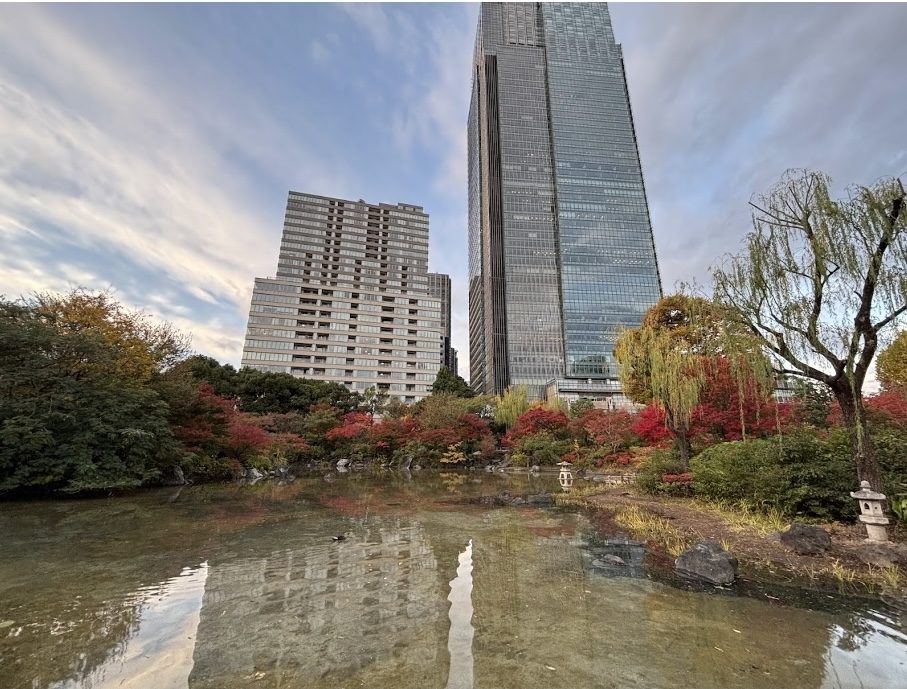 TAISO. The nearby park where elderly Japanese, including Japan’s former defense minister Gen Nakatani, do their Radio Taiso. Photo by Ricky Sabornay
The group first came together during the pandemic, when people were desperate for routine and human contact. Most are in their seventies now. Our oldest member, Jun, turns 92 this year. Many spent their younger years as teachers, civil servants, company directors, or business owners—the kind of people who quietly helped build postwar Japan. And despite their age, they show up every morning with a steadiness that is difficult not to admire.
At first, I stayed at the back, copying their movements and trying not to stand out. But over time, the routine itself dissolved the distance between us. Nods became smiles. Smiles became short conversations between stretches. I was invited to come forward and join the group. Before long, I no longer felt like an outsider observing the group and felt like part of it.
At some point, one of the members of our little Radio Taiso gang casually mentioned that another regular in the group was Nakatani Gen. I nodded politely but did not think much of it at the time. In the park, he was simply another older gentleman doing stretches beside me.
Then one evening, while watching the news, I nearly dropped my dinner when I saw Nakatani-san on television in a dark suit, officially announced once again as Japan’s then-defense minister. The same man who did side bends with us every morning was now discussing national security and regional defense strategy before the entire country.
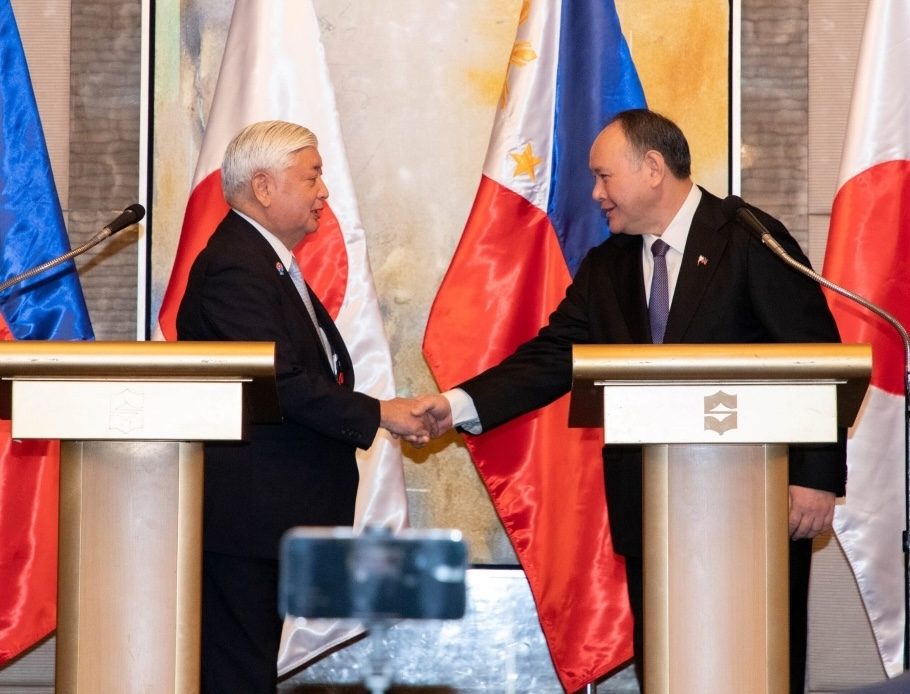 Then-Japanese Defense Minister Nakatani Gen shake hands with Philippine Secretary of Defense Gilberto Teodoro Jr., during Nakatani’s visit to the Philippines on February 24, 2025. File photo
The moment felt strangely grounding. In the park, he was simply another neighbor stretching beside the pond. On screen, he represented the machinery of state power.
The experience reminded me that relationships between countries are not built only in conference rooms, defense ministries, or official ceremonies. More often, they begin quietly—in parks, classrooms, offices, and neighborhoods, in the small everyday moments where people slowly stop feeling like strangers to each other.
That realization has stayed with me as Tokyo prepares for one of the biggest diplomatic moments of the year: the state visit of Ferdinand Marcos Jr. and First Lady Liza Araneta-Marcos to mark 70 years of normalized Philippines–Japan relations. The headlines are understandably focused on geopolitics: maritime security; defense cooperation; regional tensions; advanced radar systems and missile technology.
But when I think about the relationship between Japan and the Philippines, I keep returning to that small Radio Taiso circle beside the pond.
Because in many ways, the same quiet spirit I see there every morning is what now underpins the broader partnership between our countries. The trust did not appear overnight. It was built slowly across decades of migration, exchange, work, friendship, and shared routines. The political agreements making headlines today are, in many ways, simply the formal expression of relationships ordinary people have already been building for years.
Earlier, President Marcos noted that both countries are facing similar pressures in regional waters. The shift toward closer defense cooperation is already visible. Japan participated fully in the recent Balikatan exercises, and earlier this year both governments signed major defense agreements aimed at deepening security ties. Officials say the state visit will further strengthen cooperation on maritime security and defense equipment.
But the relationship is no longer defined by defense alone.
New bilateral pillars
Energy security is emerging as another major pillar. The meetings in Tokyo come shortly after the ASEAN Summit in Cebu, where Manila expressed interest in Japan’s proposed $10 billion POWERR Asia initiative, a regional plan designed to help Asian economies strengthen energy reserves while transitioning toward renewable energy.
And beyond government policy, the economic relationship is becoming increasingly visible in everyday life. Earlier this year, the Philippine-led hotel platform Hotel101 topped off its 482-room development in Niseko, one of Japan’s most competitive resort destinations. When it opens later this year, it will stand as a visible symbol of how the Filipino presence in Japan is changing. We are no longer defined solely by labor migration. Increasingly, Filipinos are exporting ideas, brands, capital, and business models into Japan itself. (READ: [BizSights] Why we should be proud of Injap Sia and Tony Tan Caktiong’s latest milestone)
The contrast becomes clearer when viewed against history.
In the years immediately after the war, the Philippines was among Asia’s wealthiest countries. Manila even offered scholarships to Japanese students, inviting them to study at the University of the Philippines. Then the tides shifted. Japan surged ahead economically while the Philippines struggled through decades of instability. For many years, Filipinos in Japan were seen through a narrow lens—temporary workers, entertainers, or migrants expected to blend quietly into the background. (READ: Philippines is in the heart: A Japanese Filipinologist writes a book on the import of Magellan’s voyage)
That image is slowly changing.
Japan finds itself caught in a delicate balancing act. While an aging demographic forces the country to compete globally for talent and create more space for long-term foreign residents, the government has simultaneously tightened immigration rules, balancing economic necessity against deep-seated caution. Yet, even within this tension, Filipinos in Tokyo are rewriting the narrative—moving past old barriers to become increasingly visible across every sector of society.
As a lawyer working between both countries, I see this shift daily. The legal needs of the Filipino community have become far more sophisticated than they once were. We are no longer dealing only with employment contracts and remittances. Now the conversations involve corporate governance, intellectual property, real estate, and cross-border investments. Filipinos are founding companies in Osaka, leading technology teams in Shibuya, teaching at universities, and advising multinational Japanese firms in Tokyo.
Still, social acceptance does not evolve as quickly as economics or law. Stereotypes rarely disappear overnight. The success of a few professionals does not automatically erase decades of assumptions. In many ways, legal and economic equality are moving faster than cultural acceptance. The relationship between our countries has matured enormously but building a society where everyone genuinely feels they belong remains a work in progress.
Growing together
What gives me hope is the next generation.
The bilingual children of the diaspora and young Filipino professionals in Japan move comfortably between cultures in a way earlier generations often could not. They do not see themselves as caught between two identities and see fluency in both worlds as an advantage. Recently, a young Filipino tech guy from Yokohama told me over coffee, “We’re not here just to adapt to Japan anymore. We’re here to help build its future.”
So when President Marcos meets the Filipino community during this state visit, he will not simply be speaking to homesick workers longing to return home. He will be speaking to a community that has become increasingly rooted, confident, and invested in Japan’s future.
And perhaps that is the real story of this moment between Japan and the Philippines—not only the state visit, the defense agreements, or the headlines that will fade within days, but the quieter work happening underneath all of it. The patient work of communities learning how to live beside one another.
I think again about my mornings in the park, moving in imperfect rhythm beside neighbors who once lived through a very different Japan. The sun rises slowly over the trees. The music crackles softly through the speakerphone. For a few minutes, we are simply people sharing the same space.
If our two countries can continue building their future in that same spirit: steady, humble, and side by side, then perhaps the next generation will inherit not a relationship defined by history’s wounds, but one shaped by the quieter certainty that communities, over time, can choose to grow together. – Rappler.com
Ricky Aringo Sabornay is a cross-border lawyer who moves between the Philippines and Japan, helping people navigate not just different legal systems, but different ways of thinking. He runs Sabornay Law, a member firm of Uryu & Itoga, where his work sits at the intersection of two legal systems and two cultures that don’t always speak the same language. Connect with him on LinkedIn.
Market Opportunity
Intuition Price(TRUST)
$0.07224
$0.07224$0.07224
USD
Intuition (TRUST) Live Price Chart


Disclaimer: The articles reposted on this site are sourced from public platforms and are provided for informational purposes only. They do not necessarily reflect the views of MEXC. All rights remain with the original authors. If you believe any content infringes on third-party rights, please contact crypto.news@mexc.com for removal. MEXC makes no guarantees regarding the accuracy, completeness, or timeliness of the content and is not responsible for any actions taken based on the information provided. The content does not constitute financial, legal, or other professional advice, nor should it be considered a recommendation or endorsement by MEXC.
You May Also Like

Iran’s army chief warns of ‘total destruction’ for ground invasion
The post Iran’s army chief warns of ‘total destruction’ for ground invasion appeared on BitcoinEthereumNews.com. Iran’s army chief warned of “total destruction”
Share
BitcoinEthereumNews2026/04/02 18:15

Altura Onchain Gold Arbitrage Targets 20% Return
The post Altura Onchain Gold Arbitrage Targets 20% Return appeared on BitcoinEthereumNews.com. Altura’s Onchain Gold Arbitrage for Retail Investors Altura, a decentralized
Share
BitcoinEthereumNews2026/04/02 23:18

From Telegram to Terminal: Banana Gun’s Pro Platform Hits Ethereum as User Base Surpasses One Million
Multichain trading platform crosses $15 billion in lifetime volume, launches Banana Pro web terminal on Ethereum, and unifies all chains under a single Telegram
Share
Techbullion2026/04/02 18:05



