

Treasury Yields Spike to Multi-Year Peaks — What It Means for Your Portfolio
Key Takeaways
- Bond yields across all maturities have climbed significantly following the outbreak of conflict between the U.S. and Iran in late February, pushing the 30-year Treasury to levels not seen in nearly two decades.
- Consumer price inflation accelerated to 3.8% in April, with projections suggesting a potential rise to 6.7% in the second quarter driven by elevated energy costs.
- Market participants now anticipate the Federal Reserve will raise interest rates by early 2027, a dramatic shift from prior expectations of multiple rate reductions in the current year.
- Historical data reveals that the S&P 500 has consistently declined following the initiation of Fed tightening cycles since 1999, averaging a 7% pullback.
- Equity markets rallied on diplomatic optimism between Washington and Tehran, yet Treasury markets remained skeptical with critical economic reports looming.
The military confrontation between the United States and Iran has triggered an inflationary surge, driven Treasury yields to heights not witnessed in years, and fundamentally altered Federal Reserve policy forecasts from easing to potential tightening. Here’s a breakdown of these developments and their implications for market participants.
Bond Yields Surge Across All Durations
Following the February outbreak of hostilities, crude oil markets experienced dramatic price spikes after Iran’s blockade of the Strait of Hormuz disrupted a critical artery for international petroleum transport. This action elevated energy expenses, creating ripple effects throughout the broader economic landscape.
The Consumer Price Index registered 3.8% inflation for April, marking the most elevated measurement since 2023. Analysts at the Federal Reserve Bank of Cleveland forecast the figure could climb as high as 6.7% before the end of the second quarter.
With inflation expectations mounting, Treasury bonds faced substantial selling pressure. Bond price declines translate directly to yield increases. The 2-year Treasury note has gained 75 basis points since hostilities commenced. Meanwhile, the 30-year bond now offers returns exceeding 5%, representing the highest compensation in nineteen years.
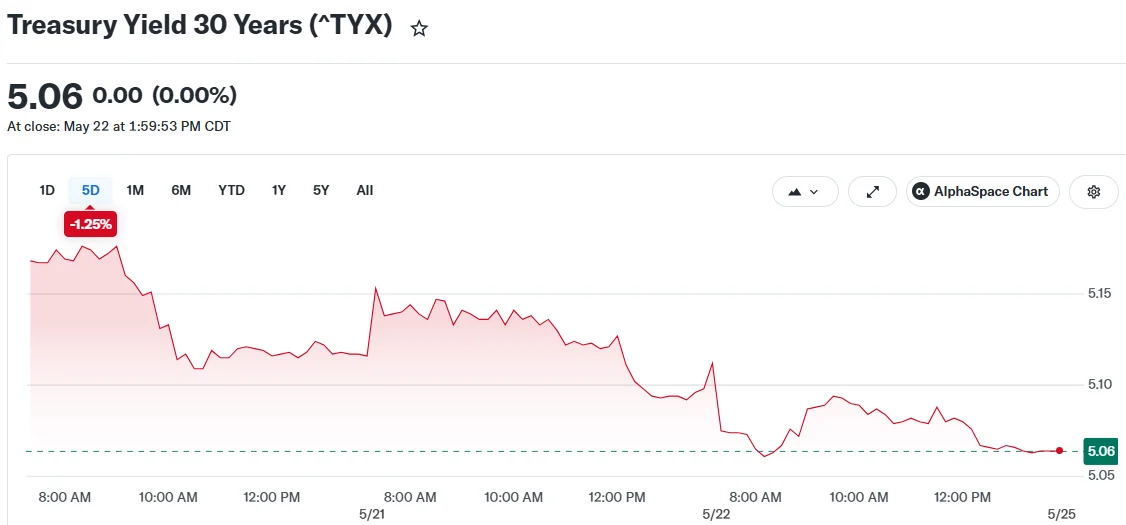 Treasury Yield 30 Years (^TYX)
Initial 2025 forecasts predicted at least two Fed rate reductions. Current market pricing from CME Group’s FedWatch indicator suggests the central bank’s next adjustment will be upward, potentially arriving as soon as January 2027.
Historical Patterns Show Equity Weakness During Tightening Cycles
Elevated interest rates increase capital costs for corporations, potentially constraining investment activity and compressing profit margins. These conditions also dampen consumer demand for financed purchases, particularly major acquisitions.
Since 1999, the Federal Reserve has initiated four distinct rate-increase campaigns. Following each commencement, the S&P 500 registered losses during the subsequent three-month period without exception. Average declines measured 7%, with individual drops spanning from 1% to 17%.
Year-to-date performance shows the S&P 500 advancing approximately 9%, buoyed by robust corporate earnings reports. However, market observers caution that current valuations may not fully reflect underlying vulnerabilities.
Diplomatic Progress Boosts Equities While Fixed Income Remains Cautious
Tuesday’s trading session witnessed significant equity gains following news reports indicating substantial advancement in peace negotiations between Washington and Tehran. The Nasdaq composite advanced approximately 300 points, propelled by technology sector strength including Nvidia, Intel, and Micron Technology. Opening projections suggested the S&P 500 would rise nearly 50 points.
Energy markets displayed considerable volatility. Brent crude futures surged over 3% to reach $96.43 per barrel during morning trading, despite remaining roughly 8.6% beneath Friday’s closing level.
Secretary of State Marco Rubio characterized the diplomatic discussions as entering final phases while noting that resolution might require “a few more days.” Simultaneously, Iran’s Revolutionary Guard announced it had engaged a U.S. aircraft allegedly violating Iranian airspace, injecting uncertainty into ceasefire timelines.
Treasury markets exhibited less enthusiasm. The 10-year note maintained yields above 4.5%. The 30-year bond remained anchored above the 5% threshold. Market participants are maintaining defensive positioning ahead of Thursday’s release of April inflation statistics and first-quarter GDP calculations.
This week’s economic calendar features new residential sales data and weekly unemployment claims alongside Thursday’s closely-watched inflation and growth figures. These releases will likely establish market sentiment heading into the weekend.
The post Treasury Yields Spike to Multi-Year Peaks — What It Means for Your Portfolio appeared first on Blockonomi.


You May Also Like

Stablecoin Market Cap Surpasses FX Reserves of Most Nations

Australian Dollar Upside Capped as Positioning Stretches, Warns MUFG

ETH Enters High-Stakes Decision Zone



