Nigeria’s internet penetration crossed the 50% mark in November 2025, reaching 50.58%, according to the latest industry data from the Nigerian Communications CommissionNigeria’s internet penetration crossed the 50% mark in November 2025, reaching 50.58%, according to the latest industry data from the Nigerian Communications Commission

Nigeria’s internet penetration crosses 50%, still short of national target

Nigeria’s internet penetration crossed the 50% mark in November 2025, reaching 50.58%, according to the latest industry data from the Nigerian Communications Commission (NCC), signifying steady progress but well short of the 70% broadband penetration target set under the National Broadband Plan (NBP) 2020–2025, which expires in December.

The increase was up from 45.61% in January, representing a gain of nearly five percentage points over the year.

The NBP established ambitious benchmarks to drive digital inclusion, includingextending effective broadband coverage to at least 90% of the population, achieving minimum download speeds of 25 Mbps in urban areas and 10 Mbps in rural regions, and ensuring data affordability at no more than ₦390 per 1GB, equivalent to 2% of median income or 1% of the minimum wage. Despite entering the plan’s final weeks, Nigeria’s current broadband landscape falls short.

By November 2025, broadband subscriptions in the country stood at around 109 million. The growth trajectory has been uneven: the nation missed its interim 2023 target of 50% penetration and ended 2024 at 44.43%, highlighting persistent structural and regulatory challenges. Among these, fibre optic vandalism, which accounts for 30 to 43 cuts daily, high Right-of-Way (RoW) fees, and declining subscription numbers, losing over a million users in early 2025, have hampered expansion and reliability.

Nevertheless, several factors have driven broadband growth in recent years. Mobile network expansion, particularly 3G and 4G deployments, has underpinned most of the increase, with limited 5G rollouts supplementing capacity in urban areas. Falling smartphone prices and competitive data bundles have enabled more Nigerians to access mobile internet, while policy frameworks like the NBP and investments in the National Communications Backbone have incentivised private sector participation, especially in underserved and rural areas.

The shortfall against targets largely reflects a mix of high deployment costs, infrastructure gaps, and coverage limitations. Operators face expensive RoW charges, multiple levies, and high energy costs to maintain base stations, particularly in rural regions. Fibre and last-mile networks have not expanded quickly enough beyond major cities, leaving significant populations unconnected and some network infrastructure underutilised.

Despite these obstacles, the Nigerian Communications Commission (NCC) maintains that the 70% penetration target remains the primary objective. With sustained investment in mobile broadband, growing smartphone adoption, and ongoing expansion of 4G/LTE infrastructure, the sector is poised to continue incremental growth, even if the original 2025 benchmark remains elusive.

Disclaimer: The articles reposted on this site are sourced from public platforms and are provided for informational purposes only. They do not necessarily reflect the views of MEXC. All rights remain with the original authors. If you believe any content infringes on third-party rights, please contact service@support.mexc.com for removal. MEXC makes no guarantees regarding the accuracy, completeness, or timeliness of the content and is not responsible for any actions taken based on the information provided. The content does not constitute financial, legal, or other professional advice, nor should it be considered a recommendation or endorsement by MEXC.

You May Also Like

Building a DEXScreener Clone: A Step-by-Step Guide

Building a DEXScreener Clone: A Step-by-Step Guide

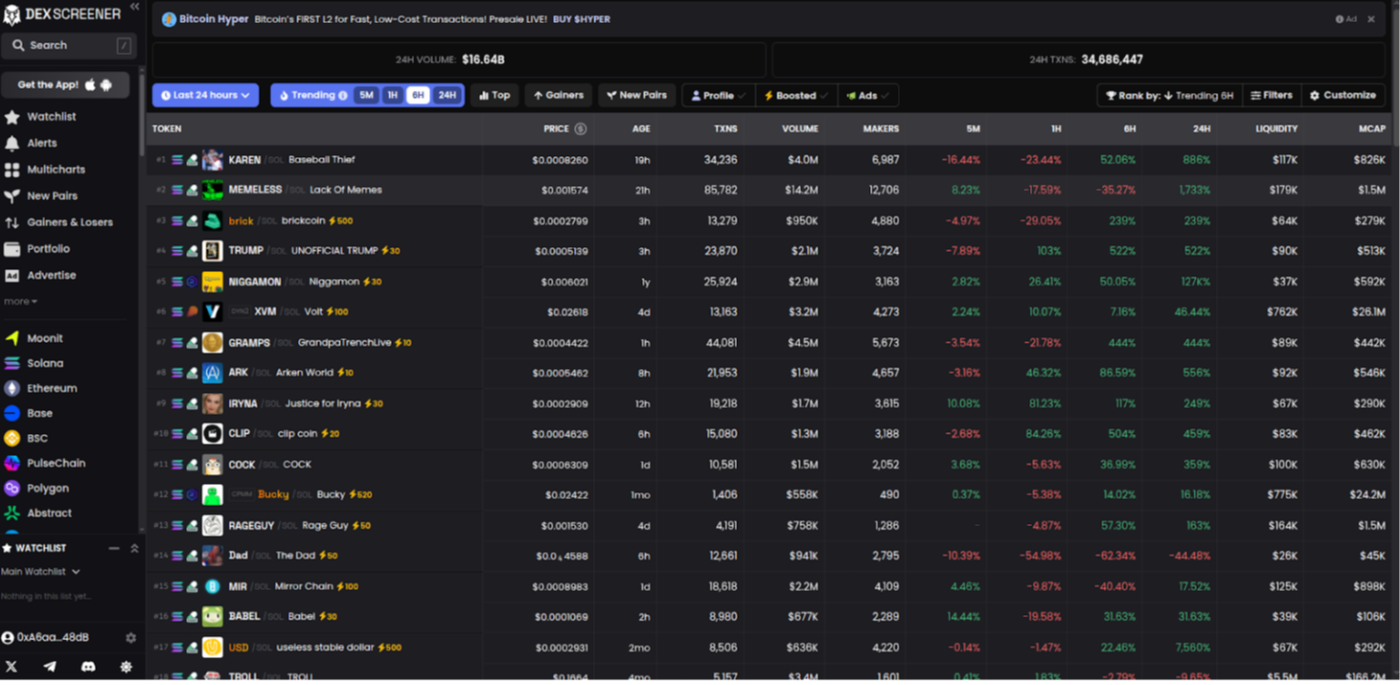
DEX Screener is used by crypto traders who need access to on-chain data like trading volumes, liquidity, and token prices. This information allows them to analyze trends, monitor new listings, and make informed investment decisions. In this tutorial, I will build a DEXScreener clone from scratch, covering everything from the initial design to a functional app. We will use Streamlit, a Python framework for building full-stack apps.
Share
Hackernoon2025/09/18 15:05
China Blocks Nvidia’s RTX Pro 6000D as Local Chips Rise

China Blocks Nvidia’s RTX Pro 6000D as Local Chips Rise

The post China Blocks Nvidia’s RTX Pro 6000D as Local Chips Rise appeared on BitcoinEthereumNews.com. China Blocks Nvidia’s RTX Pro 6000D as Local Chips Rise China’s internet regulator has ordered the country’s biggest technology firms, including Alibaba and ByteDance, to stop purchasing Nvidia’s RTX Pro 6000D GPUs. According to the Financial Times, the move shuts down the last major channel for mass supplies of American chips to the Chinese market. Why Beijing Halted Nvidia Purchases Chinese companies had planned to buy tens of thousands of RTX Pro 6000D accelerators and had already begun testing them in servers. But regulators intervened, halting the purchases and signaling stricter controls than earlier measures placed on Nvidia’s H20 chip. Image: Nvidia An audit compared Huawei and Cambricon processors, along with chips developed by Alibaba and Baidu, against Nvidia’s export-approved products. Regulators concluded that Chinese chips had reached performance levels comparable to the restricted U.S. models. This assessment pushed authorities to advise firms to rely more heavily on domestic processors, further tightening Nvidia’s already limited position in China. China’s Drive Toward Tech Independence The decision highlights Beijing’s focus on import substitution — developing self-sufficient chip production to reduce reliance on U.S. supplies. “The signal is now clear: all attention is focused on building a domestic ecosystem,” said a representative of a leading Chinese tech company. Nvidia had unveiled the RTX Pro 6000D in July 2025 during CEO Jensen Huang’s visit to Beijing, in an attempt to keep a foothold in China after Washington restricted exports of its most advanced chips. But momentum is shifting. Industry sources told the Financial Times that Chinese manufacturers plan to triple AI chip production next year to meet growing demand. They believe “domestic supply will now be sufficient without Nvidia.” What It Means for the Future With Huawei, Cambricon, Alibaba, and Baidu stepping up, China is positioning itself for long-term technological independence. Nvidia, meanwhile, faces…
Share
BitcoinEthereumNews2025/09/18 01:37
Ripple-Backed Evernorth Faces $220M Loss on XRP Holdings Amid Market Slump

Ripple-Backed Evernorth Faces $220M Loss on XRP Holdings Amid Market Slump

TLDR Evernorth invested $947M in XRP, now valued at $724M, a loss of over $220M. XRP’s price dropped 16% in the last 30 days, leading to Evernorth’s paper losses
Share
Coincentral2025/12/26 03:56