

Angola’s Agricultural Sector Gains Greater Weight in National Economy

Angola’s agricultural sector is steadily increasing its importance within the national economy, reflecting the government’s broader strategy to diversify growth away from hydrocarbons and strengthen domestic production.
According to information published by ANGOP, agriculture is gaining greater weight in Angola’s gross domestic product (GDP) as investment in farming, agro-processing and rural development continues to expand across the country.
The development highlights a structural shift underway in one of Africa’s largest oil-producing economies. For decades, Angola remained heavily dependent on crude exports, leaving public revenues vulnerable to fluctuations in international oil prices. Authorities are now accelerating efforts to position agriculture as a strategic pillar for long-term economic stability, employment creation and food security.
The country possesses significant agricultural potential, supported by vast arable land, favourable climatic conditions and abundant water resources. Recent production gains in crops such as maize, cassava, bananas, beans and sugar cane have contributed to the sector’s growing economic relevance.
Government programmes aimed at supporting mechanisation, irrigation, financing and rural infrastructure are also helping stimulate agricultural activity. Policymakers view the sector as essential for reducing Angola’s dependence on imported food products while simultaneously boosting local value chains and agro-industrial capacity.
Integrated Operations
The expansion of domestic agribusiness groups has further reinforced the sector’s momentum. Integrated operations involving cultivation, food processing and distribution are increasingly helping improve supply chains and strengthen internal production networks.
Economists note that agriculture’s growing contribution to GDP is particularly important at a time when African economies are seeking more resilient and diversified growth models. Beyond food production, the sector generates strong multiplier effects across transportation, logistics, manufacturing and rural employment.
The shift also aligns with wider continental priorities focused on food sovereignty, industrialisation and reducing exposure to global commodity shocks. Across Africa, governments are placing greater emphasis on agriculture as a driver of inclusive economic development and export diversification.
Despite the progress, structural challenges remain. Limited logistics infrastructure, high transportation costs, restricted rural credit access and insufficient storage capacity continue to constrain productivity and competitiveness in several regions of the country.
Nevertheless, Angola’s agricultural trajectory is increasingly being viewed as one of the country’s most promising long-term economic opportunities. As investment continues flowing into the sector, agriculture is expected to play an increasingly central role in supporting Angola’s non-oil economy and broader economic transformation.
The post Angola’s Agricultural Sector Gains Greater Weight in National Economy appeared first on FurtherAfrica.


You May Also Like

TrapDoor Malware Targets Crypto and AI Developers in Supply Chain Attack
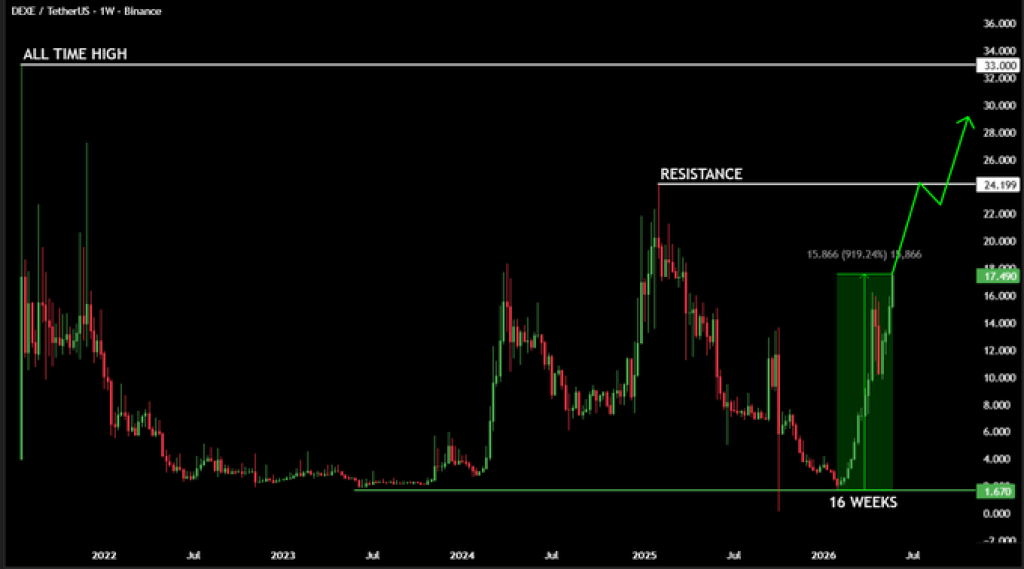
Here’s Why DeXe (DEXE) Price is Pumping Today

Alabama Enacts Dual Legislative Breakthrough in Blockchain and Judicial Reform



