

Strait of Hormuz: President Trump’s Strategic Pivot to Reopen Critical Shipping Lane
BitcoinWorld
Strait of Hormuz: President Trump’s Strategic Pivot to Reopen Critical Shipping Lane
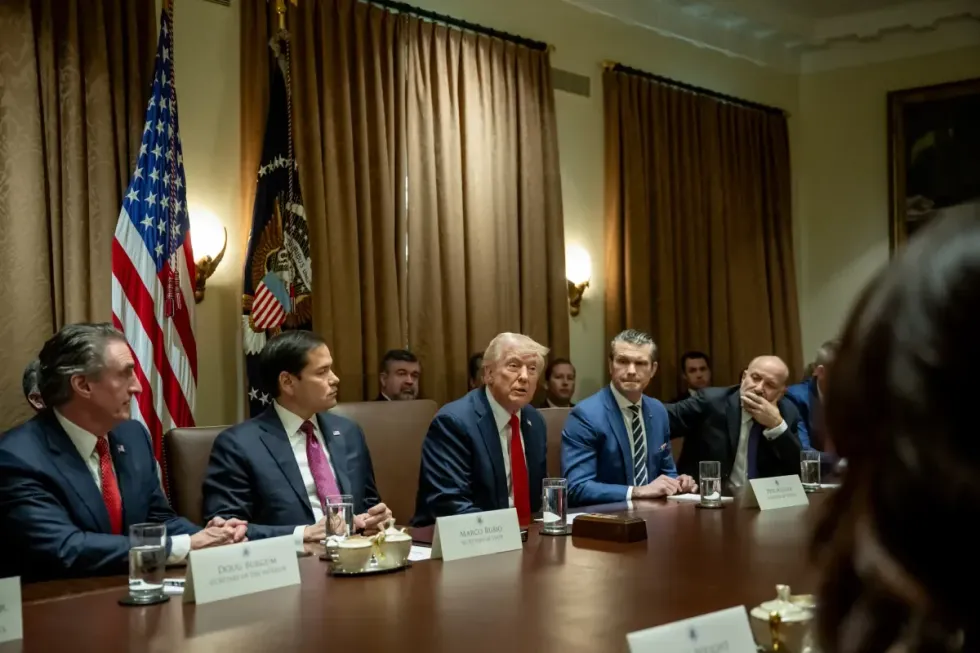
WASHINGTON, D.C., March 2025 – President Donald Trump declared this week that the United States possesses the capability to “easily reopen” the Strait of Hormuz, a statement that immediately reverberated through global energy markets and diplomatic circles. This strategic waterway, often described as the world’s most important oil chokepoint, handles approximately 21 million barrels of crude oil daily, representing 21% of global petroleum consumption. Consequently, any discussion about altering its operational status carries profound implications for international trade, energy security, and Middle Eastern stability.
Strategic Importance of the Strait of Hormuz
The Strait of Hormuz connects the Persian Gulf with the Gulf of Oman and the Arabian Sea. This narrow passage, just 21 nautical miles wide at its narrowest point, serves as the maritime gateway for nearly all oil exports from Saudi Arabia, Iran, the United Arab Emirates, Kuwait, and Iraq. Furthermore, Qatar’s liquefied natural gas exports, accounting for about 20% of global LNG trade, transit exclusively through this corridor. The waterway’s geography creates natural bottlenecks where shipping lanes narrow to just two miles in each direction, separated by a two-mile buffer zone.
Maritime experts consistently highlight several critical factors about this strategic passage:
- Volume: 21 million barrels of oil daily pass through the strait
- Global Share: Represents 21% of global petroleum liquids consumption
- Economic Impact: Disruption could increase oil prices by 50-100%
- Alternative Routes: Limited pipeline capacity bypasses the strait
Historical Context of Strait Disruptions
The Strait of Hormuz has experienced multiple periods of tension and disruption throughout modern history. During the 1980s Tanker War phase of the Iran-Iraq conflict, both nations targeted commercial shipping, resulting in significant damage to vessels and increased insurance premiums. More recently, Iran has periodically threatened to close the strait in response to international sanctions, conducting military exercises that simulate blockade scenarios. In 2019, tensions escalated dramatically when Iran seized a British-flagged tanker and the United States accused Iran of attacking commercial vessels.
International law provides specific frameworks for straits used for international navigation. The United Nations Convention on the Law of the Sea (UNCLOS) establishes transit passage rights through such strategic waterways. However, coastal states maintain certain rights to regulate navigation for safety and environmental protection. This legal framework creates complex jurisdictional questions when major powers discuss intervention in strait operations.
Military Capabilities and Regional Dynamics
The United States Fifth Fleet, headquartered in Bahrain, maintains a substantial naval presence in the region specifically designed to ensure freedom of navigation through the Strait of Hormuz. This force typically includes:
| Asset Type | Typical Deployment | Primary Function |
|---|---|---|
| Aircraft Carriers | 1-2 Carrier Strike Groups | Air superiority and power projection |
| Destroyers/Cruisers | 6-10 vessels | Air defense and escort operations |
| Coastal Patrol Ships | Multiple squadrons | Mine detection and clearance |
| Maritime Patrol Aircraft | Regular patrols | Surveillance and reconnaissance |
Iran, meanwhile, has developed asymmetric naval capabilities specifically tailored to the confined waters of the strait. These include hundreds of small, fast attack craft, sophisticated anti-ship missile systems positioned along the coastline, and extensive mine-laying capabilities. Additionally, Iran’s Islamic Revolutionary Guard Corps Navy maintains control over the northern portion of the strait, creating a layered defense system that would complicate any military operation to forcibly reopen the waterway.
Economic Implications of Strait Operations
Global energy markets reacted immediately to President Trump’s statement, with Brent crude futures experiencing volatility before stabilizing. Analysts from the International Energy Agency note that even temporary closure of the Strait of Hormuz would trigger immediate supply shortages despite strategic petroleum reserves. The global economy would face several cascading effects:
- Oil prices would likely spike to $150-200 per barrel range
- Shipping insurance premiums would increase exponentially
- Alternative shipping routes would add 10-14 days to transit times
- Asian economies particularly vulnerable due to import dependence
Energy economists emphasize that while Saudi Arabia and the UAE have invested in pipelines that bypass the strait, these alternatives have limited capacity. The East-West Pipeline across Saudi Arabia can transport approximately 5 million barrels daily to the Red Sea, while the UAE’s Habshan-Fujairah pipeline carries about 1.5 million barrels daily. However, these alternatives would still leave a significant portion of Gulf oil exports stranded.
Diplomatic Considerations and Regional Reactions
Regional powers offered mixed reactions to the American statement. Saudi Arabia and the United Arab Emirates, whose economies depend heavily on unimpeded oil exports, expressed cautious support for ensuring strait security. Conversely, Iran’s Foreign Ministry immediately condemned what it characterized as “threatening rhetoric” and reaffirmed Iran’s sovereign rights over its territorial waters. Meanwhile, European allies expressed concern about potential escalation, emphasizing diplomatic solutions to regional tensions.
The statement comes amid ongoing negotiations regarding Iran’s nuclear program and regional activities. Some analysts interpret the timing as strategic positioning ahead of potential diplomatic developments. Others view it as reaffirmation of longstanding U.S. policy regarding freedom of navigation in international waters. Regional experts note that the actual implementation of any operation to reopen the strait would require complex coordination with regional partners and consideration of multiple legal frameworks.
Environmental and Safety Concerns
The narrow confines of the Strait of Hormuz present significant environmental risks. The high volume of tanker traffic, combined with the challenging navigation conditions, creates potential for accidents that could cause major oil spills. Such incidents would have devastating effects on the Persian Gulf’s delicate marine ecosystem and the desalination plants that provide drinking water to millions of Gulf residents. Consequently, any military operations in the area would need to incorporate extensive environmental protection measures and contingency planning.
Conclusion
President Trump’s statement regarding the Strait of Hormuz reopening highlights the enduring strategic importance of this critical maritime passage. The strait remains the world’s most significant oil transit chokepoint, with profound implications for global energy security and economic stability. While the United States maintains substantial naval capabilities in the region, any operation to ensure strait accessibility would involve complex military, diplomatic, and economic considerations. The international community continues to monitor developments closely, recognizing that stability in the Strait of Hormuz remains essential to the global economy. Ultimately, the statement reinforces the fundamental reality that this narrow waterway represents one of the most strategically significant locations in contemporary geopolitics.
FAQs
Q1: What percentage of global oil shipments pass through the Strait of Hormuz?
Approximately 21% of global petroleum liquids consumption, or about 21 million barrels per day, transit the Strait of Hormuz. This represents nearly all oil exports from Persian Gulf producers except for limited pipeline alternatives.
Q2: What military forces does the United States maintain near the Strait of Hormuz?
The U.S. Fifth Fleet, based in Bahrain, typically includes carrier strike groups, destroyers, cruisers, coastal patrol ships, and maritime patrol aircraft. These forces conduct regular freedom of navigation operations and stand ready to ensure the strait remains open to international shipping.
Q3: What alternatives exist if the Strait of Hormuz closes?
Saudi Arabia’s East-West Pipeline (5 million barrels/day capacity) and the UAE’s Habshan-Fujairah pipeline (1.5 million barrels/day) provide partial alternatives. However, these would be insufficient to handle all Gulf exports, and shipping would need to reroute around Africa, adding significant time and cost.
Q4: How has Iran responded to statements about Strait of Hormuz security?
Iran consistently asserts its sovereign rights over its territorial waters and has developed asymmetric naval capabilities specifically for the strait’s confined geography. Iranian officials typically condemn external statements about strait security as interference in regional affairs.
Q5: What would be the economic impact of a Strait of Hormuz closure?
Analysts project oil prices could spike to $150-200 per barrel, with shipping insurance premiums increasing dramatically. The global economy would likely experience recessionary pressures, particularly affecting Asian economies that depend heavily on Gulf oil imports.
This post Strait of Hormuz: President Trump’s Strategic Pivot to Reopen Critical Shipping Lane first appeared on BitcoinWorld.


You May Also Like
Trump biographer predicts next 3 Cabinet members on the chopping block

Kalshi hires ex-Democratic strategist amid legal troubles




