The post HBAR price shows capitulation warning as downtrend persists appeared on BitcoinEthereumNews.com. HBAR price trades under heavy selling pressure as bearishThe post HBAR price shows capitulation warning as downtrend persists appeared on BitcoinEthereumNews.com. HBAR price trades under heavy selling pressure as bearish

HBAR price shows capitulation warning as downtrend persists

HBAR price trades under heavy selling pressure as bearish structure holds firm, placing the $0.11 support at risk and increasing the probability of a capitulation-style move lower.

Summary

  • Selling pressure continues to outweigh demand across higher time frames
  • Key volume-based support levels have failed to hold
  • Price reaction at $0.11 will likely define near-term direction

Hedera (HBAR) price continues to trade under sustained downside pressure, with technical signals pointing to an elevated risk of capitulation if key support levels fail to hold. Price action remains firmly bearish, characterized by consecutive lower highs and lower lows since the loss of the Value Area High.

With HBAR now hovering near a critical high-time-frame support at $0.11, the market appears increasingly vulnerable to an accelerated downside move should this level give way.

HBAR price key technical points

  • Bearish market structure remains intact, with lower highs and lower lows.
  • Price confirms bearish retest of the Point of Control, signaling acceptance below value.
  • $0.11 high-time-frame support is under threat, with limited support below.
HBARUSDT (1D) Chart, Source: TradingView

HBAR’s recent price action reflects a market firmly controlled by sellers. The downtrend accelerated after price lost the Value Area High, a level that previously marked fair value within the broader trading range. Since that breakdown, each attempt to recover has been met with selling pressure, resulting in a series of lower highs, a classic sign of bearish continuation.

One of the most telling developments has been the bearish retest of the Point of Control (POC). After initially breaking below this key volume level, HBAR attempted to reclaim it but failed, confirming the POC as resistance. In market auction theory, this behavior signals acceptance at lower prices rather than a temporary deviation. Once an acceptance below value is established, markets often seek out lower liquidity pools.

The loss of the Value Area Low (VAL) further reinforces the bearish thesis. Trading below the VAL indicates that price has exited the prior area of balance and entered a lower-value regime. This transition often leads to directional movement as the market searches for new demand.

In HBAR’s case, that search is now occurring near the $0.11 high-time-frame support, a level that has historically acted as a defensive zone for buyers.

From a market-structure perspective, the risk is amplified by the lack of significant support below $0.11. If this level fails on a closing basis, HBAR could quickly accelerate toward the previous swing low, where resting liquidity is likely concentrated. Such moves often unfold rapidly, as stop-losses are triggered and late sellers are forced to exit positions, the defining characteristics of capitulation.

Momentum indicators also support caution. Sustained bearish momentum typically persists until a clear structural shift occurs, such as a break in the sequence of lower highs or a reclaim of key resistance levels. Neither of these conditions has been met. Instead, each relief rally has been corrective and short-lived, reinforcing seller dominance.

Capitulation does not imply the end of a downtrend but rather an acceleration phase in which price moves aggressively to clear remaining liquidity. While capitulation can eventually set the stage for longer-term stabilization, it is often painful in the short term and occurs only after critical supports are decisively broken.

What to expect in the coming price action

As long as HBAR trades below the Point of Control and fails to reclaim value, downside risk remains elevated. A clean break below $0.11 could trigger a capitulation-style move toward the prior swing low. Any bullish invalidation would require strong buying pressure, a reclaim of the Value Area Low, and a break in the bearish market structure, signals that have yet to emerge.

Source: https://crypto.news/hbar-price-capitulation-warning-downtrend-persists/
Market Opportunity
Hedera Logo
Hedera Price(HBAR)
$0.11096
$0.11096$0.11096
+0.89%
USD
Hedera (HBAR) Live Price Chart
Disclaimer: The articles reposted on this site are sourced from public platforms and are provided for informational purposes only. They do not necessarily reflect the views of MEXC. All rights remain with the original authors. If you believe any content infringes on third-party rights, please contact service@support.mexc.com for removal. MEXC makes no guarantees regarding the accuracy, completeness, or timeliness of the content and is not responsible for any actions taken based on the information provided. The content does not constitute financial, legal, or other professional advice, nor should it be considered a recommendation or endorsement by MEXC.

You May Also Like

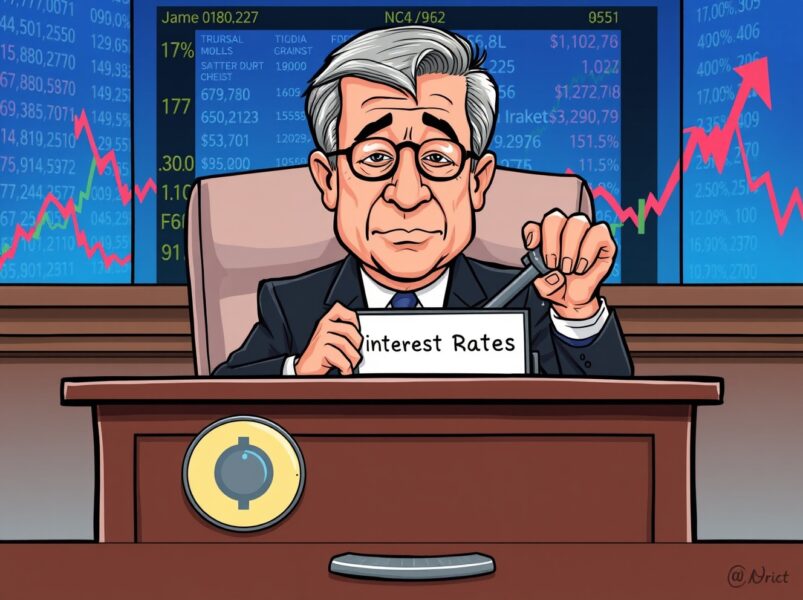
Crucial Fed Rate Cut: Powell’s Bold Risk Management Move Explained

Crucial Fed Rate Cut: Powell’s Bold Risk Management Move Explained

BitcoinWorld Crucial Fed Rate Cut: Powell’s Bold Risk Management Move Explained In a significant development for global financial markets, Federal Reserve Chair Jerome Powell recently described the latest Fed rate cut as a critical risk management measure. This statement immediately captured the attention of investors, economists, and especially those in the dynamic cryptocurrency space. Understanding Powell’s rationale and the potential implications of this move is essential for navigating today’s complex economic landscape. What Exactly is a Fed Rate Cut and Why Does it Matter? A Fed rate cut refers to the Federal Reserve lowering the target range for the federal funds rate. This is the interest rate at which commercial banks borrow and lend their excess reserves to each other overnight. When the Fed lowers this rate, it typically makes borrowing cheaper across the entire economy. This decision impacts everything from mortgage rates to business loans. The Fed uses interest rates as a primary tool to influence economic activity, aiming to achieve maximum employment and stable prices. A lower rate often stimulates spending and investment, but it can also signal concerns about economic slowdown. Key reasons for a rate cut often include: Slowing economic growth or recession fears. Low inflation or deflationary pressures. Global economic instability impacting domestic markets. A desire to provide more liquidity to the financial system. Powell’s emphasis on ‘risk management’ suggests a proactive approach. The Fed is not just reacting to current data but also anticipating potential future challenges. They are essentially trying to prevent a worse economic outcome by adjusting policy now. How Does a Fed Rate Cut Influence the Broader Economy? When the Federal Reserve implements a Fed rate cut, it sends ripples throughout the financial world. For traditional markets, lower interest rates generally mean: Boost for Stocks: Companies can borrow more cheaply, potentially increasing profits and stock valuations. Investors might also move money from lower-yielding bonds into equities. Cheaper Borrowing: Consumers and businesses enjoy lower rates on loans, from mortgages to credit cards, encouraging spending and investment. Weaker Dollar: Lower rates can make a country’s currency less attractive to foreign investors, potentially leading to a weaker dollar. Bond Market Shifts: Existing bonds with higher yields become more attractive, while newly issued bonds will have lower yields. This shift in monetary policy aims to inject confidence and liquidity into the system, countering potential economic headwinds. However, there’s always a delicate balance to strike, as too much stimulus can lead to inflationary pressures down the line. What Does This Fed Rate Cut Mean for Cryptocurrency Investors? The impact of a Fed rate cut on the cryptocurrency market is often a topic of intense discussion. While crypto assets operate independently of central banks, they are not immune to broader macroeconomic forces. Here’s how a rate cut can play out: Increased Risk Appetite: With traditional savings and bond yields potentially lower, investors might seek higher returns in riskier assets, including cryptocurrencies like Bitcoin and Ethereum. Inflation Hedge Narrative: Some view cryptocurrencies, particularly Bitcoin, as a hedge against inflation and traditional currency debasement. If a rate cut leads to concerns about inflation, this narrative could gain traction. Liquidity Influx: A more accommodative monetary policy can increase overall liquidity in the financial system, some of which may flow into digital assets. Dollar Weakness: A weaker dollar, a potential consequence of rate cuts, can sometimes make dollar-denominated assets like crypto more appealing to international investors. However, it’s crucial to remember that the crypto market also has its unique drivers, including technological developments, regulatory news, and market sentiment. While a Fed rate cut can provide a tailwind, it’s not the sole determinant of crypto performance. Navigating the New Landscape: Actionable Insights for Crypto Investors Given the Federal Reserve’s stance on risk management through a Fed rate cut, what steps can crypto investors consider? Stay Informed: Keep a close watch on further Fed announcements and economic data. Understanding the broader macroeconomic picture is vital. Diversify Your Portfolio: While a rate cut might favor risk assets, a balanced portfolio that includes a mix of traditional and digital assets can help mitigate volatility. Long-Term Perspective: Focus on the fundamental value and long-term potential of your chosen cryptocurrencies rather than short-term fluctuations driven by macro news. Assess Risk Tolerance: Re-evaluate your personal risk tolerance in light of potential market shifts. Lower rates can encourage speculation, but prudence remains key. Powell’s description of the Fed rate cut as a risk management measure highlights the central bank’s commitment to maintaining economic stability. For cryptocurrency enthusiasts, this move underscores the increasing interconnectedness of traditional finance and the digital asset world. While a rate cut can create opportunities, a thoughtful and informed approach is always the best strategy. Frequently Asked Questions (FAQs) What exactly is a Fed rate cut? A Fed rate cut is when the Federal Reserve lowers its target for the federal funds rate, which is the benchmark interest rate banks charge each other for overnight lending. This action makes borrowing cheaper across the economy, aiming to stimulate economic activity. Why did Powell emphasize “risk management” for this Fed rate cut? Jerome Powell emphasized “risk management” to indicate that the Fed was proactively addressing potential economic slowdowns or other future challenges. It suggests a preventative measure to safeguard against adverse economic conditions rather than merely reacting to existing problems. How does a Fed rate cut typically affect the crypto market? A Fed rate cut can make traditional investments less attractive due to lower yields, potentially driving investors towards higher-risk, higher-reward assets like cryptocurrencies. It can also increase overall market liquidity and strengthen the narrative of crypto as an inflation hedge. Should crypto investors change their strategy after a rate cut? While a rate cut can influence market dynamics, crypto investors should primarily focus on their long-term strategy, fundamental research, and risk tolerance. It’s wise to stay informed about macroeconomic trends but avoid making impulsive decisions based solely on a single policy change. What are the potential downsides of a Fed rate cut? Potential downsides include increased inflationary pressures if the economy overheats, a weaker national currency, and the possibility of creating asset bubbles as investors chase higher returns in riskier markets. It can also signal underlying concerns about economic health. Did you find this article insightful? Share your thoughts and help others understand the implications of the Fed’s latest move! Follow us on social media for more real-time updates and expert analysis. To learn more about the latest crypto market trends, explore our article on key developments shaping Bitcoin’s price action. This post Crucial Fed Rate Cut: Powell’s Bold Risk Management Move Explained first appeared on BitcoinWorld.
Share
Coinstats2025/09/18 16:40
Motive Files Registration Statement for Proposed Initial Public Offering

Motive Files Registration Statement for Proposed Initial Public Offering

SAN FRANCISCO–(BUSINESS WIRE)–Motive Technologies, Inc., the AI platform for physical operations, today announced that it has filed a registration statement on
Share
AI Journal2025/12/24 07:00
New Gold Protocol's NGP token was exploited and attacked, resulting in a loss of approximately $2 million.

New Gold Protocol's NGP token was exploited and attacked, resulting in a loss of approximately $2 million.

PANews reported on September 18th that according to Paidun monitoring, New Gold Protocol's NGP token was exploited in an attack, resulting in a loss of approximately $2 million. The NGP token plummeted 88% in an hour, and the attacker deposited the stolen funds (443.8 ETH) into TornadoCash.
Share
PANews2025/09/18 11:10