For years, the unofficial motto of Ghana’s cryptocurrency market was “innovate until you get caught.” That era had… The post Ghana achieved crypto clarity beforeFor years, the unofficial motto of Ghana’s cryptocurrency market was “innovate until you get caught.” That era had… The post Ghana achieved crypto clarity before

Ghana achieved crypto clarity before Nigeria, but its “compliance war” has just begun

For years, the unofficial motto of Ghana’s cryptocurrency market was “innovate until you get caught.” That era had just ended with the recent passing of the Virtual Asset Service Providers (VASP) Bill, 2025.

Speaking at the Bank of Ghana’s annual thanksgiving service during the weekend, the Governor, Dr Johnson Pandit Asiama, confirmed that the new legislation effectively ends years of regulatory ambiguity.

“This year also saw the passage of the Virtual Asset Service Providers Bill, a significant step in preparing the regulatory framework for digital asset activities. The Bill establishes the basis for licensing and supervising participants in this space, ensuring that emerging activity is brought within clear, accountable, and well-governed boundaries,” Governor Johnson said.

Building on his earlier promise at the IMF’s annual meetings in Washington sometime in October, where he announced that a draft bill is being advanced to parliament and that the country aims to have a legal and regulatory regime for crypto in place by December 2025, the governor effectively promised that the days of looking over one’s shoulder are over, stating flatly that “no one is going to be arrested for engaging in crypto.”

But as the initial euphoria settles in Accra this morning, a colder reality is dawning on the nation’s crypto and fintech founders: safety has a price tag. 

Ghana just beat Nigeria to crypto clarity, but the “compliance war” has only just begunGovernor Johnson Asiama of the Bank of Ghana

While the new law effectively ends the regulatory “Wild West,” it replaces the fear of police raids with the crushing weight of compliance costs, potentially handing the market keys to well-capitalised foreign giants while local startups struggle to foot the bill.

The passing of the bill is not just a legal milestone, but a market-clearing event. By classifying crypto exchanges and wallet providers as accountable institutions, Ghana has signalled that the free ride is over.

The reality for Ghanaian crypto is no longer about if you can operate, but how much it will cost you to do so.

Ghana’s VASP Bill: From illegal to unaffordable?

The most immediate impact of the VASP Bill will be a consolidation of the market. During the grey market era, barriers to entry were low; anyone with a Telegram group and a P2P connection could run a quasi-exchange.

The new bill changes the math entirely.

Under the new framework, Virtual Asset Service Providers (VASPs) must now obtain formal licenses from the Bank of Ghana. This sounds bureaucratic, but it is effectively a financial moat. The requirements, spanning rigorous Know Your Customer (KYC) protocols, Anti-Money Laundering (AML) reporting, and capital solvency mandates, favour incumbents.

Global giants like Binance or Coinbase, which have entire departments dedicated to compliance, can absorb these costs as a line item.

For a lean Ghanaian startup facilitating $50,000 in monthly volume, however, the cost of hiring a compliance officer and paying licensing fees could be existential. 

Ghana just beat Nigeria to crypto clarity, but the “compliance war” has only just begun

We are likely to see a wave of acqui-hires, where smaller local players are bought out not for their technology, but for their user bases, as they fail to meet the new capital adequacy standards.

The irony of regulation is that while it legitimises the industry, it often kills the very grassroots innovation that built it.

The regional power play: Accra vs. Lagos

The geopolitical implications of this bill are perhaps more significant than the domestic ones. For the last decade, Nigeria has been the undisputed king of African crypto volume, driving billions in flows despite a hostile relationship with its own Central Bank (CBN).

But capital hates uncertainty, and Nigeria’s regulatory approach has been anything but stable, oscillating between banking bans and reluctant engagement.

Ghana has now leapfrogged its larger neighbour by offering something Nigeria hasn’t: legislative certainty. By passing a clear VASP Bill, Accra is positioning itself as the “Delaware of West Africa,” a safe harbour where Web3 companies can incorporate without fear of sudden policy U-turns.

This could trigger a capital flight of sorts. Venture Capitalists (VCs) looking to deploy funds in West Africa may now mandate that their portfolio companies domicile in Ghana, even if their primary customer base remains in Nigeria.

We have seen this hub-and-spoke model work in other regions (like Singapore vs. Southeast Asia), and Ghana is now arguably the most attractive regulatory sandbox in the ECOWAS region.

The surveillance trade-off: The taxman cometh for crypto ‘bros’

Finally, we must address the visibility aspect of the bill. Governor Asiama noted that the bill brings activity within “clear, accountable boundaries.” In plain English, this means the government can now see the money.

Ghana just beat Nigeria to crypto clarity, but the “compliance war” has only just begun

With $3 billion in crypto transactions recorded in Ghana over the 12 months leading to June 2024, the state is aware of the revenue potential. The VASP Bill effectively turns exchanges into deputies of the Ghana Revenue Authority (GRA). While the bill itself focuses on licensing, it creates the data infrastructure for taxation.

Users who flocked to crypto to hedge against Cedi inflation or to move funds anonymously will face a rude awakening. 

The mandatory KYC requirements mean that every wallet address on a regulated exchange will be linked to a Ghana Card. The privacy premium of crypto is evaporating. The next major announcement from Accra will almost certainly not come from the Bank of Ghana, but from the tax authorities, armed with a new list of high-net-worth crypto holders provided by the very exchanges they just legalised.

Notwithstanding the possible tax obligations, the passing of the VASP Bill is undoubtedly a victory for legitimacy. It removes the risk of arbitrary arrest and integrates crypto into the formal financial system. But for the small traders and startups who built this $3 billion market in the shadows, the celebration should be cautious. 

The jungle is gone, the zoo now has fences, admission fees, and keepers watching every move. Ghana is open for crypto business, but only for those who can afford the fees.

The post Ghana achieved crypto clarity before Nigeria, but its “compliance war” has just begun first appeared on Technext.

Market Opportunity
GET Logo
GET Price(GET)
$0,002144
$0,002144$0,002144
0,00%
USD
GET (GET) Live Price Chart
Disclaimer: The articles reposted on this site are sourced from public platforms and are provided for informational purposes only. They do not necessarily reflect the views of MEXC. All rights remain with the original authors. If you believe any content infringes on third-party rights, please contact service@support.mexc.com for removal. MEXC makes no guarantees regarding the accuracy, completeness, or timeliness of the content and is not responsible for any actions taken based on the information provided. The content does not constitute financial, legal, or other professional advice, nor should it be considered a recommendation or endorsement by MEXC.

You May Also Like

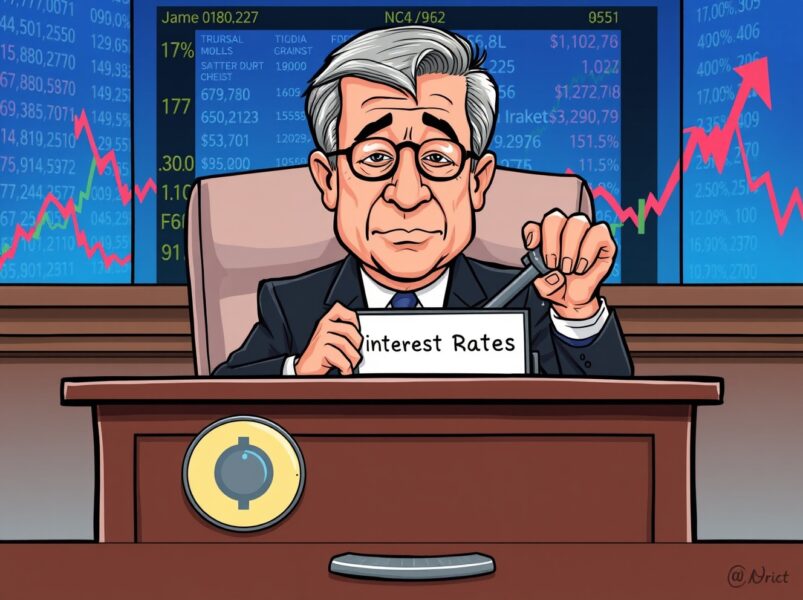
Crucial Fed Rate Cut: Powell’s Bold Risk Management Move Explained

Crucial Fed Rate Cut: Powell’s Bold Risk Management Move Explained

BitcoinWorld Crucial Fed Rate Cut: Powell’s Bold Risk Management Move Explained In a significant development for global financial markets, Federal Reserve Chair Jerome Powell recently described the latest Fed rate cut as a critical risk management measure. This statement immediately captured the attention of investors, economists, and especially those in the dynamic cryptocurrency space. Understanding Powell’s rationale and the potential implications of this move is essential for navigating today’s complex economic landscape. What Exactly is a Fed Rate Cut and Why Does it Matter? A Fed rate cut refers to the Federal Reserve lowering the target range for the federal funds rate. This is the interest rate at which commercial banks borrow and lend their excess reserves to each other overnight. When the Fed lowers this rate, it typically makes borrowing cheaper across the entire economy. This decision impacts everything from mortgage rates to business loans. The Fed uses interest rates as a primary tool to influence economic activity, aiming to achieve maximum employment and stable prices. A lower rate often stimulates spending and investment, but it can also signal concerns about economic slowdown. Key reasons for a rate cut often include: Slowing economic growth or recession fears. Low inflation or deflationary pressures. Global economic instability impacting domestic markets. A desire to provide more liquidity to the financial system. Powell’s emphasis on ‘risk management’ suggests a proactive approach. The Fed is not just reacting to current data but also anticipating potential future challenges. They are essentially trying to prevent a worse economic outcome by adjusting policy now. How Does a Fed Rate Cut Influence the Broader Economy? When the Federal Reserve implements a Fed rate cut, it sends ripples throughout the financial world. For traditional markets, lower interest rates generally mean: Boost for Stocks: Companies can borrow more cheaply, potentially increasing profits and stock valuations. Investors might also move money from lower-yielding bonds into equities. Cheaper Borrowing: Consumers and businesses enjoy lower rates on loans, from mortgages to credit cards, encouraging spending and investment. Weaker Dollar: Lower rates can make a country’s currency less attractive to foreign investors, potentially leading to a weaker dollar. Bond Market Shifts: Existing bonds with higher yields become more attractive, while newly issued bonds will have lower yields. This shift in monetary policy aims to inject confidence and liquidity into the system, countering potential economic headwinds. However, there’s always a delicate balance to strike, as too much stimulus can lead to inflationary pressures down the line. What Does This Fed Rate Cut Mean for Cryptocurrency Investors? The impact of a Fed rate cut on the cryptocurrency market is often a topic of intense discussion. While crypto assets operate independently of central banks, they are not immune to broader macroeconomic forces. Here’s how a rate cut can play out: Increased Risk Appetite: With traditional savings and bond yields potentially lower, investors might seek higher returns in riskier assets, including cryptocurrencies like Bitcoin and Ethereum. Inflation Hedge Narrative: Some view cryptocurrencies, particularly Bitcoin, as a hedge against inflation and traditional currency debasement. If a rate cut leads to concerns about inflation, this narrative could gain traction. Liquidity Influx: A more accommodative monetary policy can increase overall liquidity in the financial system, some of which may flow into digital assets. Dollar Weakness: A weaker dollar, a potential consequence of rate cuts, can sometimes make dollar-denominated assets like crypto more appealing to international investors. However, it’s crucial to remember that the crypto market also has its unique drivers, including technological developments, regulatory news, and market sentiment. While a Fed rate cut can provide a tailwind, it’s not the sole determinant of crypto performance. Navigating the New Landscape: Actionable Insights for Crypto Investors Given the Federal Reserve’s stance on risk management through a Fed rate cut, what steps can crypto investors consider? Stay Informed: Keep a close watch on further Fed announcements and economic data. Understanding the broader macroeconomic picture is vital. Diversify Your Portfolio: While a rate cut might favor risk assets, a balanced portfolio that includes a mix of traditional and digital assets can help mitigate volatility. Long-Term Perspective: Focus on the fundamental value and long-term potential of your chosen cryptocurrencies rather than short-term fluctuations driven by macro news. Assess Risk Tolerance: Re-evaluate your personal risk tolerance in light of potential market shifts. Lower rates can encourage speculation, but prudence remains key. Powell’s description of the Fed rate cut as a risk management measure highlights the central bank’s commitment to maintaining economic stability. For cryptocurrency enthusiasts, this move underscores the increasing interconnectedness of traditional finance and the digital asset world. While a rate cut can create opportunities, a thoughtful and informed approach is always the best strategy. Frequently Asked Questions (FAQs) What exactly is a Fed rate cut? A Fed rate cut is when the Federal Reserve lowers its target for the federal funds rate, which is the benchmark interest rate banks charge each other for overnight lending. This action makes borrowing cheaper across the economy, aiming to stimulate economic activity. Why did Powell emphasize “risk management” for this Fed rate cut? Jerome Powell emphasized “risk management” to indicate that the Fed was proactively addressing potential economic slowdowns or other future challenges. It suggests a preventative measure to safeguard against adverse economic conditions rather than merely reacting to existing problems. How does a Fed rate cut typically affect the crypto market? A Fed rate cut can make traditional investments less attractive due to lower yields, potentially driving investors towards higher-risk, higher-reward assets like cryptocurrencies. It can also increase overall market liquidity and strengthen the narrative of crypto as an inflation hedge. Should crypto investors change their strategy after a rate cut? While a rate cut can influence market dynamics, crypto investors should primarily focus on their long-term strategy, fundamental research, and risk tolerance. It’s wise to stay informed about macroeconomic trends but avoid making impulsive decisions based solely on a single policy change. What are the potential downsides of a Fed rate cut? Potential downsides include increased inflationary pressures if the economy overheats, a weaker national currency, and the possibility of creating asset bubbles as investors chase higher returns in riskier markets. It can also signal underlying concerns about economic health. Did you find this article insightful? Share your thoughts and help others understand the implications of the Fed’s latest move! Follow us on social media for more real-time updates and expert analysis. To learn more about the latest crypto market trends, explore our article on key developments shaping Bitcoin’s price action. This post Crucial Fed Rate Cut: Powell’s Bold Risk Management Move Explained first appeared on BitcoinWorld.
Share
Coinstats2025/09/18 16:40
Motive Files Registration Statement for Proposed Initial Public Offering

Motive Files Registration Statement for Proposed Initial Public Offering

SAN FRANCISCO–(BUSINESS WIRE)–Motive Technologies, Inc., the AI platform for physical operations, today announced that it has filed a registration statement on
Share
AI Journal2025/12/24 07:00
New Gold Protocol's NGP token was exploited and attacked, resulting in a loss of approximately $2 million.

New Gold Protocol's NGP token was exploited and attacked, resulting in a loss of approximately $2 million.

PANews reported on September 18th that according to Paidun monitoring, New Gold Protocol's NGP token was exploited in an attack, resulting in a loss of approximately $2 million. The NGP token plummeted 88% in an hour, and the attacker deposited the stolen funds (443.8 ETH) into TornadoCash.
Share
PANews2025/09/18 11:10