

XRP vs Chainlink 2026: Ghost Chain Accusation, Ripple CTO Response, and the Full Debate Explained
The post XRP vs Chainlink 2026: Ghost Chain Accusation, Ripple CTO Response, and the Full Debate Explained appeared first on Coinpedia Fintech News
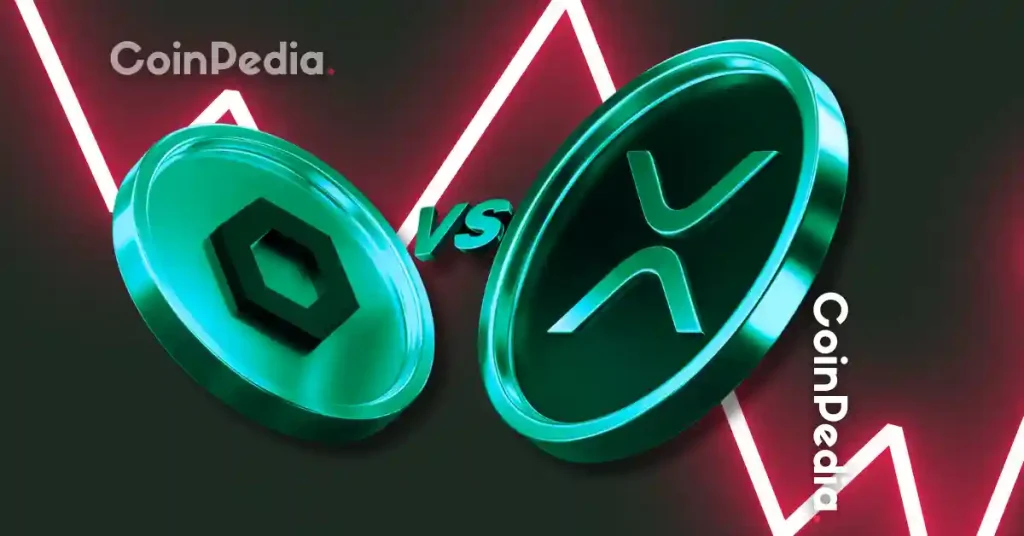
The latest XRP vs LINK clash erupted after Zach Rynes took direct aim at the XRP Ledger, calling it an “obsolete ghost chain.” His remarks didn’t stop there; he dismissed XRP’s long-standing role as a global bridge asset and pointed to weak traction in tokenized assets, noting XRPL holds less than 1% of the RWA market and under 0.01% of stablecoin supply.
This struck at the core of XRP’s narrative, instantly triggering a strong reaction from its community and turning a long-standing rivalry into a fresh social media war.
What Ignited the XRP Community
The situation intensified when Rynes linked XRP to Ripple’s corporate strategy. Following Ripple’s $750 million share buyback, he argued that XRP sales are being used to fund company growth, acquisitions, and equity buybacks, raising questions about whether token holders gain from this structure.
He framed it by saying: owning XRP may mean funding a company that prioritizes shareholders over token holders. That argument quickly spread across crypto Twitter and drew sharp reactions.
XRP Voices Push Back Strongly
Ripple CTO David Schwartz responded by calling the criticism logically flawed. He reiterated that XRP sales are part of a long-term, pre-disclosed distribution strategy and added that price drops from such sales can allow investors to accumulate at lower levels.
Attorney Bill Morgan accused Rynes of having an “unhealthy obsession with XRP,” rejecting the narrative that XRP holders are sidelined in Ripple’s growth.
XRPL validator Vet framed the backlash as frustration from the Chainlink side, while also defending XRPL’s native order book and automated market maker features.
Community voice xrpmickle delivered one of the sharpest counterattacks, claiming LINK has no economic necessity. He argued that Chainlink’s oracle network does not depend on the LINK token and called it “ETH-issued vaporware,” stating that even if LINK disappeared, the network would continue operating.
Chainlink Voices Fire Back
Rynes stood firm, calling Ripple’s defense “elite tier gaslighting” and maintaining that XRP holders do not share in the company’s upside. He argued that proceeds from XRP sales are used for acquisitions, product development, and stock buybacks that benefit Ripple’s equity holders.
Crypto analyst Fishy Catfish reinforced this stance, stating that Ripple sells XRP to fund itself while Chainlink generates revenue from its protocol and uses it for LINK buybacks, reportedly around $1.1 million weekly.
Meanwhile, on the other hand, Rynes also accused an XRP influencer of copying a Chainlink partnership graphic, originally featuring integrations with SWIFT, DTCC, Visa, and Mastercard, and replacing the branding with XRP, calling it misinformation driving retail speculation.
A Rivalry That Goes Back Years
Rynes traced the roots of this feud to 2019, tied to competition over institutional adoption. XRP supporters point to Ripple’s scale, including over $100 billion in processed transactions and growing ETF inflows nearing $1.44 billion.
On the other side, Chainlink supporters point to integrations with major financial players such as SWIFT, DTCC, and JPMorgan Chase.
Crypto voice Andres added that Ripple operates as a private company raising capital through equity, while XRP functions as a liquidity asset, separating the two roles.
Meanwhile, Juxa Meta offered a balanced take, stating that Chainlink currently shows stronger alignment between protocol activity and token value, while Ripple brings scale and established presence in payments.
Not Direct Rivals—Yet the War Continues
Despite the intensity, both projects operate in different sectors. Chainlink focuses on data, oracles, and interoperability, while XRP is built for payments and settlement. In fact, Ripple’s RLUSD stablecoin already uses Chainlink price feeds.
Even Brad Garlinghouse and Sergey Nazarov have appeared publicly on good terms, something their communities don’t reflect.
Having said that, despite the feud, the fact remains that XRP holds a significantly larger valuation at $91 billion compared to LINK’s $7 billion, marking a 13x gap between the two. Whereas LINK remains further from its peak, down 81% from its all-time high, while XRP sits relatively closer with a 59% decline.
Never Miss a Beat in the Crypto World!
Stay ahead with breaking news, expert analysis, and real-time updates on the latest trends in Bitcoin, altcoins, DeFi, NFTs, and more.
 Subscribe to News
You May Also Like

Ripple bets on Brazil as RLUSD and XRP traction builds

Mastercard Moves Into Stablecoin Infrastructure with $1.8B BVNK Deal

