

China’s Huawei reveals chip design breakthrough amid US sanctions
Huawei Technologies said on Monday, May 25, its high-end chips will have transistor density equivalent to 1.4-nanometer processes in five years, underscoring Beijing’s efforts to neutralize US sanctions that have made it hard for China to build advanced chips.
Huawei did not provide independent performance data, but the target, unveiled at a semiconductor symposium in Shanghai, is significant because 1.4 nm is expected to be close to the global frontier for advanced chipmaking around the end of the decade.
China is widely seen as unlikely to reach that level through conventional manufacturing alone because Washington has restricted its access to advanced lithography tools and other key semiconductor technologies.
Taiwan’s TSMC, the world’s largest producer of the most advanced chips, currently uses a 2-nm manufacturing technology and plans to introduce a 1.4-nm process for mass production in 2028.
‘Tau scaling law’
Huawei unveiled on Monday a new principle for improving chips, noting the industry can no longer rely mainly on making transistors smaller.
The Tau Scaling Law, as the principle is called, focuses on cutting the time it takes signals and data to move through chips and computing systems, Huawei said. If successful, it could offer the company a way to improve performance and chip density despite restrictions on China’s access to the most advanced semiconductor equipment.
The stakes of Huawei’s chip breakthroughs are high, as frontier technologies have become an increasingly important pillar of future economic development and geopolitical leverage for China.
Huawei’s Ascend chip series has become increasingly central to powering Chinese AI models, including DeepSeek’s latest flagship model V4, released last month.
Huawei said its Kirin chips scheduled to launch later this year would be the first to use a related architecture called LogicFolding, which the company said would shorten wiring inside chips and considerably improve performance.
It had designed and mass-produced 381 chips over the past six years based on the Tau Scaling Law for use in industries including smartphones and AI computing, the company said.
“What Huawei is proposing is a shift from traditional node-driven scaling to system-level efficiency scaling,” said He Hui, director of semiconductor research at Omdia.
“Rather than depending solely on smaller transistors, the company is focusing on shortening interconnect, lowering latency and improving data movement inside the chip, which is a credible way to extract more performance when leading-edge lithography is constrained.”
Domestic alternative to Nvidia
Huawei was placed on a US trade blacklist in 2019 that cut it off many US-origin technologies, including chips and software, and restricted its ability to rely on global contract chipmakers.
Huawei entered what it described as an “extreme survival mode” after the restrictions were imposed. A secret backup chip project led by He Tingbo, president of Huawei’s semiconductor business and director of its Scientist Committee, became central to its survival strategy.
The company mounted a surprise comeback in 2023 with the launch of its 5G-capable Mate 60 series smartphones, powered by a system-on-chip produced by China’s biggest contract chipmaker, Semiconductor Manufacturing International Corp (SMIC), using 7-nm technology.
SMIC shares rose 7.6% on Monday after Huawei’s announcement of its LogicFolding architecture.
Huawei’s latest chip design strategy is seen as evidence that Huawei and its Chinese partners had made progress despite US restrictions, though analysts say China remains behind global leaders in the most advanced process technology.
It also follows Huawei’s October release of a long-term development roadmap for its AI chips including the Ascend series.
Demand for Ascend chips has risen in China this year, as domestic tech firms seek alternatives to U.S. company Nvidia, whose most advanced AI processors are restricted from sale to China.
Nvidia CEO Jensen Huang said earlier this month that the company had “largely conceded” China’s AI chip market to Huawei. – Rappler.com


추천 콘텐츠
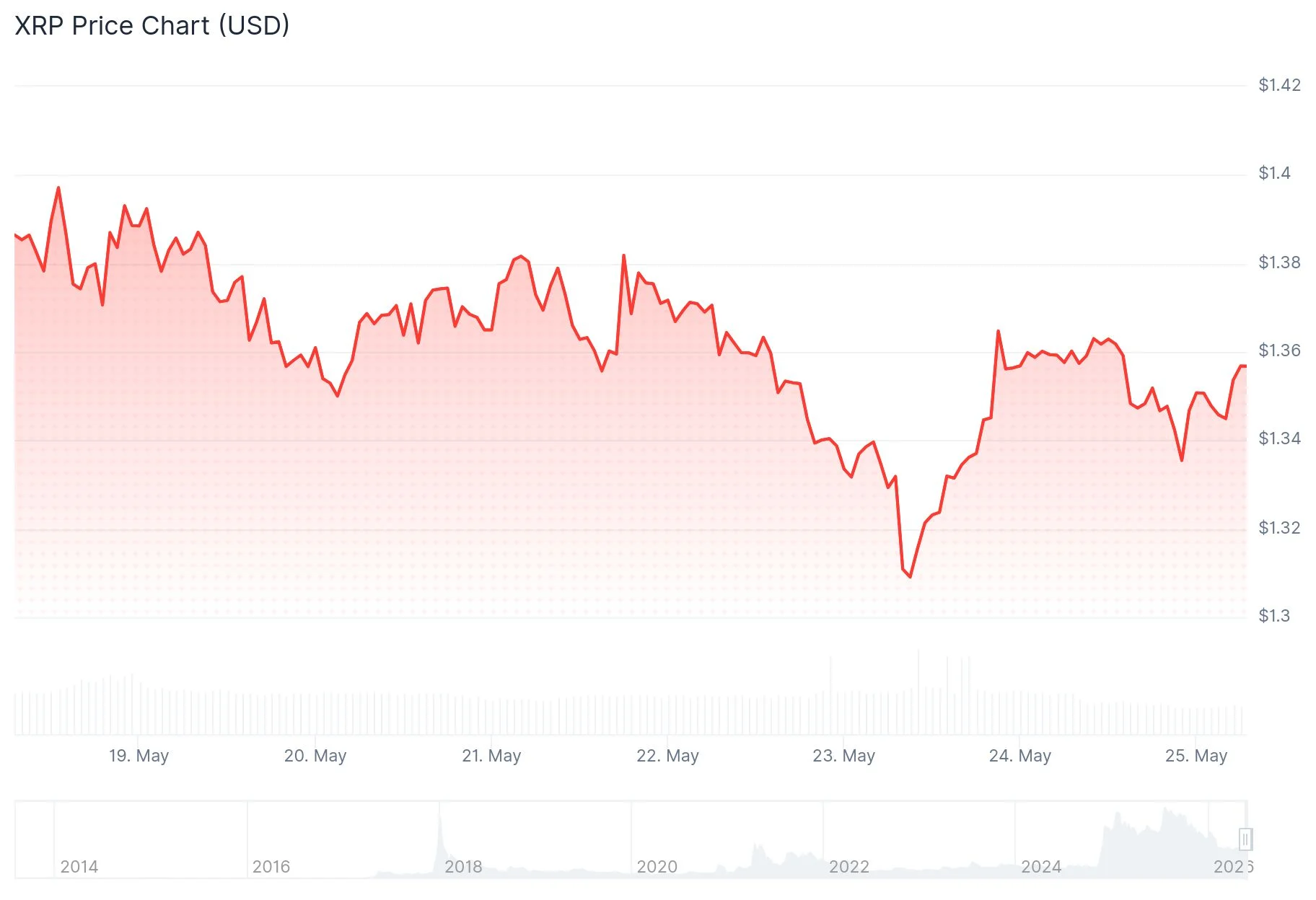
XRP (XRP) Price Analysis: Critical Support Levels as Volatility Looms

Foreign VC exits in Kenya face 15% tax under proposed law

FTX legal adviser Fenwick settles customer lawsuit for $54m


인기 뉴스
더보기
