Common Dogecoin Trading Mistakes Beginners Make and How to Avoid Them
Key Takeaways
- DOGE's meme visibility can create "false simplicity," where users feel confident before grasping basic mechanics.
- Narrative spikes (social attention surges) often coincide with sharper volatility and noisier price action.
- Many "mistakes" are actuallymisunderstandings about instruments (spot vs. derivatives, order types, funding intervals).
- Fees, spreads, and liquidity depth can matter as much as price direction when interpreting outcomes.
- Security errors (phishing, impersonation, fake apps) remain a major source of loss in meme-asset communities.
- The goal is not prediction—it's buildingclean mental modelsfor observing DOGE market behavior.
1. Why DOGE "Feels Simple" and Why That Can Mislead
2. The Mistake Map
Common Beginner Mistake | What It UsuallyMisreads | The Concept That Fixes the Model | Where to Learn More |
Entering during hype peaks | Attention ≠ stability | Narrative cycles, liquidity stress | |
Overreacting to short-term moves | Noise ≠ signal | Timeframe context, volatility ranges | Check:TradingView charts |
Confusing spot vs derivatives | "I bought DOGE" vs "I opened a contract" | Instrument definition, settlement logic | Learn:Fees: spot vs futures |
Ignoring costs | Price change is everything | Fees, spreads, funding intervals | |
Over-trusting social proof | Popularity = safety | Incentives, information quality | |
Weak security hygiene | Convenience = safe | Verification, custody basics |
3. "Hype Signals" vs "Market Reality"
What a User Sees | What It Might Actually Indicate | Why It Can Mislead in DOGE |
Trending hashtags / viral posts | Attention density rising | Attention can fade faster than market risk dissipates |
Fast green candles | Volatility expanding | Volatility is direction-agnostic—moves can reverse quickly |
"Everyone is talking about it" | Social proof effect | Loud voices don't represent the full outcome distribution |
Sudden news headlines | Narrative catalyst | Headlines often lag the move—or amplify it belatedly |
4. Instrument Confusion: "Spot" Is Not the Same as "a Contract"
- Spot market:you buy/sell the asset itself (DOGE).
- Derivatives market:you interact with a contract whose value references DOGE.
5. Costs Users Overlook: Fees, Spreads, and "Market Frictions"
- Trading fees(maker/taker models vary by venue)
- Bid–ask spread(especially during volatile markets)
- Liquidity depth(how much volume can be absorbed at each price level)
- Funding intervals(for perpetual-style derivatives)
6. Security Mistakes: The Most Preventable Category
7. A Quick "Model Self-Check"
- Do I know whether I'm observingspotbehavior orfuturesbehavior?
- Do I understand what "liquidity" means in an order book context (depth, spread)?
- Am I interpreting attention as "confidence," or simply as "increasing uncertainty"?
- Have I distinguished "I recognize DOGE" from "I understand DOGE market mechanics"?
- Do I practice basic security verification habits (URLs, app sources, account protection)?
8. Conclusion
Learn More
Popular Articles
View More
Is Dogecoin Dead? A Data-Driven Look at DOGE’s Survival Through Market Cycles
Key Takeaways Dogecoin (DOGE) is not dead; it remains a liquid, actively traded asset with a market capitalization exceeding $20 billion as of late 2025. Though trading below its all-time high of
How to Short Dogecoin: A Step-by-Step Hedging Guide
Shorting Dogecoin involves opening a position that generates a profit when the price of DOGE declines. Instead of the typical buy and hold strategy, a trader borrows or enters a contract against the
Is Dogecoin Mining Still Profitable in 2026? Hardware and ROI Analysis
Dogecoin mining in 2026 remains technically possible but economically narrow. Profitability depends almost entirely on electricity cost and hardware efficiency. Miners with access to sub-$0.05/kWh
Hot Crypto Updates
View More
DOGE Spikes 11% — But the Smart Money Moved 6 Days Earlier
Overview Dogecoin (DOGE) staged a sharp intraday rally on April 29, 2026, surging over 11% and reclaiming the psychological $0.10 level to trade in the $0.107–$0.109 range. For most market observers,
DOGE Price Today — Is the Real Breakout Still Ahead?
Overview Dogecoin (DOGE) has been building momentum in silence. Over the past seven days, DOGE's price has climbed approximately 4.63%, with a 30-day gain of 7.78% — a steady upward grind that has


Trending News
View More
Analyzing why Dogecoin’s recovery depends on DOGE flipping THIS key level!
The post Analyzing why Dogecoin’s recovery depends on DOGE flipping THIS key level! appeared on BitcoinEthereumNews.com. Established memecoins have remained relatively
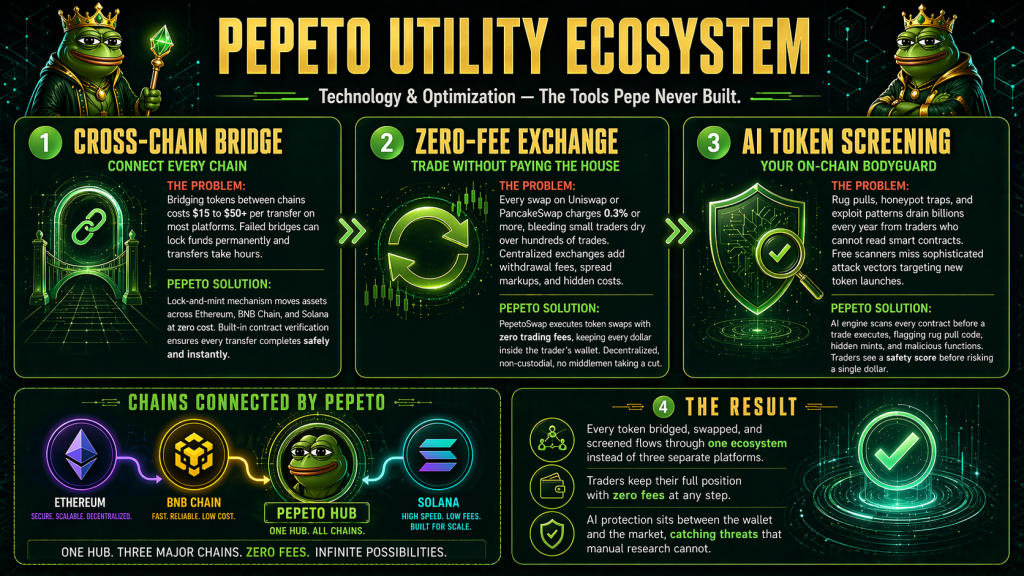
Crypto News: Morgan Stanley Says Banks Could Hold Bitcoin as DOGE and Chainlink (LINK) Rally While Pepeto Follows the Same Entry Pattern
The crypto news this week tells the story that prints real money every cycle. Morgan Stanley signaled that US banks may hold Bitcoin on their balance sheets despite
Related Articles
View More
How Many People Own XRP? Complete Ownership Statistics
Wondering how many people own XRP and where you stand among global holders?This guide breaks down XRP ownership statistics using blockchain data and official sources.You'll discover wallet distributio

Who Owns the Most Bitcoin in the World? Largest Holders Revealed
Bitcoin operates without a central owner, making the question "who owns Bitcoin" more complex than it appears at first glance. While no single entity controls the Bitcoin network itself, certain indiv

What Banks Use XRP? Complete List of Financial Institutions Using Ripple
Sending money across borders traditionally meant waiting days and paying steep fees. In 2026, that's changing faster than most people expected — over 300 financial institutions now use RippleNet, Ripp