Ethereum vs Bitcoin, Solana, Cardano, Polkadot, XRP, Litecoin, WETH : Complete Cryptocurrency Comparison Guide
Choosing between Ethereum and other cryptocurrencies can feel overwhelming. With Bitcoin hitting $119,469 and Ethereum trading at $4,273, investors are asking which digital asset offers the best opportunity in 2025.
This guide breaks down how ETH compares against Bitcoin, Solana, Cardano, XRP, Litecoin, WETH and Polkadot. You’ll discover the key differences, performance metrics, and which cryptocurrency might suit your investment goals.
Comparing cryptocurrencies? This guide compares Ethereum with major competitors. For an in-depth understanding of how Ethereum actually works – its smart contracts, DeFi ecosystem, and unique features – start with our complete Ethereum guide.
Key Takeaways
- ETH remains the #2 cryptocurrency with $513B market cap, processing 30+ transactions per second with smart contract capabilities.
- Bitcoin dominates at $2.37T market cap but Ethereum gained 54% vs Bitcoin’s 10% following Trump’s election victory.
- Solana offers 2,600+ TPS with $0.02 fees, making it 80x faster than Ethereum but with a smaller $85B market cap.
- Ethereum’s 2022 Proof of Stake transition cut energy consumption by 99%, while Bitcoin still uses energy-intensive mining.
- XRP targets cross-border payments at 1,500 TPS, while Litecoin serves as “digital silver” with limited smart contract functionality.
- WETH is simply ETH wrapped in ERC-20 format for DeFi compatibility, maintaining 1:1 exchange rates.
- Multi-cryptocurrency portfolios balance Bitcoin’s stability, Ethereum’s utility, and alternatives like Solana’s innovation potential.
Quick Comparison: ETH vs Top Cryptocurrencies 2025
| Cryptocurrency | Price (USD) | Market Cap | TPS | Fees | Consensus |
| Ethereum (ETH) | $4,273 | $513B | 30 | $1 | Proof of Stake |
| Bitcoin (BTC) | $119,469 | $2.37T | 7 | High | Proof of Work |
| Solana (SOL) | $153 | $85B | 2,600 | $0.02 | PoS + PoH |
| Cardano (ADA) | – | $12B | 1,000 | Low | Ouroboros PoS |
| Polkadot (DOT) | – | $6.3B | 1,000 | Medium | Nominated PoS |
| XRP | – | $89B | 1,500 | $0.0002 | XRP Ledger |
| Litecoin (LTC) | – | $8B | 54 | Low | Proof of Work |
| WETH | $4,273 | Same as ETH | Same as ETH | Same as ETH | ERC-20 Token |
What is Ethereum (ETH)
Ethereum remains the world’s second-largest cryptocurrency with a market cap of $513 billion. The network processes over 1.6 million daily transactions and generates $1.3 million in daily fees.
The platform pioneered smart contracts in 2015. These self-executing agreements power decentralized finance (DeFi), non-fungible tokens (NFTs), and thousands of applications. Recent upgrades like Dencun and the upcoming Pectra enhancement continue improving speed and reducing costs.
Unlike Bitcoin’s simple payment focus, Ethereum functions as a programmable blockchain. This flexibility attracts developers building everything from lending platforms to digital art marketplaces.
ETH vs Bitcoin: The Ultimate Showdown
Price and Performance Battle
Bitcoin dominates with a $2.37 trillion market cap compared to Ethereum’s $513 billion. However, recent months tell a different story.
Following Trump’s election victory, Ethereum surged 54% in one month while Bitcoin gained 10%. This performance shift reflects changing investor sentiment toward programmable blockchains.
Technology: Security vs Functionality
Bitcoin uses Proof of Work, making it extremely secure but energy-intensive. The network processes 7 transactions per second with high fees during congestion.
Ethereum switched to Proof of Stake in 2022, cutting energy use by 99%, while also reducing gas fees through improved efficiency. The network handles 30+ transactions per second and supports complex applications through smart contracts.
Investment Perspective: Digital Gold vs Innovation Platform
Bitcoin serves as “digital gold” with its 21 million coin limit creating scarcity. It appeals to investors seeking a hedge against inflation and monetary instability.
Ethereum offers broader utility through DeFi, NFTs, and Web3 applications. The transition to Proof of Stake allows ETH holders to earn 4-6% annual staking rewards.
ETH vs Solana: Speed vs Security
Performance Revolution
Solana processes 2,600+ transactions per second with fees averaging $0.02. This makes it 80 times faster than Ethereum with dramatically lower costs.
The speed advantage has attracted developers building high-frequency applications, gaming platforms, and meme coin ecosystems. Solana’s Pump.fun platform creates thousands of new tokens daily.
Market Dynamics in 2025
Despite lower fees and faster speeds, Solana’s $85 billion market cap remains significantly smaller than Ethereum’s $513 billion. However, key metrics show Solana gaining ground.
Solana’s upcoming Firedancer upgrade promises 1 million transactions per second. This could solidify its position as the fastest blockchain for real-time applications.
Ecosystem Development
Ethereum leads in total value locked (TVL) and institutional trust. Major platforms like Uniswap and OpenSea operate on Ethereum, creating network effects that benefit all users.
Solana excels in innovation and user experience. The Phantom wallet gets more downloads every day than some popular social media apps, showing mainstream adoption potential.
ETH vs Cardano: Security vs Innovation
Development Philosophy Clash
Cardano follows a research-first approach, using peer-reviewed studies for all upgrades. This methodical strategy ensures security but slows development compared to Ethereum’s rapid iteration.
The ADA blockchain can handle 1,000 transactions per second using its Ouroboros Proof of Stake consensus. However, it lacks the extensive application ecosystem that makes Ethereum valuable.
Staking and Governance
Cardano offers flexible staking without minimum requirements or lock-up periods. Users can delegate ADA tokens while maintaining full control and liquidity.
Ethereum requires 32 ETH minimum for solo staking, though liquid staking services allow smaller amounts. The locked nature provides security but reduces flexibility.
ETH vs Polkadot: Single Chain vs Multi-Chain
Multi-Chain Architecture
Polkadot operates as a “layer 0” platform connecting different blockchains through parachains. This design allows specialized chains to communicate seamlessly.
Each parachain functions independently with custom features while sharing Polkadot’s security. This modular approach could scale beyond Ethereum’s single-chain limitations.
Market Position and Adoption
Despite technical advantages, Polkadot’s $6.3 billion market cap trails far behind Ethereum. The platform struggles with adoption and developer migration from established ecosystems.
Polkadot 2.0’s elastic scaling feature, launching early 2025, may change this dynamic by offering dynamic computational resources based on demand.
ETH vs XRP: Smart Contracts vs Payments
Speed and Purpose Differences
XRP focuses exclusively on cross-border payments, processing up to 1,500 transactions per second with settlement times within seconds. Some banks and financial institutions use XRP for international transfers.
Ethereum serves broader purposes through smart contracts but processes payments slower at 30+ transactions per second. However, ETH powers entire financial ecosystems beyond simple transfers.
Market Position and Legal Clarity
XRP’s regulatory battles with the SEC created uncertainty, though recent developments show progress toward resolution. The cryptocurrency trades significantly lower than its 2017 peaks.
Ethereum enjoys clearer regulatory status with approved ETFs providing institutional access. This regulatory clarity supports higher institutional adoption and investment flows.
- For a deeper XRP comparison, read XRP vs Ethereum: full analysis.
ETH vs Litecoin: Silver vs Smart Contracts
Digital Silver Philosophy
Litecoin operates as “digital silver” to Bitcoin’s “digital gold,” offering faster transaction times and lower fees than Bitcoin. The network processes blocks every 2.5 minutes compared to Bitcoin’s 10 minutes.
However, Litecoin lacks smart contract functionality that makes Ethereum valuable. LTC serves primarily as a payment method rather than a platform for applications.
Technology and Innovation Gap
Ethereum’s programmable nature enables DeFi, NFTs, and complex financial instruments. This versatility creates multiple use cases beyond simple payments.
Litecoin focuses on payment efficiency but hasn’t evolved beyond its original scope. The network remains stable but offers limited growth opportunities compared to Ethereum’s expanding ecosystem.
ETH vs WETH: Native vs Wrapped Tokens
What is Wrapped Ethereum?
WETH (Wrapped Ethereum) is ETH converted into an ERC-20 token format for use in decentralized applications. This technical wrapper allows ETH to interact with protocols requiring ERC-20 compatibility.
The wrapping process locks ETH in a smart contract and issues equivalent WETH tokens. Users can unwrap WETH back to ETH at any time through a 1:1 exchange rate.
Practical Usage Differences
WETH enables ETH to function in DeFi protocols, decentralized exchanges, and lending platforms that require standardized token formats. This compatibility is essential for complex DeFi operations.
Regular ETH works for basic transactions and gas payments, while WETH facilitates advanced DeFi interactions. Most users automatically convert between formats as needed through wallet interfaces.
Bitcoin vs Ethereum vs Solana: Which to Buy?
For Beginners: Start with Bitcoin or Ethereum
Bitcoin offers simplicity and proven store-of-value properties. Its straightforward purpose makes it easy to understand for new investors.
Ethereum provides more utility but requires understanding of smart contracts and DeFi. The learning curve is steeper but offers greater engagement opportunities.
For Different Investment Goals
- Long-term Storage: Bitcoin’s 21 million supply cap creates scarcity similar to gold. Experts predict potential $185,000 targets based on institutional adoption.
- Active Participation: Ethereum enables staking rewards, DeFi lending, and NFT trading. The ecosystem offers multiple income streams beyond price appreciation.
- High Growth Potential: Solana’s speed and low costs position it for mainstream adoption. XRP’s banking partnerships could drive institutional demand if regulatory clarity improves.
Multi-Chain Future Strategy
Rather than choosing one cryptocurrency, many investors diversify across multiple platforms. Bitcoin provides stability, Ethereum offers established utility, Solana brings innovation, and XRP targets banking payments.
2025 Market Predictions
Ethereum could reach $6,500-$10,000 if it maintains DeFi dominance and attracts institutional investment through ETFs. The Pectra upgrade and Layer 2 scaling solutions support this growth trajectory.
Solana faces the challenge of maintaining network stability while scaling. Success depends on executing the Firedancer upgrade and preventing outages that have hurt confidence.
Bitcoin’s path seems most predictable, with halving cycles and institutional adoption driving steady appreciation. The approval of spot ETFs provides traditional finance access.
The Bottom Line: ETH vs Cryptocurrency Landscape
Ethereum maintains its position as the leading smart contract platform through first-mover advantage and continuous innovation. While competitors offer faster speeds or lower fees, none match Ethereum’s ecosystem depth and institutional trust.
The choice between ETH and other cryptocurrencies depends on your priorities. Bitcoin offers proven store-of-value properties. Solana provides speed and low costs. Cardano emphasizes security through research. Polkadot enables cross-chain functionality.
Smart investors often hold multiple cryptocurrencies, balancing stability with innovation potential. As the crypto market matures, each platform may find its specialized niche rather than competing directly.
Ready to dive deeper into Ethereum? Now that you’ve seen how Ethereum compares to other cryptocurrencies, discover exactly what makes Ethereum unique. Our comprehensive guide explains smart contracts, DeFi, staking, and all the innovations that set Ethereum apart from the competition.
Read More:
Popular Articles
View More
Ethereum (ETH) Price Prediction May 2026: What Charts, Whales, and Catalysts Are Telling Traders
ETH is flashing signals that traders haven't seen in months — rising volume, aggressive whale buying, and a technical setup sitting right at a make-or-break level. This article breaks down the

Solana Bridge Guide: How to Bridge ETH to Solana Safely
If your crypto is sitting on Ethereum or BNB Chain while Solana's DeFi ecosystem keeps growing, you're leaving opportunities on the table. This guide breaks down everything you need to know about

Ethereum Price Prediction: Short-Term Signals and Long-Term Price Targets
Ethereum is the world's second-largest cryptocurrency by market cap, and understanding where its price is headed matters to millions of investors. This article breaks down the short-term Ethereum

Hot Crypto Updates
View More
Ethereum (ETH) 7-Day Price Change
The Latest Ethereum (ETH) price has shown significant movement over the past week. In this article, we'll examine its current price, 7-day performance, and the key market factors shaping ETH's price
Ethereum (ETH) Bullish Price Prediction
Introduction to Bullish ETH Outlook Optimistic investors often look to bullish price predictions for Ethereum (ETH) to identify the coin's growth potential during favorable market cycles. A bullish


Trending News
View More
Multi-Collateral Crypto Loans: Borrowing Rates and LTV Ratios Compared
Crypto-backed borrowing has evolved far beyond simple BTC or ETH loans. In 2026, many lenders now support multi-collateral crypto loans — structures where users
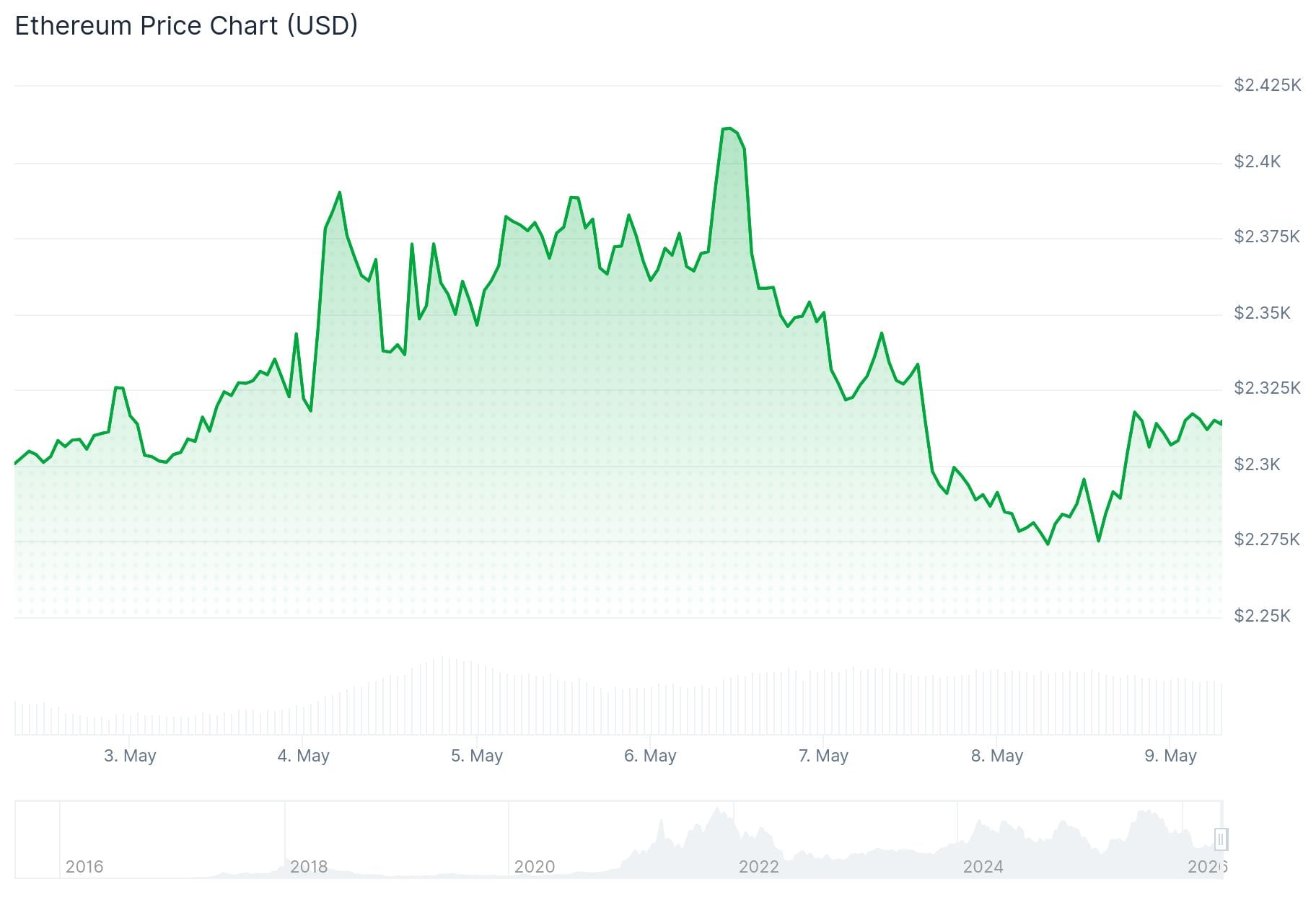
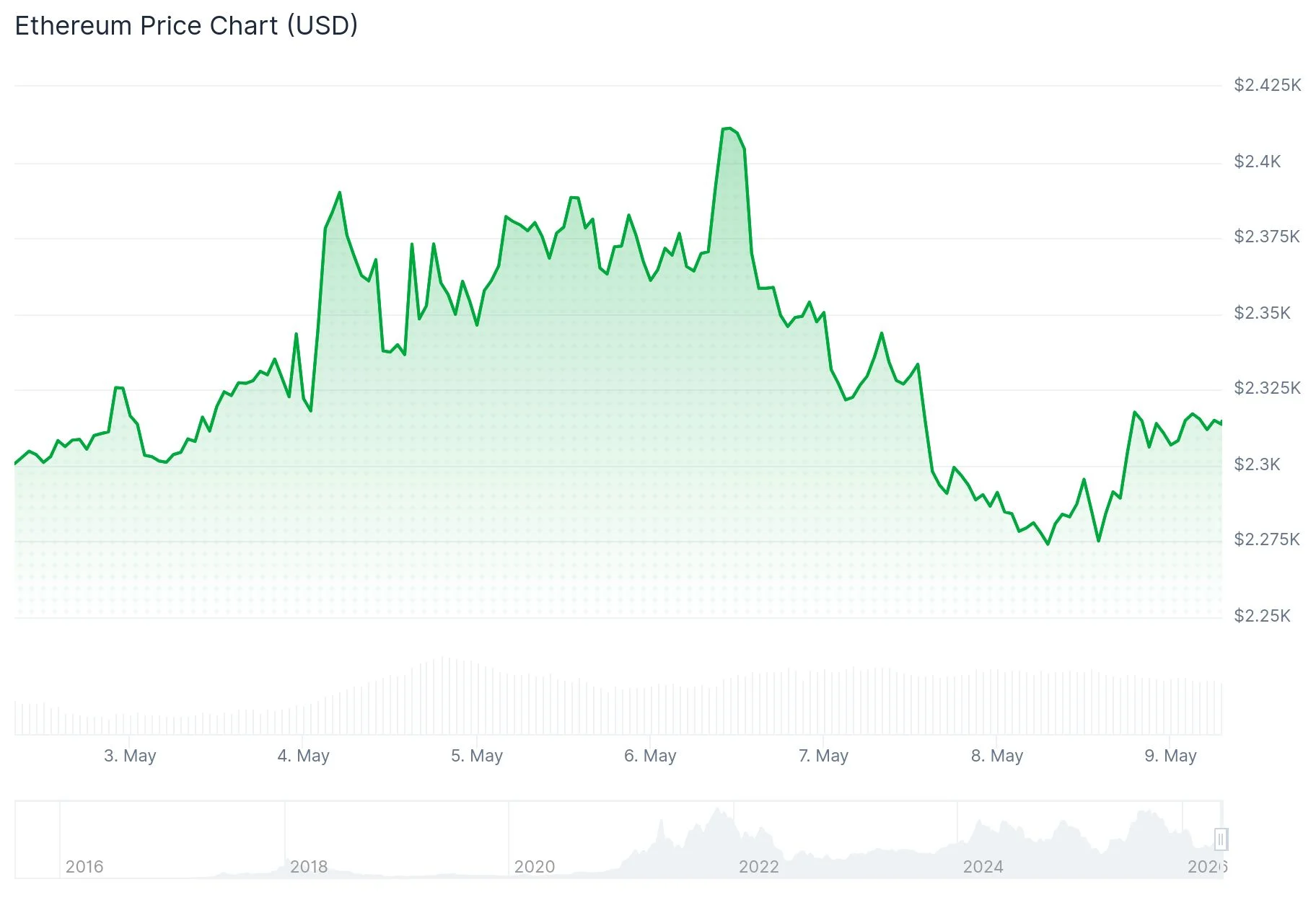
Ethereum (ETH) Price: Whale Selling and ETF Outflows Push ETH Below $2,300
TLDR A whale wallet moved 244K ETH to Binance over three days, putting pressure on ETH’s price US spot Ethereum ETFs recorded $103.5 million in outflows, ending
Related Articles
View More
How Many People Own XRP? Complete Ownership Statistics
Wondering how many people own XRP and where you stand among global holders?This guide breaks down XRP ownership statistics using blockchain data and official sources.You'll discover wallet distributio

Who Owns the Most Bitcoin in the World? Largest Holders Revealed
Bitcoin operates without a central owner, making the question "who owns Bitcoin" more complex than it appears at first glance. While no single entity controls the Bitcoin network itself, certain indiv

What Banks Use XRP? Complete List of Financial Institutions Using Ripple
Sending money across borders traditionally meant waiting days and paying steep fees. In 2026, that's changing faster than most people expected — over 300 financial institutions now use RippleNet, Ripp