Ethereum staking lets you earn passive income by locking your ETH to help secure the network. Since Ethereum's transition to Proof-of-Stake in 2022, staking has become the primary way for ETH holdersEthereum staking lets you earn passive income by locking your ETH to help secure the network. Since Ethereum's transition to Proof-of-Stake in 2022, staking has become the primary way for ETH holders
Learn/Cryptocurrency Knowledge/Hot Concepts/What Is Eth...ing Rewards

What Is Ethereum Staking? Your Guide to ETH Staking Rewards

Intermediate
Dec 16, 2025MEXC
0m
Ethereum
ETH$2,025.76+1.36%
Universal HighIncome
INCOME$0.000101+6.99%
Unitas
UP$0.1619-4.23%
Wink
LIKE$0.001096-0.45%
Based
BASED$0.12095+202.37%
Ethereum staking lets you earn passive income by locking your ETH to help secure the network.
Since Ethereum's transition to Proof-of-Stake in 2022, staking has become the primary way for ETH holders to generate rewards while supporting blockchain operations.
This guide explains what ethereum staking is, how it works, the different staking methods available, and how you can start earning rewards with your ETH today.


For foundational staking concepts, see our comprehensive crypto staking guide.


Key Takeaways
  • Ethereum staking lets you earn 2-4% annual rewards by locking ETH to secure the network's Proof-of-Stake consensus.
  • Solo validators need exactly 32 ETH, but staking pools allow you to start with any amount.
  • Rewards come from newly issued ETH, transaction fees, and MEV (maximal extractable value) earned by validators.
  • Staking carries risks including market volatility, lock-up periods, slashing penalties, and potential technical failures.
  • You can stake through exchanges like MEXC (easiest), liquid staking pools (flexible), staking-as-a-service (managed), or solo staking (maximum rewards).
  • Ethereum's transition to Proof-of-Stake in September 2022 reduced energy consumption by over 99% compared to mining.

What Is Ethereum Staking and How Does ETH Staking Work?

Staking ethereum involves locking your ETH in the network to become a validator or support validators who secure the blockchain.
Validators process transactions, create new blocks, and maintain network consensus in Ethereum's Proof-of-Stake system.
To run a validator independently, you need exactly 32 ETH, which serves as collateral to ensure honest behavior.
The network randomly selects validators to propose new blocks and verify transactions from other validators.
When validators perform their duties correctly, they earn ethereum staking rewards from newly issued ETH, transaction fees, and maximal extractable value (MEV).
The eth staking rewards typically range between 2-4% annually, though rates fluctuate significantly based on total network participation, validator performance, and market conditions.
If validators go offline or act maliciously, they face penalties that reduce their staked ETH, ensuring network security remains strong.


Ethereum Staking Benefits and Risks: Is Staking ETH Worth It?

Benefits of Ethereum Staking

Staking generates passive income without requiring you to actively trade or manage investments.
Your ethereum staking rewards accumulate automatically as validators perform their network duties, creating a predictable yield stream.
By staking eth, you contribute directly to Ethereum's security and decentralization, making the network more resistant to attacks.
Ethereum's Proof-of-Stake consensus uses over 99% less energy than the previous Proof-of-Work mining system, making eth staking an environmentally sustainable choice.
Beyond rewards, your staked ETH could appreciate if Ethereum's market value increases over time.

Risks of Staking Ethereum

ETH's market price can fluctuate significantly while your assets remain locked in staking, exposing you to volatility risk.
Most ethereum staking methods involve lock-up periods where you cannot immediately access your funds, creating liquidity constraints.
Validators who fail to maintain proper uptime face inactivity penalties that reduce rewards, while those who violate specific protocol rules may face slashing penalties that permanently destroy a portion of staked ETH.
Technical requirements for running validators include reliable hardware, constant internet connectivity, and software maintenance expertise.
Some staking platforms charge service fees that reduce your net ethereum staking rewards compared to the protocol's base rate.


Different Ways to Stake Ethereum


1. Solo Staking

Solo staking means running your own validator node with 32 ETH and managing all technical aspects independently.
This method delivers maximum ethereum staking rewards since you receive the full protocol payout without intermediary fees.
You maintain complete control over your validator keys and don't need to trust third parties with your assets.
However, solo staking demands technical expertise in setting up nodes, maintaining hardware, and ensuring consistent uptime to avoid penalties.


2. Staking Pools

Staking pools allow you to stake ethereum with any amount of ETH by joining other users to collectively reach the 32 ETH threshold.
Popular liquid staking protocols like Lido and Rocket Pool let you stake eth and receive tradeable tokens representing your staked position.
These liquid staking tokens (like stETH or rETH) can be used in DeFi applications while still earning staking rewards.
Pool staking typically charges fees of 10-15% of rewards but provides flexibility and accessibility for users with less than 32 ETH.


3. Staking-as-a-Service

Staking-as-a-service providers operate validator nodes on your behalf while you maintain custody of your 32 ETH deposit.
You generate validator keys and deposit credentials, then delegate the operational responsibilities to professional node operators.
This approach offers higher eth staking rewards than pools since you run a dedicated validator, but still requires the full 32 ETH.
Service providers typically charge monthly fees or take a percentage of rewards for handling technical maintenance and monitoring.


4. Exchange Staking

Cryptocurrency exchanges offer the simplest way to stake ethereum directly through their platforms with minimal technical knowledge.
Exchanges like MEXC handle all validator operations while you simply deposit ETH into your exchange account and enable staking.
This method provides maximum convenience and often allows flexible staking amounts starting from very small quantities of ETH.
However, exchange staking typically offers lower ethereum staking rewards due to platform fees and requires trusting the exchange with custody.


How to Start Staking Ethereum: Complete Step-by-Step Guide

For Exchange Staking (Beginner-Friendly):

  1. Create an account on a cryptocurrency exchange that supports ethereum staking like MEXC
  2. Complete identity verification (KYC) as required by the platform
  3. Purchase ETH or deposit existing ETH from your wallet to the exchange
  4. Navigate to the staking section within your exchange account
  5. Select Ethereum from available staking options
  6. Choose the amount of eth staking you want to activate
  7. Review the estimated ethereum staking rewards and any applicable fees
  8. Confirm your staking transaction to begin earning rewards

For Liquid Staking Pools:

  1. Set up a Web3 wallet like MetaMask or another compatible Ethereum wallet
  2. Purchase or transfer ETH to your wallet address
  3. Visit a liquid staking platform website (such as Lido or Rocket Pool)
  4. Connect your wallet to the staking platform
  5. Enter the amount of ETH you want to stake (no minimum required for most pools)
  6. Approve the transaction in your wallet and pay the gas fee
  7. Receive liquid staking tokens (like stETH) representing your staked position
  8. Track your ethereum staking rewards as they accumulate automatically

For Solo Staking (Advanced Users):

  1. Acquire at least 32 ETH for validator activation
  2. Purchase or build hardware meeting Ethereum's validator requirements (modern multi-core CPU, 16-32GB RAM, 2TB+ SSD storage)
  3. Install Ethereum execution client and consensus client software on your validator node
  4. Generate validator keys using official Ethereum staking tools
  5. Fund your validator by depositing 32 ETH to the Ethereum staking contract
  6. Configure your node to connect to the Ethereum network and begin validation duties
  7. Monitor validator performance and maintain consistent uptime to maximize eth staking rewards


Frequently Asked Questions About Ethereum Staking

What is ethereum staking?
Ethereum staking is the process of locking ETH to help secure the network and earn rewards in return.


How does ethereum staking work?
Validators lock 32 ETH as collateral, then the network randomly selects them to validate transactions and propose new blocks in exchange for rewards.


Is staking ethereum worth it?
Staking ethereum can be worthwhile if you're comfortable with the lock-up period and 3-4% annual rewards align with your investment goals.


What is eth staking?
ETH staking refers to the same process as ethereum staking—depositing Ether to validate network transactions and earn protocol rewards.


How much can you make staking ethereum?
Ethereum staking rewards currently average 3-4% annually, though exact returns vary based on network conditions and your chosen staking method.


What does staking ethereum mean?
Staking ethereum means locking your ETH in the protocol to become a validator or support validators who secure the blockchain.


How to choose a validator for ethereum staking?
Choose validators based on their uptime history, commission fees, security practices, and reputation within the Ethereum community.


What are the risks of staking ethereum?
The main risks include ETH price volatility, slashing penalties for validator misbehavior, liquidity constraints from lock-up periods, and potential technical failures.


Conclusion

Ethereum staking offers a compelling way to earn passive income while contributing to one of the world's largest blockchain networks.
Whether you choose exchange staking for simplicity, liquid staking pools for flexibility, or solo staking for maximum rewards, each method provides opportunities to put your ETH to work.
Consider your technical expertise, ETH holdings, and risk tolerance when selecting your staking approach.
Start with smaller amounts through platforms like MEXC if you're new to staking, then explore other methods as you gain confidence.


Want to compare other staking options? Explore our complete guide to crypto staking.

Market Opportunity
Ethereum Logo
Ethereum Price(ETH)
$2,025.76
$2,025.76$2,025.76
-2.34%
USD
Ethereum (ETH) Live Price Chart

Popular Articles

Polymarket’s Use of Polygon and UMA for Decentralized Resolution

Polymarket’s Use of Polygon and UMA for Decentralized Resolution

IntroductionPolymarket, a leading decentralized prediction market, leverages the power of the Polygon blockchain and UMA’s Optimistic Oracle to offer a transparent, secure, and efficient platform for
Bank of America XRP: The Ripple Connection Explained

Bank of America XRP: The Ripple Connection Explained

Bank of America and XRP have been linked in crypto headlines for years — and for good reason.The U.S.'s second-largest bank has filed dozens of blockchain patents, joined Ripple's global payments netw
Kalshi vs. PredictIt: Comparing US Political Betting Markets

Kalshi vs. PredictIt: Comparing US Political Betting Markets

IntroductionThe U.S. prediction market landscape has evolved dramatically since 2024. Platforms like Kalshi and PredictIt now allow users to trade event contracts on political outcomes — from election
XLM vs XRP Explained: Two Coins, Two Very Different Missions

XLM vs XRP Explained: Two Coins, Two Very Different Missions

If you've been researching cross-border payment coins, you've probably run into XLM and XRP sitting side by side on every list.They share a founder, solve similar problems, and often move in price tog

Hot Crypto Updates

View More
ETH Price Prediction 2026: Will ETH Break $5,000 or Stay Range-Bound? A Complete Analysis

ETH Price Prediction 2026: Will ETH Break $5,000 or Stay Range-Bound? A Complete Analysis

Published: March 24, 2026 Reading Time: ~12 minutes Overview Ethereum in 2026 finds itself at a pivotal crossroads. Two landmark upgrades—Glamsterdam and Hegotá—are poised to push the network toward
Ethereum (ETH) Price Prediction: Market Forecast and Analysis

Ethereum (ETH) Price Prediction: Market Forecast and Analysis

Understanding the price prediction of Ethereum (ETH) gives traders and investors a forward-looking perspective on potential market trends. Ethereum price predictions aren't guarantees, but they

Ethereum (ETH) Price Prediction: Market Forecast and Analysis

Ethereum (ETH) Price Prediction: Market Forecast and Analysis

Understanding the price prediction of Ethereum (ETH) gives traders and investors a forward-looking perspective on potential market trends and cryptocurrency forecasts. Ethereum price predictions

Ethereum (ETH) 7-day Price Change

Ethereum (ETH) 7-day Price Change

The latest Ethereum (ETH) price has demonstrated notable volatility and recovery momentum over the past week. In this article, we'll examine the current Ethereum price, 7-day performance, and the

Trending News

View More
Bitmine hits 4.73M ETH with biggest 2026 buy amid outflows

Bitmine hits 4.73M ETH with biggest 2026 buy amid outflows

The post Bitmine hits 4.73M ETH with biggest 2026 buy amid outflows appeared on BitcoinEthereumNews.com. Bitmine has increased its Ethereum (ETH) holdings to over

Ethereum Foundation locks $46 mln in ETH – Here’s why the market isn’t reacting

Ethereum Foundation locks $46 mln in ETH – Here’s why the market isn’t reacting

The post Ethereum Foundation locks $46 mln in ETH – Here’s why the market isn’t reacting appeared on BitcoinEthereumNews.com. In a recent turn of events, and as
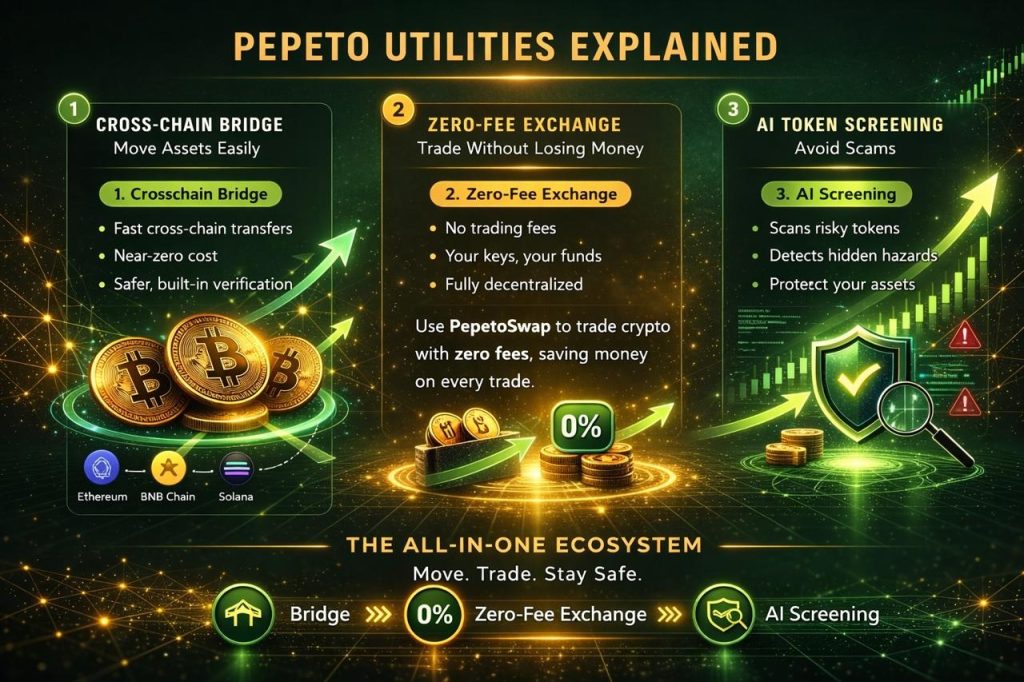
Crypto News: 200x Returns Are No Longer in BTC or ETH as Pepeto Presale Draws Capital While Fear Hits 8

Crypto News: 200x Returns Are No Longer in BTC or ETH as Pepeto Presale Draws Capital While Fear Hits 8

Crypto firms are squeezing yield from established coins through institutional lending products, but that is not what changes a life. The crypto news that matters

Tom Lee’s Bitmine Closes In on 5% Ethereum Ownership Goal

Tom Lee’s Bitmine Closes In on 5% Ethereum Ownership Goal

TLDR Bitmine now holds more than 4.7 million ETH, representing 3.9% of Ethereum’s total supply. The company has reached nearly 80% of its goal to control 5% of

Related Articles

Polymarket’s Use of Polygon and UMA for Decentralized Resolution

Polymarket’s Use of Polygon and UMA for Decentralized Resolution

IntroductionPolymarket, a leading decentralized prediction market, leverages the power of the Polygon blockchain and UMA’s Optimistic Oracle to offer a transparent, secure, and efficient platform for

Bank of America XRP: The Ripple Connection Explained

Bank of America XRP: The Ripple Connection Explained

Bank of America and XRP have been linked in crypto headlines for years — and for good reason.The U.S.'s second-largest bank has filed dozens of blockchain patents, joined Ripple's global payments netw

Kalshi vs. PredictIt: Comparing US Political Betting Markets

Kalshi vs. PredictIt: Comparing US Political Betting Markets

IntroductionThe U.S. prediction market landscape has evolved dramatically since 2024. Platforms like Kalshi and PredictIt now allow users to trade event contracts on political outcomes — from election

XLM vs XRP Explained: Two Coins, Two Very Different Missions

XLM vs XRP Explained: Two Coins, Two Very Different Missions

If you've been researching cross-border payment coins, you've probably run into XLM and XRP sitting side by side on every list.They share a founder, solve similar problems, and often move in price tog

Sign Up on MEXC
Sign Up & Receive Up to 10,000 USDT Bonus