Bitcoin's journey from under $1 to nearly $100,000 has created a generation of crypto millionaires.
Now, investors worldwide are asking the same question: what is the next Bitcoin?
With institutional adoption accelerating and regulatory clarity improving in 2026, several cryptocurrencies show genuine potential to deliver life-changing returns.
This guide examines the characteristics that define the next big crypto investment and analyzes the top contenders based on fundamentals, not hype.
- For a complete Bitcoin overview, see our ultimate guide to Bitcoin (BTC) for beginners.
Key Takeaways:
Ethereum leads with a $376 billion market cap and newly approved ETFs driving institutional adoption.
Solana's Firedancer upgrade targets 1 million transactions per second with fees under a penny.
XRP gained regulatory clarity after resolving its SEC lawsuit in August 2025 with a $50 million settlement.
Successful "next Bitcoin" candidates demonstrate real-world utility, strong development teams, and growing user bases.
Strategic crypto reserves now include Bitcoin, Ethereum, Solana, XRP, and Cardano, validating their long-term potential.
Diversification across multiple top cryptocurrencies reduces risk while maintaining exposure to different growth scenarios.
Not every cryptocurrency can become the next Bitcoin, despite what their marketing claims suggest.
The golden rule in crypto communities remains simple: if a cryptocurrency is useful, it will overcome any struggles and continue to grow. Bitcoin succeeded because it solved a real problem—creating scarce digital money that no government could control.
Any coin aiming to be the next big investment needs similar utility. The cryptocurrency should have a clear mission that delivers value immediately after transactions, without complicated extra steps. Fast transaction speeds matter, but so does accessibility through major trading platforms like MEXC where users can easily buy and sell.
Strong development teams separate winners from failures. A cryptocurrency needs dedicated developers constantly improving its blockchain, managing transaction speeds, and building related projects that expand its ecosystem.
The best candidates for what crypto is the next Bitcoin also demonstrate transparent operations, growing user bases, and solutions to problems people actually face. Without these fundamentals, even the flashiest coins eventually fade away.
When people ask what cryptocurrency is the next Bitcoin, Ethereum consistently tops the list.
Ethereum holds the number two position globally with a market cap exceeding $376 billion, and unlike Bitcoin's single purpose as digital money, Ethereum functions as an entire technology platform. The blockchain powers smart contracts, decentralized finance protocols, NFT marketplaces, and thousands of applications that couldn't exist without it.
The recent Pectra upgrade improved Ethereum's speed and efficiency, addressing previous criticisms about slow transaction times. Major institutions have poured billions into Ethereum through newly approved ETFs, signaling serious long-term confidence in the platform's future. Some analysts call Ethereum "digital silver" to Bitcoin's "digital gold," but this undersells its capabilities. Ethereum doesn't just store value—it creates an entire financial system where developers build innovative applications daily. Layer-2 solutions like Arbitrum and Base now handle thousands of transactions per second at minimal cost, solving scalability issues that once plagued the network.
Many investors researching what coin is predicted to be the next Bitcoin discover Solana's remarkable performance advantages.
Transaction costs on Solana rarely exceed a fraction of a cent, enabling use cases impossible on more expensive blockchains. This combination of speed and affordability has attracted explosive growth in decentralized finance applications, NFT projects, and even viral meme coins that brought millions of new users to crypto.
The U.S. government's decision to include Solana in its strategic crypto reserve sent a powerful signal about the blockchain's legitimacy. Major financial institutions are now exploring Solana ETF proposals, which could unlock billions in institutional investment similar to what Bitcoin experienced.
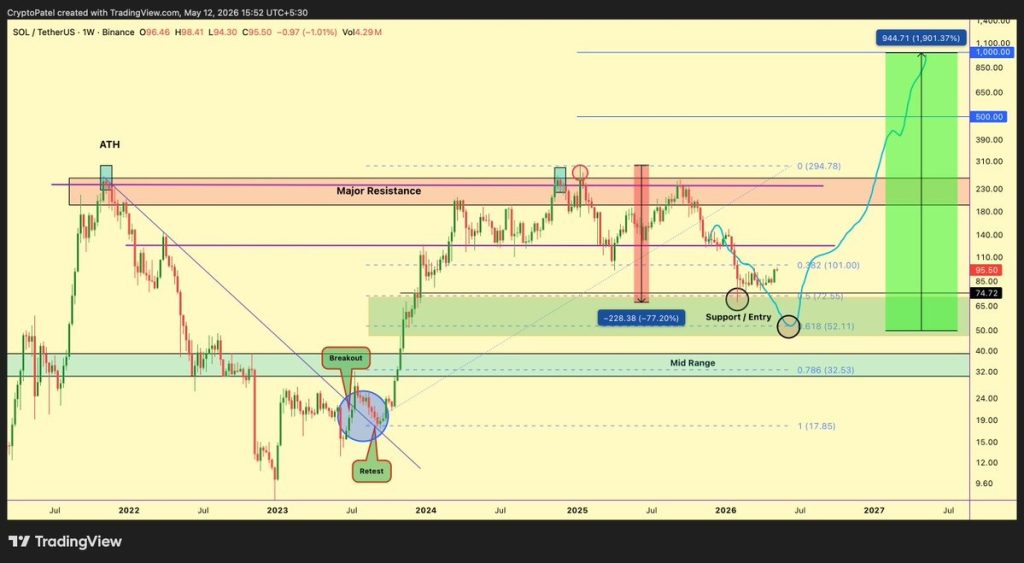
Solana trades around $141 currently, well below its previous all-time highs, creating what many analysts view as a compelling entry point for long-term investors seeking what is going to be the next Bitcoin.
XRP presents a unique answer to what is the next Bitcoin like investment by focusing on institutional adoption rather than retail speculation.
The resolution of XRP's SEC lawsuit in 2025 removed the dark cloud of regulatory uncertainty that suppressed its price for years. Now operating with full legal clarity, Ripple can aggressively expand its network of banking partnerships beyond the 300+ financial institutions already using its technology. XRP settles cross-border payments in 3-5 seconds compared to Bitcoin's 10-60 minutes and traditional SWIFT transfers that take up to five business days. Transaction costs measure in fractions of a cent, making XRP economically viable for small payments that would be impractical with Bitcoin's higher fees.
The cryptocurrency's inclusion in the U.S. strategic crypto reserve validates its importance to the future financial system. Ripple's On-Demand Liquidity service is positioned to potentially replace SWIFT as the global standard for international money transfers, a market worth trillions of dollars annually.
Critics point to centralization concerns since Ripple Labs owns a significant XRP stake, but this structure also enables the rapid decision-making necessary for institutional partnerships.
Cardano takes a scientific approach that distinguishes it from competitors chasing quick gains.
Every upgrade undergoes peer-review by academics before implementation, creating confidence in the platform's long-term stability. The blockchain uses proof-of-stake consensus that consumes far less energy than Bitcoin's mining, appealing to environmentally-conscious institutional investors.
Current price levels around $0.36-$0.39 represent significant discounts from previous highs, and Cardano's inclusion in the strategic crypto reserve suggests government confidence in its future. The integration of Ripple's RLUSD stablecoin could unlock new DeFi opportunities across Cardano's ecosystem.
Chainlink solves a critical problem that blockchain technology cannot address alone—securely connecting to real-world data. The platform serves as an oracle that allows smart contracts to access external information like stock prices, weather data, or sports scores. This capability is essential for tokenized real-world assets, a sector expected to reach trillions in value.
Chainlink's partnership with the U.S. Department of Commerce to bring government economic data to public blockchains demonstrates its position as the industry's chosen oracle solution. The recent approval of the first spot Chainlink ETF provides another avenue for institutional investment.
BNB powers the extensive ecosystem built around one of the world's largest crypto platforms.
The recent Maxwell Upgrade accelerated block times and improved scalability, making BNB Chain more competitive with faster alternatives. Growing numbers of DeFi and GameFi projects choose BNB Chain for development, creating network effects that drive token demand.
Current prices around $907 sit below recent highs, potentially offering value for investors betting on continued ecosystem expansion. The token's utility for reducing trading fees creates consistent demand independent of speculation.
What is the next Bitcoin?
No single cryptocurrency will replace Bitcoin, but Ethereum, Solana, and XRP each offer unique value propositions that could deliver substantial returns.
What is the next Bitcoin to invest in for 2026?
Ethereum offers an established ecosystem with institutional backing, while Solana provides technological advantages in speed and cost that appeal to growth-focused investors.
What coin is predicted to be the next Bitcoin by experts?
Most analysts favor Ethereum for its institutional adoption and developer activity, though Solana's technical advantages are gaining recognition.
What is the next Bitcoin to buy right now?
Current market conditions make Solana and Cardano attractive at discounted prices, but always invest only what you can afford to lose.
After Bitcoin what is the next big thing in crypto?
Real-world asset tokenization powered by platforms like Ethereum and Chainlink represents the next major evolution beyond simple cryptocurrencies.
What is the next Bitcoin like investment today?
XRP offers similar "get in early" potential that Bitcoin had, especially given its recent regulatory clarity and institutional focus.
The question of what is the next Bitcoin doesn't have a single answer because the cryptocurrency market has matured beyond winner-take-all dynamics.
Ethereum has built the strongest case through its massive ecosystem of applications, institutional ETF adoption, and role as the foundation for Web3 development. Solana's technological superiority in speed and cost could trigger explosive growth as mainstream adoption accelerates. XRP's regulatory clarity and banking partnerships position it to dominate the trillion-dollar cross-border payments market.
Successful crypto investing requires focusing on fundamentals rather than hype. The coins with real-world utility, strong development teams, and growing user bases will survive market volatility and deliver long-term value.
Diversification across multiple top contenders reduces risk while maintaining upside potential. A portfolio mixing Ethereum's stability, Solana's growth potential, and XRP's institutional angle provides balanced exposure to different success scenarios.
The "next Bitcoin" may not replace Bitcoin but instead complement it by serving different purposes in the evolving digital economy. Stay informed through trusted platforms like MEXC, maintain a long-term perspective of 5-10 years, and never invest more than you can afford to lose.
The cryptocurrency revolution is just beginning, and the next decade will likely create more millionaires than the last.
- Want to learn more? Read our comprehensive What is Bitcoin (BTC) guide for the full picture.