Mainz vs Union Berlin: 2026 Bundesliga Match Prediction and Analysis
Key Takeaways
- Match scheduled for May 11, 2026, at 01:30 Singapore time (May 10, 19:30 CEST / 17:30 UTC)
- Both teams enter as mid-table Bundesliga sides with contrasting tactical philosophies
- Union Berlin's organized defensive structure provides competitive foundation despite away status
- Mainz relies on home advantage at MEWA Arena to compensate for tactical limitations
- Historical head-to-head record shows relatively balanced competition between the clubs
- Statistical models suggest 40-45% Union Berlin win probability versus 30-35% for Mainz
- Tactical matchup features Mainz's pressing intensity against Union Berlin's defensive discipline
- Draw probability sits around 25-30% reflecting competitive parity between the teams
- Home atmosphere provides Mainz with psychological advantage in tight encounters
- Prediction markets offer probabilistic framework for outcome assessment
1.Match Overview and Competitive Context
The Bundesliga encounter between Mainz and Union Berlin on May 11, 2026, represents a compelling mid-table clash that embodies the competitive depth of German football beyond the traditional powerhouses. Scheduled for 01:30 Singapore time, which translates to 19:30 Central European Summer Time (CEST) and 17:30 UTC on May 10, this fixture carries significance for both clubs' aspirations to secure respectable league positioning as the season approaches its conclusion.
Mainz brings a rich history of developing young talent and implementing aggressive pressing systems that challenge opponents regardless of reputation. Their philosophy emphasizes intensity, work rate, and collective organization over individual brilliance, creating an identity that resonates with supporters and occasionally produces memorable results against supposedly superior opposition. The club's commitment to attractive, proactive football has established them as a respected Bundesliga institution despite operating with more modest resources compared to Germany's elite clubs.
Union Berlin represents one of German football's most remarkable success stories, having risen from lower divisions to establish themselves as a competitive Bundesliga presence through exceptional organization, tactical discipline, and unwavering team spirit. Their An der Alten Försterei stadium symbolizes their unique culture, with passionate supporters creating one of European football's most atmospheric environments. Union Berlin's success derives from systematic coaching, intelligent recruitment, and collective commitment rather than financial advantages or star power.
The May timing positions this match in the final phase of the Bundesliga season, where both clubs typically focus on securing the highest possible league finish while potentially harboring ambitions for European qualification depending on their accumulated points. This context creates genuine competitive stakes without the extreme pressure associated with relegation battles or championship races, allowing both teams to play with relative freedom while maintaining professional standards.
2.Team Analysis: Mainz
Mainz's tactical approach emphasizes high-intensity pressing and vertical transitions that aim to win possession in advanced areas and quickly exploit disorganized defensive structures. Their systematic pressing triggers coordinate multiple players converging on ball carriers, forcing hurried decisions and creating turnover opportunities that can be converted into dangerous attacking situations. This philosophy requires exceptional fitness levels, tactical discipline, and collective commitment from all outfield players regardless of their primary positional responsibilities.
The squad composition reflects a balanced approach combining experienced Bundesliga professionals who understand league demands with promising young talents seeking developmental opportunities. Mainz's recruitment strategy focuses on identifying technically capable players who embrace the club's intensity requirements and demonstrate willingness to prioritize collective success over individual statistics. This approach creates squad cohesion and tactical flexibility that enables effective implementation of their systematic pressing patterns.
Offensively, Mainz demonstrates directness and speed in transition, capitalizing on turnovers by immediately attacking space behind opponent defensive lines. Their attacking players possess pace and movement intelligence that exploits defensive confusion, while midfielders provide progressive passing options and secondary runs that overload opponent defensive structures. Set-piece execution represents an additional attacking weapon, with coaching staff dedicating substantial preparation time to developing creative patterns from corners and free kicks.
Defensively, Mainz's high defensive line and aggressive positioning create vulnerability to well-executed counter-attacks from opponents capable of bypassing their press. Their defensive structure relies on maintaining compactness and preventing central penetration, accepting calculated risks in wide areas where defensive coverage can adjust more readily. Goalkeeper distribution quality becomes crucial for initiating attacking transitions and maintaining possession during opponent pressing moments.
Home performance at the MEWA Arena provides Mainz with significant advantages through familiar playing conditions, passionate supporter presence, and psychological comfort. Their pressing intensity becomes more effective in their home environment, where crowd energy supports defensive resilience and creates pressure on visiting teams unaccustomed to the atmosphere.
3.Team Analysis: Union Berlin
Union Berlin's tactical identity centers on defensive organization, structural discipline, and collective commitment to maintaining shape throughout all match phases. Their systematic approach prioritizes limiting opponent space and channeling attacks into predetermined areas where defensive coverage can respond effectively. This philosophy requires exceptional positional awareness, communication, and willingness to sacrifice individual expression for collective defensive solidity.
The playing style reflects pragmatic recognition of competitive realities when facing opponents with potentially superior technical quality or greater financial resources. Union Berlin accepts reduced possession percentages in exchange for defensive stability and counter-attacking opportunities, demonstrating patience in waiting for optimal moments to transition into attacking phases. Their players exhibit remarkable work rate and tactical intelligence, pressing opponent ball carriers when strategic advantages exist while maintaining defensive shape when prudent.
Squad composition includes experienced professionals who understand Bundesliga intensity requirements alongside developing players who embrace the club's collective ethos. Union Berlin's recruitment emphasizes character, tactical adaptability, and willingness to prioritize team success over personal statistics. This approach creates exceptional squad cohesion and cultural identity that translates into on-field resilience and competitive consistency.
Offensive output relies on efficient counter-attacking patterns that exploit space vacated by opponent attacking commitment. Their forward players demonstrate intelligent movement and hold-up play quality that allows teammates to advance into supporting positions, while midfielders provide defensive stability before contributing to attacking transitions. Set-piece situations represent crucial scoring opportunities, with Union Berlin developing sophisticated patterns that maximize aerial presence and movement coordination.
Away performance demonstrates remarkable consistency considering their tactical approach and resource limitations compared to traditional Bundesliga powers. Their organizational discipline and mental resilience enable competitive performances across various stadium environments, though they naturally benefit from home atmosphere at An der Alten Försterei.
4.Head-to-Head History and Statistical Trends
Historical encounters between Mainz and Union Berlin reveal relatively balanced competition, with neither side establishing sustained dominance over the other. This parity reflects their similar competitive positioning within the Bundesliga hierarchy, where both clubs operate as respected mid-table sides capable of challenging higher-ranked opponents while avoiding relegation concerns. Previous meetings have produced varied outcomes including narrow wins for both sides and several draws, suggesting tactical approaches that create competitive equilibrium.
Goal-scoring patterns from past matches demonstrate modest offensive output from both teams, reflecting their tactical priorities and competitive contexts. Average goals per match in their encounters typically range between 2.0-2.5, indicating defensive solidity combined with occasional clinical finishing rather than free-flowing offensive exchanges. This trend suggests the upcoming match will likely feature tactical caution and defensive organization rather than expansive attacking football.
Possession statistics from historical meetings show relatively balanced distribution, with neither team dominating territorial control. Union Berlin typically concedes slightly more possession while maintaining defensive shape, whereas Mainz attempts to establish territorial advantage through pressing intensity. This dynamic creates tactical chess matches where control oscillates based on match circumstances and strategic adjustments.
Set-piece situations have proven decisive in several previous encounters, with both teams demonstrating capability to score from dead-ball situations. This trend emphasizes the importance of organizational discipline during defensive set-pieces and creative execution during offensive opportunities, as marginal advantages in these structured moments can determine match outcomes when open-play chances remain limited.
5.Tactical Matchup and Strategic Considerations
The fundamental tactical dynamic contrasts Mainz's aggressive pressing approach against Union Berlin's disciplined defensive structure, creating an engaging strategic battle between proactive territorial control and reactive defensive solidity. Mainz will seek to establish pressing intensity that forces Union Berlin into uncomfortable possession situations, generating turnovers in advanced areas that can be quickly converted into goal-scoring opportunities.
Union Berlin's optimal strategy involves maintaining defensive shape with compact lines, limiting space between defensive and midfield units to prevent Mainz's attacking players from receiving in dangerous positions. Quick defensive transitions and immediate pressure on ball carriers aim to disrupt Mainz's rhythm and force rushed decisions. Their counter-attacking approach requires patience in waiting for optimal moments when Mainz's aggressive positioning creates space behind their defensive line.
Mainz's pressing triggers will likely emphasize forcing Union Berlin toward wide areas where pressing intensity can be maximized and defensive coverage can support quickly. Their pressing patterns coordinate multiple players converging on ball carriers, creating numerical advantages that generate turnovers. However, Union Berlin's experienced professionals understand these patterns and will seek to play through pressure with composed passing or direct balls toward forward players.
Transitional moments represent critical phases where matches between these teams are often decided. Mainz's ability to quickly transition from pressing to attacking determines their goal-scoring opportunities, while Union Berlin's efficiency in counter-attacking situations provides their primary offensive threat. Both teams must balance attacking ambition with defensive responsibility during these volatile moments.
Set-piece situations become statistically significant goal-scoring opportunities for both sides, with coaching staffs dedicating extensive preparation to both offensive execution and defensive organization. Any defensive breakdown during these structured moments could prove decisive in a match where open-play chances may remain limited due to tactical approaches.
6.Key Players and Individual Matchups
Mainz's offensive personnel will drive their goal-scoring threat through intelligent movement, pressing triggers, and clinical finishing when opportunities arise. Their attacking players must demonstrate both offensive capability and defensive work rate, contributing to pressing patterns while exploiting spaces created by turnovers. Midfield creators provide progressive passing options and set-piece delivery quality that creates additional scoring threats.
Union Berlin's defensive leaders must organize collective positioning and maintain communication during Mainz's pressing periods. Their goalkeeper faces substantial distribution responsibility, needing to remain composed under pressure while initiating counter-attacking sequences. Central defenders require positional discipline and aerial presence to neutralize Mainz's attacking threats while managing set-piece situations.
Mainz's defensive unit must balance aggressive positioning with awareness of Union Berlin's counter-attacking threat. Their defenders need recovery speed to manage situations where pressing patterns are bypassed, while maintaining organizational discipline prevents Union Berlin's forwards from exploiting space behind their high defensive line.
Union Berlin's offensive players carry responsibility for providing counter-attacking outlets and maintaining work rate during Mainz's possession phases. Their effectiveness in holding possession and bringing teammates into play determines whether Union Berlin can create genuine goal-scoring threats beyond set-piece situations.
7.Venue Analysis and Environmental Factors
The MEWA Arena provides Mainz with home advantage through familiar playing conditions, passionate supporter atmosphere, and psychological comfort. The stadium's intimate design concentrates crowd noise, creating pressure on visiting teams while inspiring home players. Mainz's supporters generate energetic atmosphere that particularly amplifies during pressing sequences and attacking transitions, providing tangible competitive advantage.
Playing surface typically maintains excellent condition favoring technical passing football for both teams. Pitch quality allows precise ball control and quick transitions, though Mainz's pressing intensity and directness naturally suit their tactical approach regardless of surface conditions. Union Berlin's organized approach adapts effectively to various pitch conditions, maintaining tactical discipline across different environments.
May weather conditions in Mainz typically present mild temperatures and stable playing conditions, though occasional rain may affect ball movement and footing. Any adverse weather generally impacts both teams equally, though Mainz's familiarity with home conditions provides marginal advantages in adapting to unexpected circumstances.
Travel logistics favor Mainz as the home side, eliminating journey fatigue and allowing normal pre-match preparation routines. Union Berlin faces manageable travel from Berlin, though any journey still requires schedule adjustments and potential disruptions to usual preparation patterns. Professional teams typically manage such logistics effectively, though home advantage remains statistically significant across football competitions.
8.Statistical Modeling and Probability Assessment
Advanced statistical models incorporating team performance metrics, historical results, and tactical matchup analysis generate probability distributions for various match outcomes. These models typically assign Union Berlin a 40-45% win probability, Mainz a 30-35% win probability, and draw probability around 25-30%, reflecting competitive parity between mid-table Bundesliga sides with tactical approaches that often produce tight matches.
Expected goals modeling based on shot quality and quantity from previous matches predicts both teams generating modest expected goals totals, likely ranging between 1.0-1.5 expected goals each. This relatively balanced projection reflects their tactical approaches and historical scoring patterns, suggesting the match outcome may be determined by fine margins rather than dominant performance from either side.
Score prediction models favor narrow outcomes such as 1-1 draw or 1-0 victories for either team, occurring in approximately 40-50% of simulations. The probability of multiple-goal margins remains relatively low, reflecting defensive solidity and modest offensive output typical of matches between these tactical profiles.
Set-piece situations represent statistically significant goal-scoring opportunities for both teams, with approximately 30-40% of goals in matches between similar tactical profiles originating from dead-ball situations. This trend emphasizes the importance of organizational execution during corners, free kicks, and throw-ins as potential match-deciding moments.
Conclusion
The Bundesliga encounter between Mainz and Union Berlin on May 11, 2026, presents a tactically intriguing matchup between two well-organized mid-table sides with contrasting approaches. Statistical modeling, historical performance, and tactical analysis suggest a competitive match where fine margins will likely determine the outcome. Union Berlin enters with slight favoritism based on their organizational consistency and away performance reliability, though Mainz's home advantage and pressing intensity create genuine competitive threats.
The most probable outcome involves a narrow result, potentially a 1-1 draw or 1-0 victory for either side. Mainz must leverage home advantage through pressing intensity and crowd energy, while Union Berlin relies on defensive discipline and counter-attacking efficiency. Set-piece execution and transitional moments will likely prove decisive in a match where open-play dominance remains unlikely for either team.
FAQ
Q: When does Mainz vs Union Berlin start?
A: May 11, 2026, at 01:30 Singapore time (May 10, 19:30 CEST / 17:30 UTC).
Q: Who is favored to win?
A: Union Berlin holds slight favoritism with 40-45% win probability versus Mainz's 30-35%.
Q: What is the expected score?
A: Most probable outcomes favor 1-1 draw or narrow 1-0 victories for either team.
Q: Where will the match take place?
A: The match occurs at MEWA Arena in Mainz, providing home advantage to the hosts.
Q: What are the key tactical factors?
A: Mainz's pressing intensity versus Union Berlin's defensive organization will determine match flow and outcome.


You May Also Like
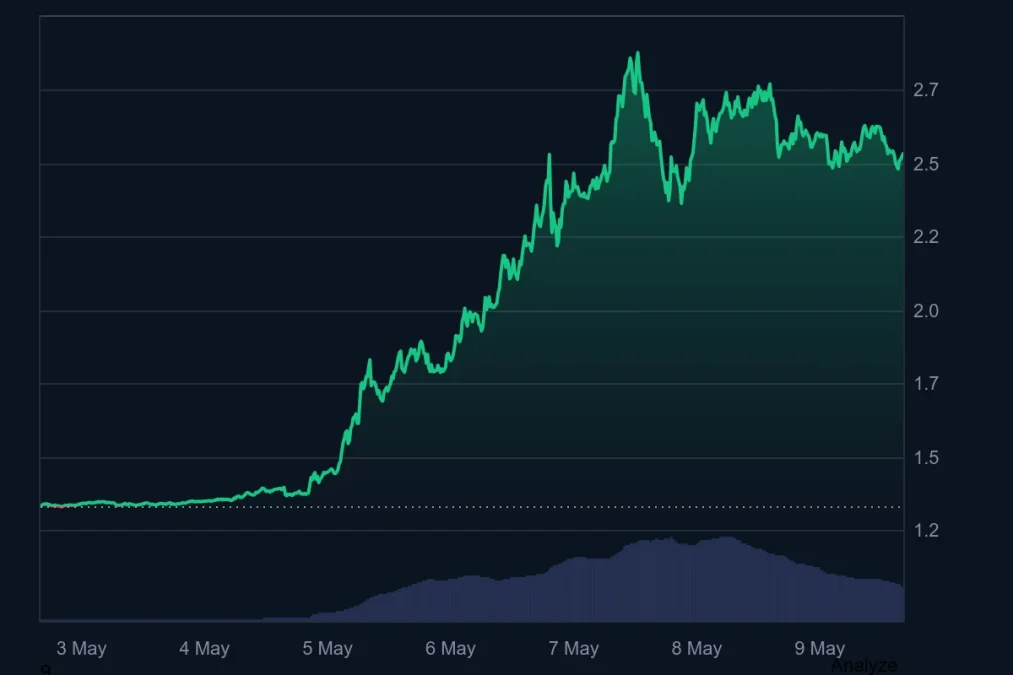
TON Surges 90% in a Week, Flips XLM and SUI in Market Cap

Solana price confirms bearish crossover following Drift exploit, will it crash?