Bitcoin (BTC) Faces Fresh Headwinds as ETF Outflows Hit $277M Near $80K Mark
Key Takeaways
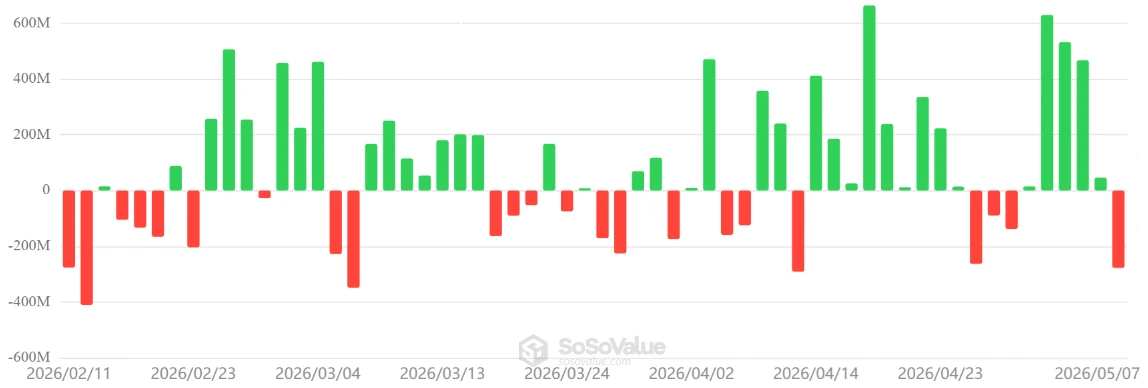
- On May 7, U.S. Bitcoin spot ETFs experienced $277 million in net withdrawals, breaking a five-consecutive-day accumulation pattern
- IBIT from BlackRock recorded a single-day withdrawal of $98 million; Fidelity’s FBTC experienced consecutive outflow days
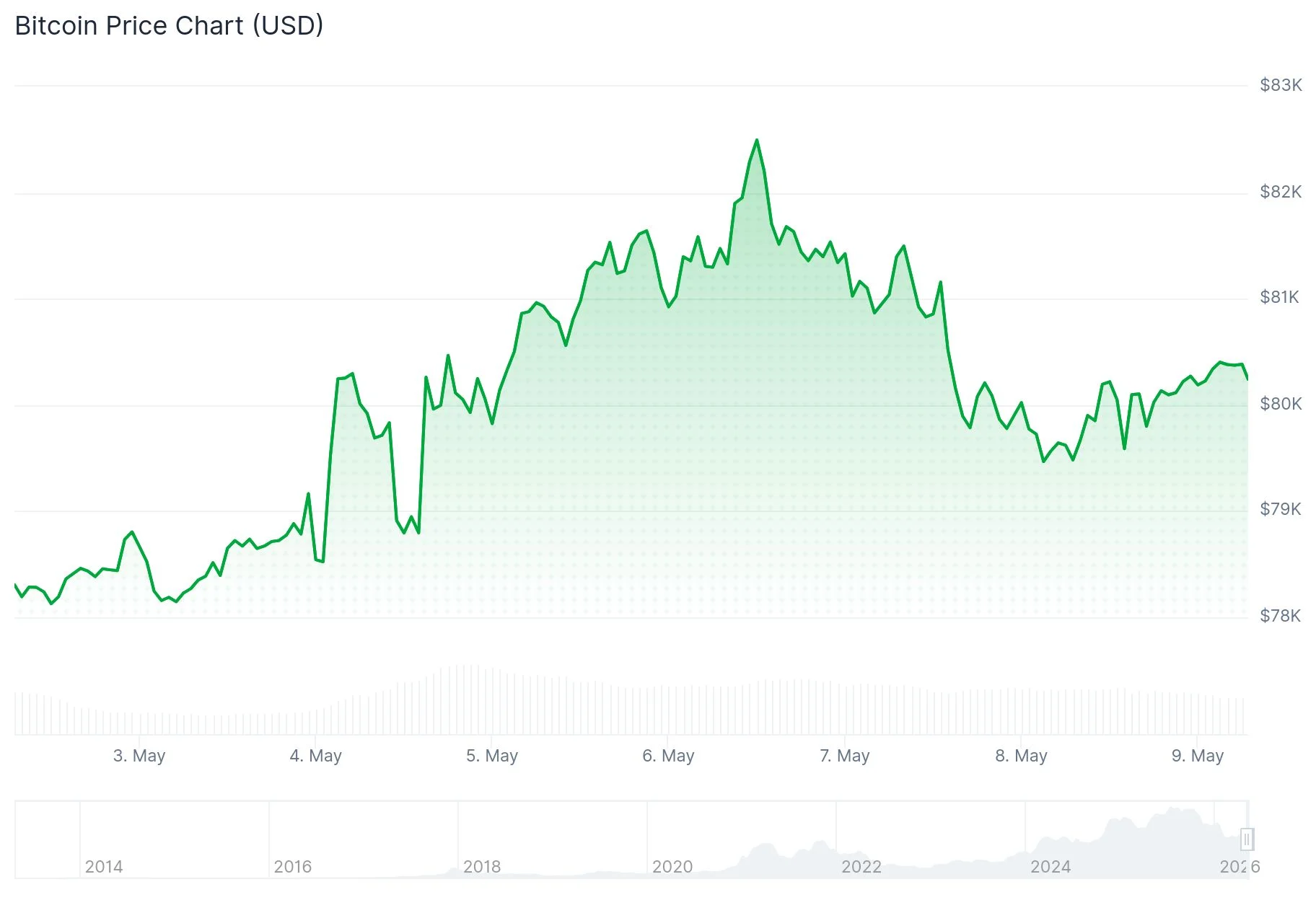
- Bitcoin retreated from $80,000 following rejection at the $82,000–$82,500 resistance level
- Coinbase and Robinhood reported revenue declines of 31% and 47% respectively in crypto operations, signaling diminished retail participation
- Dollar weakness and speculation surrounding a Strategic Bitcoin Reserve maintain long-term bullish sentiment
The streak of capital flowing into U.S. Bitcoin exchange-traded funds came to an abrupt halt on May 7, with institutional investors pulling $277.5 million from spot products. This reversal ended a remarkable accumulation phase that had attracted more than $1.6 billion since the beginning of May.
 Bitcoin (BTC) Price
The iShares Bitcoin Trust (IBIT) from BlackRock experienced its largest single-day redemption, with $98 million exiting the fund. This marked a sharp contrast to the preceding five trading sessions, during which IBIT accumulated more than $1 billion in Bitcoin exposure. Despite the outflow, the fund maintains approximately $75.8 billion in total holdings.
Fidelity’s Wise Origin Bitcoin Fund (FBTC) witnessed outflows for the second consecutive session, with combined withdrawals reaching $167.94 million over the two-day period. The fund currently manages $15.24 billion in assets.
 Source: SoSoValue
Collectively, the universe of U.S. spot Bitcoin ETFs maintains approximately $106.77 billion in Bitcoin holdings.
Bitcoin’s price action on Friday showed consolidation in the $79,700–$80,180 range, following a rejection at the $82,000–$82,500 resistance zone earlier in the week. The pullback triggered liquidations of leveraged long positions totaling approximately $270 million in a 24-hour window.
Weakening Retail Participation
Quarterly earnings reports from leading cryptocurrency platforms revealed declining retail engagement. Coinbase disclosed a 31% revenue contraction compared to the first quarter of 2025. Meanwhile, Robinhood’s cryptocurrency segment experienced a steeper 47% decline during the same timeframe.
Jake Kennis, who serves as senior research analyst at Nansen, observed that Bitcoin’s push above $81,000 was primarily fueled by institutional spot acquisitions and forced short closures — with minimal retail trader involvement. Notably, funding rates remained subdued throughout the price advance.
Lacie Zhang, research analyst at Bitget Wallet, suggested that absent a revival in retail interest, Bitcoin could face downward pressure toward the $75,000–$78,000 support range.
Data from major exchanges showed shifting sentiment among sophisticated traders. Top-tier Binance traders reduced their Bitcoin long exposure to levels not seen in more than four weeks. At OKX, the long-to-short ratio among leading traders plummeted to 0.27, a dramatic decline from 1.20 recorded just ten days prior.
Broader Economic Context: Employment Figures and Currency Weakness
The April U.S. nonfarm payrolls report delivered 115,000 new jobs — substantially exceeding the anticipated 62,000. Additionally, March figures were revised upward to 185,000. The unemployment rate remained steady at 4.3%.
While the robust employment data supported short-term risk appetite, the Federal Reserve’s capacity to implement rate cuts remains constrained by ongoing energy-related inflationary pressures.
The U.S. dollar has experienced depreciation against major global currencies over the past two months. Market analysts suggest this dynamic diminishes the attractiveness of U.S. Treasuries and may redirect capital toward scarce digital assets like Bitcoin.
Geopolitical tensions resurfaced as uncertainties regarding a U.S.-Iran ceasefire intensified. Iranian authorities alleged that Washington violated previously agreed-upon terms, while reports of renewed military action near the Strait of Hormuz drove crude oil prices higher on Friday.
In related developments, Kevin Warsh is anticipated to succeed Jerome Powell as Federal Reserve Chair. Warsh has publicly expressed favorable views toward Bitcoin and recently disclosed personal investments in cryptocurrency assets and industry-related companies.
Polymarket prediction markets indicate increasing probability that the U.S. Strategic Bitcoin Reserve could commence BTC accumulation by 2027.
According to CryptoQuant data, Bitcoin held on exchanges decreased by 9,832 BTC between May 1 and May 9, declining from 2,686,423 to 2,676,591.
The post Bitcoin (BTC) Faces Fresh Headwinds as ETF Outflows Hit $277M Near $80K Mark appeared first on Blockonomi.


You May Also Like
TON Surges 90% in a Week, Flips XLM and SUI in Market Cap

Solana price confirms bearish crossover following Drift exploit, will it crash?