

Must Read
ARTIFICIAL INTELLIGENCE. AI letters and robot hand are placed on computer motherboard in this illustration created on June 23, 2023.ARTIFICIAL INTELLIGENCE. AI letters and robot hand are placed on computer motherboard in this illustration created on June 23, 2023.
Generative AI in 2025: From Ghibli memes to low-cost therapy and beyond
For feedback or concerns regarding this content, please contact us at crypto.news@mexc.com
In 2025, artificial intelligence reached a point of relative normalcy in usage. Due to its ease of use, generative AI (GenAI) — that is, AI that applies machine learning techniques to data it has access to so as to output content of varying sorts — is at the forefront of what people are taking advantage of.
Right now, GenAI has been used in a staggering number of fields and contexts and for various reasons. Let’s try to pin these down.
For amusement and meme-making
One of GenAI’s common uses in 2025 was as a source of amusement or entertainment.
People took advantage of the power of GenAI to make memes and other images that mimicked various art styles, such as the style of Studio Ghibli.
Tools meant for making GenAI-enabled videos also came out in droves. These included Sora, Veo, and Firefly, among a host of others.
These memes were a source of fun on one hand, and also a way of helping people take stock of the world in a humorous way as well.
That said, there was also significant pushback from artists of all stripes, calling for protections for their works to not become AI data or licensing agreements that would allow them proper compensation for their work.
GenAI as musician
GenAI was also used, perhaps in part or in whole, to make AI “music” that was “virtually undetectable” or at the very least very difficult to distinguish from human-made music.
Human artists were pushing back against this. Music insiders are calling for guidelines to identify AI-made music on streaming services, and AI artists have already made their way into the Original Philippine Music (OPM) space.
Musicians who put their work out there for people to enjoy are not having it. As “Sandali” hitmaker MRLD said in a GMA report, “Ubos braincells, lahat ng pagpupuyat, at wala [nang] page sa notebook na sinusulatan ng kanta para lang matalo ng isang robot na iniiba lang ang genre ng mismong kanta.”
(All those empty brain cells, late-night sessions, and lyric-filled notebooks only to lose to a robot that just changes the genre of a song.)
Whether these AI tracks went onto streaming services as a money-making endeavor or for fun, it stands to reason that these tracks cribbed off existing musicians’ styles and likely skirted or ignored copyright in some shape or form.
According to a Deezer-Ipsos study, 73% of respondents supported disclosure when AI-generated tracks are recommended, 45% sought filtering options, and 40% said they would skip AI-generated songs entirely. Meanwhile, around 71% expressed surprise at their inability to distinguish between human-made and synthetic tracks.
The political sphere
Generative AI also made it into the political sphere. Usually combined with coordinated inauthentic behavior, generative AI outputs were used to simulate smart responses on Philippine political issues.
A June report by OpenAI, for one, mentioned how it had banned ChatGPT accounts using its models to generate bulk volumes of short comments in English and Taglish that were meant to be posted on politics and current events topics on TikTok and Facebook. Rappler’s report mentioned that the comments “were focused on praising Marcos and/or criticizing his erstwhile ally, Vice President Sara Duterte.”
OpenAI added that “this activity was connected to Comm&Sense Inc, a commercial marketing company in the Philippines.”
On the more insidious side of things, people also used GenAI to make Rodrigo Duterte statues pop up everywhere, or to make AI videos opposing Vice President Sara Duterte’s impeachment. An apparent attempt to appeal to the Duterte “cult of personality,” these AI images were political disinformation disguised as entertainment.
Further, GenAI images of politicians were shared alongside false claims about the former UniTeam of President Ferdinand Marcos Jr. and supporters of former vice president Leni Robredo, called the Kakampinks, banding together to form “UniPink.”
As a therapist and friend
The Philippines’ growing use of GenAI tools like ChatGPT also underscored how, despite wanting to support specific ends, people also used it as a means of finding affordable or free mental health assistance, or to serve as a surrogate social connection they could count on.
The World Health Organization Commission on Social Connection’s global report revealed one in six people worldwide was affected by loneliness, with significant impacts on health and well-being.
In GenAI’s case, chatbots served as non-judgmental connections people could turn to for solace, or as a means of finding further help for how they’re feeling or thinking
Trigger warning: AI-enabled therapy is not without its risks. AI doesn’t push back against a person’s ideas. It has led some to warn about AI as a therapy tool because it may have driven teens to not seek help from their parents and to turn to suicide as a solution.
(The Department of Health has national crisis hotlines to assist people with mental health concerns: 1553 (landline), 0966-351-4518, and 0917-899-USAP (8727) (Globe/TM); and 0908-639-2672 (Smart/Sun/TNT).)
Bridging or creating AI gaps
As artificial intelligence iterates and improves, it also becomes more important to recognize the ever-present digital divide that might be made worse by increased AI adoption, even as we enter an age of ever-increasing AI slop, as dictionaries might call it.
Not only will people have to be technologically proficient, they also have to now be mindful of how AI shapes reality at present.
Otherwise, there is a risk of increasing inequality between rich and poor states the further along in the AI cycle we go.
What started out as a marketing term to secure funding for research into a given tech field in the 1950s and became a point of entertainment at present is also a cause for concern as it upends work and play.
And yet, as we deal with the repercussions of generative and other forms of AI as they appear, further AI literacy is needed to bridge the gaps.
Governments should look to enact guardrails to protect against AI use by bad actors, and civil society should also work in tandem to inform the public of the potentials and problems posed by GenAI and all its other emerging forms. – Rappler.com
Market Opportunity
Sleepless AI Price(SLEEPLESSAI)
$0.02913
$0.02913$0.02913
USD
Sleepless AI (SLEEPLESSAI) Live Price Chart


Disclaimer: The articles reposted on this site are sourced from public platforms and are provided for informational purposes only. They do not necessarily reflect the views of MEXC. All rights remain with the original authors. If you believe any content infringes on third-party rights, please contact crypto.news@mexc.com for removal. MEXC makes no guarantees regarding the accuracy, completeness, or timeliness of the content and is not responsible for any actions taken based on the information provided. The content does not constitute financial, legal, or other professional advice, nor should it be considered a recommendation or endorsement by MEXC.
You May Also Like

The Chemistry of UV Resistance: How Titanium Dioxide Protects Against the California Sun
Homeowners considering synthetic boundary systems frequently voice a singular, pervasive concern: “Will the material turn yellow and brittle after a few years in
Share
Techbullion2026/04/02 18:06
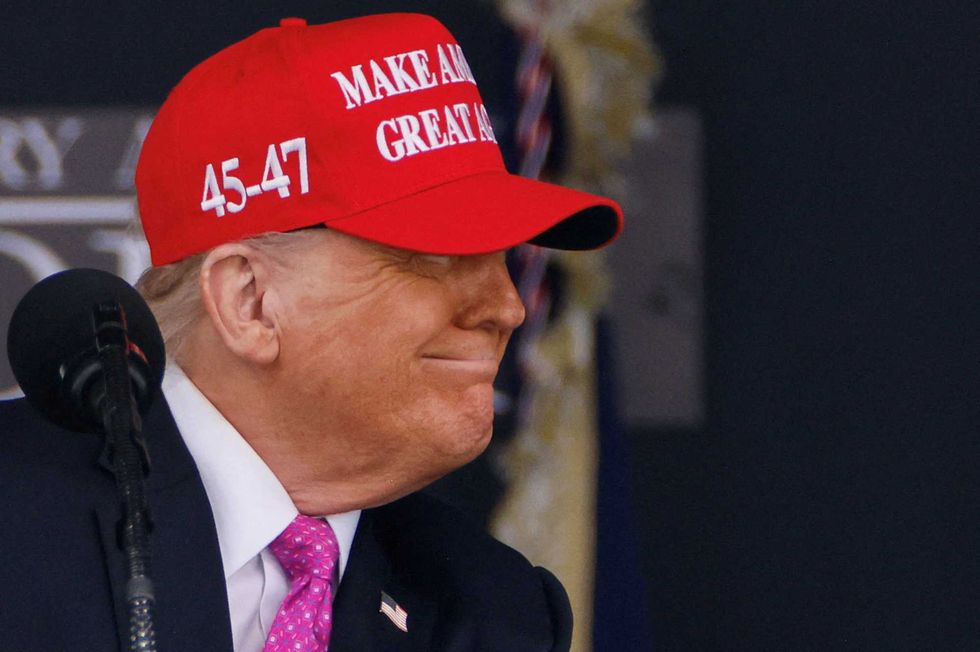
Trump-voting C-SPAN caller throws away MAGA hat: 'I apologize to all of America'
One of President Donald Trump's former supporters apologized to America for his vote and said that he had gotten rid of his MAGA gear.During Thursday's Washington
Share
Rawstory2026/05/15 03:20

Strive (ASST) Stock: Surge as Daily Dividend Plan Fuels Bitcoin Treasury Buzz
TLDR ASST rises as Strive links daily SATA dividends with its bitcoin strategy shift. Strive’s SATA preferred stock moves toward daily cash payouts from June 16
Share
Coincentral2026/05/15 03:10



