

Autonomous Finance: Inside the Fusion of AI Agents and Decentralized Markets
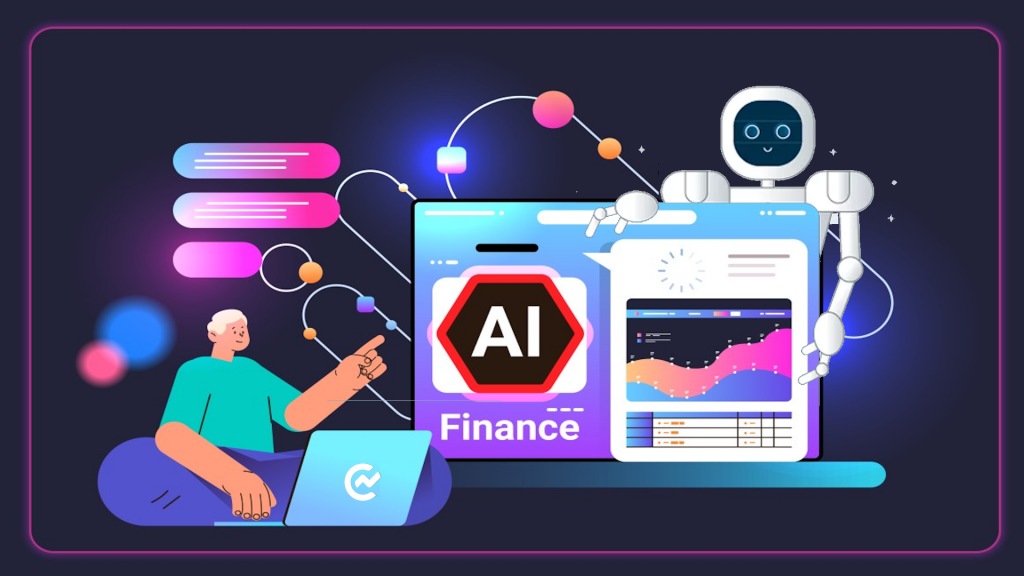
Financial systems no longer sleep. Autonomous AI agents now move liquidity, scan on-chain signals, rebalance portfolios, and arbitrate risk long after human traders log off. What began as automated trading has evolved into a 24/7 machine-driven financial layer.
This new reality for investing is being built directly from the convergence of artificial intelligence and blockchain. Their combination is forging a more autonomous digital economy, powered by decentralized financial AI (DeFAI), Web3 AI agents, and the decentralized infrastructure they require.
This isn’t happening on the fringes. Key industry players are already moving into this space, fully aware of its power to reshape digital asset management for their global user base.
The state of blockchain and AI
The scale of these two technologies is immense.
On one side, the crypto market cap reached $3.46 trillion as of November 6, 2025, up 1.8% for the year. The momentum is coming from critical areas. The stablecoin market cap is already up 48.52% in 2025. Tokenized real-world assets (RWAs) have seen even more dramatic growth, with on-chain value jumping 129% to $35.83 billion on the back of institutional interest.
At the same time, AI is on its own explosive path, with projections showing a $254.5 billion market in 2025 and a climb toward $1.8 trillion by 2031. The early intersection of these forces, the DeFAI and Web3 AI agent market, has already carved out an $11.12 billion capitalization. These figures illustrate two powerful forces now beginning to integrate, setting the stage for a new wave of financial innovation.
The rise of web3 AI agents and DeFAI
Web3 AI agents are best understood as autonomous programs on decentralized networks. Their functions are extensive. They can manage DeFi portfolios, carry out on-chain tasks, and they do all of it without needing direct human input.
This is speeding up the move toward decentralization, and the data proves it. In November 2025, the spot trade volume on DEXs hit 19.46% of the volume on CEXs—a major jump from 11.34% the previous year.
These agents are making complex trading strategies available to more people, turning them from simple tools into active players in the economy. As this new field grows, the focus turns to user accessibility. As an industry leader, Binance is committed to purposefully incorporating AI across its product suite. The goal is to address the various pain points users face and to make crypto trading and insights accessible for everyone.
This commitment is already in practice. As Jeff Li, Binance’s VP of Product, noted, “Binance has been actively exploring and integrating AI technologies across our products and services for some time now. We have been leveraging AI in multiple areas, from assisting with customer queries and enhancing platform and market surveillance to detecting and deterring misconduct and fighting scams.”
When AI and DeFi are combined, the result is a digital economy that is much more than efficient. It’s a smarter and more autonomous system in the making.
The infrastructure must be upgraded
The AI-powered innovation happening today requires a new foundation. It simply cannot run on the legacy infrastructure we have now. Traditional, centralized cloud services present critical bottlenecks and single points of failure, with the high cost and scarcity of GPUs serving as a primary example. In response, a new, decentralized stack is emerging on-chain to support a user-owned AI economy.
Crypto-native projects are leading this charge. Compute Labs is tokenizing illiquid assets like GPUs to provide both capital and hardware for AI developers, while networks like io.net and Aethir are building decentralized GPU networks specifically for AI workloads.
Any doubt that this is a niche movement is fading as major institutional players enter the field. This signals a fundamental shift in financial architecture. BlackRock’s launch of BUIDL, its first tokenized fund on the Ethereum network, is a clear example, bringing real-world assets on-chain at an institutional scale. In parallel, established Wall Street firms are making moves, with Goldman Sachs spinning out its blockchain-based technology platform, GS DAP, to streamline institutional trading.
Navigating the new AI-powered economy
What’s happening with AI and blockchain is more than a simple upgrade—it’s an architectural and philosophical redesign of the financial world.
The practical emergence of DeFAI and autonomous agents, supported by a new decentralized infrastructure, is moving the market away from human-managed systems. We are entering an era defined by autonomous, intelligent, and machine-mediated financial ecosystems—a fundamental shift from centralized control toward a more open and user-governed digital market.

You May Also Like

‘One Battle After Another’ Becomes One Of This Decade’s Best-Reviewed Movies

SlowMist: ClawHub is increasingly becoming a new target for attackers to poison supply chains.
