Hyperliquid’s revenue engine revealed: a victory for incremental decentralization
By Ryan Watkins , Co-Founder of Syncracy Capital
Compiled by: Felix, PANews
In the fourth quarter of 2024, Syncracy Capital built a large position in HYPE and continued to increase its position in the first quarter of 2025. Recently, Syncracy Capital published a statement to disclose the multiple reasons for its increase in HYPE.
The following is the full text (some modifications have been made to this article):
Hyperliquid has a unique revenue engine that combines an exchange and a smart contract platform, making it the blockchain with the highest fees in the crypto economy. Its vertically integrated design combines these two businesses through a unified interface, allowing Hyperliquid to aggregate users more efficiently than any other platform to date, providing it with a structural advantage in accommodating all financial businesses around the world.
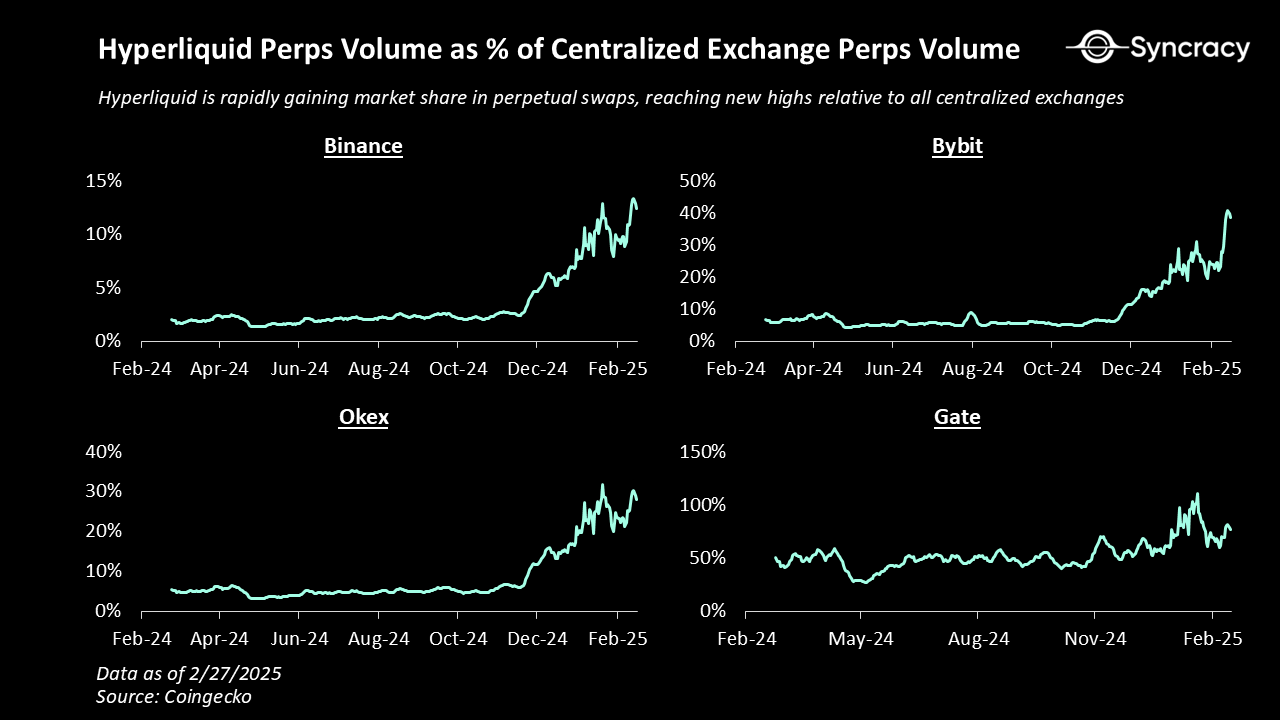
In the long run, Hyperliquid has the potential to "disrupt" Binance, offering performance superior to other decentralized platforms and outperforming centralized exchanges in terms of cost, accessibility, auditability, composability, security, and asset availability. At the same time, its smart contract platform has the potential to become one of the leading application ecosystems, leveraging Hyperliquid's exchange and trader base as the foundation for its growth.
Syncracy estimates that the combined market size for its exchange and smart contract platform will reach hundreds of billions of dollars in the coming years.
The Art of Progressive Decentralization
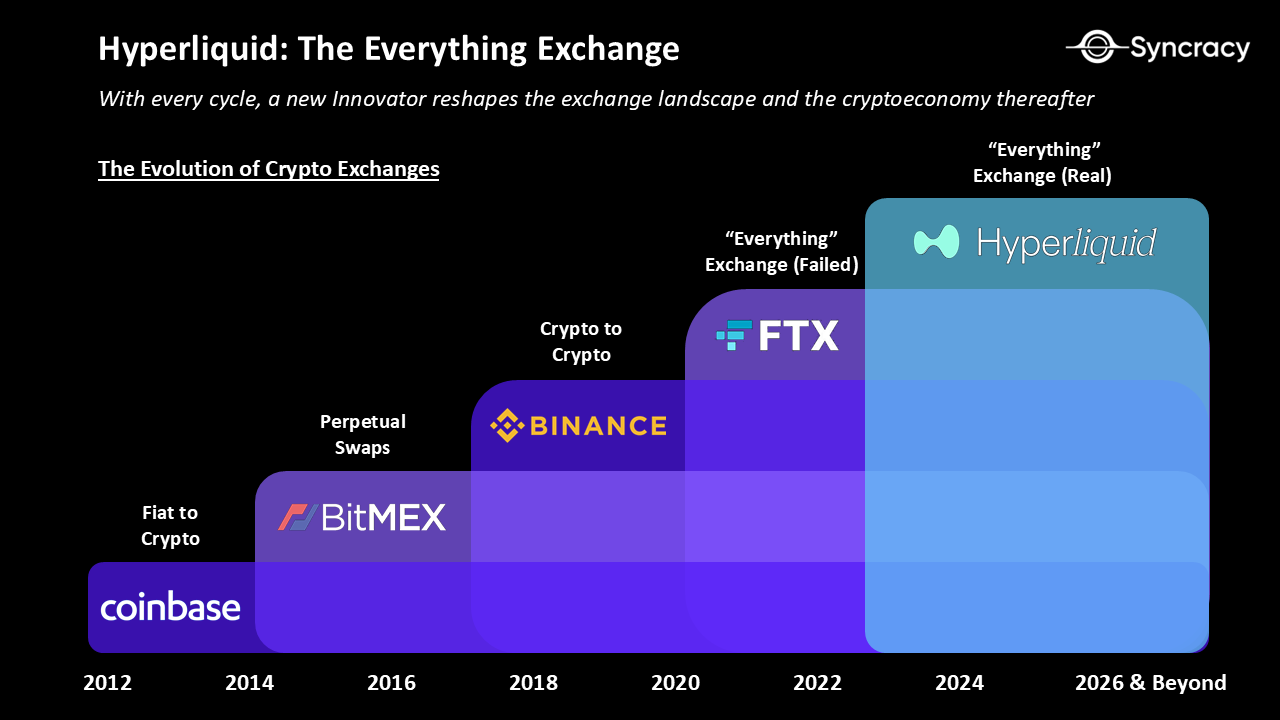
Trading is one of the killer apps in the cryptoeconomy to date, but most trading still takes place on centralized platforms. Is it possible to build a decentralized exchange with features similar to Bitcoin’s origins? This is the question Hyperliquid co-founder Jeff Yan set out to answer when he launched his new exchange from the ashes of FTX in 2022.
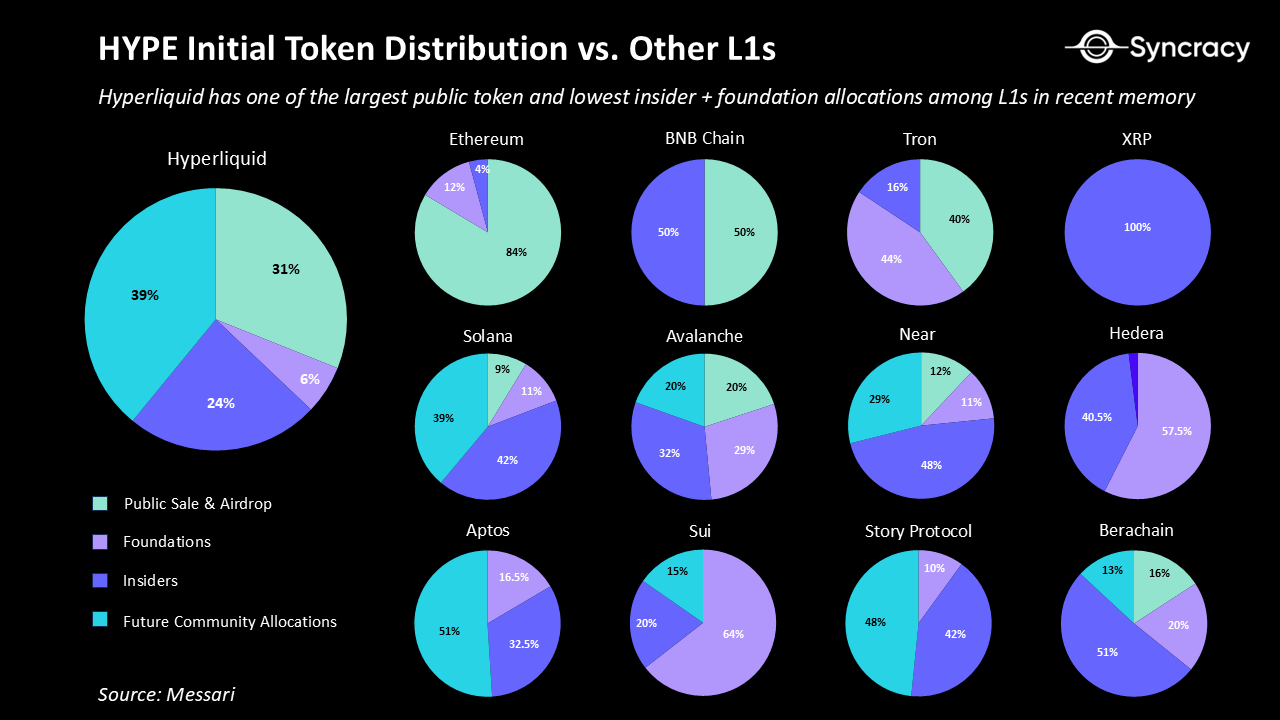
Hyperliquid did not receive any external funding from VCs, instead choosing to be completely self-funded. This was a critical decision that allowed the team to focus on developing the product without external pressure and ultimately distribute the majority of ownership to the community.
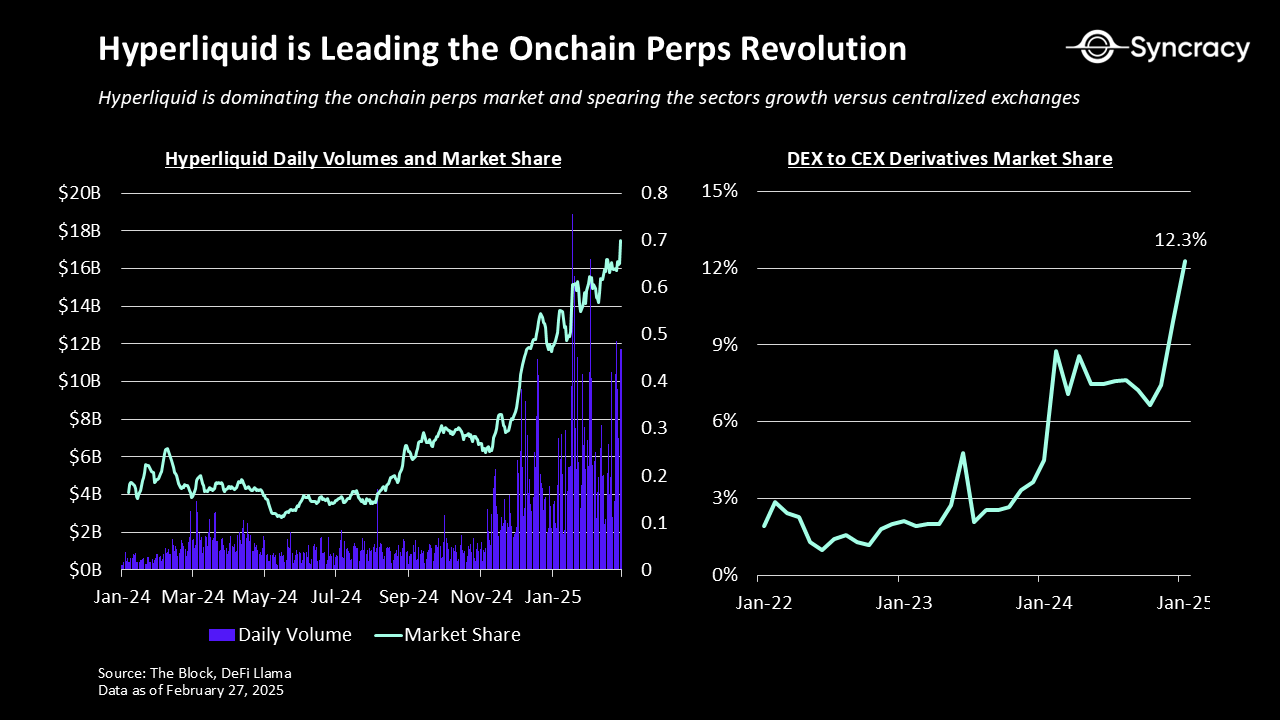
Two years later, Hyperliquid has become one of the fastest growing projects in the crypto economy, capturing more than 60% of the on-chain perpetual swap market. In doing so, Hyperliquid has played a key role in leading the shift to on-chain perpetual swap trading, which now accounts for approximately 12% of global trading volume.
Keys to Success
It all starts with the team’s product-first philosophy. The team does not optimize for ideological purity, for example, the priority from the beginning is not maximum decentralization, but providing the best on-chain transaction experience. This strategy can be understood as progressive decentralization - a practical approach to building successful projects in the crypto economy, which involves the team first finding product-market fit and then gradually giving up control over time.
While decentralization and open source are critical to reducing counterparty risk and improving product scalability in the long term, most users prefer performance and usability over strict adherence to Cypherpunk principles. Therefore, in the two years before the HYPE token was launched, the team refined the platform through direct engagement with traders.
This feedback proved valuable, as the Hyperliquid team often implemented feature requests and bug fixes within hours, building deep trust in the community. It also led to key product features such as order cancellation priority for traders, which enables market makers to quote tighter spreads, and the Hyperliquid Vault, which enables exchanges to quickly bootstrap liquidity for new token pairs. The result is a high-performance chain with a fixed order book (CLOB) capable of 100,000 transactions per second (TPS) throughput and sub-second finality, an order of magnitude higher than other platforms.
As trading volume grows exponentially by the end of 2024, Hyperliquid airdrops 31% of its token supply to users. The airdrop is a huge success.
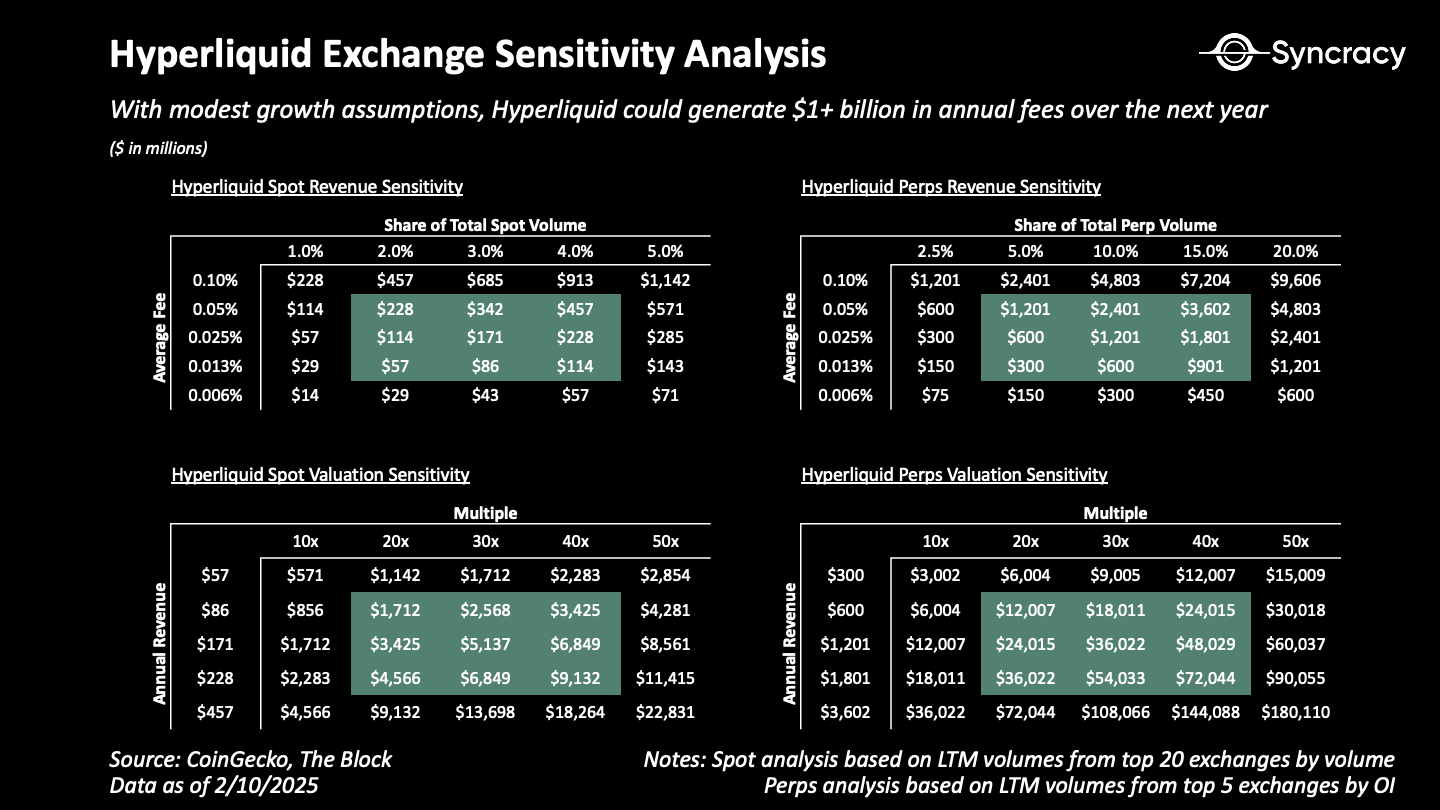
Crucially, the HYPE token also had a clear intrinsic value, with fees at the time being $228 million per year. This not only provided an incentive for recipients to hold rather than sell, but also provided buying momentum for HYPE due to the high revenues, driving large-scale buybacks. Furthermore, since there was no pre-allocation to any insiders outside the core team, large buyers had to buy on the open market. Not only did this force these participants to join Hyperliquid directly, increasing trading volume in tandem, it also highlighted that the next step in Hyperliquid's development was more than just a simple derivatives exchange.
Everything Exchange
Exchanges are winner-take-all markets, where liquidity network effects, scale efficiencies, brand equity, and regulatory moats concentrate trading activity in a few dominant players. This model has shaped the financial market landscape for centuries, solidifying the CME’s dominance in derivatives, the NYSE and Nasdaq in equities, and Binance’s dominance in centralized crypto markets. Yet, despite its size, no exchange has fully unified liquidity across multiple asset classes on a single global ledger — a concept known as the “Everything Exchange.”
Bridging this gap requires more than just dominance in a single market, it requires infrastructure that can seamlessly integrate multiple asset classes, unified liquidity, and global scale. This is where Hyperliquid’s design differs from traditional exchanges, offering a vertically integrated system that operates on its own high-performance blockchain while integrating liquidity from spot and derivatives markets.
Blockchain-based exchanges have structural advantages in terms of auditability, efficiency, security, composability, and accessibility. Instead of entrusting their assets to risky and opaque centralized entities, users can use autonomous smart contracts as intermediaries to self-custody their assets and trade in a global 24/7, almost instantaneous settlement market.
These benefits are not just theoretical. They are already driving growth in on-chain transaction volume today. This trend is reflected not only in the data, but also in the strategies of the two largest exchanges in the industry, Binance and Coinbase, which have launched their own blockchains: Binance Smart Chain and Base, respectively.
Hyperliquid has taken the first step: expanding into the crypto spot market. The solution starts with allowing users to send native assets on blockchains such as Bitcoin, Ethereum, and Solana to Hyperliquid through a fixed interface. Hyperliquid will be the only on-chain CLOB with multi-chain spot and derivatives markets.
The only large-cap assets Hyperliquid supports in the spot market are HYPE and BTC, and it is already among the top 10 and top 5 chains in global DEX trading volume.
Hyperliquid may continue to outperform its platform due to the following advantages:
- Cost - transaction fees and management fees are significantly lower than CEX such as Binance
- Accessibility — users are more likely to join due to its global permissionless nature
- Auditability — easily verifiable using basic public key cryptography inherent to blockchain
- Composability — easy for third parties to build on top of it (e.g. builder code)
- Security — self-custody, decentralization will improve over time
- Asset availability – a faster and more transparent process for listing assets
These advantages allow Hyperliquid to eventually expand beyond blockchain-native assets. Hyperliquid could potentially cover all assets around the world, including currencies, stocks, bonds, commodities, real estate, and even markets like sports betting and predictions. In fact, this shift is almost inevitable. As wallets become more popular, asset issuers will have an increasingly strong incentive to list on public chains to leverage a global investor base to increase distribution and achieve the lowest cost of capital.
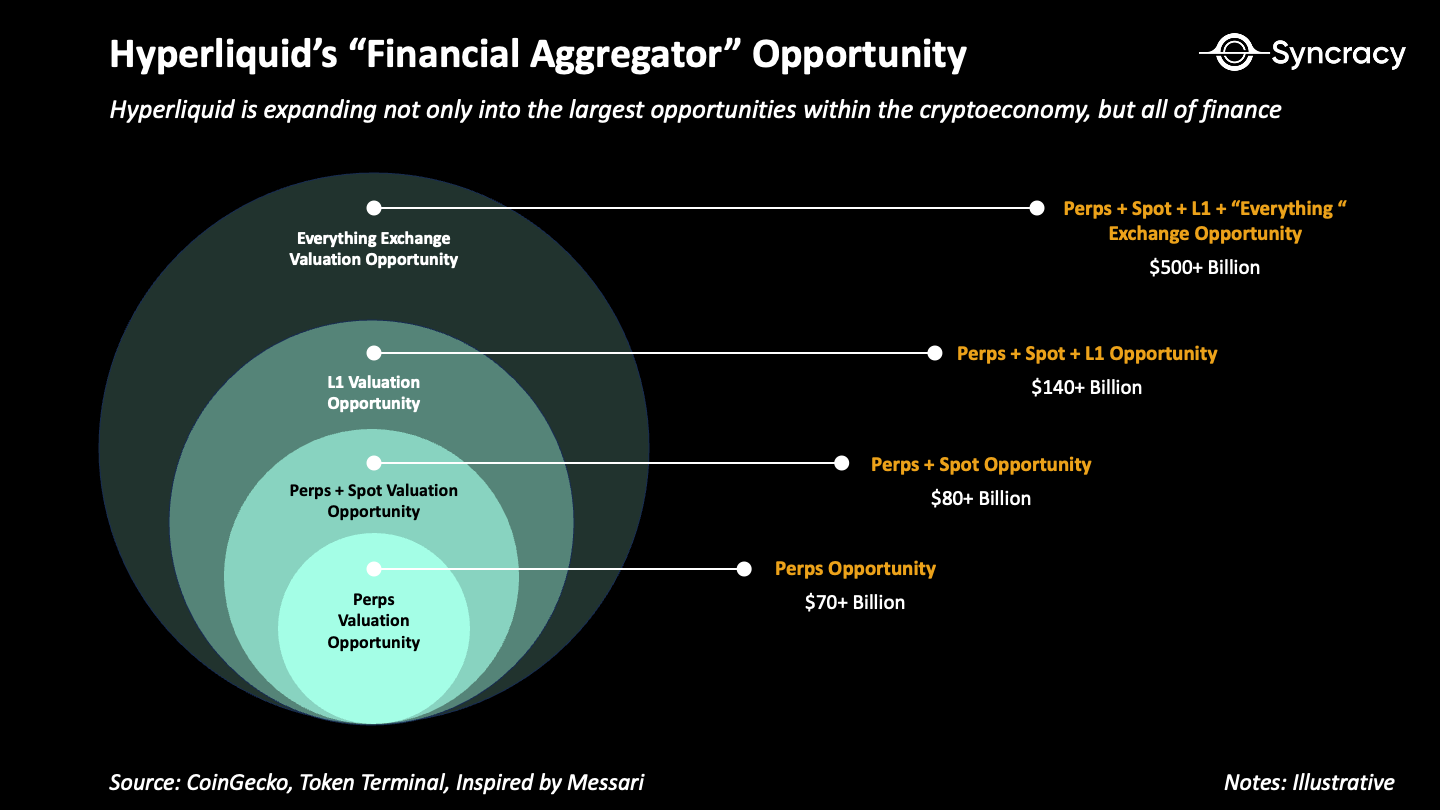
The opportunity in the crypto economy is estimated to be worth over $140 billion today. In addition, the opportunity outside of the crypto economy (covering every asset class and exchange on the planet) is worth at least $500 billion globally, not including privacy exchanges, large over-the-counter markets such as foreign exchange, etc. Including these, the market opportunity is easily worth trillions of dollars.
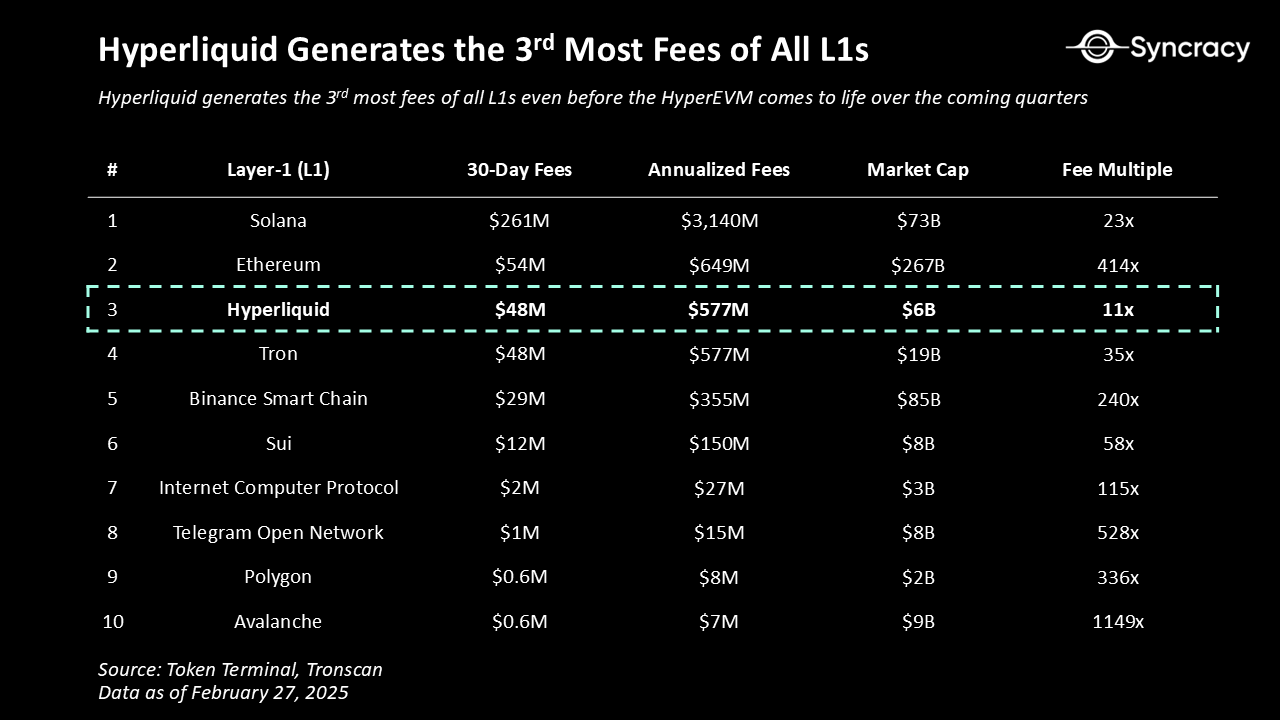
In its short history, Hyperliquid has already achieved $577 million in annual revenue from its perps exchange and emerging spot markets alone. If any of the above theories come to fruition over the next 12-24 months, revenue is expected to grow exponentially in the future, likely vaulting Hyperliquid to the top of the crypto economy in terms of on-chain revenue (it already ranks third).
The road to financial aggregation
Previously, Binance and Coinbase launched BSC and Base respectively. The two chains are independent entities from the exchanges, with independent capital tables and profit and loss statements. But what if Binance and BSC were merged? What if, in essence, the two most profitable businesses in the history of the crypto economy (exchanges and smart contract platforms) were combined? What if they were accessed through a single interface? This is the opportunity for Hyperliquid's recently launched HyperEVM, an EVM-compatible virtual machine that will run in parallel with its order book exchange.
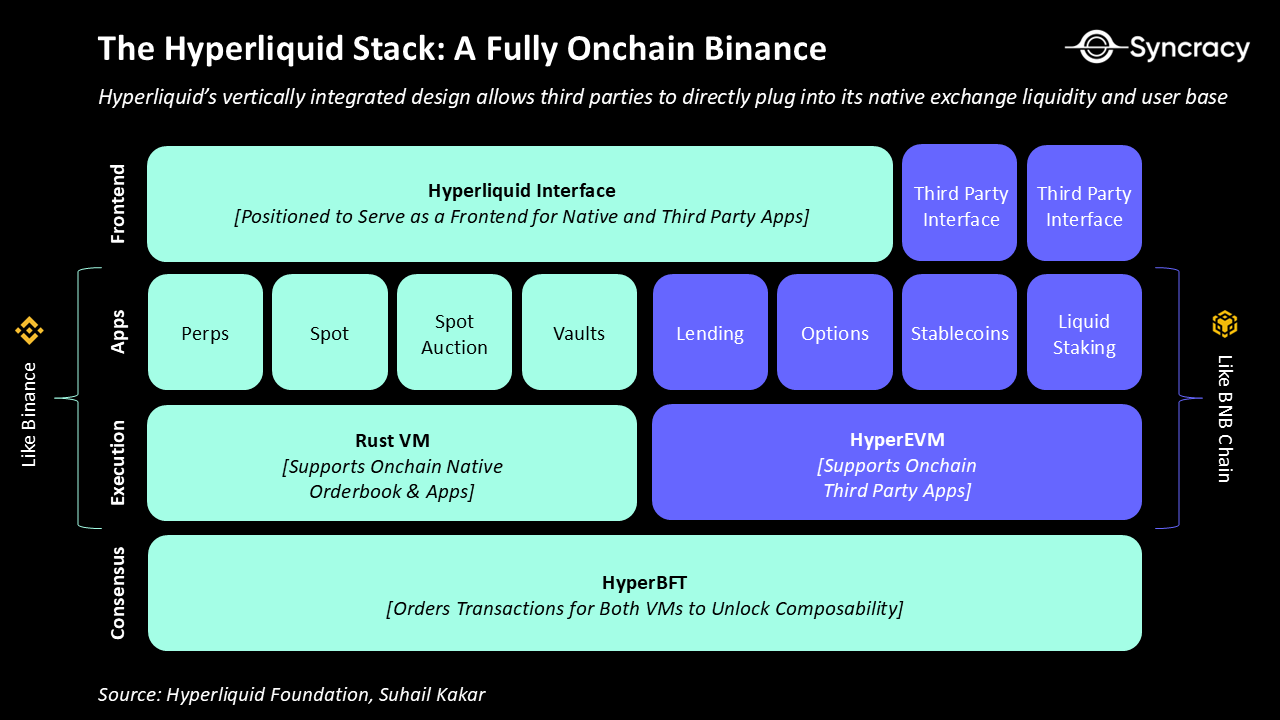
Essentially, by tightly integrating its interface, exchange, and smart contract platform into a cohesive experience, Hyperliquid can aggregate users at scale.
Historically, these three have been fragmented in the crypto economy. Hyperliquid integrates the entire stack, only partially modularizing its application and interface layer — a design choice that creates potential strategic advantages. Unlike ecosystems that rely entirely on third-party applications and interfaces, Hyperliquid’s internal exchange serves as both an anchor and a distribution hub, strengthening its network effects. The exchange is the preferred channel for third-party developers to build applications and issue assets, which can be directly integrated with the flagship Hyperliquid interface. This creates a positive feedback loop: the more users on the exchange, the more liquidity is available for applications. The more liquidity is available for applications, the more useful the applications become. The more useful the applications become, the stickier the Hyperliquid ecosystem becomes, and the more valuable Hyperliquid becomes over time.
In summary, the shared state between Hyperliquid Exchange and HyperEVM can bring many synergies and product innovations, such as:
- Advanced Collateral Management — A prime brokerage application that allows traders to maximize the capital efficiency of their collateral — such as lending liquid collateral HYPE through protocols like Aave, selling the interest through yield markets like Pendle, while using that position as collateral for derivatives trades
- On-chain structured products - an asset management application that leverages Hyperliquid vaults and derivatives to create on-chain structured products similar to Ethena
- Advanced Money Markets - a money market protocol that integrates Hyperliquid’s derivatives exchange to hedge collateral risk and spot exchange clearing, ultimately enabling it to offer higher loan-to-value (LTV) ratios to borrowers
- Confidential Transactions — A privacy protocol similar to Tornado Cash that allows anonymous orders on Hyperliquid’s exchange (dark pools)
These examples only scratch the surface — the deep integration between Hyperliquid’s trading interface, order book, and smart contract ecosystem provides fertile ground for a new wave of on-chain finance.
Hyperliquid has several important levers to pull to drive growth in its ecosystem — a key competitive advantage in an increasingly saturated smart contract platform space.
- Loyal trading users - Unlike most emerging smart contract platforms, Hyperliquid already has a large, highly engaged user base. This solves the cold start problem that plagues ecosystems outside of Ethereum, Solana, and Base, providing an immediate market for developers’ products.
- Incentive Fund — Initially, Hyperliquid allocated 39% of its supply to community rewards and incentives, enabling it to launch a multi-year, multi-billion dollar campaign to attract users and builders
- Relief Fund Buybacks — Hyperliquid announced that it will begin purchasing ecosystem tokens with its relief fund to stimulate on-chain activity and support its community
HyperEVM ecosystem builders are keenly aware of these advantages and have built their go-to-market strategies accordingly. Many are inspired by Jeff (Hyperliquid CEO) and are highly aligned with HYPE holders, which may help various projects airdrop their tokens to Hyperliquid users and HYPE stakers.
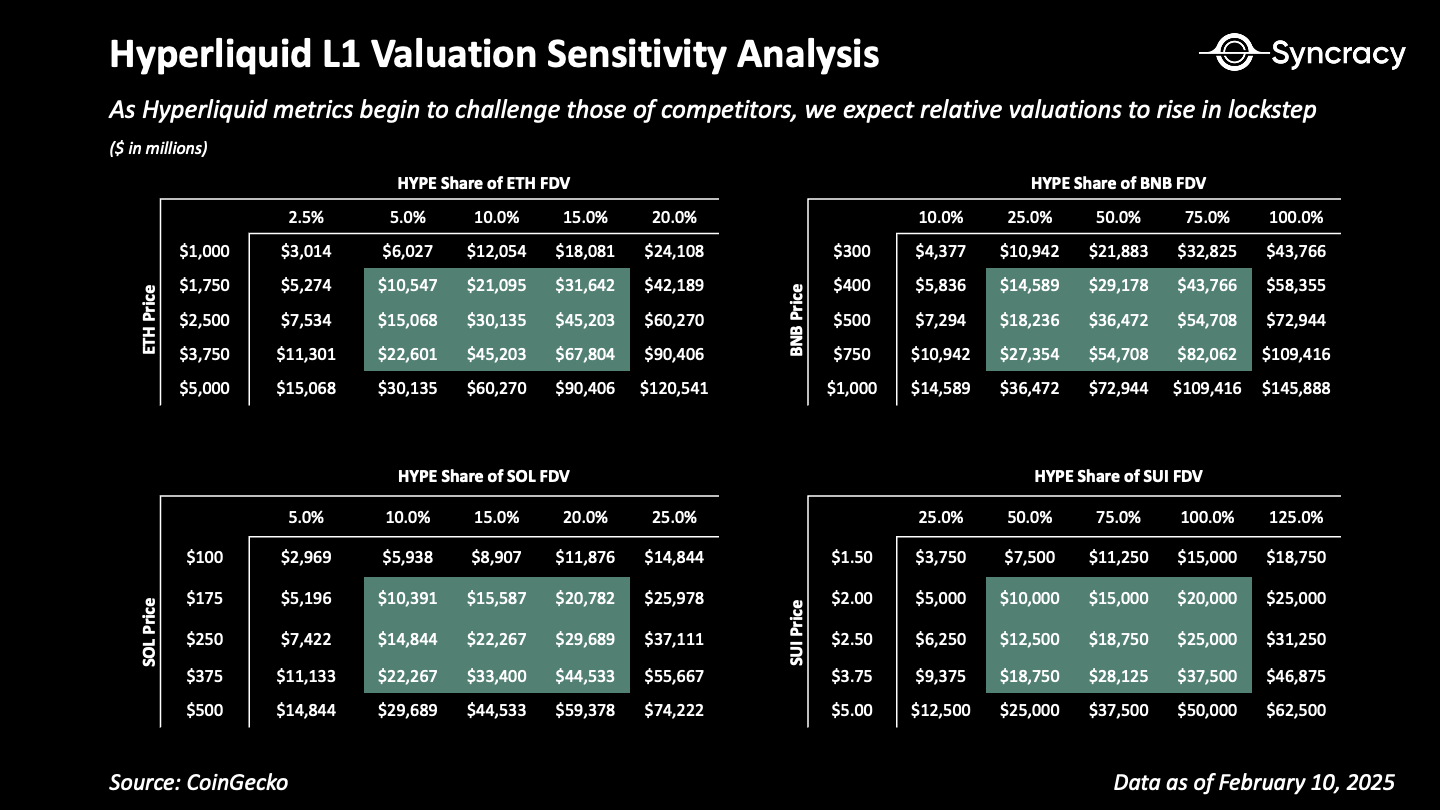
Additionally, there are a handful of projects that have pledged to allocate a portion of their funds to HYPE, which could create additional demand for HYPE while increasing revenue. This move is important in developing HYPE into a reserve asset for their respective ecosystems similar to ETH and SOL. As HYPE's adoption scales in HyperEVM, its roles as Gas, collateral, etc. will further this narrative, potentially allowing HYPE's valuation to far exceed what MEV and execution fees alone can justify. Solidifying its position as a core asset alongside BTC, ETH, and SOL.
risk
Hyperliquid's development is not without risk. In addition to the execution risks inherent in any early-stage business, there are the following risks:
- Centralization — Hyperliquid may not be able to distribute its validator set, which currently consists of 16 servers located in Tokyo, globally without degrading performance; in addition, its lack of decentralization may pose regulatory risks
- Developer ecosystem — Hyperliquid is mainly developed by the core team, with very few external contributions; most of the code is still closed source, and HyperEVM is in its infancy
- Protocol Embedding — Whether it is necessary to embed all the necessary infrastructure on-chain to run an order book exchange remains an open question, especially related to perpetual products that require a protocol-owned insurance fund to prevent bankruptcy
- Bridge hack — If Hyperliquid fails to decentralize its bridge infrastructure, its spot market could be disrupted; additionally, the lack of native stablecoin support creates unnecessary counterparty risk
- Cyclical nature of the business – exchanges are cyclical businesses and declining interest in the asset class will lead to lower volumes and lower fees
The boundaries between financial markets are disappearing, merging into a single, composable, and ultra-liquid financial system. Over time, the collection of siloed ledgers, intermediaries, and clearing houses of the old financial world will be replaced by a unified, real-time, programmable economy.
Related reading: Transaction volume exceeds one trillion US dollars, with an average daily liquidation amount of 400 million US dollars. Hyperliquid has become a giant whale chain "casino"
You May Also Like

Ethereum unveils roadmap focusing on scaling, interoperability, and security at Japan Dev Conference

Here’s How Consumers May Benefit From Lower Interest Rates