

SK Politician Faces Allegations of Targeting Exchange Amid Conflict of Interest
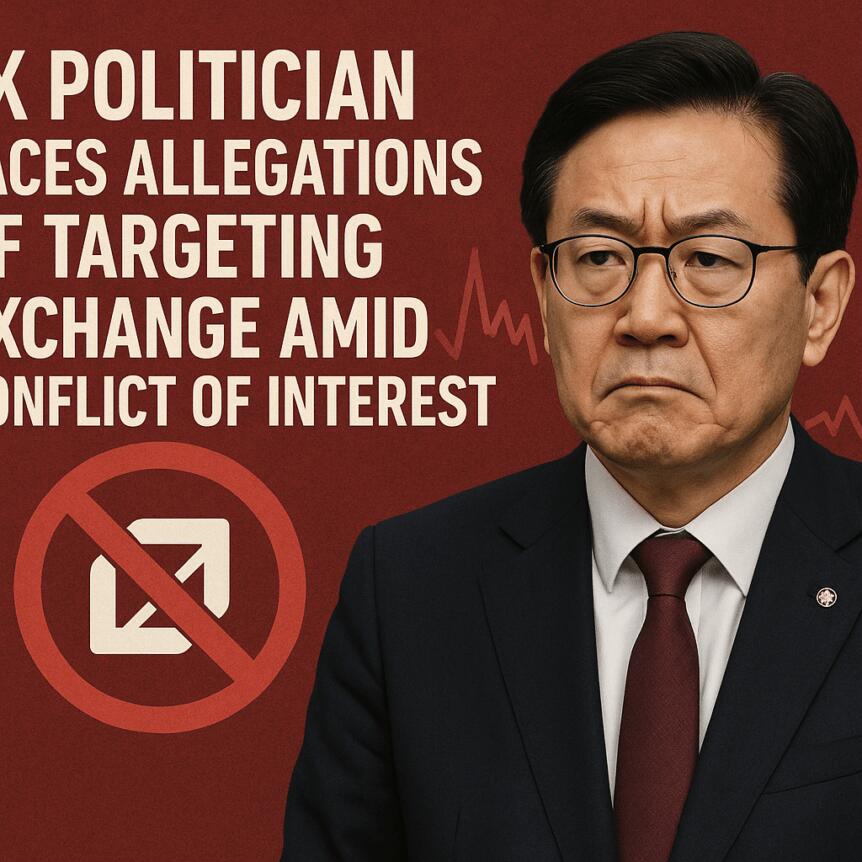
South Korean Politician Faced with Allegations of Crypto Industry Influence
Kim Byung-kee, a prominent figure in South Korea’s Democratic Party and a member of the National Assembly’s Political Affairs Committee, is under investigation following claims that he attempted to influence the country’s cryptocurrency exchange market for personal and political gain. The controversy centers around allegations of pressure on Dunamu, operator of the leading exchange Upbit, amidst efforts to promote his son’s employment prospects at a rival crypto firm.
Reports suggest Kim sought to secure a role for his son at Bithumb, another major South Korean exchange, while simultaneously raising concerns about Upbit’s monopoly practices. Allegedly, Kim instructed staff to frame regulatory scrutiny of Dunamu, allegedly as part of wider efforts to curb dominant market players following a significant acquisition by Naver, South Korea’s largest internet company, which announced its intention to acquire Dunamu in a $10 billion deal—a move still pending regulatory approval.
The controversy has intensified given Kim’s influential role overseeing financial institutions, raising questions about potential conflicts of interest. Despite denying any wrongdoing, Kim expressed frustration over the accusations, stating, “The company’s work, including hiring my son, has absolutely nothing to do with me, and it is deeply regrettable that my legislative activities are being linked to my son’s employment through open recruitment.”
Meanwhile, a spokesman for Bithumb claimed that recruitment processes are transparent and open, emphasizing that addressing market monopolies has been a priority for policymakers since 2021. The ongoing scrutiny coincides with South Korea’s broader efforts to regulate the crypto sector, including ongoing discussions around a stablecoin framework.
Stablecoin Regulation Continues to Evolve
Unlike the United States, where comprehensive legislation was passed in July to regulate payment stablecoins, South Korean regulators, along with the Bank of Korea, have faced delays over the issuance of won-backed stablecoins. Talks regarding the framework have stalled since November, with the government expected to introduce a new draft bill in January, after missing key regulatory deadlines.
This environment of regulatory uncertainty reflects South Korea’s cautious but active stance towards crypto governance, amid efforts to balance innovation with consumer protection and market stability.
Further Reading
When privacy and AML laws conflict: Crypto projects’ impossible choice
This article was originally published as SK Politician Faces Allegations of Targeting Exchange Amid Conflict of Interest on Crypto Breaking News – your trusted source for crypto news, Bitcoin news, and blockchain updates.
You May Also Like

American Bitcoin’s $5B Nasdaq Debut Puts Trump-Backed Miner in Crypto Spotlight

CME Group to Launch Solana and XRP Futures Options
