

NATO Arctic Security: Critical Alliance Moves to Block Russian and Chinese Influence
BitcoinWorld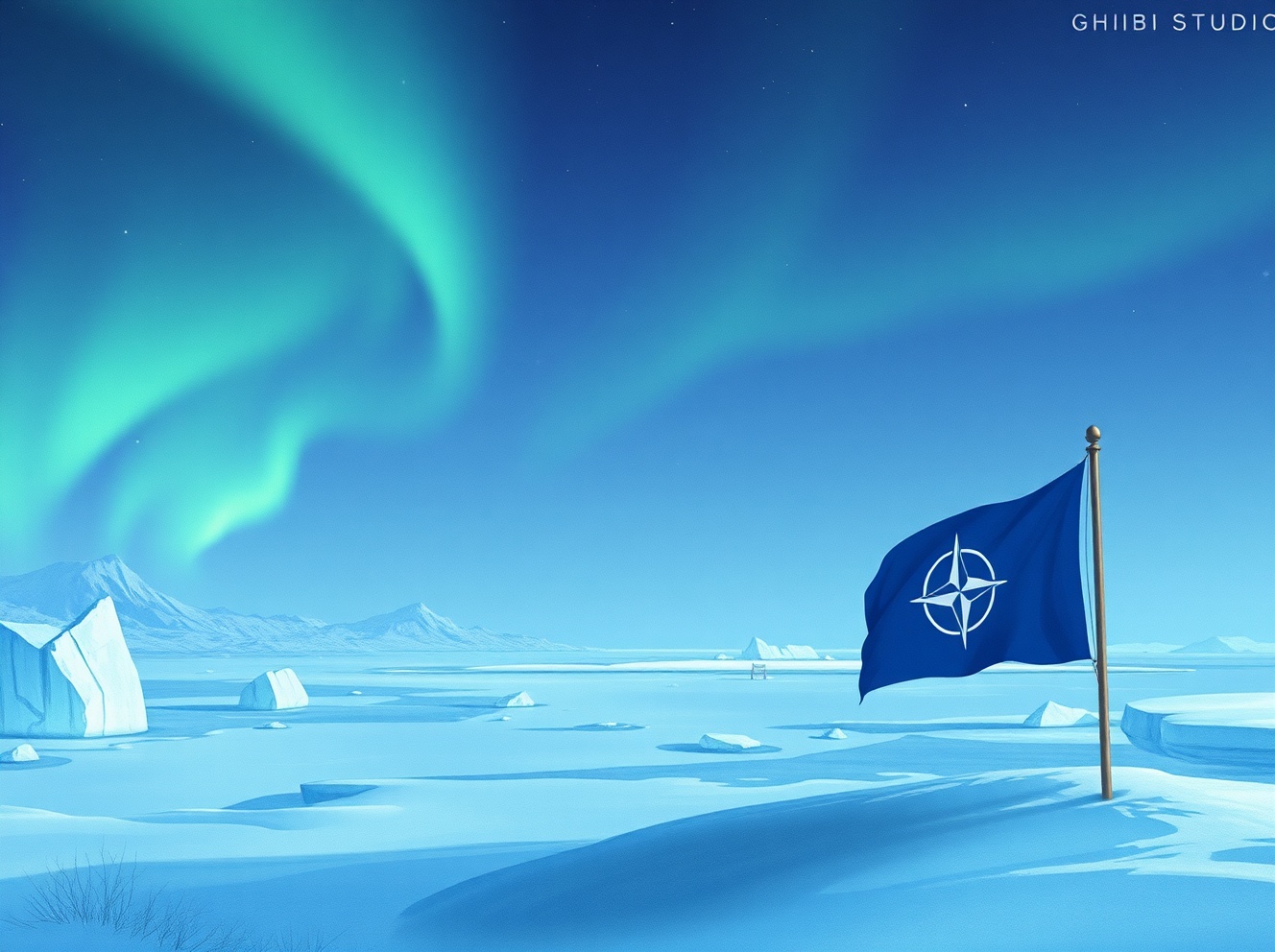
NATO Arctic Security: Critical Alliance Moves to Block Russian and Chinese Influence
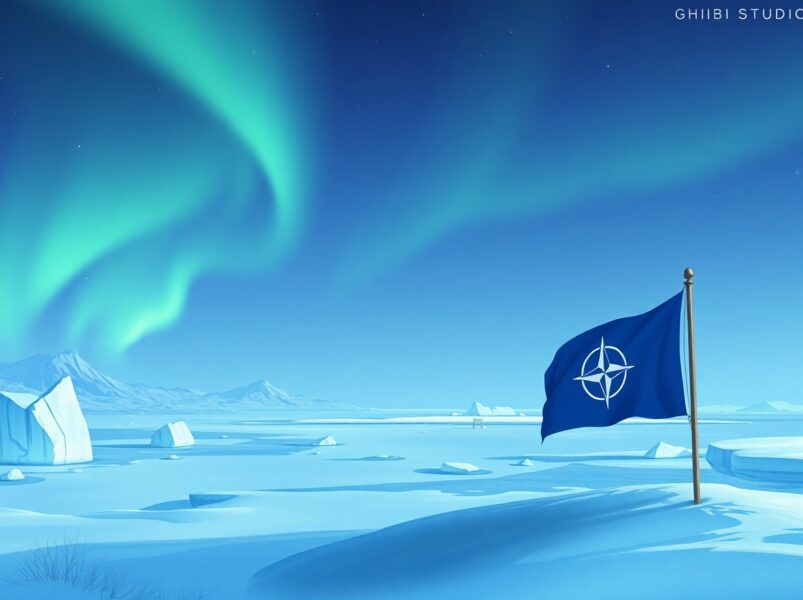
In a significant geopolitical development this week, NATO allies are intensifying discussions about establishing a comprehensive Arctic security framework, a strategic move directly aimed at countering expanding Russian and Chinese influence in the resource-rich polar region. According to a NATO spokesperson, these critical talks build upon previous concepts and focus on collective security efforts among the seven NATO members with Arctic territories. The alliance specifically aims to strengthen cooperation with Denmark and the United States to prevent economic or military footholds by Moscow and Beijing in strategically vital Greenland. This evolving NATO Arctic security posture represents a pivotal shift in global power dynamics as climate change opens new northern passages and resource opportunities.
NATO Arctic Security Framework Takes Shape
NATO officials confirm that discussions about an Arctic security framework have gained substantial momentum recently. The alliance spokesperson explained that these talks specifically focus on ensuring regional stability through coordinated military and diplomatic efforts. Significantly, seven NATO member states maintain Arctic territories: the United States, Canada, Denmark (via Greenland), Norway, Iceland, Sweden, and Finland. Consequently, these nations will play essential roles in any collective security arrangement. The framework discussions reportedly address multiple dimensions including maritime surveillance, infrastructure protection, and joint exercises. Furthermore, NATO emphasizes that its approach remains defensive and compliant with international law. The alliance consistently maintains that its primary objective involves safeguarding member states’ sovereignty and territorial integrity.
Historical Context and Strategic Importance
The Arctic region has transformed from a frozen periphery into a central arena for geopolitical competition. Several factors drive this transformation. First, receding sea ice creates new shipping routes like the Northern Sea Route, potentially cutting transit times between Asia and Europe by 40%. Second, the region contains vast untapped resources including an estimated 13% of the world’s undiscovered oil and 30% of its natural gas. Third, strategic military positioning gains importance as Arctic waterways become more navigable. Russia has dramatically expanded its Arctic military presence over the past decade, reopening dozens of Soviet-era bases and establishing new ones. Similarly, China declared itself a “near-Arctic state” in 2018 and has pursued scientific, economic, and strategic investments across the region. These developments create legitimate security concerns for NATO members.
Comparative Arctic Military Presence
| Country/Alliance | Key Arctic Military Assets | Recent Developments |
|---|---|---|
| Russia | Northern Fleet, Arctic brigades, icebreakers, radar stations | Reopened 50+ Soviet bases, new S-400 systems deployed |
| China | Icebreaker fleet, research stations, satellite surveillance | “Polar Silk Road” initiative, dual-use infrastructure investments |
| NATO Members | Joint exercises, surveillance networks, cold-weather training | Increased patrols, enhanced intelligence sharing, infrastructure upgrades |
The Greenland Factor in Arctic Security
Greenland emerges as a particularly sensitive focal point in NATO’s Arctic security calculations. As the world’s largest island, Greenland possesses strategic importance for several reasons. Its location controls access between the North Atlantic and Arctic Ocean. Additionally, it hosts the U.S. Thule Air Base, a critical early-warning radar site. Moreover, Greenland contains significant mineral resources including rare earth elements essential for modern technology. The NATO spokesperson specifically emphasized cooperation with Denmark and the United States to prevent foreign footholds in Greenland. This concern follows several notable incidents. In 2019, then-President Donald Trump reportedly discussed purchasing Greenland. Subsequently, China has pursued mining investments and research partnerships there. Consequently, NATO views Greenland’s stability as directly connected to transatlantic security.
Key Strategic Concerns Regarding Greenland
- Geographic Position: Controls maritime approaches to North America
- Military Infrastructure: Hosts Thule Air Base with ballistic missile tracking capabilities
- Resource Competition: Contains rare earth minerals critical for electronics and defense systems
- Dual-Use Investments: Foreign-funded infrastructure projects with potential military applications
- Climate Vulnerability: Melting ice exposes new resources and shipping lanes requiring protection
Russian and Chinese Activities in the Arctic
NATO’s renewed focus on Arctic security responds directly to documented activities by Russia and China. Russia maintains the most substantial Arctic military presence of any nation. Its Northern Fleet, based near Murmansk, represents Russia’s largest naval force. Additionally, Russia has constructed new Arctic bases equipped with modern weapons systems. These installations support Moscow’s claim to extended continental shelf resources under international law. Meanwhile, China pursues a comprehensive Arctic strategy despite lacking territorial claims. Beijing’s approach combines scientific research, economic investment, and strategic positioning. Chinese state-owned companies have invested in Arctic energy projects and infrastructure. Furthermore, China operates multiple icebreakers, including nuclear-powered vessels, and conducts regular polar research missions. Both nations participate actively in Arctic governance forums while advancing their national interests.
Alliance Coordination and Implementation Challenges
Developing an effective NATO Arctic security framework presents several practical challenges. First, member states possess differing threat perceptions and economic interests in the region. Second, the harsh Arctic environment requires specialized equipment and training, representing significant investment. Third, balancing military presence with environmental protection remains crucial. Fourth, NATO must coordinate with non-member Arctic states like Sweden and Finland, which recently joined the alliance. Fifth, the framework must comply with international agreements including the United Nations Convention on the Law of the Sea. Despite these challenges, NATO has already taken concrete steps. The alliance conducted its largest Arctic exercise in decades, Cold Response 2022, involving 30,000 troops from 27 nations. Additionally, NATO established a new Arctic command structure and enhanced intelligence sharing about northern developments.
Expert Analysis on Arctic Security Dynamics
Security analysts emphasize that Arctic competition involves multiple domains beyond traditional military concerns. Dr. Rebecca Pincus, Director of the Polar Institute at the Wilson Center, notes, “The Arctic represents a complex security environment where climate change, economic development, and strategic competition intersect.” Similarly, Professor Michael Byers of the University of British Columbia explains, “NATO’s challenge involves deterring aggression while maintaining space for cooperation on scientific research and environmental protection.” These experts highlight that successful Arctic security requires integrated approaches combining defense, diplomacy, and development. Furthermore, they stress the importance of involving Indigenous communities who possess essential knowledge and rights in the region. Consequently, NATO’s framework discussions reportedly include consultations with northern populations and environmental experts.
Global Implications and Future Projections
The evolving NATO Arctic security framework carries significant implications beyond the polar region. First, it signals renewed great power competition in previously peripheral areas. Second, it may influence global shipping patterns as Arctic routes become viable alternatives. Third, resource competition could affect energy markets and technology supply chains. Fourth, increased military activity raises risks of incidents or escalation in remote areas. Looking ahead, several developments seem likely. NATO will probably increase joint exercises and surveillance capabilities in the Arctic. The alliance may establish permanent naval patrols or rapid response forces for northern contingencies. Additionally, NATO will likely enhance partnerships with non-Arctic allies concerned about polar developments. Meanwhile, Russia and China will probably continue expanding their Arctic activities, potentially testing NATO’s resolve and coordination. The coming years will determine whether competition or cooperation defines the Arctic’s future.
Conclusion
NATO’s intensifying discussions about an Arctic security framework represent a strategic response to documented Russian and Chinese activities in the polar region. This NATO Arctic security initiative focuses particularly on preventing foreign military or economic footholds in Greenland while ensuring collective defense among member states with northern territories. The framework development occurs against a backdrop of climate change, resource competition, and shifting global trade routes. Successful implementation requires balancing military preparedness with environmental stewardship and Indigenous rights. As the Arctic transforms from frozen frontier to contested space, NATO’s coordinated approach aims to maintain stability and protect member interests. The alliance’s actions in coming months will significantly influence whether the High North becomes an arena for conflict or cooperation in the twenty-first century.
FAQs
Q1: Why is NATO focusing on Arctic security now?
NATO intensifies its Arctic focus due to increased Russian military buildup, expanding Chinese economic activities, climate change opening new passages, and growing competition for Arctic resources that affect member states’ security interests.
Q2: Which NATO countries have Arctic territory?
Seven NATO members maintain Arctic territories: the United States (Alaska), Canada, Denmark (via Greenland), Norway, Iceland, Sweden, and Finland, giving the alliance substantial legitimate interests in the region.
Q3: What specific concerns exist about Greenland?
Greenland concerns include its strategic location controlling maritime approaches, hosting critical U.S. military infrastructure like Thule Air Base, containing valuable rare earth minerals, and attracting foreign investment with potential dual-use applications.
Q4: How does China participate in Arctic affairs without territory there?
China engages through scientific research stations, icebreaker expeditions, infrastructure investments in Arctic states, participation in governance forums, and declaring itself a “near-Arctic state” with legitimate interests in polar developments.
Q5: What are the main challenges for NATO’s Arctic security framework?
Key challenges include coordinating diverse member state interests, operating in extreme environments, balancing military and environmental priorities, complying with international law, and avoiding unnecessary escalation with Russia and China.
This post NATO Arctic Security: Critical Alliance Moves to Block Russian and Chinese Influence first appeared on BitcoinWorld.
You May Also Like

The Role of Blockchain in Building Safer Web3 Gaming Ecosystems
- Immutable Ownership of Assets Blockchain records can be manipulated by anyone. If a player owns a sword, skin, or plot of land as an NFT, it is verifiably in their ownership, and it cannot be altered or deleted by the developer or even hacked. This has created a proven track record of ownership, providing control back to the players, unlike any centralised gaming platform where assets can be revoked.
- Decentralized Infrastructure Blockchain networks also have a distributed architecture where game data is stored in a worldwide network of nodes, making them much less susceptible to centralised points of failure and attacks. This decentralised approach makes it exponentially more difficult to hijack systems or even shut off the game’s economy.
- Secure Transactions with Cryptography Whether a player buys an NFT or trades their in-game tokens for other items or tokens, the transactions are enforced by cryptographic algorithms, ensuring secure, verifiable, and irreversible transactions and eliminating the risks of double-spending or fraudulent trades.
- Smart Contract Automation Smart contracts automate the enforcement of game rules and players’ economic exchanges for the developer, eliminating the need for intermediaries or middlemen, and trust for the developer. For example, if a player completes a quest that promises a reward, the smart contract will execute and distribute what was promised.
- Anti-Cheating and Fair Gameplay The naturally transparent nature of blockchain makes it extremely simple for anyone to examine a specific instance of gameplay and verify the economic outcomes from that play. Furthermore, multi-player games that enforce smart contracts on things like loot sharing or win sharing can automate and measure trustlessness and avoid cheating, manipulations, and fraud by developers.
- Cross-Platform Security Many Web3 games feature asset interoperability across platforms. This interoperability is made viable by blockchain, which guarantees ownership is maintained whenever assets transition from one game or marketplace to another, thereby offering protection to players who rely on transfers for security against fraud. Key Security Dangers in Web3 Gaming Although blockchain provides sound first principles of security, the Web3 gaming ecosystem is susceptible to threats. Some of the most serious threats include:

Vitalik Buterin Challenges Ethereum’s Layer 2 Paradigm
