Can society’s decline be stalled by decentralised social media? Ethereum co-founder Vitalik Buterin intends to find out in 2026, with a focus on developing betterCan society’s decline be stalled by decentralised social media? Ethereum co-founder Vitalik Buterin intends to find out in 2026, with a focus on developing better

Vitalik Buterin Vows Full Push Into Decentralised Social Media in 2026

4 min read
  • Ethereum co-founder Vitalik Buterin intends to recommit to decentralised social media in 2026, saying that if society is to improve, we need to develop better “mass communication tools.”
  • Buterin said any new decentralised social platform needs to do more than simply add a speculative token, arguing the entire system needs to meet users’ long-term interests, rather than incentivise short-term engagement.

Everyone knows the internet is a swamp filled with misinformation and malicious actors. But Vitalik Buterin plans to change that by making “new and better forms of interaction” possible through decentralised technology.

The co-founder of Ethereum said he’ll recommit to decentralised social media in 2026, driven by a belief that the key to improving society is better mass communication tools that reward high-quality content catering to a “user’s long-term interest” rather than click-bait designed to maximise “short-term engagement.”

Posting on X, Buterin said that there’s no easy solution to the problem of creating a system that supports this kind of higher-quality social media content. However, he suggested that more competition, driven by a decentralised social data layer, would lay a firm foundation.

“There is one important place to start: more competition. Decentralization is the way to enable that: a shared data layer, with anyone being able to build their own client on top,” Buterin explained.

Buterin explained that when he talks about decentralised social media, he doesn’t simply mean something like Twitter with a speculative token attached. “Crypto social projects has often gone the wrong way,” Buterin said. 

Too often, we in crypto think that if you insert a speculative coin into something, that counts as ‘innovating’, and moves the world forward.
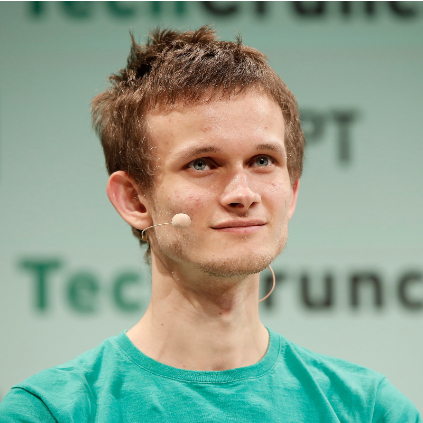
Vitalik Buterin, Co-founder of Ethereum

The Ethereum co-founder said he isn’t against monetising social content, pointing to the subscription-based social platform, Substack, as an example of how it can be done in a way that incentivises high-quality content. 

He cautioned that market-based models involving tokens have repeatedly failed to reward quality content and have instead rewarded creators with “pre-existing social capital,” creating bubbles around these creators, which almost inevitably crash back to zero.

Over the past decade, we have seen many many attempts at incentivizing creators by creating price bubbles around them, and all fail by (i) rewarding not content quality, but pre-existing social capital, and (ii) the tokens all going to zero after one or two years anyway.

Vitalik Buterin, Co-founder of Ethereum

Buterin also lashed out at people making what he described as “galaxy-brained arguments” that a market-based approach is inherently good because it “elicits information” when those same people create social media products clearly intended to co-opt people’s attention and algorithmically manipulate them.

“That is not Hayekian info-utopia,” Buterin said (referring to the liberalist theories of economist Friedrich Hayek), “that is corposlop.”

Decentralised social media, Buterin argued, should be run by people who care deeply about the “social” component and “are motivated first and foremost by solving the problems of social,” rather than those more focussed on the monetisation component.

We need to move beyond everyone constantly tweeting inside a single global info warzone, and into a reopened frontier, where new and better forms of interaction become possible.

Vitalik Buterin, Co-founder of Ethereum

Related: Yakovenko vs. Buterin: Solana’s Constant Evolution Meets Ethereum’s “Walkaway” Ideal

Shake-Ups at Leading SocialFi Platforms Coincide with Buterin Post

Two leading SocialFi platforms have seen major shake-ups in the past few days, with one being acquired and the other having a major leadership change. 

On January 21, Dan Romero, the co-founder of Farcaster, announced on X that the platform had been acquired by ecosystem infrastructure provider, Neynar. Farcaster had been widely hyped as the future of decentralised social media a few years ago and is one of the few decentralised SocialFi apps to have seen solid adoption so far. 

In his announcement, Romero explained that “after five years, it’s clear Farcaster needs a new approach and leadership to reach its full potential.”

Meanwhile Lens, a decentralised SocialFi protocol and layer 2 network, announced January 20 that leadership will transition from the decentralised finance protocol, Aave (which also created Lens), to the Mask Network. The announcement characterised the leadership makeover as a change in “stewardship” rather than a sale or acquisition.

Related: Vitalik Buterin: Ethereum DApps Can Shield Internet From Outages and Centralised Failures

In a statement, the founder of Aave and Lens, Stani Kulechov, said the new Mask Network leadership team will focus on “advancing Lens at the application layer,” while he and others at Aave will remain active as “technical advisors.”

The post Vitalik Buterin Vows Full Push Into Decentralised Social Media in 2026 appeared first on Crypto News Australia.

Market Opportunity
MASS Logo
MASS Price(MASS)
$0.0002988
$0.0002988$0.0002988
+0.33%
USD
MASS (MASS) Live Price Chart
Disclaimer: The articles reposted on this site are sourced from public platforms and are provided for informational purposes only. They do not necessarily reflect the views of MEXC. All rights remain with the original authors. If you believe any content infringes on third-party rights, please contact service@support.mexc.com for removal. MEXC makes no guarantees regarding the accuracy, completeness, or timeliness of the content and is not responsible for any actions taken based on the information provided. The content does not constitute financial, legal, or other professional advice, nor should it be considered a recommendation or endorsement by MEXC.

You May Also Like

‘One Battle After Another’ Becomes One Of This Decade’s Best-Reviewed Movies

‘One Battle After Another’ Becomes One Of This Decade’s Best-Reviewed Movies

The post ‘One Battle After Another’ Becomes One Of This Decade’s Best-Reviewed Movies appeared on BitcoinEthereumNews.com. Topline Critics have hailed Paul Thomas Anderson’s “One Battle After Another,” starring Leonardo DiCaprio, as a “masterpiece,” indicating potential Academy Awards success as it boasts near-perfect scores on review aggregators Metacritic and Rotten Tomatoes based on early reviews. Leonardo DiCaprio stars in “One Battle After Another,” which opens in theaters next week. (Photo by Jeff Spicer/Getty Images for Warner Bros. Pictures) Getty Images for Warner Bros. Pictures Key Facts “One Battle After Another” boasts a nearly perfect 97 out of a possible 100 on Metacritic based on its first 31 reviews, making it the highest-rated movie of this decade on Metacritic’s best movies of all time list. The movie also has a 96% score on Rotten Tomatoes based on the first 56 reviews, with only two reviews considered “rotten,” or negative. The Associated Press hailed the movie as “an American masterpiece,” noting the movie touches on topical political themes and depicts a society where “gun violence, white power and immigrant deportations recur in an ongoing dance, both farcical and tragic.” The movie stars DiCaprio as an ex-revolutionary who reunites with former accomplices to rescue his 16-year-old daughter when she goes missing, and Anderson has said the movie was inspired by the 1990 novel, “Vineland.” Most critics have described the movie as an action thriller with notable chase scenes, which jumps in time from DiCaprio’s character’s early days with fictional revolutionary group, the French 75, to about 15 years later, when he is pursued by foe and military leader Captain Steven Lockjaw, played by Sean Penn. The Warner Bros.-produced film was made on a big budget, estimated to be between $130 million and $175 million, and co-stars Penn, Benicio del Toro, Regina Hall and Teyana Taylor. When Will ‘one Battle After Another’ Open In Theaters And Streaming? The move opens in…
Share
BitcoinEthereumNews2025/09/18 07:35
Best Crypto to Buy as Saylor & Crypto Execs Meet in US Treasury Council

Best Crypto to Buy as Saylor & Crypto Execs Meet in US Treasury Council

The post Best Crypto to Buy as Saylor & Crypto Execs Meet in US Treasury Council appeared on BitcoinEthereumNews.com. Michael Saylor and a group of crypto executives met in Washington, D.C. yesterday to push for the Strategic Bitcoin Reserve Bill (the BITCOIN Act), which would see the U.S. acquire up to 1M $BTC over five years. With Bitcoin being positioned yet again as a cornerstone of national monetary policy, many investors are turning their eyes to projects that lean into this narrative – altcoins, meme coins, and presales that could ride on the same wave. Read on for three of the best crypto projects that seem especially well‐suited to benefit from this macro shift:  Bitcoin Hyper, Best Wallet Token, and Remittix. These projects stand out for having a strong use case and high adoption potential, especially given the push for a U.S. Bitcoin reserve.   Why the Bitcoin Reserve Bill Matters for Crypto Markets The strategic Bitcoin Reserve Bill could mark a turning point for the U.S. approach to digital assets. The proposal would see America build a long-term Bitcoin reserve by acquiring up to one million $BTC over five years. To make this happen, lawmakers are exploring creative funding methods such as revaluing old gold certificates. The plan also leans on confiscated Bitcoin already held by the government, worth an estimated $15–20B. This isn’t just a headline for policy wonks. It signals that Bitcoin is moving from the margins into the core of financial strategy. Industry figures like Michael Saylor, Senator Cynthia Lummis, and Marathon Digital’s Fred Thiel are all backing the bill. They see Bitcoin not just as an investment, but as a hedge against systemic risks. For the wider crypto market, this opens the door for projects tied to Bitcoin and the infrastructure that supports it. 1. Bitcoin Hyper ($HYPER) – Turning Bitcoin Into More Than Just Digital Gold The U.S. may soon treat Bitcoin as…
Share
BitcoinEthereumNews2025/09/18 00:27
Google and PayPal Team Up to Power Next-Gen Commerce for Billions

Google and PayPal Team Up to Power Next-Gen Commerce for Billions

TLDR: Google and PayPal signed a multiyear partnership to integrate payments across Google platforms and boost digital commerce experiences. PayPal’s checkout, payouts, and Hyperwallet will be embedded into Google products, including Ads, Play, and Cloud services. The partnership uses Google’s AI to create agent-based shopping tools and secure, frictionless payment solutions for users worldwide. PayPal [...] The post Google and PayPal Team Up to Power Next-Gen Commerce for Billions appeared first on Blockonomi.
Share
Blockonomi2025/09/18 16:15