The post Binance Updates Portfolio Margin Ratios and Futures Leverage Jan 30 appeared on BitcoinEthereumNews.com. Alvin Lang Jan 29, 2026 09:08 Binance adjustsThe post Binance Updates Portfolio Margin Ratios and Futures Leverage Jan 30 appeared on BitcoinEthereumNews.com. Alvin Lang Jan 29, 2026 09:08 Binance adjusts

Binance Updates Portfolio Margin Ratios and Futures Leverage Jan 30

2 min read


Alvin Lang
Jan 29, 2026 09:08

Binance adjusts Portfolio Margin collateral ratios and USDⓈ-M perpetual contract leverage tiers on January 30, 2026. Traders should review position sizing.

Binance will implement changes to its Portfolio Margin collateral ratios and USDⓈ-M perpetual contract leverage tiers on January 30, 2026, giving traders three days to adjust their positions before the new risk parameters take effect.

The exchange framed the update as part of ongoing risk management protocols, though specific details on which assets face ratio adjustments or the magnitude of leverage tier changes weren’t disclosed in the initial announcement.

What’s Actually Changing

Both Portfolio Margin (PM) and PM Pro accounts will see collateral ratio adjustments. For context, these programs let traders use multiple assets as collateral across Margin, USDⓈ-M Futures, and COIN-M Futures wallets simultaneously—Binance claims this can improve capital efficiency by over 30% compared to isolated margin trading.

The leverage and margin tier changes affect USDⓈ-M perpetual contracts specifically. Lower collateral ratios or reduced maximum leverage would require traders to either add margin or reduce position sizes to maintain the same exposure.

Why This Matters for Active Traders

Portfolio Margin users face liquidation when their unified maintenance margin ratio (uniMMR) drops below 105%. If collateral ratios decrease for certain assets you’re using as margin, your uniMMR takes an immediate hit when the changes go live.

PM Pro users face additional complexity since their uniMMR calculation excludes ‘OpenLoss’—unrealized losses on open positions. This means the buffer between your current ratio and liquidation might be thinner than standard PM users realize.

Separate Update: U Token Margin Trading

The announcement also referenced a separate January 15 update adding “U” as a borrowable asset on Cross and Isolated Margin, with U/USDT and U/USDC trading pairs. Binance issued standard volatility warnings for newly listed tokens.

What Traders Should Do

Check your current positions against Binance’s Margin Data section once the exchange publishes specific ratio changes. If you’re running concentrated positions in assets likely to see reduced collateral value, consider diversifying collateral or reducing leverage before January 30. The exchange’s updated Terms of Use and Clearing Rules for Futures took effect January 5, 2026—worth reviewing if you haven’t already.

Image source: Shutterstock

Source: https://blockchain.news/news/binance-updates-portfolio-margin-futures-leverage-january-2026

Disclaimer: The articles reposted on this site are sourced from public platforms and are provided for informational purposes only. They do not necessarily reflect the views of MEXC. All rights remain with the original authors. If you believe any content infringes on third-party rights, please contact service@support.mexc.com for removal. MEXC makes no guarantees regarding the accuracy, completeness, or timeliness of the content and is not responsible for any actions taken based on the information provided. The content does not constitute financial, legal, or other professional advice, nor should it be considered a recommendation or endorsement by MEXC.

You May Also Like

XRP Enters ‘Washout Zone,’ Then Targets $30, Crypto Analyst Says

XRP Enters ‘Washout Zone,’ Then Targets $30, Crypto Analyst Says

XRP has entered what Korean Certified Elliott Wave Analyst XForceGlobal (@XForceGlobal) calls a “washout” phase inside a broader Elliott Wave corrective structure
Share
NewsBTC2026/02/05 08:00
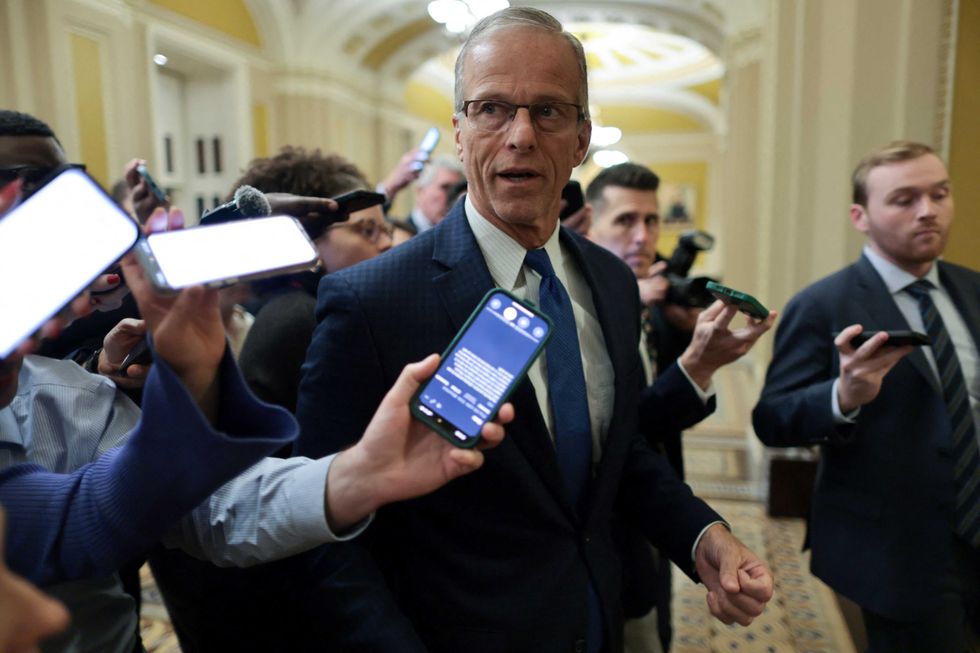
Republicans are 'very concerned about Texas' turning blue: GOP senator

Republicans are 'very concerned about Texas' turning blue: GOP senator

While Republicans in the U.S. House of Representatives have a razor-thin with just a four-seat advantage, their six-seat advantage in the U.S. Senate is seen as
Share
Alternet2026/02/05 08:38
Headwind Helps Best Wallet Token

Headwind Helps Best Wallet Token

The post Headwind Helps Best Wallet Token appeared on BitcoinEthereumNews.com. Google has announced the launch of a new open-source protocol called Agent Payments Protocol (AP2) in partnership with Coinbase, the Ethereum Foundation, and 60 other organizations. This allows AI agents to make payments on behalf of users using various methods such as real-time bank transfers, credit and debit cards, and, most importantly, stablecoins. Let’s explore in detail what this could mean for the broader cryptocurrency markets, and also highlight a presale crypto (Best Wallet Token) that could explode as a result of this development. Google’s Push for Stablecoins Agent Payments Protocol (AP2) uses digital contracts known as ‘Intent Mandates’ and ‘Verifiable Credentials’ to ensure that AI agents undertake only those payments authorized by the user. Mandates, by the way, are cryptographically signed, tamper-proof digital contracts that act as verifiable proof of a user’s instruction. For example, let’s say you instruct an AI agent to never spend more than $200 in a single transaction. This instruction is written into an Intent Mandate, which serves as a digital contract. Now, whenever the AI agent tries to make a payment, it must present this mandate as proof of authorization, which will then be verified via the AP2 protocol. Alongside this, Google has also launched the A2A x402 extension to accelerate support for the Web3 ecosystem. This production-ready solution enables agent-based crypto payments and will help reshape the growth of cryptocurrency integration within the AP2 protocol. Google’s inclusion of stablecoins in AP2 is a massive vote of confidence in dollar-pegged cryptocurrencies and a huge step toward making them a mainstream payment option. This widens stablecoin usage beyond trading and speculation, positioning them at the center of the consumption economy. The recent enactment of the GENIUS Act in the U.S. gives stablecoins more structure and legal support. Imagine paying for things like data crawls, per-task…
Share
BitcoinEthereumNews2025/09/18 01:27