

Must Read
ALLIES NO MORE. President Ferdinand Marcos Jr. and Vice President Sara Duterte in February 2024.ALLIES NO MORE. President Ferdinand Marcos Jr. and Vice President Sara Duterte in February 2024.
[Vantage Point] Why Marcos Jr. can survive ouster calls and negative ratings
10 min read
The pathways that once unseated presidents no longer carry decisive force. Military adventurism has been institutionally neutralized, and collapsing trust ratings — while politically damaging — no longer translate into removal from office. If a sitting president were ever to be unseated, it would not come from the streets or the barracks, but from the Constitution itself. Impeachment, with all its rigor and political cost, remains the only legitimate mechanism for removing President Ferdinand “Bongbong” Marcos Jr. — a process that demands evidence, due process, and congressional will, not noise, pressure, or manufactured outrage. But even this avenue, because of how the present Congress is constituted, would be next to impossible to succeed.
This column does not argue for or against that outcome, nor does it serve as a defense of the administration or an attack on Vice President Sara Duterte. It is an examination of political reality as it exists, not as factions wish it to be. The analysis rests on observable shifts: a professionalized military, an electorate shaped by economic risk, and institutions that now absorb anger without collapsing. In that context, accountability must operate through law, not spectacle — and understanding that truth is essential before the country mistakes political theater for constitutional remedy.
That there is a credible attempt to destabilize the Marcos administration is an understatement. Some groups in and out of the Duterte circle have been trying to stir up unrest to cover up for its own crimes, using the scandal as its platform. They invoke the language of moral outrage, while carefully avoiding the harder question: who benefits when accountability is short-circuited into regime change?
The country does not need another political collapse engineered by actors who thrive under impunity. It needs a president compelled to finish what he started: prosecution that climbs, reforms that illuminate the budget’s darkest corners, and convictions that restore consequence to abuse of power.
The demand shouldn’t be for Marcos Jr. to step down, but for him to step through — to carry accountability past speeches, past surveys, and past pressure from operators who mistake destabilization for salvation. In a system that has learned to absorb anger without changing, resignation is the easy exit.
From my vantage point, in a constitutional democracy, military loyalty is not personal — it is institutional. It is owed to the Constitution, the chain of command, and the civilian authority established by law, and not to any individual leader. This distinction is critical when a senior officer publicly or implicitly withdraws support for the President, who, by design, serves as Commander-in-Chief. A soldier’s duty is obedience, but only within the bounds of law, honor, and constitutional mandate.
When such withdrawal is driven by personal disagreement, political affiliation, or factional sympathy, it marks a dangerous breach of civil-military norms. Armed forces do not choose presidents or referee politics; they serve the office vested by the people. Any signal of conditional loyalty — especially from senior ranks — risks unsettling morale, cohesion, and discipline. The proper response to irreconcilable conflict is not symbolic dissent, but lawful compliance or principled resignation. The soldier’s highest loyalty is to civilian supremacy and the rule of law — the quiet discipline that keeps a republic intact.
The absence of revolt in the Philippines is often misread as approval. It is not. It is inertia — produced by institutions that dampen disruption and narratives that redirect outrage. This explains why the country can absorb its largest corruption scandal in decades — ₱79 billion in suspected flood-control plunder — without tanks on the streets, even as dissatisfaction simmers just below the surface.
The decisive reason revolt has fallen out of fashion is not political fatigue or civic apathy. It is economic reality. The Philippines is navigating a fragile transition toward upper-middle-income status, and that transition rests on a foundation that cannot withstand political shock. This year, upheaval is no longer a tool of correction; it is an act of self-harm.
Stability is all that matters
This begins with a truth Filipinos understand instinctively: stability feeds the household. After years of inflationary stress, average inflation fell to 1.7% in 2025. On paper, it is a statistic. On the ground, it means cheaper rice, predictable transport costs, and breathing room for families living from paycheck to paycheck. Any political action that threatens that relief is immediately suspect.
That progress is reinforced by the country’s external standing. A BBB+ Positive sovereign credit rating places the Philippines one notch below the coveted “A” category. Crossing that line would lower borrowing costs, attract longer-term capital, and expand fiscal space for infrastructure, education, and health. It would signal graduation from volatility to predictability. But this entire trajectory depends on a single, fragile input: confidence.
In 2026, global capital does not wait for clarity. It moves at the first hint of disorder. Portfolio investors rebalance instantly. Multinationals pause expansions. Business-process outsourcing firms activate contingency plans that shift operations to Vietnam, India, or Indonesia. I see these decisions not as ideological, but algorithmic. Political theater registers as risk, and risk is priced immediately.
This is why modern revolts fail before they begin. The feedback loop is swift and unforgiving. Currency volatility raises import costs. Borrowing rates spike. Equity markets sag. Hiring freezes ripple across services and manufacturing. What starts as a call for “change” ends as job losses for people who had nothing to do with elite power struggles. For the average Filipino, stability is no longer a philosophical preference; it is a survival strategy. A revolt today would not deliver freedom. It would produce a shuttered economy.
Limited tolerance disorder
The Philippines’ march toward upper-middle-income status has narrowed tolerance for disruption. At lower-income levels, instability is sometimes accepted as the price of change. At this stage, instability becomes prohibitively expensive. Growth now depends on continuity — steady investment, predictable policy, and credible institutions. After pandemics, supply shocks, and inflation surges, voters have learned how quickly gains evaporate. The result is a quiet consensus: grievances are real, but they must be resolved without detonating the economy.
Nothing illustrates this better than the ₱6.793-trillion 2026 General Appropriations Act (GAA) — one of the largest and most socially targeted budgets in Philippine history. Education receives record funding. Agriculture secures its strongest allocation in over a decade. Health, infrastructure, and social services are calibrated to close long-standing gaps. Definitely, this budget is not an abstraction. We can view it as classrooms, irrigation, clinics, scholarships, and local jobs.
When destabilization escalates into political crisis, it does not merely weaken a presidency; it attacks the GAA fund. Every week spent firefighting manufactured turmoil is a week stolen from implementation. Every delayed project compounds inefficiency. In this context, calls to upend the government without constitutional cause are not acts of courage. They are acts of fiscal vandalism.
Political theater carries hidden costs. Crisis management consumes executive bandwidth. Policy planning stalls. Regulators retreat into risk aversion. The cumulative effect is paralysis — an invisible tax on growth that hits hardest at the margins. Farmers waiting for support gain nothing from televised outrage. Investors deciding whether to build factories do not distinguish between righteous anger and reckless instability. They see only risk.
Stability as the New Revolution
Likewise, military intervention is no longer viable. The Armed Forces of the Philippines (AFP) is more professionalized, better compensated, and more deeply embedded in institutional incentives than at any point since 1986. Pensions, procurement, promotions, and post-service careers are tied to stability, not adventurism. Coups once thrived on ambiguity. Today, they fail on predictability and cost.
People Power has also structurally decayed — not because Filipinos are apathetic, but because mobilization has been atomized. Anger disperses into timelines; it does not converge rather in public squares. Disinformation fractures consensus faster than outrage can consolidate it. Protest is not suppressed; it is diluted. Economic precarity completes the trap. When household margins thin, revolt becomes a luxury. Survival dominates. Dole-out programs anesthetize unrest just enough to prevent ignition — creating not stability, but managed stagnation.
This is where polling enters the story — not as a rebuttal, but as corroboration. Surveys do not arbitrate truth; they measure narrative penetration. In a political culture shaped by personalism and tribal loyalty, respondents can rank corruption as a top concern, while trusting figures persistently linked to graft and corruption. This is not a polling error. It is cognitive dissonance embedded in the system.
The durability of Sara Duterte in surveys reflects the lingering power of strongman mythology, which reframes accusations as persecution and opacity as strength. Polls record this faithfully without interrogating it. By contrast, Marcos Jr. suffers from fatigue without a counter-myth: a technocratic presidency in a culture that prizes symbolism over systems. Indifference, in surveys, is deadlier than anger.
Taken together, the absence of revolt and the paradox of polling reveal the same structural failure: accountability has been decoupled from both mass action and public opinion. Revolts no longer erupt because incentives suppress escalation. Surveys no longer correct behavior because perception has been severed from proof. Between them lies a void where corruption metastasizes without consequence.
Marcos Jr. does not face tanks or crowds. He faces normalization. In this environment, legitimacy is no longer earned through popularity or survival, but through enforcement. Convictions — not speeches, committees, or surveys — are now the only credible signal of reform.
For the rabblerousers, invoking the Constitution to justify its violation is a pitch that no longer persuades. Filipinos have grown clear-eyed about who truly bears the cost of upheaval: not the loudest agitators, often insulated by wealth and offshore options, but ordinary citizens whose livelihoods depend on continuity and peace. Chaos is a luxury for the few; stability is a necessity for the many.
In 2026, the country’s most radical act is not rebellion but resolve — the insistence that disputes be settled within the institutions we built, through courts that decide, legislatures that deliberate, and ballots that correct. The age of highway revolutions has given way to the harder work of nation-building, where credibility with investors and fidelity to the rule of law — not spectacle — define progress and power.
The Philippines of today neither topples leaders in the streets nor corrects them in surveys — and that is precisely the danger. When anger dissipates and myths endure, power faces no natural constraint. In that vacuum, corruption does not provoke collapse; it festers. When corruption festers, it causes significant economic damage, erodes public faith in governing bodies, exacerbates inequality and poverty, and can ultimately lead to a rise in political instability and social unrest. It creates pervasive, systemic issues that negatively impact every facet of society.
What has become the new revolution is stability — not as an end in itself, but as the only platform from which justice can still be pursued without burning the house down. – Rappler.com
Click here for other Vantage Point articles.
Disclaimer: The articles reposted on this site are sourced from public platforms and are provided for informational purposes only. They do not necessarily reflect the views of MEXC. All rights remain with the original authors. If you believe any content infringes on third-party rights, please contact service@support.mexc.com for removal. MEXC makes no guarantees regarding the accuracy, completeness, or timeliness of the content and is not responsible for any actions taken based on the information provided. The content does not constitute financial, legal, or other professional advice, nor should it be considered a recommendation or endorsement by MEXC.
You May Also Like

SEC greenlights new generic standards to expedite crypto ETP listings
The post SEC greenlights new generic standards to expedite crypto ETP listings appeared on BitcoinEthereumNews.com. The U.S. Securities and Exchange Commission (SEC) has approved a new set of generic listing standards for commodity-based trust shares on Nasdaq, Cboe, and the New York Stock Exchange. The move is expected to streamline the approval process for exchange-traded products (ETPs) tied to digital assets, according to Fox Business reporter Eleanor Terret. However, she added that the Generic Listing Standards don’t open up every type of crypto ETP because threshold requirements remain in place, meaning not all products will immediately qualify. To add context, she quoted Tushar Jain of Multicoin Capital, who noted that the standards don’t apply to every type of crypto ETP and that threshold requirements remain. He expects the SEC will iterate further on these standards. The order, issued on Sept. 17, grants accelerated approval of proposed rule changes filed by the exchanges. By adopting the standards, the SEC aims to shorten the time it takes to bring new commodity-based ETPs to market, potentially clearing a path for broader crypto investment products. The regulator has been delaying the decision on several altcoin ETFs, most of which are set to reach their final deadlines in October. The move was rumored to be the SEC’s way of expediting approvals for crypto ETFs. The approval follows years of back-and-forth between the SEC and exchanges over how to handle crypto-based products, with past applications facing lengthy reviews. The new process is expected to reduce delays and provide more clarity for issuers, though the SEC signaled it may revisit and refine the standards as the market evolves. While the decision marks progress, experts emphasized that the so-called “floodgates” for crypto ETPs are not yet fully open. Future SEC actions will determine how broadly these standards can be applied across different digital asset products. Source: https://cryptoslate.com/sec-greenlights-new-generic-standards-to-expedite-crypto-etp-listings/
Share
BitcoinEthereumNews2025/09/18 08:43

Optimizely Named a Leader in the 2026 Gartner® Magic Quadrant™ for Personalization Engines
Company recognized as a Leader for the second consecutive year NEW YORK, Feb. 5, 2026 /PRNewswire/ — Optimizely, the leading digital experience platform (DXP) provider
Share
AI Journal2026/02/06 00:47
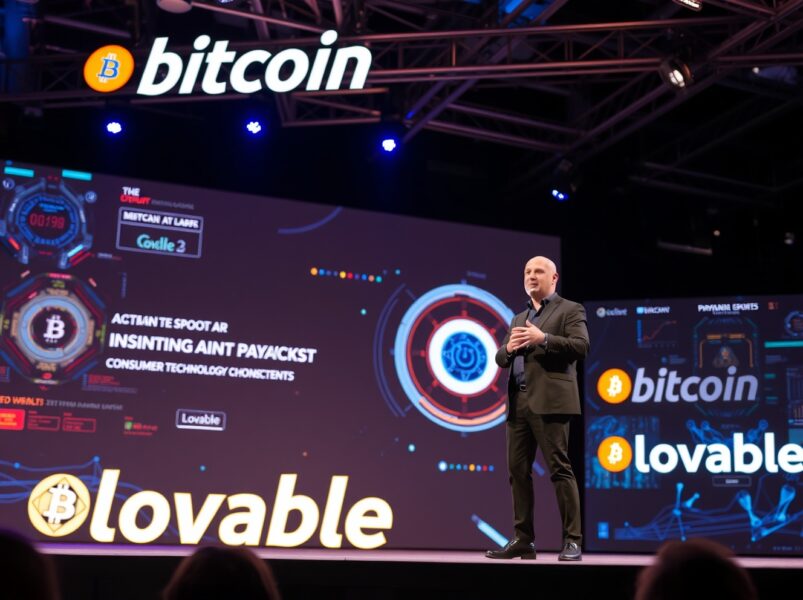
Lovable AI’s Astonishing Rise: Anton Osika Reveals Startup Secrets at Bitcoin World Disrupt 2025
BitcoinWorld Lovable AI’s Astonishing Rise: Anton Osika Reveals Startup Secrets at Bitcoin World Disrupt 2025 Are you ready to witness a phenomenon? The world of technology is abuzz with the incredible rise of Lovable AI, a startup that’s not just breaking records but rewriting the rulebook for rapid growth. Imagine creating powerful apps and websites just by speaking to an AI – that’s the magic Lovable brings to the masses. This groundbreaking approach has propelled the company into the spotlight, making it one of the fastest-growing software firms in history. And now, the visionary behind this sensation, co-founder and CEO Anton Osika, is set to share his invaluable insights on the Disrupt Stage at the highly anticipated Bitcoin World Disrupt 2025. If you’re a founder, investor, or tech enthusiast eager to understand the future of innovation, this is an event you cannot afford to miss. Lovable AI’s Meteoric Ascent: Redefining Software Creation In an era where digital transformation is paramount, Lovable AI has emerged as a true game-changer. Its core premise is deceptively simple yet profoundly impactful: democratize software creation. By enabling anyone to build applications and websites through intuitive AI conversations, Lovable is empowering the vast majority of individuals who lack coding skills to transform their ideas into tangible digital products. This mission has resonated globally, leading to unprecedented momentum. The numbers speak for themselves: Achieved an astonishing $100 million Annual Recurring Revenue (ARR) in less than a year. Successfully raised a $200 million Series A funding round, valuing the company at $1.8 billion, led by industry giant Accel. Is currently fielding unsolicited investor offers, pushing its valuation towards an incredible $4 billion. As industry reports suggest, investors are unequivocally “loving Lovable,” and it’s clear why. This isn’t just about impressive financial metrics; it’s about a company that has tapped into a fundamental need, offering a solution that is both innovative and accessible. The rapid scaling of Lovable AI provides a compelling case study for any entrepreneur aiming for similar exponential growth. The Visionary Behind the Hype: Anton Osika’s Journey to Innovation Every groundbreaking company has a driving force, and for Lovable, that force is co-founder and CEO Anton Osika. His journey is as fascinating as his company’s success. A physicist by training, Osika previously contributed to the cutting-edge research at CERN, the European Organization for Nuclear Research. This deep technical background, combined with his entrepreneurial spirit, has been instrumental in Lovable’s rapid ascent. Before Lovable, he honed his skills as a co-founder of Depict.ai and a Founding Engineer at Sana. Based in Stockholm, Osika has masterfully steered Lovable from a nascent idea to a global phenomenon in record time. His leadership embodies a unique blend of profound technical understanding and a keen, consumer-first vision. At Bitcoin World Disrupt 2025, attendees will have the rare opportunity to hear directly from Osika about what it truly takes to build a brand that not only scales at an incredible pace in a fiercely competitive market but also adeptly manages the intense cultural conversations that inevitably accompany such swift and significant success. His insights will be crucial for anyone looking to understand the dynamics of high-growth tech leadership. Unpacking Consumer Tech Innovation at Bitcoin World Disrupt 2025 The 20th anniversary of Bitcoin World is set to be marked by a truly special event: Bitcoin World Disrupt 2025. From October 27–29, Moscone West in San Francisco will transform into the epicenter of innovation, gathering over 10,000 founders, investors, and tech leaders. It’s the ideal platform to explore the future of consumer tech innovation, and Anton Osika’s presence on the Disrupt Stage is a highlight. His session will delve into how Lovable is not just participating in but actively shaping the next wave of consumer-facing technologies. Why is this session particularly relevant for those interested in the future of consumer experiences? Osika’s discussion will go beyond the superficial, offering a deep dive into the strategies that have allowed Lovable to carve out a unique category in a market long thought to be saturated. Attendees will gain a front-row seat to understanding how to identify unmet consumer needs, leverage advanced AI to meet those needs, and build a product that captivates users globally. The event itself promises a rich tapestry of ideas and networking opportunities: For Founders: Sharpen your pitch and connect with potential investors. For Investors: Discover the next breakout startup poised for massive growth. For Innovators: Claim your spot at the forefront of technological advancements. The insights shared regarding consumer tech innovation at this event will be invaluable for anyone looking to navigate the complexities and capitalize on the opportunities within this dynamic sector. Mastering Startup Growth Strategies: A Blueprint for the Future Lovable’s journey isn’t just another startup success story; it’s a meticulously crafted blueprint for effective startup growth strategies in the modern era. Anton Osika’s experience offers a rare glimpse into the practicalities of scaling a business at breakneck speed while maintaining product integrity and managing external pressures. For entrepreneurs and aspiring tech leaders, his talk will serve as a masterclass in several critical areas: Strategy Focus Key Takeaways from Lovable’s Journey Rapid Scaling How to build infrastructure and teams that support exponential user and revenue growth without compromising quality. Product-Market Fit Identifying a significant, underserved market (the 99% who can’t code) and developing a truly innovative solution (AI-powered app creation). Investor Relations Balancing intense investor interest and pressure with a steadfast focus on product development and long-term vision. Category Creation Carving out an entirely new niche by democratizing complex technologies, rather than competing in existing crowded markets. Understanding these startup growth strategies is essential for anyone aiming to build a resilient and impactful consumer experience. Osika’s session will provide actionable insights into how to replicate elements of Lovable’s success, offering guidance on navigating challenges from product development to market penetration and investor management. Conclusion: Seize the Future of Tech The story of Lovable, under the astute leadership of Anton Osika, is a testament to the power of innovative ideas meeting flawless execution. Their remarkable journey from concept to a multi-billion-dollar valuation in record time is a compelling narrative for anyone interested in the future of technology. By democratizing software creation through Lovable AI, they are not just building a company; they are fostering a new generation of creators. His appearance at Bitcoin World Disrupt 2025 is an unmissable opportunity to gain direct insights from a leader who is truly shaping the landscape of consumer tech innovation. Don’t miss this chance to learn about cutting-edge startup growth strategies and secure your front-row seat to the future. Register now and save up to $668 before Regular Bird rates end on September 26. To learn more about the latest AI market trends, explore our article on key developments shaping AI features. This post Lovable AI’s Astonishing Rise: Anton Osika Reveals Startup Secrets at Bitcoin World Disrupt 2025 first appeared on BitcoinWorld.
Share
Coinstats2025/09/17 23:40