

GameStop Poised to Dump Bitcoin Holdings at Loss to Finance Ambitious Acquisition Strategy
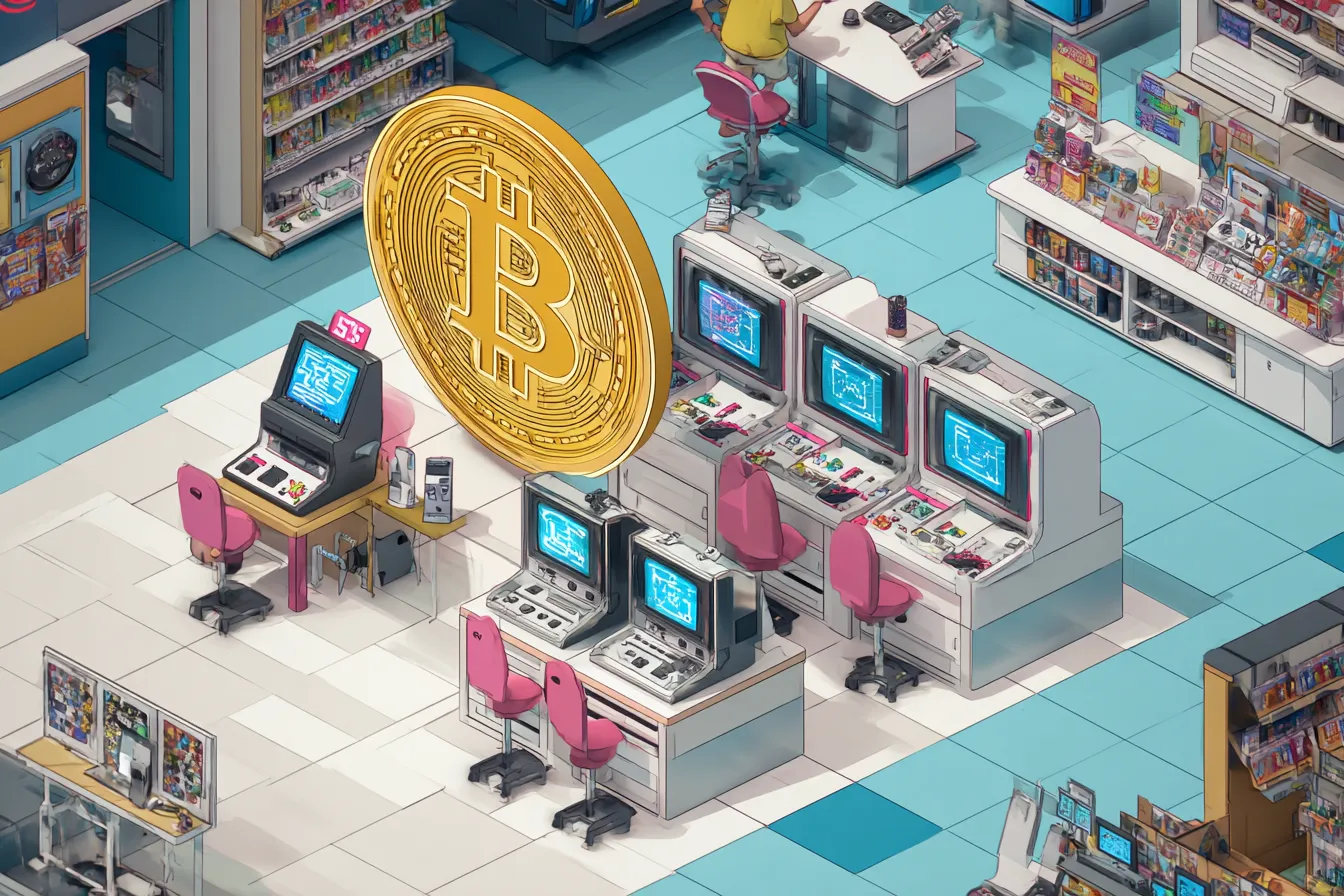
GameStop appears ready to abandon its brief cryptocurrency experiment, with onchain data suggesting the video game retailer has positioned its entire Bitcoin holdings for sale as CEO Ryan Cohen pursues what he describes as a "very, very, very big" acquisition in the consumer sector.
Blockchain analytics firm CryptoQuant reported in late January that GameStop transferred all 4,710 BTC from its on-chain wallets to Coinbase Prime, a move typically associated with preparation for liquidation. The transfer would mark a painful exit from the cryptocurrency market for the Grapevine, Texas-based company, which accumulated the Bitcoin position between May 14-23, 2025, at an average price of approximately $107,900 per BTC – a $504 million investment that now faces roughly $183 million in unrealized losses at current price levels around $78,619.
The timing of the apparent liquidation aligns closely with Cohen's newly unveiled ambitions to transform GameStop into a $100 billion enterprise through a major acquisition.
In a recent interview with CNBC, Cohen outlined plans to acquire a publicly traded consumer company significantly larger than GameStop, calling the potential deal "transformational" not just for his company but for capital markets more broadly.
When pressed on whether GameStop would sell its Bitcoin to help finance the acquisition, Cohen declined to provide specifics but offered a telling assessment. The new strategy, he said, is "way more compelling than bitcoin."
Cohen characterized his approach as similar to Warren Buffett's Berkshire Hathaway model, but compressed into a much shorter timeframe. The plan involves identifying an undervalued, high-quality consumer business with what Cohen termed a "sleepy management team," then applying the operational efficiency principles he honed at pet retailer Chewy and more recently at GameStop itself.
"We can go in there and apply the Chewy and GameStop mindset of brutal efficiency and increase the profitability of the company very, very quickly," Cohen told CNBC. "We could capture a lot more value by focusing on this under-optimized asset."
The ambitious plan comes with substantial personal stakes for Cohen. GameStop unveiled an equity incentive package in early January that only pays out if the company reaches a $100 billion market capitalization – roughly ten times its current $10.5 billion valuation – and generates $10 billion in cumulative EBITDA. Under the all-or-nothing compensation structure, Cohen receives nothing unless minimum thresholds of $20 billion market cap and $2 billion cumulative EBITDA are met.
GameStop's pivot away from Bitcoin reflects a broader strategic recalibration as the company grapples with fundamental challenges in its core business. The retailer posted third-quarter revenue of $821 million in December, falling short of analyst estimates of $987.3 million, as it continues struggling to adapt to the gaming industry's shift toward digital downloads and streaming services.
Since Cohen took the helm as CEO in September 2023, he has dramatically improved GameStop's financial performance through aggressive cost-cutting measures. The company posted consecutive annual profits in fiscal 2024 and 2025 after five straight years of losses, with gross margins expanding by 7 percentage points and net income reaching $77.1 million in the most recent quarter.
However, overall sales have continued to decline as traditional retail gaming faces existential pressure from digital distribution channels dominated by Microsoft, Sony, and cloud gaming platforms. Hardware and accessories revenue fell 12% in the third quarter, underscoring the structural headwinds facing GameStop's legacy business model.
Cohen's turnaround efforts have accumulated a war chest of more than $9 billion in cash and marketable securities – resources previously earmarked for Bitcoin investment but now apparently being redirected toward the acquisition strategy. The CEO's willingness to exit the cryptocurrency position at a loss suggests urgency in marshaling capital for what he acknowledges could be either "genius" or "totally, totally foolish."
Investment bankers in the consumer and retail sectors have expressed skepticism about Cohen's ability to identify an acquisition capable of delivering the magnitude of value creation he envisions. "I've never seen it," one banker told CNBC. "Unless you're talking about radically transforming a business model or something, it just doesn't happen in retail."
Nevertheless, GameStop shares surged 8.25% on Monday as investors responded positively to Cohen's bold vision. The stock has also attracted attention from Michael Burry, the investor famous for betting against the housing market before the 2008 financial crisis, who recently disclosed he has been accumulating shares.
"Ryan is making lemonade out of lemons," Burry wrote in a Substack post. "He has a crappy business, and he is milking it best he can while taking advantage of the meme stock phenomenon to raise cash and wait for an opportunity to make a big buy of a real growing cash cow business."
Whether Cohen can execute on his acquisition strategy remains an open question, with the next earnings call scheduled for March 24 providing an opportunity for further details. What appears increasingly certain, however, is that GameStop's short-lived experiment with Bitcoin as a treasury asset is coming to an expensive end.
The potential Bitcoin sale would add GameStop to a growing list of corporate holders reconsidering their cryptocurrency positions amid market volatility, though few entered at prices as disadvantageous as the retailer's $107,900 average cost basis. For a company built on buying and selling used video games, the prospect of taking a $183 million loss on a months-old investment underscores just how dramatically Cohen is willing to pivot in pursuit of his transformation vision.
You May Also Like
The Role of Blockchain in Building Safer Web3 Gaming Ecosystems
- Immutable Ownership of Assets Blockchain records can be manipulated by anyone. If a player owns a sword, skin, or plot of land as an NFT, it is verifiably in their ownership, and it cannot be altered or deleted by the developer or even hacked. This has created a proven track record of ownership, providing control back to the players, unlike any centralised gaming platform where assets can be revoked.
- Decentralized Infrastructure Blockchain networks also have a distributed architecture where game data is stored in a worldwide network of nodes, making them much less susceptible to centralised points of failure and attacks. This decentralised approach makes it exponentially more difficult to hijack systems or even shut off the game’s economy.
- Secure Transactions with Cryptography Whether a player buys an NFT or trades their in-game tokens for other items or tokens, the transactions are enforced by cryptographic algorithms, ensuring secure, verifiable, and irreversible transactions and eliminating the risks of double-spending or fraudulent trades.
- Smart Contract Automation Smart contracts automate the enforcement of game rules and players’ economic exchanges for the developer, eliminating the need for intermediaries or middlemen, and trust for the developer. For example, if a player completes a quest that promises a reward, the smart contract will execute and distribute what was promised.
- Anti-Cheating and Fair Gameplay The naturally transparent nature of blockchain makes it extremely simple for anyone to examine a specific instance of gameplay and verify the economic outcomes from that play. Furthermore, multi-player games that enforce smart contracts on things like loot sharing or win sharing can automate and measure trustlessness and avoid cheating, manipulations, and fraud by developers.
- Cross-Platform Security Many Web3 games feature asset interoperability across platforms. This interoperability is made viable by blockchain, which guarantees ownership is maintained whenever assets transition from one game or marketplace to another, thereby offering protection to players who rely on transfers for security against fraud. Key Security Dangers in Web3 Gaming Although blockchain provides sound first principles of security, the Web3 gaming ecosystem is susceptible to threats. Some of the most serious threats include:
Vitalik Buterin Challenges Ethereum’s Layer 2 Paradigm
