

Crypto Fear & Greed Index Stagnates in ‘Extreme Fear’ at 11, Revealing Persistent Market Anxiety
BitcoinWorld
Crypto Fear & Greed Index Stagnates in ‘Extreme Fear’ at 11, Revealing Persistent Market Anxiety
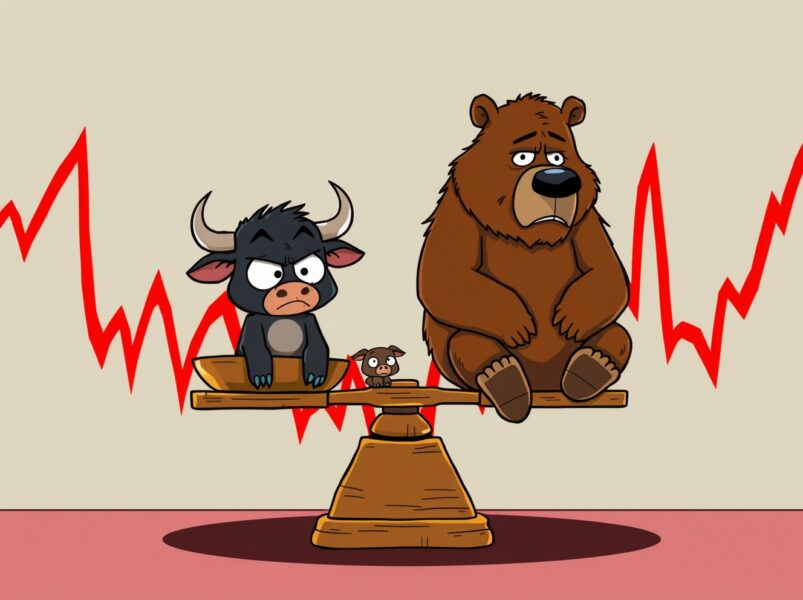
Global cryptocurrency markets continue to exhibit profound caution as of March 2025, with the widely monitored Crypto Fear & Greed Index registering a mere 11 out of 100. This reading, a slight two-point increase from the previous day, firmly entrenches market psychology in the “extreme fear” category. The index, a composite gauge developed by analytics firm Alternative.me, serves as a critical barometer for investor emotion, often acting as a contrarian indicator during periods of market stress. Consequently, its persistent low level signals a market grappling with uncertainty, despite incremental daily improvements.
Decoding the Crypto Fear & Greed Index and Its 2025 Significance
The Crypto Fear & Greed Index provides a quantifiable snapshot of market sentiment, translating complex social and trading data into a single, digestible number. It operates on a scale from 0 to 100, where 0 represents “Extreme Fear” and 100 signifies “Extreme Greed.” The current reading of 11 sits just above the absolute lowest possible score, indicating widespread pessimism among traders and investors. This metric has gained substantial authority since its inception, frequently referenced by analysts at major financial institutions and blockchain research firms for its historical correlation with market cycles. Its calculation relies on a weighted blend of six core market factors, each offering a different lens on investor behavior.
Analysts emphasize the index’s role in identifying potential market inflection points. Historically, sustained periods of “extreme fear” have sometimes preceded market recoveries, as weak hands exit and asset prices find a bottom. However, the index is not a timing tool. Instead, it offers context for price action, helping to distinguish between healthy corrections and panic-driven selloffs. The prolonged stay in this zone throughout early 2025 suggests a market that is still digesting macroeconomic pressures, regulatory developments, and technological shifts within the blockchain ecosystem.
The Six Pillars of Market Sentiment
The index’s methodology is transparent and data-driven, aggregating inputs from multiple sources to avoid reliance on any single metric. The following table outlines its composition:
| Component | Weight | What It Measures |
|---|---|---|
| Market Volatility | 25% | Current price swings versus historical averages, particularly for Bitcoin. |
| Market Volume & Momentum | 25% | Trading volume and its direction on major spot exchanges. |
| Social Media Sentiment | 15% | Mentions and engagement rates on platforms like Twitter and Reddit. |
| Surveys | 15% | Poll data from various cryptocurrency community platforms. |
| Bitcoin Dominance | 10% | Bitcoin’s share of the total cryptocurrency market capitalization. |
| Google Trends (Search Volume) | 10% | Relative search interest for key cryptocurrency terms. |
This multi-factor approach ensures the index captures both on-chain and off-chain behavior. For instance, high volatility and low volume typically correlate with fear, as seen in the current weighting. Simultaneously, subdued social media hype and specific search patterns for terms like “crypto crash” further depress the score. Bitcoin’s dominance component is particularly insightful; a rising dominance in a fearful market often indicates a “flight to safety” within crypto, where investors consolidate into the perceived stability of Bitcoin over altcoins.
Historical Context and the ‘Extreme Fear’ Zone
Placing the current score of 11 into a historical framework is essential for meaningful analysis. The index has dipped into “extreme fear” (a score below 25) during several notable market events. These periods include the March 2020 COVID-19 market crash, the May 2021 China mining ban selloff, and the prolonged bear market of 2022 following the collapse of several major crypto entities. Each episode shared common characteristics: sharp price declines, negative news cycles, and a dramatic drop in leveraged trading activity. The market’s memory of these events contributes to the current sentiment, as investors remain wary of similar systemic shocks.
Comparatively, the index spent extended periods in “extreme greed” territory (above 75) during the bull market peaks of late 2017 and late 2021. The contrast between those euphoric periods and the present climate is stark. Currently, data from blockchain analytics firms shows a significant reduction in exchange inflows from new, retail-sized wallets, while large holders (often called “whales”) have been observed accumulating assets at these lower price levels. This divergence between retail fear and institutional accumulation is a classic hallmark of a fearful market phase and is a key detail often highlighted in on-chain analysis reports.
Expert Analysis on Prolonged Fear
Market strategists point to several converging factors sustaining the low sentiment reading in 2025. Firstly, macroeconomic uncertainty regarding interest rates and global liquidity continues to pressure all risk assets, including cryptocurrencies. Secondly, the ongoing integration of regulatory frameworks in major jurisdictions like the EU and the US creates short-term uncertainty for market participants. Thirdly, the technological maturation of the sector, including the rise of layer-2 scaling solutions and new consensus mechanisms, requires time for market valuation and adoption.
“A sentiment index lingering in extreme fear is not inherently a signal to buy, but it is a signal to pay close attention,” notes a recent report from a blockchain data research firm. “It indicates that the market is likely discounting a significant amount of bad news. The key for investors is to differentiate between fear driven by cyclical factors versus fear driven by structural, long-term threats to the asset class’s viability.” The current consensus among several analysts suggests the fear is more cyclical, related to asset pricing and adoption timelines, rather than existential.
Impacts on Trader Behavior and Market Dynamics
The psychological impact of a persistent “extreme fear” reading directly influences market microstructure. Trading platforms report a measurable shift in product usage. Demand for simple spot buying often decreases, while interest in derivatives used for hedging—such as put options—may increase. Furthermore, funding rates in perpetual swap markets, which indicate whether traders are leaning bullish or bearish with leverage, tend to hover in negative territory during such phases, meaning bearish traders pay bullish traders to maintain their positions. This is a clear technical manifestation of prevailing pessimism.
On-chain data provides further evidence. Metrics like the Spent Output Profit Ratio (SOPR), which tracks whether coins moved on-chain are being sold at a profit or loss, often show values below 1 during fear periods, indicating realized losses across the network. Additionally, the activity of long-term holders (LTHs) versus short-term holders (STHs) becomes a focal point. Typically, LTHs become increasingly inactive, refusing to sell at depressed prices, while STHs exhibit high anxiety and turnover. This dynamic can lead to a supply shock if demand quietly returns, as fewer coins are available for sale at current prices.
Conclusion
The Crypto Fear & Greed Index reading of 11 underscores a market still gripped by significant anxiety as of early 2025. While the two-point daily gain is a minor positive, the index’s firm position in “extreme fear” territory reflects a complex interplay of macroeconomic headwinds, regulatory evolution, and post-bull-market consolidation. Understanding the six weighted components of the index—from volatility and volume to social media and search trends—provides a nuanced view beyond simple price charts. Historically, such prolonged fear phases have represented periods of opportunity for patient, long-term investors, though they require careful risk management and a focus on fundamental blockchain developments rather than short-term sentiment swings. The market’s next major move will likely hinge on a shift in one or more of the index’s core pillars, moving the needle from fear back toward neutrality.
FAQs
Q1: What does a Crypto Fear & Greed Index score of 11 mean?
A score of 11 indicates “Extreme Fear” in the market. It suggests that investor sentiment is overwhelmingly negative, driven by factors like high volatility, low trading momentum, and pessimistic social media discourse. It is a quantitative measure of collective market psychology.
Q2: Is the Crypto Fear & Greed Index a reliable buy or sell signal?
The index is a sentiment indicator, not a direct timing signal for trades. While sustained extreme fear has historically coincided with market bottoms, it does not predict exactly when a recovery will begin. It is best used as one tool among many for assessing market conditions and potential contrarian opportunities.
Q3: How often is the Crypto Fear & Greed Index updated?
The index is updated daily, typically once per 24-hour period. It reflects a rolling analysis of data from the previous day across its six component metrics, providing a near-real-time gauge of shifting sentiment.
Q4: Why does Bitcoin’s market dominance affect the Fear & Greed Index?
Bitcoin dominance is included because it often acts as a “flight to safety” gauge within the crypto market. When fear is high, investors may sell riskier altcoins and move into Bitcoin, increasing its share of the total market cap. A rising dominance in a fearful market can thus reinforce or amplify the fear reading.
Q5: Can the index remain in ‘extreme fear’ for a long time?
Yes, the index can remain in extreme fear for extended periods, sometimes weeks or months, as seen during major bear markets. A low score reflects ongoing market conditions and news flow; it only changes when the underlying data from its six components shifts significantly enough to alter the weighted average.
This post Crypto Fear & Greed Index Stagnates in ‘Extreme Fear’ at 11, Revealing Persistent Market Anxiety first appeared on BitcoinWorld.
You May Also Like

Fed Decides On Interest Rates Today—Here’s What To Watch For

Robinhood Chain Public Testnet Launch: A Strategic Pivot into Ethereum’s Layer 2 Ecosystem
