Robinhood Unveils ETH Layer-2 Testnet for Tokenized Assets
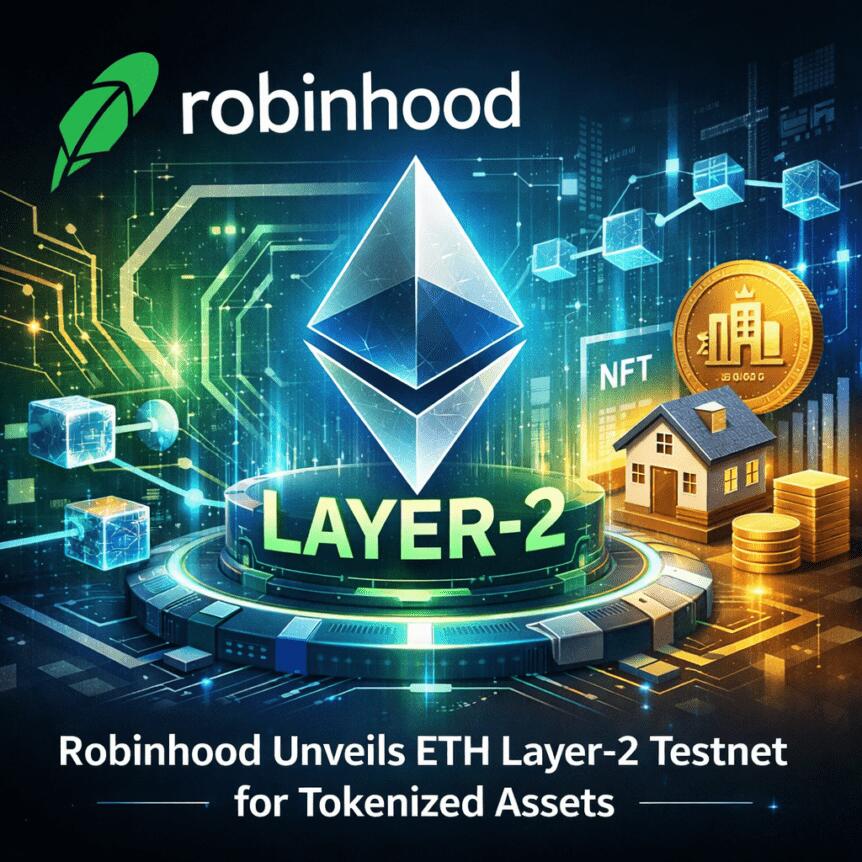
Robinhood has launched a public testnet for Robinhood Chain, its upcoming Ethereum layer-2 network designed to bring tokenized real-world and digital assets onto the blockchain. The testnet is now open to developers and offers access points, documentation, and compatibility with standard Ethereum development tools, along with early integrations from infrastructure partners. The project emphasizes “financial-grade” use cases, including 24/7 trading, seamless bridging, self-custody, and decentralized products such as tokenized asset platforms, lending markets, and perpetual futures exchanges. A mainnet launch is planned for later this year, with testnet-only assets such as stock-style tokens and tighter integration with Robinhood Wallet anticipated in the coming months.
Ethereum (CRYPTO: ETH) is at the center of Robinhood Chain, which draws on Arbitrum-style technology to scale and secure on-chain interactions around tokenized assets. In the announcement, Robinhood frames the testnet as laying the groundwork for an ecosystem that could redefine access to tokenized real-world assets and unlock deeper liquidity within the Ethereum ecosystem. The release notes that developers will be able to build and test decentralized applications that interact with on-chain securities, commodities, and other tokenized instruments, all while leveraging the throughput benefits associated with layer-2 scaling. A dedicated documentation hub—docs.chain.robinhood.com—provides step-by-step guidance for onboarding, smart contract development, and bridging between the main chain and the testnet environment.
The broader mission, as outlined by Robinhood, is to move beyond a simple exchange app that supports crypto trading to an on-chain infrastructure that can host a range of tokenized real-world assets. This shift builds on the company’s earlier push to tokenize a substantial slice of traditional markets, including nearly 500 United States stocks and exchange-traded funds (ETFs) on Arbitrum as part of a broader real-world asset strategy. In practical terms, tokenized stocks and other asset types could offer near real-time settlement, programmability, and new liquidity venues that hinge on the security and efficiency of blockchain settlement. The testnet will serve as a proving ground for these ideas, with the expectation that some features, such as tighter integration with the Robinhood Wallet, will transition to mainnet in the months ahead.
Robinhood’s leadership has framed the project as part of a broader trend in which centralized exchanges pursue end-to-end control over both the user experience and the on-chain rails that enable trading and custody. In parallel, Coinbase has been pursuing its own on-chain expansion through Base, an L2 network aimed at regulated, scalable trading and the eventual rollout of tokenized equities; the company signaled it would begin tokenized equities in December 2025 as part of a broader strategy. This move aligns with the industry’s push for on-chain settlement and more fluid movement between traditional and digital asset markets.
On the other side of the market spectrum, Kraken has pursued a similar end-to-end approach. The exchange has been developing Ink, its own Optimism-based L2 network, and has signaled a pathway toward tokenized equities such as xStocks. Taken together, these initiatives reflect a sector-wide appetite for on-chain rails that can support regulated trading, custody, and real-world asset tokenization while maintaining robust compliance and risk controls.
Robinhood’s tokenization push
The testnet release underscores a continuing shift in Robinhood’s strategy from simply offering crypto trading to building and operating its own on-chain infrastructure. This explicitly ties into the company’s earlier moves to tokenize real-world assets and integrate them into a broader trading ecosystem. Beyond the testnet, the plan calls for a mainnet launch later this year, with expectations of stock‑style tokens and even deeper integration with the Robinhood Wallet as part of the rollout.
Johann Kerbrat, senior vice president and GM of Crypto and International at Robinhood, framed the testnet as a foundational step toward an ecosystem that could define the future of tokenized real‑world assets. He described the environment as a launchpad for DeFi liquidity within the Ethereum ecosystem, inviting builders to experiment with on-chain representations of traditional financial instruments. The announcement emphasizes that the testnet is designed to support “financial-grade” use cases, including 24/7 trading and cross-chain bridging, while preserving user custody and security.
As the industry moves toward more comprehensive on-chain rails, tokenized assets are increasingly viewed as a way to reduce settlement times and unlock new liquidity pools. The Robinhood Chain testnet embodies this ambition by offering a sandbox where developers can test tokenized securities and other asset types, ensuring that the underlying rails and tooling can withstand real-market stress, while integrating with existing Ethereum tooling and infrastructure. The initiative also participates in a broader narrative about regulated, practitioner-friendly deployments of decentralized finance on established networks.
Historically, Robinhood has faced regulatory scrutiny and public criticism related to outages during periods of market stress and questions about the company’s use of payment for order flow in equities. The company’s leadership has argued that tokenized stocks could help prevent trading freezes by enabling real-time settlement on-chain. Whether the testnet and subsequent mainnet deployment will meaningfully mitigate past concerns remains a topic of ongoing scrutiny among regulators and market participants.
What to watch next
- Mainnet launch in the latter part of the year, with a clear roadmap for introducing stock-style tokens on Robinhood Chain.
- Expansion of testnet assets beyond basic tokenized instruments, including tighter integration with Robinhood Wallet and enhanced developer tooling.
- Continued activity from peer exchanges pursuing on-chain rails and tokenized equities, such as Base (Coinbase) and Ink (Kraken), and how these ecosystems interact with the broader DeFi liquidity landscape.
- Regulatory clarity and potential oversight around on-chain tokenized securities and cross-border custody arrangements as these platforms move from testnet to mainnet.
Sources & verification
- Official Robinhood release outlining the Robinhood Chain testnet, its documentation hub, and the roadmap for 24/7 trading, bridging, and self-custody.
- Statement from Johann Kerbrat on the testnet’s role in enabling a future tokenized real-world assets ecosystem.
- Coinbase coverage of stock trading and prediction markets as part of its broader “everything app” strategy and tokenized equities rollout.
- Kraken coverage of Ink, its Optimism-based L2, and the xStocks tokenization initiative as part of an end-to-end approach to on-chain markets.
- Historical context on Robinhood’s tokenization efforts, including the tokenization of nearly 500 US stocks and ETFs on Arbitrum.
Why it matters
The Robinhood Chain testnet marks a pivotal step in the ongoing transition of traditional financial assets to on-chain representations. By coupling Ethereum‑level security with layer-2 scalability and tokenized instruments, Robinhood aims to provide a more predictable and programmable framework for on-chain asset trading. If mainnet deployment succeeds, developers could build decentralized markets that mirror or improve upon real-world asset trading, with potential benefits such as faster settlement, improved liquidity, and enhanced transparency.
From a market perspective, the initiative contributes to a broader trend of regulated, infrastructure-focused expansion by mainstream financial incumbents into the Web3 and DeFi space. The convergence of wallet-centric custody, tokenized securities, and cross-chain interoperability could influence how liquidity flows between centralized exchanges and decentralized venues, potentially shaping user experience and capital flows for years to come. At the same time, observers will be watching how these platforms address risk controls, regulatory expectations, and incident response given Robinhood’s historical outages and public scrutiny.
Market context
As the crypto and digital asset ecosystem matures, more traditional platforms are experimenting with on-chain rails to support tokenized real-world assets. The Robinhood Chain testnet fits into a wider pattern of exchanges grafting on-chain capabilities to support regulated activity while offering developers a sandbox to refine interoperability with Ethereum-based tooling. The deployment—spanning testnets, mainnet timelines, and collaborations with wallet ecosystems—illustrates a broader industry shift toward programmable, real-time settlement mechanisms and the integration of traditional markets with decentralized infrastructure.
What to watch next
- Mainnet timing and any delays or accelerations announced by Robinhood for Robinhood Chain.
- Progress on stock-style tokens becoming live on the mainnet and any regulatory disclosures tied to those assets.
- Enhanced interoperability between Robinhood Wallet and other DeFi layers or bridges, including potential cross-chain use cases.
Tickers mentioned: $ETH, $COIN
Market context: The launch is part of a broader movement toward on-chain rails for regulated assets and DeFi liquidity on Ethereum-layer-2s.
What to watch next: Mainnet timing, broader tokenized-asset rollout, and wallet-chain integrations will shape the near-term trajectory of Robinhood Chain and related ecosystems.
This article was originally published as Robinhood Unveils ETH Layer-2 Testnet for Tokenized Assets on Crypto Breaking News – your trusted source for crypto news, Bitcoin news, and blockchain updates.
You May Also Like

Hauser’s Stark Warning Charts Reveal Persistent Economic Pressure
China’s mineral moves shake global tech and defense