Singapore’s Prime Minister Lawrence Wong laid out a spending plan on February 12 that puts artificial intelligence and financial market growth as the country’s Singapore’s Prime Minister Lawrence Wong laid out a spending plan on February 12 that puts artificial intelligence and financial market growth as the country’s

Singapore's Lawrence Wong unveils 2026 budget focused on AI and financial market growth

2026/02/13 01:08
4 min read

Singapore’s Prime Minister Lawrence Wong laid out a spending plan on February 12 that puts artificial intelligence and financial market growth as the country’s future, as the government eyes a smaller budget surplus this year compared to last.

The government expects to end the coming financial year, which starts in April, with a surplus of SG$8.5 billion. That is well below the SG$15.1 billion surplus recorded in 2025.

Wong said last year’s figure was higher than anticipated as the economy grew faster than forecast, bringing in more corporate tax money, along with stronger sales of private vehicles and properties that pushed vehicle tax and stamp duty collections up.

A smaller but steady surplus

Even with a lower surplus, the government says it is on solid ground. The projected surplus works out to roughly 1% of the country’s GDP, enough to fund targeted programmes without drawing on the country’s reserves. Singapore has only drawn on those reserves twice before: once during the 2008 global financial crisis and again during the COVID-19 pandemic.

With trade tensions and rapid technological change shaking up industries, Wong said the 2026 budget is focused on making Singapore more competitive over the long run.

A large part of that plan centres on getting more companies and workers to use AI. Wong announced the creation of a “national AI council” that he will personally chair. “AI is a powerful tool, but it is still a tool. It must serve our national interests and our people,” he said. The council will oversee four focus areas: advanced manufacturing, connectivity, finance, and healthcare, with the aim of pushing Singapore toward becoming a leading AI hub.

Singapore will establish a national AI council | Source: @MOFsg

To help businesses make the shift, the government is launching a “Champions of AI” programme. It will offer tailored support to companies looking to use AI to change how they operate, covering both business transformation and staff training. Wong said companies that succeed under the programme would set standards for their industries and push others to follow.

Firms can also benefit from an expansion of the Enterprise Innovation Scheme, which already gives businesses a 400% tax deduction on qualifying costs. AI spending will now count under the scheme, though there is a cap of SG$50,000 (about $39,654) per year for 2027 and 2028.

On the worker side, Wong said every Singaporean can take steps to learn AI skills. The government will redesign its SkillsFuture website to make it easier for people to find AI courses that match their job needs and skill level. SkillsFuture gives Singaporeans credits to sign up for courses starting at age 25. Wong also acknowledged that while basic AI tools are free, more advanced features often come with a price tag. To help with that, people who complete selected AI training courses will get six months of free access to premium AI tools. “This will allow them to practice, experiment, and apply what they have learnt,” he said.

Boosting the stock market

On the financial markets side, the government announced it would add SG$1.5 billion (about $1.18 billion) to the Financial Sector Development Fund. Set up in 1999, the fund hands out grants to build Singapore up as a global financial centre.

The new injection follows a SG$5 billion Equity Market Development Programme announced in 2025. That programme has helped the Straits Times Index climb 22.67% last year, its best annual performance since 2009. Of the original SG$5 billion, SG$4 billion has already been placed with nine asset managers, with the rest due to follow in the second quarter of 2026.

The government also plans to make it easier for fast-growing companies to list on the stock exchange and to set up a dual-listing link between the Singapore Exchange and Nasdaq.

“These measures will enhance the depth and vibrancy of our public equities market and provide more pathways for enterprises to grow and scale from Singapore,” Wong said.

Join a premium crypto trading community free for 30 days - normally $100/mo.

Market Opportunity
Ucan fix life in1day Logo
Ucan fix life in1day Price(1)
$0.0007954
$0.0007954$0.0007954
+2.26%
USD
Ucan fix life in1day (1) Live Price Chart
Disclaimer: The articles reposted on this site are sourced from public platforms and are provided for informational purposes only. They do not necessarily reflect the views of MEXC. All rights remain with the original authors. If you believe any content infringes on third-party rights, please contact service@support.mexc.com for removal. MEXC makes no guarantees regarding the accuracy, completeness, or timeliness of the content and is not responsible for any actions taken based on the information provided. The content does not constitute financial, legal, or other professional advice, nor should it be considered a recommendation or endorsement by MEXC.

You May Also Like

UAE’s Central Bank Approves the DSSC Stablecoin Launch by IHC, FAB, and Sirius

UAE’s Central Bank Approves the DSSC Stablecoin Launch by IHC, FAB, and Sirius

The post UAE’s Central Bank Approves the DSSC Stablecoin Launch by IHC, FAB, and Sirius appeared on BitcoinEthereumNews.com. CBUAE has approved the dirham-backed
Share
BitcoinEthereumNews2026/02/13 04:30
Unyielding Challenges Stall US Crypto Bill Progress
Unyielding Challenges Stall US Crypto Bill Progress

The post Unyielding Challenges Stall US Crypto Bill Progress appeared on BitcoinEthereumNews.com. The enduring quest to establish a regulatory framework for cryptocurrencies
Share
BitcoinEthereumNews2026/02/13 04:04
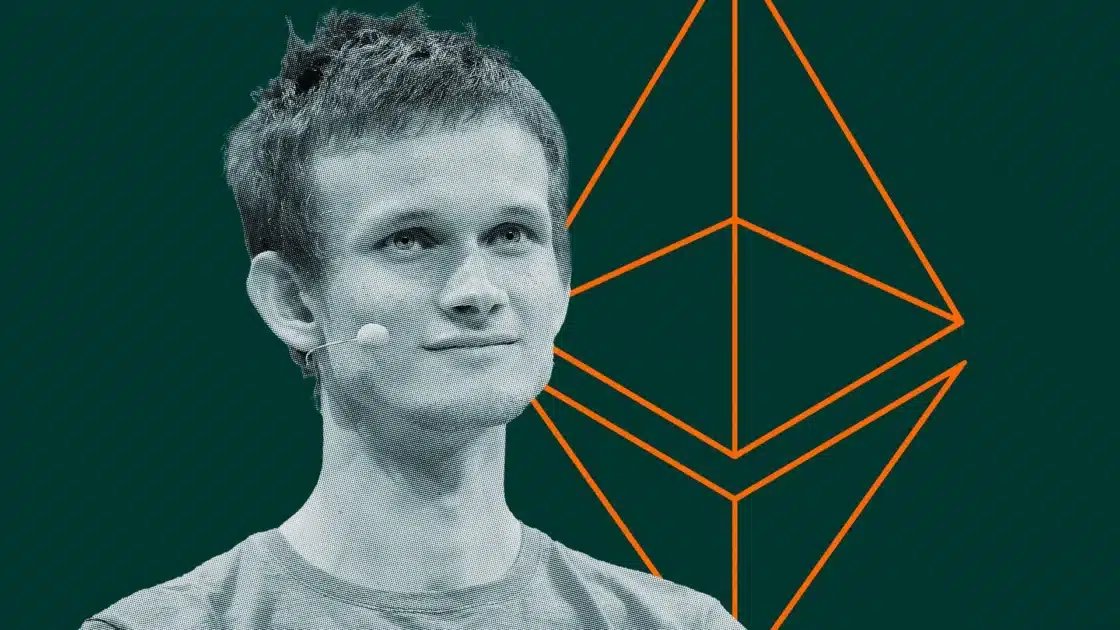
Vitalik Buterin Reveals Ethereum’s Bold Plan to Stay Quantum-Secure and Simple!

Vitalik Buterin Reveals Ethereum’s Bold Plan to Stay Quantum-Secure and Simple!

Buterin unveils Ethereum’s strategy to tackle quantum security challenges ahead. Ethereum focuses on simplifying architecture while boosting security for users. Ethereum’s market stability grows as Buterin’s roadmap gains investor confidence. Ethereum founder Vitalik Buterin has unveiled his long-term vision for the blockchain, focusing on making Ethereum quantum-secure while maintaining its simplicity for users. Buterin presented his roadmap at the Japanese Developer Conference, and splits the future of Ethereum into three phases: short-term, mid-term, and long-term. Buterin’s most ambitious goal for Ethereum is to safeguard the blockchain against the threats posed by quantum computing.  The danger of such future developments is that the future may call into question the cryptographic security of most blockchain systems, and Ethereum will be able to remain ahead thanks to more sophisticated mathematical techniques to ensure the safety and integrity of its protocols. Buterin is committed to ensuring that Ethereum evolves in a way that not only meets today’s security challenges but also prepares for the unknowns of tomorrow. Also Read: Ethereum Giant The Ether Machine Takes Major Step Toward Going Public! However, in spite of such high ambitions, Buterin insisted that Ethereum also needed to simplify its architecture. An important aspect of this vision is to remove unnecessary complexity and make Ethereum more accessible and maintainable without losing its strong security capabilities. Security and simplicity form the core of Buterin’s strategy, as they guarantee that the users of Ethereum experience both security and smooth processes. Focus on Speed and Efficiency in the Short-Term In the short term, Buterin aims to enhance Ethereum’s transaction efficiency, a crucial step toward improving scalability and reducing transaction costs. These advantages are attributed to the fact that, within the mid-term, Ethereum is planning to enhance the speed of transactions in layer-2 networks. According to Butterin, this is part of Ethereum’s expansion, particularly because there is still more need to use blockchain technology to date. The other important aspect of Ethereum’s development is the layer-2 solutions. Buterin supports an approach in which the layer-2 networks are dependent on layer-1 to perform some essential tasks like data security, proof, and censorship resistance. This will enable the layer-2 systems of Ethereum to be concerned with verifying and sequencing transactions, which will improve the overall speed and efficiency of the network. Ethereum’s Market Stability Reflects Confidence in Long-Term Strategy Ethereum’s market performance has remained solid, with the cryptocurrency holding steady above $4,000. Currently priced at $4,492.15, Ethereum has experienced a slight 0.93% increase over the last 24 hours, while its trading volume surged by 8.72%, reaching $34.14 billion. These figures point to growing investor confidence in Ethereum’s long-term vision. The crypto community remains optimistic about Ethereum’s future, with many predicting the price could rise to $5,500 by mid-October. Buterin’s clear, forward-thinking strategy continues to build trust in Ethereum as one of the most secure and scalable blockchain platforms in the market. Also Read: Whales Dump 200 Million XRP in Just 2 Weeks – Is XRP’s Price on the Verge of Collapse? The post Vitalik Buterin Reveals Ethereum’s Bold Plan to Stay Quantum-Secure and Simple! appeared first on 36Crypto.
Share
Coinstats2025/09/18 01:22