A blog post titled “Something Big Is Happening,” published by AI founder Matt Shumer, has rapidly gone viral across the technology sector. Written less like an A blog post titled “Something Big Is Happening,” published by AI founder Matt Shumer, has rapidly gone viral across the technology sector. Written less like an

“Something Big Is Happening” in AI — Industry Leaders Are Split on What Comes Next

2026/02/13 02:41
6 min read

Shumer compares the current moment to the early days of the pandemic: signals of massive disruption are visible to insiders, yet widely dismissed by the broader population. His central warning is blunt — society is underestimating both the speed and magnitude of the AI transition. As a result, AI anxiety is suddenly a new phenomenon of the modern age.

“We’re not making predictions,” he writes. “We’re telling you what already occurred in our own jobs.”

That framing — AI disruption as present reality rather than future risk — is precisely what has fueled the post’s viral spread.

Something Big is Happening, source: Matt Shumer

But how much of this is consensus versus insider anxiety? To understand the stakes, it’s critical to look at how other industry leaders are responding.


The Productivity Explosion: Confirmed by Builders

On the core claim — that AI is already transforming knowledge work — many leaders agree with Shumer’s assessment.

NVIDIA CEO Jensen Huang has repeatedly argued that AI will function as a universal productivity engine, describing it as “the most powerful technology force of our time.” His view aligns closely with Shumer’s firsthand accounts of engineers delegating large portions of their workflow to autonomous systems.

Similarly, Microsoft CEO Satya Nadella has framed AI copilots as foundational infrastructure rather than optional tools. He has said AI will reshape “every software category,” embedding automation directly into daily work rather than existing as a separate interface.

From this vantage point, Shumer’s examples — describing software being built end-to-end from natural language prompts — are not outliers but early indicators of a structural shift.

Even Google DeepMind CEO Demis Hassabis has acknowledged the acceleration, noting that progress toward advanced general systems is moving faster than many expected just a few years ago.

Among builders, the productivity shock is not controversial. It is observable.


The Exponential Curve — Hype or Reality?

Where debate intensifies is around timelines.

Shumer argues that AI progress is compounding exponentially — moving from simple tasks to complex autonomous execution within a compressed timeframe.

OpenAI CEO Sam Altman has echoed this trajectory, warning that society is “not ready” for the economic changes advanced AI could bring. He has suggested that entire job categories could evolve — or disappear — faster than labor markets can retrain.

Anthropic CEO Dario Amodei has expressed similar urgency, predicting that highly capable AI systems could emerge within this decade, with transformative economic consequences.

But not everyone agrees with the compression of timelines.

Meta Chief AI Scientist Yann LeCun has been one of the most prominent skeptics of near-term “intelligence explosion” narratives. He argues current systems, while powerful, still lack core reasoning frameworks, real-world modeling, and autonomous agency required for true general intelligence.

In his view, today’s AI is impressive pattern recognition — not independent cognition — and predictions of imminent human-level systems are overstated.

This divide is crucial: insiders agree acceleration is real, but disagree on how close we are to runaway capability.


AI Improving Itself — The Recursive Debate

One of Shumer’s most consequential claims is that AI is now contributing to its own development — optimizing code, training processes, and evaluation systems.

This recursive improvement loop is often cited as the gateway to rapid intelligence scaling.

Former Google CEO Eric Schmidt has supported this concern, warning that once systems meaningfully assist in designing successor systems, progress could accelerate beyond traditional forecasting models.

However, AI researcher Andrew Ng has pushed back on fears of runaway self-improvement, arguing that human engineering bottlenecks — data, compute infrastructure, alignment testing — still heavily constrain development cycles.

The disagreement is less about possibility and more about immediacy. Self-improving systems are plausible; the question is how quickly they become dominant drivers of progress.


The Labor Market Flashpoint

Where Shumer’s post hits hardest — and resonates most widely — is employment disruption.

He argues that entry-level cognitive roles are particularly exposed, as AI systems absorb routine analytical and production tasks.

This concern is widely shared.

Mustafa Suleyman, CEO of Microsoft AI, has warned that AI will be “hugely destabilizing” to white-collar employment, especially in administrative, research, and support functions.

Goldman Sachs research has similarly projected that hundreds of millions of jobs globally could be affected by generative AI automation.

But some leaders see augmentation, not replacement, as the dominant pattern.

IBM CEO Arvind Krishna has said AI will automate tasks rather than eliminate roles wholesale — freeing workers to focus on higher-value responsibilities.

Accenture and McKinsey analysts have echoed this more tempered view: AI will restructure work more than it eradicates it, at least in the medium term.

In other words, disruption is inevitable — but its severity remains contested.


Democratization vs. Displacement

Shumer’s post is not purely alarmist. He emphasizes that AI dramatically lowers the barrier to creation — enabling individuals to build software, produce media, and launch businesses without traditional technical expertise.

This perspective is strongly supported across the venture ecosystem.

Investor Marc Andreessen has framed AI as a “force multiplier for human ambition,” arguing it will unleash entrepreneurial capacity at a scale previously limited to well-funded institutions.

Reid Hoffman, LinkedIn co-founder, has similarly described AI as a co-pilot for human ingenuity — amplifying rather than replacing creative and strategic thinking.

The optimistic framing: AI compresses the distance between idea and execution.

The pessimistic framing: it compresses the distance between employment and redundancy.

Both can be true simultaneously.


Why This Debate Matters Beyond Tech

The viral spread of “Something Big Is Happening” signals a broader shift: AI is no longer a niche technology conversation. It is becoming a mainstream economic, political, and social issue.

When builders warn of exponential productivity…

When researchers debate intelligence timelines…

When CEOs model workforce disruption…

…it becomes clear that AI is not just another software cycle.

It is infrastructure — economic infrastructure — reshaping how value is created and distributed.

Shumer’s post resonates because it captures the insider mood: urgency, acceleration, and a sense that public awareness is lagging reality. AI anxiety is a thing.

AI anxiety has arrived, Source: Naval on X

But on one point there is near-universal agreement:

AI is not slowing down and now the average person is feeling anxious about what AI will do to their work and life.

Market Opportunity
Farcana Logo
Farcana Price(FAR)
$0.000813
$0.000813$0.000813
-1.09%
USD
Farcana (FAR) Live Price Chart
Disclaimer: The articles reposted on this site are sourced from public platforms and are provided for informational purposes only. They do not necessarily reflect the views of MEXC. All rights remain with the original authors. If you believe any content infringes on third-party rights, please contact service@support.mexc.com for removal. MEXC makes no guarantees regarding the accuracy, completeness, or timeliness of the content and is not responsible for any actions taken based on the information provided. The content does not constitute financial, legal, or other professional advice, nor should it be considered a recommendation or endorsement by MEXC.

You May Also Like

Fan Token Firm Chiliz Acquires 2-Time ‘Dota 2’ Champions, OG Esports

Fan Token Firm Chiliz Acquires 2-Time ‘Dota 2’ Champions, OG Esports

The post Fan Token Firm Chiliz Acquires 2-Time ‘Dota 2’ Champions, OG Esports appeared on BitcoinEthereumNews.com. In brief The Chiliz Group has acquired a controlling stake in OG Esports, a prominent competitive gaming organization. OG Esports unveiled its own fan token on Chiliz’s Socios.com platform back in 2020. It recently hit an all-time high price. Chiliz has teased various future team-related benefits for OG token holders, along with a new Web3-related project. The Chiliz Group, which operates the Socios.com crypto fan token platform, announced Tuesday that it has acquired a 51% controlling stake in OG Esports, the competitive gaming organization founded in 2015 by Dota 2 legends Johan “nOtail” Sundstein and Sébastien “Ceb” Debs. OG made history as the first team to win consecutive titles at The International—the annual, high-profile Dota 2 world championship tournament—in 2018 and 2019, and has since expanded into multiple games including Counter-Strike, Honor of Kings, and Marvel Rivals. The team was also the first esports organization to join the Socios platform with the 2020 debut of its own fan token, which Chiliz said recently became the first esports team token to exceed a $100 million market capitalization. OG was recently priced at $16.88, up nearly 9% on the day following the announcement. The token’s price peaked at a new all-time high of $24.78 last week ahead of The International 2025, where OG did not compete this year. Following the acquisition, Xavier Oswald will assume the CEO role, while the co-founders will turn their attention to “a new strategic project consolidating the team’s competitive foundation [and] driving innovation at the intersection of esports and Web3,” per a press release. No further details were provided regarding that project. “Bringing OG into the Chiliz Group is a major step toward further strengthening fan experiences, one where the community doesn’t just watch from the sidelines but gets to shape the journey,” Chiliz CEO Alex Dreyfus…
Share
BitcoinEthereumNews2025/09/18 09:40
Health Insurers To Cover Covid Vaccines Despite RFK, Jr. Moves
Health Insurers To Cover Covid Vaccines Despite RFK, Jr. Moves

The post Health Insurers To Cover Covid Vaccines Despite RFK, Jr. Moves appeared on BitcoinEthereumNews.com. The nation’s biggest health insurance companies will continue to cover vaccinations – including those against Covid-19 and seasonal flu – previously recommended by a federal advisory committee, America’s Health Insurance Plans said Wednesday, Sept. 17, 2025. In this photo is a free flu and Covid-19 vaccine shots available sign, CVS, Queens, New York. (Photo by: Lindsey Nicholson/Universal Images Group via Getty Images) UCG/Universal Images Group via Getty Images The nation’s biggest health insurance companies will continue to cover vaccinations – including those against Covid-19 and seasonal flu – previously recommended by a federal advisory committee. The announcement by America’s Health Insurance Plans (AHIP), which includes CVS Health’s Aetna, Humana, Cigna, Centene and an array of Blue Cross and Blue Shield plans as members, comes ahead of the first meeting of the reconstituted Advisory Committee on Immunization Practices, which now has new members chosen by U.S. Health and Human Services Secretary Robert F. Kennedy Jr., a vaccine critic. “Health plans are committed to maintaining and ensuring affordable access to vaccines,” AHIP said in a statement Wednesday. “Health plan coverage decisions for immunizations are grounded in each plan’s ongoing, rigorous review of scientific and clinical evidence, and continual evaluation of multiple sources of data.” The move by AHIP is good news for millions of Americans at a time of year when they flock to drugstores, pharmacies, physician’s offices and outpatient clinics to get their seasonal flu and Covid shots. Kennedy’s changes to U.S. vaccine policy have created confusion across the country over whether certain vaccines long covered by insurance would continue to be. AHIP has now provided some clarity for millions of Americans. “Health plans will continue to cover all ACIP-recommended immunizations that were recommended as of September 1, 2025, including updated formulations of the COVID-19 and influenza vaccines, with no cost-sharing…
Share
BitcoinEthereumNews2025/09/18 03:11
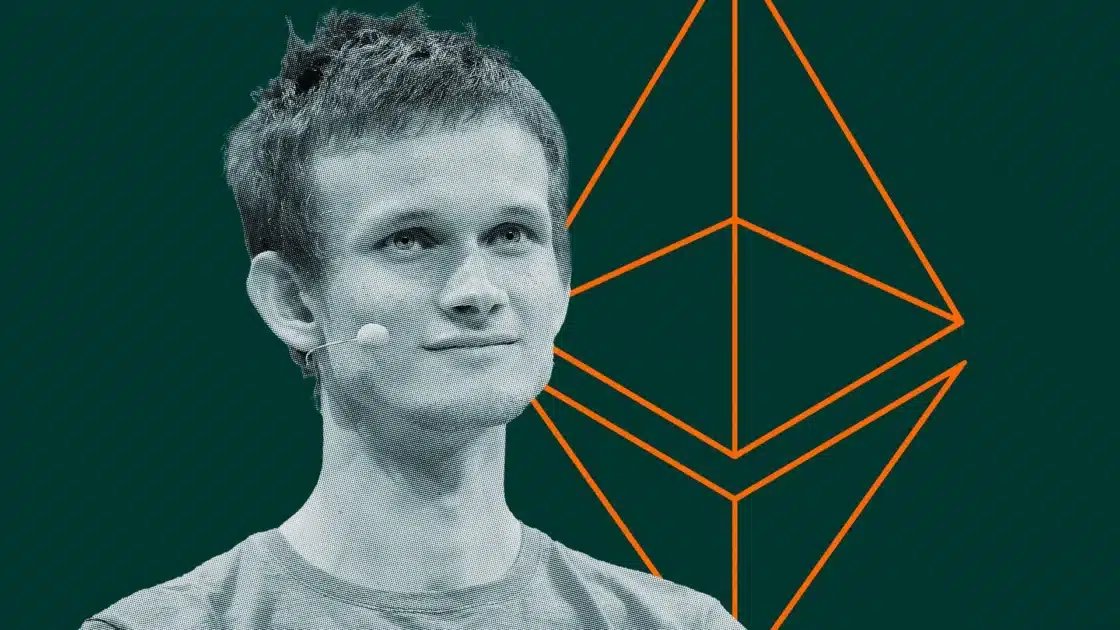
Vitalik Buterin Reveals Ethereum’s Bold Plan to Stay Quantum-Secure and Simple!

Vitalik Buterin Reveals Ethereum’s Bold Plan to Stay Quantum-Secure and Simple!

Buterin unveils Ethereum’s strategy to tackle quantum security challenges ahead. Ethereum focuses on simplifying architecture while boosting security for users. Ethereum’s market stability grows as Buterin’s roadmap gains investor confidence. Ethereum founder Vitalik Buterin has unveiled his long-term vision for the blockchain, focusing on making Ethereum quantum-secure while maintaining its simplicity for users. Buterin presented his roadmap at the Japanese Developer Conference, and splits the future of Ethereum into three phases: short-term, mid-term, and long-term. Buterin’s most ambitious goal for Ethereum is to safeguard the blockchain against the threats posed by quantum computing.  The danger of such future developments is that the future may call into question the cryptographic security of most blockchain systems, and Ethereum will be able to remain ahead thanks to more sophisticated mathematical techniques to ensure the safety and integrity of its protocols. Buterin is committed to ensuring that Ethereum evolves in a way that not only meets today’s security challenges but also prepares for the unknowns of tomorrow. Also Read: Ethereum Giant The Ether Machine Takes Major Step Toward Going Public! However, in spite of such high ambitions, Buterin insisted that Ethereum also needed to simplify its architecture. An important aspect of this vision is to remove unnecessary complexity and make Ethereum more accessible and maintainable without losing its strong security capabilities. Security and simplicity form the core of Buterin’s strategy, as they guarantee that the users of Ethereum experience both security and smooth processes. Focus on Speed and Efficiency in the Short-Term In the short term, Buterin aims to enhance Ethereum’s transaction efficiency, a crucial step toward improving scalability and reducing transaction costs. These advantages are attributed to the fact that, within the mid-term, Ethereum is planning to enhance the speed of transactions in layer-2 networks. According to Butterin, this is part of Ethereum’s expansion, particularly because there is still more need to use blockchain technology to date. The other important aspect of Ethereum’s development is the layer-2 solutions. Buterin supports an approach in which the layer-2 networks are dependent on layer-1 to perform some essential tasks like data security, proof, and censorship resistance. This will enable the layer-2 systems of Ethereum to be concerned with verifying and sequencing transactions, which will improve the overall speed and efficiency of the network. Ethereum’s Market Stability Reflects Confidence in Long-Term Strategy Ethereum’s market performance has remained solid, with the cryptocurrency holding steady above $4,000. Currently priced at $4,492.15, Ethereum has experienced a slight 0.93% increase over the last 24 hours, while its trading volume surged by 8.72%, reaching $34.14 billion. These figures point to growing investor confidence in Ethereum’s long-term vision. The crypto community remains optimistic about Ethereum’s future, with many predicting the price could rise to $5,500 by mid-October. Buterin’s clear, forward-thinking strategy continues to build trust in Ethereum as one of the most secure and scalable blockchain platforms in the market. Also Read: Whales Dump 200 Million XRP in Just 2 Weeks – Is XRP’s Price on the Verge of Collapse? The post Vitalik Buterin Reveals Ethereum’s Bold Plan to Stay Quantum-Secure and Simple! appeared first on 36Crypto.
Share
Coinstats2025/09/18 01:22