El Salvador, the Bitcoin home country, may be facing a crisis with the IMF following the recent drop in BTC prices. Here are the details. Continue Reading: El El Salvador, the Bitcoin home country, may be facing a crisis with the IMF following the recent drop in BTC prices. Here are the details. Continue Reading: El

El Salvador May Be in Trouble Over Bitcoin: Experts Speak Out

2026/02/13 01:59
4 min read

The sharp drop in Bitcoin has deeply affected El Salvador, which gained global attention by declaring BTC as its official currency.

President Nayib Bukele’s high-risk crypto strategy has caused volatility in the country’s debt markets and heightened investor concerns.

Bukele made history as the first leader to make Bitcoin a legal tender alongside the US dollar. Despite the recent sell-off, the president maintained his policy of buying “one Bitcoin a day.” However, the latest crash has resulted in hundreds of millions of dollars in losses in government crypto assets and complicated ongoing $1.4 billion loan negotiations with the International Monetary Fund (IMF).

Increased risk perception in financial markets is drawing attention. Investors have pushed El Salvador’s credit default swap (CDS) premiums to their highest level in five months. This indicates growing unease regarding the country’s crypto-focused strategy.

The country’s dollar-denominated bonds recorded the sharpest decline among emerging markets last week. However, some of the losses were later recouped in the wake of a general rally in emerging market debt.

According to investors, the main risk is the possibility of a confrontation with the IMF due to the government’s continued Bitcoin purchases and its delay in reforming the pension system. A breakdown in the IMF program could weaken one of the fundamental pillars of El Salvadoran bonds, which have stood out as a “success story” among emerging markets, delivering yields of over 130% in the last three years.

Christopher Mejia, emerging markets analyst at T Rowe Price, commented, “The IMF may object to the possibility of using loan tranches to purchase Bitcoin. Furthermore, Bitcoin’s decline is not easing investor concerns.”

The IMF stated that discussions on pension reform and Bitcoin purchases are ongoing, with a particular focus on better understanding the purchases and increasing transparency.

Bitcoin’s decline of more than 22% since the end of January has led to losses of up to 2.6 cents per dollar in El Salvadoran bonds maturing in 2035. In a broader context, Bitcoin has fallen 46% since its October peak.

According to Bloomberg calculations, the value of the country’s Bitcoin investments has decreased from approximately $800 million to around $500 million. El Salvador’s international reserves are at approximately $4.5 billion.

The second review of the IMF program has been on hold since September due to the government’s delay in publishing its analysis of the pension system. The third review, scheduled for March, is critical for loan repayments.

Related News: Bitwise CIO Shares What's Needed for Bitcoin and Altcoins to Exit the Bear Market

Jared Lou, a manager at the William Blair Emerging Markets Debt Fund, said, “Continued Bitcoin purchases create potential challenges in terms of IMF reviews. The market would react very negatively if IMF support were to disappear.”

However, it is noted that El Salvadoran bonds have formed a floor, and some bonds continue to trade above their face value. One reason for this is Bukele’s close relationship with the US administration. The US is the largest shareholder in the IMF.

Oppenheimer analyst Thomas Jackson commented, “The Bukele administration appears to be pushing the limits of the program by using its preferential relationship with the U.S.”

Some experts suggest that El Salvador could completely exit the IMF program and consider the US as an alternative source of financing. However, this scenario could mean the loss of one of the key pillars that have made investing in the country’s debt attractive in recent years.

El Salvador faces $450 million in bond payments this year. This amount is projected to rise to approximately $700 million next year. Furthermore, pension debt obligations are expected to reach 6% of GDP after April.

*This is not investment advice.

Continue Reading: El Salvador May Be in Trouble Over Bitcoin: Experts Speak Out

Market Opportunity
ELYSIA Logo
ELYSIA Price(EL)
$0.00197
$0.00197$0.00197
-1.25%
USD
ELYSIA (EL) Live Price Chart
Disclaimer: The articles reposted on this site are sourced from public platforms and are provided for informational purposes only. They do not necessarily reflect the views of MEXC. All rights remain with the original authors. If you believe any content infringes on third-party rights, please contact service@support.mexc.com for removal. MEXC makes no guarantees regarding the accuracy, completeness, or timeliness of the content and is not responsible for any actions taken based on the information provided. The content does not constitute financial, legal, or other professional advice, nor should it be considered a recommendation or endorsement by MEXC.

You May Also Like

UAE’s Central Bank Approves the DSSC Stablecoin Launch by IHC, FAB, and Sirius

UAE’s Central Bank Approves the DSSC Stablecoin Launch by IHC, FAB, and Sirius

The post UAE’s Central Bank Approves the DSSC Stablecoin Launch by IHC, FAB, and Sirius appeared on BitcoinEthereumNews.com. CBUAE has approved the dirham-backed
Share
BitcoinEthereumNews2026/02/13 04:30
Unyielding Challenges Stall US Crypto Bill Progress
Unyielding Challenges Stall US Crypto Bill Progress

The post Unyielding Challenges Stall US Crypto Bill Progress appeared on BitcoinEthereumNews.com. The enduring quest to establish a regulatory framework for cryptocurrencies
Share
BitcoinEthereumNews2026/02/13 04:04
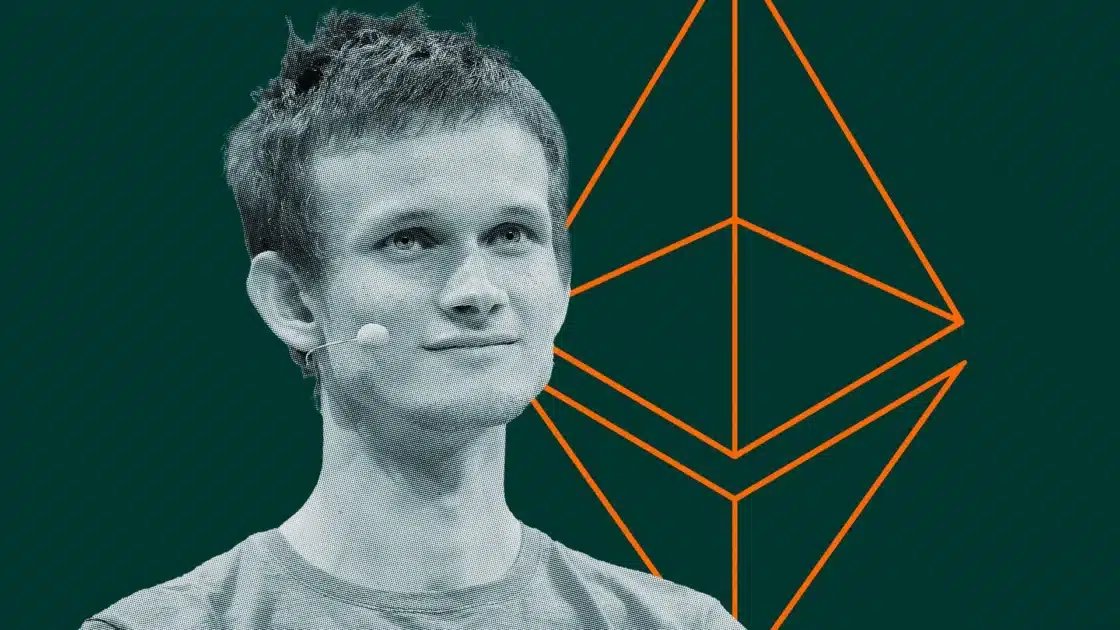
Vitalik Buterin Reveals Ethereum’s Bold Plan to Stay Quantum-Secure and Simple!

Vitalik Buterin Reveals Ethereum’s Bold Plan to Stay Quantum-Secure and Simple!

Buterin unveils Ethereum’s strategy to tackle quantum security challenges ahead. Ethereum focuses on simplifying architecture while boosting security for users. Ethereum’s market stability grows as Buterin’s roadmap gains investor confidence. Ethereum founder Vitalik Buterin has unveiled his long-term vision for the blockchain, focusing on making Ethereum quantum-secure while maintaining its simplicity for users. Buterin presented his roadmap at the Japanese Developer Conference, and splits the future of Ethereum into three phases: short-term, mid-term, and long-term. Buterin’s most ambitious goal for Ethereum is to safeguard the blockchain against the threats posed by quantum computing.  The danger of such future developments is that the future may call into question the cryptographic security of most blockchain systems, and Ethereum will be able to remain ahead thanks to more sophisticated mathematical techniques to ensure the safety and integrity of its protocols. Buterin is committed to ensuring that Ethereum evolves in a way that not only meets today’s security challenges but also prepares for the unknowns of tomorrow. Also Read: Ethereum Giant The Ether Machine Takes Major Step Toward Going Public! However, in spite of such high ambitions, Buterin insisted that Ethereum also needed to simplify its architecture. An important aspect of this vision is to remove unnecessary complexity and make Ethereum more accessible and maintainable without losing its strong security capabilities. Security and simplicity form the core of Buterin’s strategy, as they guarantee that the users of Ethereum experience both security and smooth processes. Focus on Speed and Efficiency in the Short-Term In the short term, Buterin aims to enhance Ethereum’s transaction efficiency, a crucial step toward improving scalability and reducing transaction costs. These advantages are attributed to the fact that, within the mid-term, Ethereum is planning to enhance the speed of transactions in layer-2 networks. According to Butterin, this is part of Ethereum’s expansion, particularly because there is still more need to use blockchain technology to date. The other important aspect of Ethereum’s development is the layer-2 solutions. Buterin supports an approach in which the layer-2 networks are dependent on layer-1 to perform some essential tasks like data security, proof, and censorship resistance. This will enable the layer-2 systems of Ethereum to be concerned with verifying and sequencing transactions, which will improve the overall speed and efficiency of the network. Ethereum’s Market Stability Reflects Confidence in Long-Term Strategy Ethereum’s market performance has remained solid, with the cryptocurrency holding steady above $4,000. Currently priced at $4,492.15, Ethereum has experienced a slight 0.93% increase over the last 24 hours, while its trading volume surged by 8.72%, reaching $34.14 billion. These figures point to growing investor confidence in Ethereum’s long-term vision. The crypto community remains optimistic about Ethereum’s future, with many predicting the price could rise to $5,500 by mid-October. Buterin’s clear, forward-thinking strategy continues to build trust in Ethereum as one of the most secure and scalable blockchain platforms in the market. Also Read: Whales Dump 200 Million XRP in Just 2 Weeks – Is XRP’s Price on the Verge of Collapse? The post Vitalik Buterin Reveals Ethereum’s Bold Plan to Stay Quantum-Secure and Simple! appeared first on 36Crypto.
Share
Coinstats2025/09/18 01:22