

Must Read
Manny Villar’s stars are about to sparkle again: Villar Land Corporation’s share price has bounced back as of February 12, Thursday.Manny Villar’s stars are about to sparkle again: Villar Land Corporation’s share price has bounced back as of February 12, Thursday.
Tracking the fallout of Manny Villar’s spot in Forbes’ list of richest individuals
Manny Villar was ranked 117th overall in Forbes Magazine’s list of Billionaires for 2025 based on his estimated net worth of US$17.2 billion as of April 2025. This also resulted in naming him at the time by the publication as the Philippines’ richest individual, besting 14 other Filipinos.
Villar’s net worth was driven up by the P1.3 trillion ($22 billion) valuation of his development projects, essentially by his three property companies which own a total of 396.88 hectares of prime land in “Villar City,” the massive 3,500-hectare property, spanning 15 cities and towns across Metro Manila and Cavite.
But by August 2025, in Forbes Magazine’s edition of the “50 Richest in the Philippines,” Villar was no longer number one on the leaderboard. On the list, he was ranked 3rd richest person in the country with a net worth of $11 billion only. The Sy siblings — the heirs to the SM group built by the late retail tycoon Henry Sy Sr. — took the top spot with $11.8 billion, followed by Enrique Razon Jr. with $11.5 billion, in second place.
The drop in Villar’s net worth was prompted by what happened in May 2025: the Philippine Stock Exchange (PSE) suspended the trading of several Villar key firms. This included his flagship company, Villar Land Holdings Inc. (VLC), formerly Golden MV Holdings Inc. (HVN); Vista Land & Lifescapes Inc.; and Vistamalls Inc. — due to delays in filing their 2024 audited financial statements.
VLC tried to explain that the financials of the company were “currently undergoing rigorous audit process.” The process included a comprehensive review of appraisal reports covering high-value properties, requiring extensive audit to ensure the accuracy and integrity of the financial statements. And once the audit is concluded, VLC gave the assurance that “the audited financial statements will be publicly released in full compliance with regulatory requirements.”
As talked about, the delay in reporting was actually caused by a disagreement with external auditors over the valuation of the 396.88 hectares of land in Villar City. This also led to the postponement of VLC’s annual stockholder’s meeting several times, which was finally held on December 29, 2025. The meeting was held via remote communication, with livestreaming accessible to registered participants.
How the valuation issue was resolved
Villar Land Holdings’ auditors, Punongbayan & Araullo (P&A), rejected the fair market value method used by VLC’s management and insisted in reverting to the “cost basis,” forcing the land’s valuation down to P8.6 billion only.
Early on, VLC hired E-Value Philippines, a third-party appraiser accredited by the Securities & Exchange Commission (SEC). It came up with a P1.33-trillion land estimate, which VLC used to book a paper gain (meaning no actual sales and no cash was made) “of P999.72 billion in earnings and an income tax of P334.2 billion.” VLC listed this as deferred tax liabilities for the tax is not yet paid and only becomes due if the gains are realized as in the actual sale of the property.
To secure a final audit and meet delayed regulatory deadlines, VLC agreed to abandon their “fair value” model. Total assets were also slashed, falling from the unaudited P1.34 trillion to approximately P35.7 billion. The record-breaking P999 billion paper profit originally claimed by the company was effectively wiped out.
While P&A used in its the primary audit the cost basis, it submitted a final audit using the income approach to estimate fair value, and arrived at the much higher value of P52.74 billion.
This was at least higher than the cost value of P8.6 billion. As I understand it, it was the selling prices of nearby properties that served as the basis of the final valuation.
The accounting disagreement between VLC and its external auditors effectively made the former fail to submit its 2024 audited annual report and Q1 2025 quarterly report by the required deadlines. It also forced the trading suspension of VLCs shares for six months in 2025. The suspension began on May 16, 2025 and trading officially resumed on November 13, 2025.
When trading resumed in November 2025, VLC’s share price had plunged by over 75%, erasing billions from Villar’s declared fortune six months earlier: Villar’s net worth traveled from a high of about $17.2 billion in March, then to $11.0 billion in August, and to around $4.3 billion by the end of the year.
The drastic dropped in Villar’s net worth can be partly explained by the 70% one-day rout of VLC’s share price from P552.5 to P386.80 per share on November 19, 2025, at 09:41:04 am, which also triggered urgent inquiry by the Philippine Stock Exchange’s (PSE’s) Capital Markets Integrity Corporation (“CMIC”) to VLC for explanations.
Incidentally, the SEC revoked the accreditation of the appraiser, E-Value Philippines in November 2025. As of late, the company is said to have been also used for market manipulation.
 Villar Land Corporation’s one-year stock data as of February 12, 2025. Image from the Philippine Stock Exchange
As of February 12, 2025, after all the massive asset write-down and lower-than-reported profits revealed in VLC’s audited financials and amid the latest investigations launched by the Philippine Securities and Exchange Commission (SEC) on the VLC issue, Manny Villar’s stars are about to sparkle, again: VLC’s share price has bounced back — rising 75% higher than its dismal trading close of P386.80 per share on November 19, 2025 — to P677 apiece.
As is said in the vernacular on what comes next in unfolding amazing stories captivating the imagination, “Abangan!”
Octa’s TNM survey report
Dr. Guido David of OCTA Research was our guest at The Monday Circle Forum last Monday, February 9, for the result of their Q4 2025 Tugon ng Masa (TNM) Survey, which was also released to the public on the same day.
The survey was conducted from December 3 to 11, 2025. Among the highlights of the survey: self-rated poverty fell by 17 points in self-rated poverty from 54% (Q3 2025) to 37% (Q4 2025). As noted, this is the largest single-quarter decline ever recorded in the OCTA TNM series. For context, Dr. David explained that this is equivalent to about 4.5 million families no longer considering themselves poor.
Next, is the decline in food poverty. This is not about hunger, “but the inability to purchase adequate, nutritious food, including lack of physical access or proximity to shops selling nutritious food, or lacking the dignity of shopping for and cooking one’s own food, often relying on food banks or charity.”
Self-rated food poverty declined by 19 points, from 49% to 30%. Again, Dr. David explained this as representative of roughly 5 million families no longer consider themselves “unable to access or afford a nutritious, healthy diet in a socially acceptable way.” This is one of the fastest improvements in food poverty perceptions in the TNM series, he added.
However, self-rated hunger increased from 11% to 16% in Q4 2025. But, according to the survey, nearly 80% of affected families experienced hunger only once or a few times, indicating short-term, episodic food stress rather than chronic hunger.
 Image from OCTA Research
Most significantly, a majority of adult Filipinos — 55% — expressed trust in the national government’s ability to handle issues effectively, while 20% express distrust while 25% remain undecided or ambivalent.
Finally, the top national concerns are increasing wages (45%) and controlling inflation (41%). – Rappler.com
(The article has been prepared for general circulation for the reading public and must not be construed as an offer, or solicitation of an offer to buy or sell any securities or financial instruments whether referred to herein or otherwise. Moreover, the public should be aware that the writer or any investing parties mentioned in the column may have a conflict of interest that could affect the objectivity of their reported or mentioned investment activity. You may reach the writer at densomera@yahoo.com)
Market Opportunity
Outlanders Price(LAND)
$0.0000998
$0.0000998$0.0000998
USD
Outlanders (LAND) Live Price Chart
Disclaimer: The articles reposted on this site are sourced from public platforms and are provided for informational purposes only. They do not necessarily reflect the views of MEXC. All rights remain with the original authors. If you believe any content infringes on third-party rights, please contact service@support.mexc.com for removal. MEXC makes no guarantees regarding the accuracy, completeness, or timeliness of the content and is not responsible for any actions taken based on the information provided. The content does not constitute financial, legal, or other professional advice, nor should it be considered a recommendation or endorsement by MEXC.
You May Also Like
Crucial Fed Rate Cut: Powell’s Bold Risk Management Move Explained
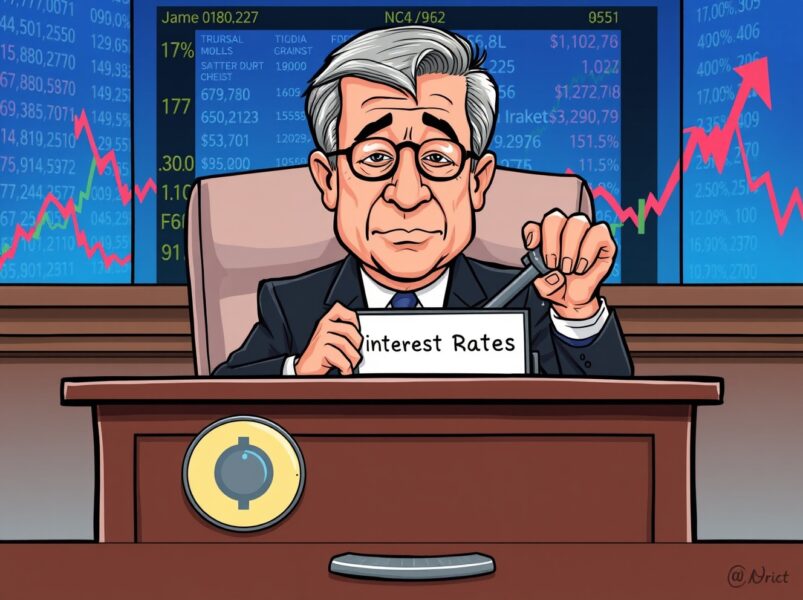
BitcoinWorld Crucial Fed Rate Cut: Powell’s Bold Risk Management Move Explained In a significant development for global financial markets, Federal Reserve Chair Jerome Powell recently described the latest Fed rate cut as a critical risk management measure. This statement immediately captured the attention of investors, economists, and especially those in the dynamic cryptocurrency space. Understanding Powell’s rationale and the potential implications of this move is essential for navigating today’s complex economic landscape. What Exactly is a Fed Rate Cut and Why Does it Matter? A Fed rate cut refers to the Federal Reserve lowering the target range for the federal funds rate. This is the interest rate at which commercial banks borrow and lend their excess reserves to each other overnight. When the Fed lowers this rate, it typically makes borrowing cheaper across the entire economy. This decision impacts everything from mortgage rates to business loans. The Fed uses interest rates as a primary tool to influence economic activity, aiming to achieve maximum employment and stable prices. A lower rate often stimulates spending and investment, but it can also signal concerns about economic slowdown. Key reasons for a rate cut often include: Slowing economic growth or recession fears. Low inflation or deflationary pressures. Global economic instability impacting domestic markets. A desire to provide more liquidity to the financial system. Powell’s emphasis on ‘risk management’ suggests a proactive approach. The Fed is not just reacting to current data but also anticipating potential future challenges. They are essentially trying to prevent a worse economic outcome by adjusting policy now. How Does a Fed Rate Cut Influence the Broader Economy? When the Federal Reserve implements a Fed rate cut, it sends ripples throughout the financial world. For traditional markets, lower interest rates generally mean: Boost for Stocks: Companies can borrow more cheaply, potentially increasing profits and stock valuations. Investors might also move money from lower-yielding bonds into equities. Cheaper Borrowing: Consumers and businesses enjoy lower rates on loans, from mortgages to credit cards, encouraging spending and investment. Weaker Dollar: Lower rates can make a country’s currency less attractive to foreign investors, potentially leading to a weaker dollar. Bond Market Shifts: Existing bonds with higher yields become more attractive, while newly issued bonds will have lower yields. This shift in monetary policy aims to inject confidence and liquidity into the system, countering potential economic headwinds. However, there’s always a delicate balance to strike, as too much stimulus can lead to inflationary pressures down the line. What Does This Fed Rate Cut Mean for Cryptocurrency Investors? The impact of a Fed rate cut on the cryptocurrency market is often a topic of intense discussion. While crypto assets operate independently of central banks, they are not immune to broader macroeconomic forces. Here’s how a rate cut can play out: Increased Risk Appetite: With traditional savings and bond yields potentially lower, investors might seek higher returns in riskier assets, including cryptocurrencies like Bitcoin and Ethereum. Inflation Hedge Narrative: Some view cryptocurrencies, particularly Bitcoin, as a hedge against inflation and traditional currency debasement. If a rate cut leads to concerns about inflation, this narrative could gain traction. Liquidity Influx: A more accommodative monetary policy can increase overall liquidity in the financial system, some of which may flow into digital assets. Dollar Weakness: A weaker dollar, a potential consequence of rate cuts, can sometimes make dollar-denominated assets like crypto more appealing to international investors. However, it’s crucial to remember that the crypto market also has its unique drivers, including technological developments, regulatory news, and market sentiment. While a Fed rate cut can provide a tailwind, it’s not the sole determinant of crypto performance. Navigating the New Landscape: Actionable Insights for Crypto Investors Given the Federal Reserve’s stance on risk management through a Fed rate cut, what steps can crypto investors consider? Stay Informed: Keep a close watch on further Fed announcements and economic data. Understanding the broader macroeconomic picture is vital. Diversify Your Portfolio: While a rate cut might favor risk assets, a balanced portfolio that includes a mix of traditional and digital assets can help mitigate volatility. Long-Term Perspective: Focus on the fundamental value and long-term potential of your chosen cryptocurrencies rather than short-term fluctuations driven by macro news. Assess Risk Tolerance: Re-evaluate your personal risk tolerance in light of potential market shifts. Lower rates can encourage speculation, but prudence remains key. Powell’s description of the Fed rate cut as a risk management measure highlights the central bank’s commitment to maintaining economic stability. For cryptocurrency enthusiasts, this move underscores the increasing interconnectedness of traditional finance and the digital asset world. While a rate cut can create opportunities, a thoughtful and informed approach is always the best strategy. Frequently Asked Questions (FAQs) What exactly is a Fed rate cut? A Fed rate cut is when the Federal Reserve lowers its target for the federal funds rate, which is the benchmark interest rate banks charge each other for overnight lending. This action makes borrowing cheaper across the economy, aiming to stimulate economic activity. Why did Powell emphasize “risk management” for this Fed rate cut? Jerome Powell emphasized “risk management” to indicate that the Fed was proactively addressing potential economic slowdowns or other future challenges. It suggests a preventative measure to safeguard against adverse economic conditions rather than merely reacting to existing problems. How does a Fed rate cut typically affect the crypto market? A Fed rate cut can make traditional investments less attractive due to lower yields, potentially driving investors towards higher-risk, higher-reward assets like cryptocurrencies. It can also increase overall market liquidity and strengthen the narrative of crypto as an inflation hedge. Should crypto investors change their strategy after a rate cut? While a rate cut can influence market dynamics, crypto investors should primarily focus on their long-term strategy, fundamental research, and risk tolerance. It’s wise to stay informed about macroeconomic trends but avoid making impulsive decisions based solely on a single policy change. What are the potential downsides of a Fed rate cut? Potential downsides include increased inflationary pressures if the economy overheats, a weaker national currency, and the possibility of creating asset bubbles as investors chase higher returns in riskier markets. It can also signal underlying concerns about economic health. Did you find this article insightful? Share your thoughts and help others understand the implications of the Fed’s latest move! Follow us on social media for more real-time updates and expert analysis. To learn more about the latest crypto market trends, explore our article on key developments shaping Bitcoin’s price action. This post Crucial Fed Rate Cut: Powell’s Bold Risk Management Move Explained first appeared on BitcoinWorld.
Share
Coinstats2025/09/18 16:40

Inference Research Launches in Hong Kong with US$20M Seed Funding
Inference Research, an AI-native quantitative trading firm based in Hong Kong, has announced its launch and the expected closing of a US$20 million Seed funding
Share
Fintechnews2026/02/13 11:38

Should traders track FLOKI, memecoins to see where Bitcoin’s price will go?
The post Should traders track FLOKI, memecoins to see where Bitcoin’s price will go? appeared on BitcoinEthereumNews.com. The memecoin sector, characterized by
Share
BitcoinEthereumNews2026/02/13 11:15