

Bitcoin (BTC) Price: Jobs Report Crushes Rate Cut Dreams and Crypto Rally
TLDR
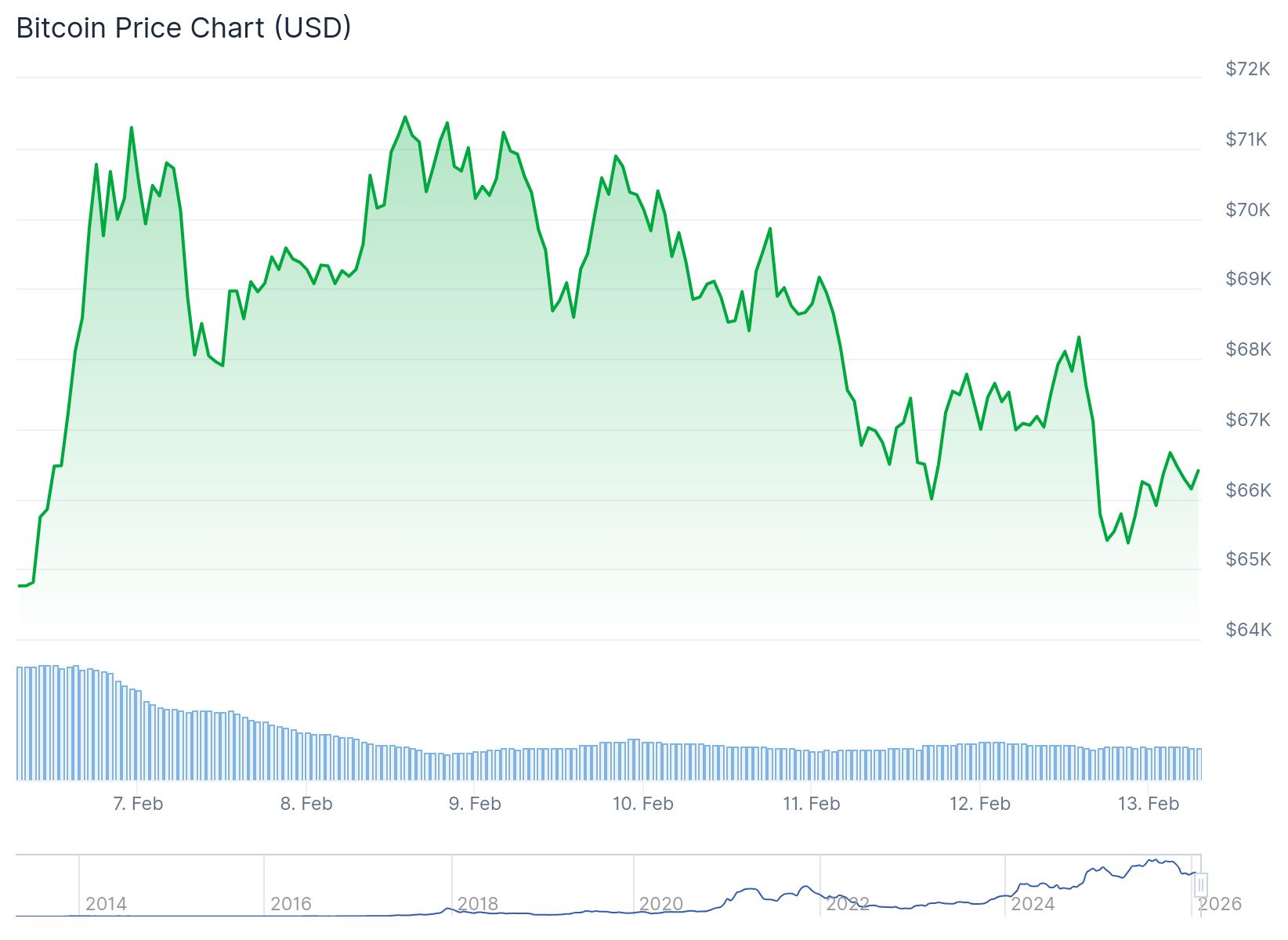
- Bitcoin fell 2.9% to $65,663 on Thursday, extending its losing streak to four days as traders reduced expectations for Federal Reserve rate cuts.
- Strong U.S. jobs data showed nonfarm payrolls beat forecasts in January, with unemployment near multi-month lows and firm wage growth, pushing rate cut expectations to June.
- Bitcoin spot ETFs recorded net outflows of $276.30 million on February 11, led by $92.60 million in redemptions from Fidelity’s FBTC.
- The crypto market mirrored tech sector weakness, with bitcoin falling alongside the Nasdaq and software stocks, reflecting their strong correlation.
- Gold dropped 3.1% to $4,938 per ounce while silver plunged 10.3% to $75.08, showing broader risk-off sentiment across markets.
Bitcoin dropped to $65,663 on Thursday, marking its fourth consecutive day of losses. The decline came after strong U.S. employment data reduced expectations for Federal Reserve interest rate cuts in the near term.
 Bitcoin (BTC) Price
The world’s largest cryptocurrency fell 2.9% during Thursday trading. Bitcoin had briefly stabilized overnight and pushed higher before resuming its downward trend.
The crypto has struggled to regain momentum after halting a sharp slide toward $60,000 earlier this month. Prices remain range-bound as traders show limited conviction in either direction.
Wednesday’s jobs report showed U.S. nonfarm payrolls increased more than economists forecast in January. The data pointed to continued strength in the labor market.
The unemployment rate stayed near multi-month lows. Wage growth also remained firm, strengthening the case for the Federal Reserve to keep interest rates steady for longer.
Following the jobs report, traders reduced their bets on a near-term rate cut. Market pricing now indicates lower odds of easing until June at the earliest.
ETF Outflows Weigh on Market
Bitcoin spot ETFs saw net outflows of $276.30 million on February 11. Fidelity’s FBTC led redemptions with $92.60 million in outflows.
WisdomTree’s BTCW provided a partial offset with $6.78 million in inflows. Total ETF net assets now stand at $85.77 billion, representing 6.35% of bitcoin’s market capitalization.
Cumulative inflows into bitcoin ETFs have reached $54.72 billion since their launch. The recent outflows reflect investor caution as interest rate expectations shift.
Derivatives Market Shows Reduced Leverage
Derivatives positioning continues to ease across the crypto market. Funding rates remain slightly positive, indicating modest bullish sentiment among traders.
Open interest has fallen to around $23 billion. This marks a sharp decline from levels seen in January and October.
The open interest-to-volume ratio sits at historically low levels. This suggests leverage has been flushed from the system and has not been rebuilt in a meaningful way.
Inverted implied volatility signals elevated near-term uncertainty among options traders. The total crypto market capitalization remains range-bound, reflecting subdued volatility.
Dessislava Ianeva, analyst at Nexo Dispatch, noted the limited conviction in current market conditions. Bitcoin’s inability to break above $70,000 reflects cautious risk appetite among investors.
Higher-for-longer rate expectations typically weigh on risk-sensitive assets like cryptocurrencies. The correlation between crypto and tech stocks reasserted itself during Wednesday’s trading.
The Nasdaq fell 2% on Wednesday. The iShares Expanded Tech-Software Sector ETF dropped 3% as investors questioned software sector valuations.
The software sector has declined 21% year to date. Concerns about artificial intelligence’s impact on traditional coding roles have pressured tech stocks.
Investors are now awaiting Friday’s U.S. Consumer Price Index report. The inflation data could provide clearer direction on the Federal Reserve’s policy outlook and future rate decisions.
The post Bitcoin (BTC) Price: Jobs Report Crushes Rate Cut Dreams and Crypto Rally appeared first on CoinCentral.
You May Also Like

Top 5 Crypto Mining Hosting Platforms in 2025: A Comprehensive Review

Robinhood Makes Notable Confirmation about Ripple and XRP Ledger

VanEck Drops Bombshell 13 Governments Are Secretly Mining Bitcoin in Global Power Play
  VanEck Identifies 13 Governments Actively Mining Bitcoin Signaling New Phase of State Participation in Digital Assets
  Global in