

Why Amazon (AMZN) and Microsoft (MSFT) Stocks Just Crashed into Bear Market Territory
TLDR
- Amazon and Microsoft have entered bear market territory, both down over 20% from recent highs due to concerns about heavy AI spending without matching cloud revenue growth.
- The Magnificent Seven ETF has dropped nearly 11% from its October peak as investors rotate away from big tech stocks.
- Apple fell 5% on Thursday after reports emerged that its planned AI upgrade to Siri may face delays.
- Alphabet is down 6.4% over the past month, while Meta has given up all post-earnings gains and Tesla is down 7.3% year-to-date.
- UBS downgraded the U.S. technology sector to Neutral, citing concerns about AI capital expenditure outpacing current revenue generation.
The Magnificent Seven technology stocks are experiencing a downturn driven by investor concerns about artificial intelligence spending. The Roundhill Magnificent Seven ETF closed Thursday in correction territory, down nearly 11% from its late October high.
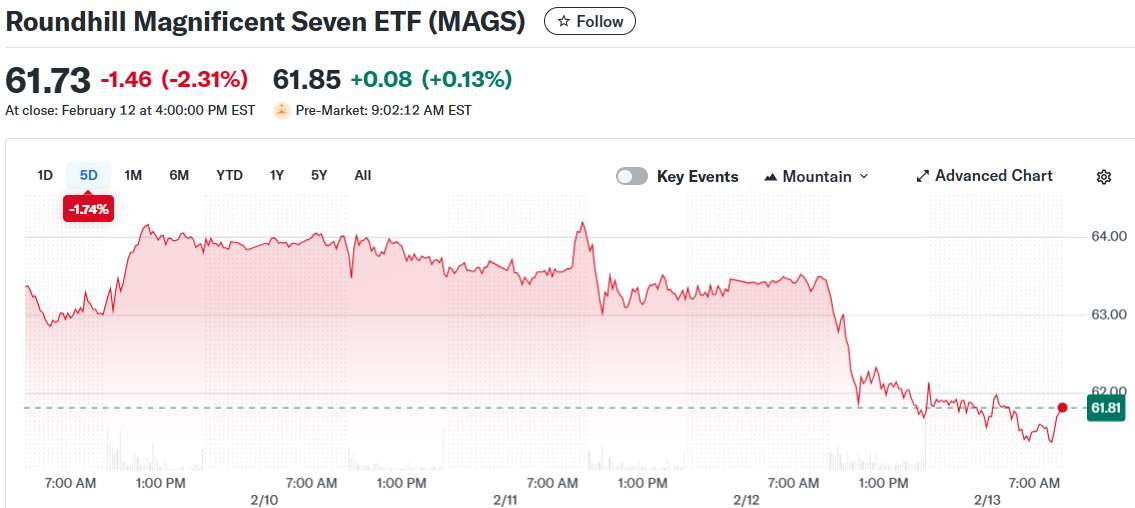 Roundhill Magnificent Seven ETF (MAGS)
Amazon and Microsoft have been hit hardest among the group. Both companies have now entered bear market territory, meaning they are down more than 20% from their recent highs. Investors have penalized the two tech giants for ramping up AI infrastructure investments without delivering proportional cloud computing revenue growth.
The selloff has spread beyond the initial leaders. Alphabet, which received praise for its Gemini AI platform and cloud unit growth, has declined 6.4% over the past month. Meta Platforms erased all gains from its recent earnings report, which had highlighted AI-driven revenue growth.
Apple Faces Delay Concerns
Apple experienced its worst single-day performance since April 2025, falling 5% on Thursday. Reports indicated that the company’s planned AI upgrade to its digital assistant Siri may be delayed. The news raised questions about whether new AI features will drive the next iPhone upgrade cycle.
The company also faces headwinds from rising memory chip prices. These cost pressures come as investors wait for clearer signs of AI adoption in Apple’s product lineup.
Broader Market Rotation Underway
UBS recently downgraded the U.S. technology sector to Neutral from its previous rating. Mark Haefele, chief investment officer for global wealth management at UBS, recommended investors diversify across sectors and geographies. He noted that AI value creation is occurring beyond the information technology sector.
Mark Hawtin of Liontrust Asset Management highlighted the rising capital expenditure across the Magnificent Seven companies. He pointed to Amazon as an example, noting that much of the company’s expected cash flow this year could be absorbed by increased capital spending on AI infrastructure.
Other Magnificent Seven Members
Nvidia has traded in a range for several months without breaking out. The chip maker continues to face questions about sustaining its AI-driven growth trajectory. Tesla remains an outlier in the group, moving based on investor sentiment around CEO Elon Musk’s robotaxi and robot deployment plans rather than AI trends.
Tesla is down 7.3% year-to-date. Meta Platforms sits just above the threshold that would place it in bear market territory alongside Amazon and Microsoft.
The collective decline reflects a shift in investor sentiment toward the market’s most concentrated positions. The Magnificent Seven stocks have driven a large portion of market gains over the past two years. Weakness in these companies now weighs on broader market indexes.
Investors are not reacting to weak earnings reports. The concern centers on future growth prospects, specifically how quickly artificial intelligence investments will convert into profits. Companies across the group are spending heavily on AI infrastructure while current revenue from the technology remains limited compared to the capital outlays.
Wall Street analysts maintain that Microsoft has the most upside potential among the group. The average price target for Microsoft stock stands at $593.38 per share, implying 47.7% upside from current levels.
The post Why Amazon (AMZN) and Microsoft (MSFT) Stocks Just Crashed into Bear Market Territory appeared first on Blockonomi.
You May Also Like

USD/JPY eases as softer US CPI caps Dollar gains, Yen demand stays firm

Markets await Fed’s first 2025 cut, experts bet “this bull market is not even close to over”
