The post Dragonfly’s Haseeb proposes holder scores, crowdsales to replace current airdrop model appeared on BitcoinEthereumNews.com. Dragonfly managing partner Haseeb Qureshi proposed a reputation system to reward users on token distributions through airdrops. On a Sept. 15 post via X, he shared a reform plan to filter airdrop farmers who dump tokens immediately after launches. Qureshi responded to Aztec CMO Claire Kart’s critique that airdrops “tank your chart” and provide “lazy alignment” by drawing parallels to IPO allocation methods. Companies offer institutional investors like BlackRock preferential pricing because these firms demonstrate long-term holding patterns, while retail investors pay market prices due to unpredictable behavior. Qureshi stated: “It’s crazy that token distributions don’t work this way.” He advocated for meta-incentives based on users’ historical token behavior rather than platform-specific metrics. Holder score framework The Dragonfly partner proposed standardized holder scores tracking token retention curves, governance participation, fee spending, liquidity provision, and product usage across multiple protocols. Projects would publish these scores in JSON format, enabling other teams to incorporate reputation data into distribution decisions. Qureshi argued that this creates accountability across the ecosystem. Users who know about future airdrops consider their holding history when modifying their behavior toward long-term commitment rather than immediate selling. Credit bureaus operate similarly, with financial institutions sharing customer data to encourage responsible behavior. The framework recommended limiting free airdrops to under 15% of total token generation events while selling the majority through score-tiered crowdsales. Better holder scores receive larger allocations at lower prices, while mercenary farmers pay full price or receive no access. Crowdsale advantages Qureshi stated that the proposal addresses fundamental airdrop problems by requiring skin in the game. Users paying for tokens create committed holder bases versus recipients of free money seeking immediate exits. Crowdsales also provide built-in sybil resistance, as creating thousands of farming accounts becomes economically prohibitive. He acknowledged airdrops remain useful for pay-for-performance scenarios requiring specific measurable… The post Dragonfly’s Haseeb proposes holder scores, crowdsales to replace current airdrop model appeared on BitcoinEthereumNews.com. Dragonfly managing partner Haseeb Qureshi proposed a reputation system to reward users on token distributions through airdrops. On a Sept. 15 post via X, he shared a reform plan to filter airdrop farmers who dump tokens immediately after launches. Qureshi responded to Aztec CMO Claire Kart’s critique that airdrops “tank your chart” and provide “lazy alignment” by drawing parallels to IPO allocation methods. Companies offer institutional investors like BlackRock preferential pricing because these firms demonstrate long-term holding patterns, while retail investors pay market prices due to unpredictable behavior. Qureshi stated: “It’s crazy that token distributions don’t work this way.” He advocated for meta-incentives based on users’ historical token behavior rather than platform-specific metrics. Holder score framework The Dragonfly partner proposed standardized holder scores tracking token retention curves, governance participation, fee spending, liquidity provision, and product usage across multiple protocols. Projects would publish these scores in JSON format, enabling other teams to incorporate reputation data into distribution decisions. Qureshi argued that this creates accountability across the ecosystem. Users who know about future airdrops consider their holding history when modifying their behavior toward long-term commitment rather than immediate selling. Credit bureaus operate similarly, with financial institutions sharing customer data to encourage responsible behavior. The framework recommended limiting free airdrops to under 15% of total token generation events while selling the majority through score-tiered crowdsales. Better holder scores receive larger allocations at lower prices, while mercenary farmers pay full price or receive no access. Crowdsale advantages Qureshi stated that the proposal addresses fundamental airdrop problems by requiring skin in the game. Users paying for tokens create committed holder bases versus recipients of free money seeking immediate exits. Crowdsales also provide built-in sybil resistance, as creating thousands of farming accounts becomes economically prohibitive. He acknowledged airdrops remain useful for pay-for-performance scenarios requiring specific measurable…

Dragonfly’s Haseeb proposes holder scores, crowdsales to replace current airdrop model

Dragonfly managing partner Haseeb Qureshi proposed a reputation system to reward users on token distributions through airdrops.

On a Sept. 15 post via X, he shared a reform plan to filter airdrop farmers who dump tokens immediately after launches.

Qureshi responded to Aztec CMO Claire Kart’s critique that airdrops “tank your chart” and provide “lazy alignment” by drawing parallels to IPO allocation methods.

Companies offer institutional investors like BlackRock preferential pricing because these firms demonstrate long-term holding patterns, while retail investors pay market prices due to unpredictable behavior.

Qureshi stated:

He advocated for meta-incentives based on users’ historical token behavior rather than platform-specific metrics.

Holder score framework

The Dragonfly partner proposed standardized holder scores tracking token retention curves, governance participation, fee spending, liquidity provision, and product usage across multiple protocols.

Projects would publish these scores in JSON format, enabling other teams to incorporate reputation data into distribution decisions.

Qureshi argued that this creates accountability across the ecosystem. Users who know about future airdrops consider their holding history when modifying their behavior toward long-term commitment rather than immediate selling.

Credit bureaus operate similarly, with financial institutions sharing customer data to encourage responsible behavior.

The framework recommended limiting free airdrops to under 15% of total token generation events while selling the majority through score-tiered crowdsales.

Better holder scores receive larger allocations at lower prices, while mercenary farmers pay full price or receive no access.

Crowdsale advantages

Qureshi stated that the proposal addresses fundamental airdrop problems by requiring skin in the game. Users paying for tokens create committed holder bases versus recipients of free money seeking immediate exits.

Crowdsales also provide built-in sybil resistance, as creating thousands of farming accounts becomes economically prohibitive.

He acknowledged airdrops remain useful for pay-for-performance scenarios requiring specific measurable activities like total value locked or trading volume.

However, Qureshi concluded that broad “helicopter money” distributions only attract artificial activity that disappears after token launches.

Mentioned in this article

Source: https://cryptoslate.com/dragonflys-haseeb-proposes-holder-scores-crowdsales-to-replace-current-airdrop-model/

Market Opportunity
Threshold Logo
Threshold Price(T)
$0.006979
$0.006979$0.006979
+0.44%
USD
Threshold (T) Live Price Chart
Disclaimer: The articles reposted on this site are sourced from public platforms and are provided for informational purposes only. They do not necessarily reflect the views of MEXC. All rights remain with the original authors. If you believe any content infringes on third-party rights, please contact service@support.mexc.com for removal. MEXC makes no guarantees regarding the accuracy, completeness, or timeliness of the content and is not responsible for any actions taken based on the information provided. The content does not constitute financial, legal, or other professional advice, nor should it be considered a recommendation or endorsement by MEXC.

You May Also Like

A whale that made a 141% profit on PUMP three days ago bought 321 million TRUMPs today, with a floating profit of $223,000.

A whale that made a 141% profit on PUMP three days ago bought 321 million TRUMPs today, with a floating profit of $223,000.

PANews reported on September 18th that according to Lookonchain monitoring, whale H56YMH sold 317 million PUMPs (worth approximately $2.53 million) at an average price of $0.008 three days ago, realizing a net profit of $1.48 million (a 141% return). Subsequently, eight hours ago, it purchased 321 million TRUMPs at an average price of $0.007835, resulting in unrealized profits of $223,000.
Share
PANews2025/09/18 10:36
Health Insurers To Cover Covid Vaccines Despite RFK, Jr. Moves

Health Insurers To Cover Covid Vaccines Despite RFK, Jr. Moves

The post Health Insurers To Cover Covid Vaccines Despite RFK, Jr. Moves appeared on BitcoinEthereumNews.com. The nation’s biggest health insurance companies will continue to cover vaccinations – including those against Covid-19 and seasonal flu – previously recommended by a federal advisory committee, America’s Health Insurance Plans said Wednesday, Sept. 17, 2025. In this photo is a free flu and Covid-19 vaccine shots available sign, CVS, Queens, New York. (Photo by: Lindsey Nicholson/Universal Images Group via Getty Images) UCG/Universal Images Group via Getty Images The nation’s biggest health insurance companies will continue to cover vaccinations – including those against Covid-19 and seasonal flu – previously recommended by a federal advisory committee. The announcement by America’s Health Insurance Plans (AHIP), which includes CVS Health’s Aetna, Humana, Cigna, Centene and an array of Blue Cross and Blue Shield plans as members, comes ahead of the first meeting of the reconstituted Advisory Committee on Immunization Practices, which now has new members chosen by U.S. Health and Human Services Secretary Robert F. Kennedy Jr., a vaccine critic. “Health plans are committed to maintaining and ensuring affordable access to vaccines,” AHIP said in a statement Wednesday. “Health plan coverage decisions for immunizations are grounded in each plan’s ongoing, rigorous review of scientific and clinical evidence, and continual evaluation of multiple sources of data.” The move by AHIP is good news for millions of Americans at a time of year when they flock to drugstores, pharmacies, physician’s offices and outpatient clinics to get their seasonal flu and Covid shots. Kennedy’s changes to U.S. vaccine policy have created confusion across the country over whether certain vaccines long covered by insurance would continue to be. AHIP has now provided some clarity for millions of Americans. “Health plans will continue to cover all ACIP-recommended immunizations that were recommended as of September 1, 2025, including updated formulations of the COVID-19 and influenza vaccines, with no cost-sharing…
Share
BitcoinEthereumNews2025/09/18 03:11
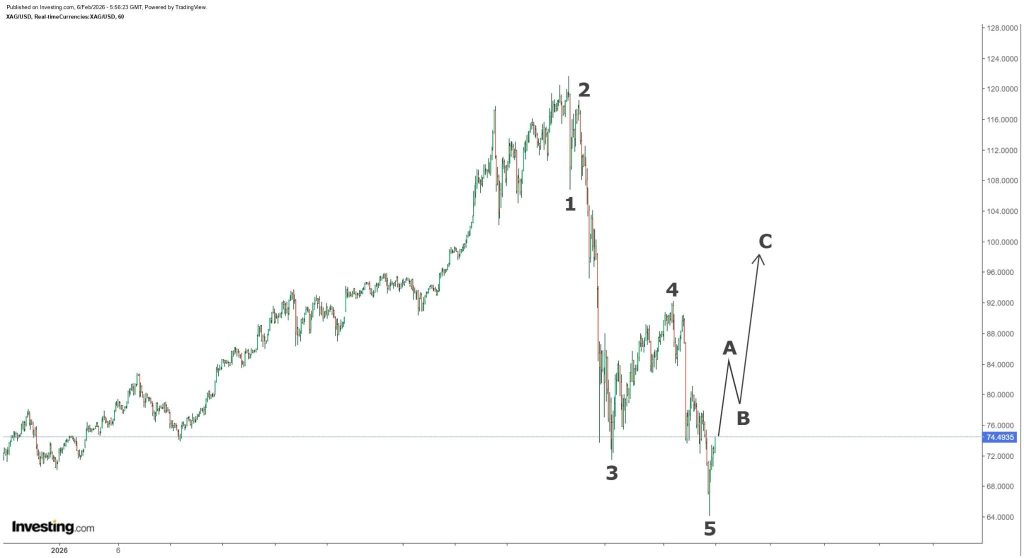
Silver Price Crash Is Over “For Real This Time,” Analyst Predicts a Surge Back Above $90

Silver Price Crash Is Over “For Real This Time,” Analyst Predicts a Surge Back Above $90

Silver has been taking a beating lately, and the Silver price hasn’t exactly been acting like a safe haven. After running up into the highs, the whole move reversed
Share
Captainaltcoin2026/02/07 03:15