

Space Data Centers: Starcloud’s $170M Bet on Orbital Computing Faces Technical and Economic Hurdles
BitcoinWorld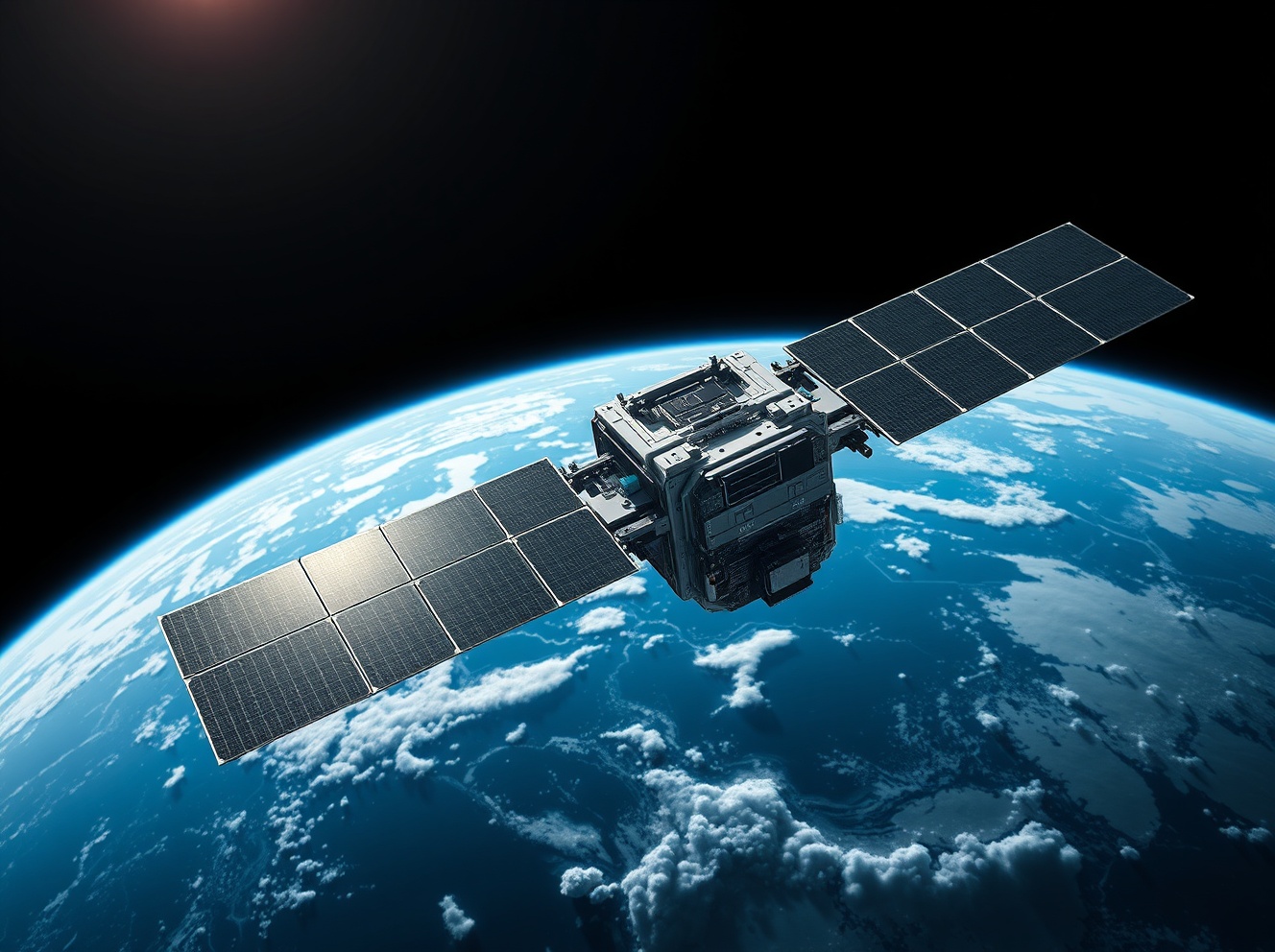
Space Data Centers: Starcloud’s $170M Bet on Orbital Computing Faces Technical and Economic Hurdles
San Francisco, CA | April 30, 2025 — The race to build data centers in space has entered a new, capital-intensive phase. Starcloud, a startup focused on orbital computing, has secured a $170 million Series A funding round led by Benchmark and EQT Ventures. This investment values the company at $1.1 billion, cementing its status as a unicorn just 17 months after its Y Combinator demo day. The funding underscores growing investor interest in offloading compute workloads to orbit, a concept driven by terrestrial constraints like energy costs, political hurdles, and real estate scarcity for traditional data centers. However, the business model hinges on unproven technology and the future affordability of space launch.
Starcloud’s Funding and Ambitious Roadmap for Space Compute
Starcloud’s latest capital infusion brings its total funding to $200 million. The company has moved quickly from concept to initial deployment. In November 2025, it launched its first demonstration satellite, which carried an Nvidia H100 GPU into orbit. According to CEO Philip Johnston, this mission achieved a significant milestone: training an AI model in space for the first time and running a version of Google’s Gemini. “An H100 is probably not the best chip for space, to be honest,” Johnston admitted in an interview. “But we wanted to prove we could run state-of-the-art terrestrial chips in space.” The company plans to launch a more advanced version, Starcloud 2, later this year. This spacecraft will feature multiple GPUs, including Nvidia’s Blackwell architecture and an AWS server blade, alongside a bitcoin mining computer.
The long-term vision centers on Starcloud 3, a dedicated data center spacecraft designed for SpaceX’s Starship. Envisioned as a three-ton vehicle with 200 kilowatts of power, it would utilize SpaceX’s “pez dispenser” deployment system. Johnston projects this could be the first orbital data center cost-competitive with Earth-based facilities, targeting an energy cost of approximately $0.05 per kilowatt-hour. This calculation, however, depends critically on Starship achieving a commercial launch cost of around $500 per kilogram—a target that remains speculative.
The Starship Dependency and Launch Cost Reality
The entire economic thesis for large-scale orbital data centers is tethered to the success of next-generation, reusable heavy-lift rockets like Starship. Currently, SpaceX’s Falcon 9 provides access to orbit, but its cost structure does not enable competitive energy pricing for bulk compute. “We’re not going to be competitive on energy costs until Starship is flying frequently,” Johnston stated. He anticipates commercial access opening in 2028 or 2029, but acknowledges the risk of delay. “If it ends up being delayed, we’ll just carry on launching the smaller versions on Falcon 9,” he said. This reality highlights a central paradox: the technology needed to make space computing affordable is the same technology that must be proven first.
Technical Challenges of Computing in the Vacuum of Space
Operating advanced computing hardware in orbit presents a unique set of engineering obstacles. Starcloud’s experience is instructive. The company reported that an Nvidia A6000 GPU failed during launch, underscoring the rigors of the space environment. Beyond durability, the primary challenges are power generation, heat dissipation, and synchronization.
- Thermal Management: High-performance GPUs generate immense heat. In the vacuum of space, there is no air for convection cooling. Starcloud-2 will reportedly carry “the largest deployable radiator ever flown on a private satellite” to reject this waste heat.
- Power Availability: Energy is a precious commodity. For context, SpaceX’s entire Starlink constellation of roughly 10,000 satellites generates about 200 megawatts. Meanwhile, terrestrial U.S. data centers under construction represent over 25 gigawatts of power capacity.
- Distributed Compute: The largest AI training workloads require thousands of GPUs working in unison. Achieving this in orbit would necessitate either massive single spacecraft or extremely reliable, high-bandwidth laser links between formations of smaller satellites—technology still in development.
Most industry experts expect simpler “inference” tasks (using already-trained AI models) to migrate to orbit long before complex training workloads do.
The Emerging Competitive Landscape for Orbital Data Centers
Starcloud is not alone in pursuing this frontier. The competitive field includes companies like Aetherflux, Google’s Project Suncatcher, and Aethero, which launched Nvidia’s first space-based Jetson GPU in 2025. However, the most formidable potential competitor is SpaceX itself. The launch provider has sought regulatory permission to operate a million satellites for distributed space computing. Johnston differentiates Starcloud’s approach, suggesting SpaceX is primarily building for its internal needs, like serving its Grok AI and Tesla workloads. “They are building for a slightly different use case than us,” he said. “What I think they are unlikely to do is what we’re doing [as] an energy and infrastructure player.”
The market is currently minuscule. While Nvidia sold nearly 4 million advanced GPUs to terrestrial cloud providers in 2025, only dozens of comparable units are in orbit. Starcloud’s early move gives it valuable operational data. “We now have valuable data about what it takes to run a powerful chip in space,” Johnston noted. This hard-won knowledge will inform the design of future, space-optimized computing hardware.
Business Models: From Niche Services to Future Disruption
Johnston outlines a dual-path business model. Initially, Starcloud is selling processing power to other spacecraft in orbit. For example, its first satellite analyzes radar imagery collected by Capella Space’s satellites. This provides near-term revenue while building flight heritage. The long-term, transformative model involves using cheap launch to deploy distributed orbital data centers that can compete for terrestrial cloud workloads. This shift would represent a fundamental change in global compute infrastructure, but it remains a distant prospect contingent on the factors of cost and technical maturity.
Conclusion
Starcloud’s $170 million Series A is a landmark vote of confidence in the future of space data centers. It validates the thesis that orbit could become a viable location for compute infrastructure. Nevertheless, the path is fraught with significant technical hurdles and a deep dependency on the success of SpaceX’s Starship and similar vehicles to drive down launch costs. The company’s progress from a Y Combinator graduate to a unicorn with hardware in orbit demonstrates remarkable execution. However, the ultimate question of whether orbital data centers can achieve cost parity with their terrestrial counterparts will not be answered for years, making this one of the most capital-intensive and long-term bets in the modern technology landscape.
FAQs
Q1: What is Starcloud’s main business?
Starcloud is building data centers in space to provide computing power, initially for other satellites and potentially in the future for workloads traditionally handled by terrestrial cloud providers.
Q2: Why put data centers in space?
Proponents cite potential benefits like abundant solar power, reduced cooling needs in a vacuum, bypassing terrestrial energy grid constraints, and locating compute closer to data sources (like Earth observation satellites).
Q3: What is the biggest challenge for orbital data centers?
The single largest challenge is economic: launch costs must drop dramatically, via vehicles like SpaceX’s Starship, for the energy cost of space-based computing to compete with ground-based data centers.
Q4: How does SpaceX factor into this industry?
SpaceX is both a critical enabler, as a launch provider, and a potential competitor, as it has proposed its own massive constellation for space-based computing.
Q5: Is the technology for space computing proven?
No, it is still in early development. While companies like Starcloud have demonstrated basic GPU operations in orbit, scaling to large, reliable, and synchronized data center clusters presents unsolved engineering challenges in power, cooling, and communications.
This post Space Data Centers: Starcloud’s $170M Bet on Orbital Computing Faces Technical and Economic Hurdles first appeared on BitcoinWorld.
You May Also Like

Walmart Recession Signal points to 'sharp economic downtown': Wall Street insider

Trump’s Critical Warning: US Engages Iran’s New Regime in High-Stakes Talks, Threatens Strikes if Diplomacy Fails


