

Coinbase federal charter granted conditionally for national crypto custody trust
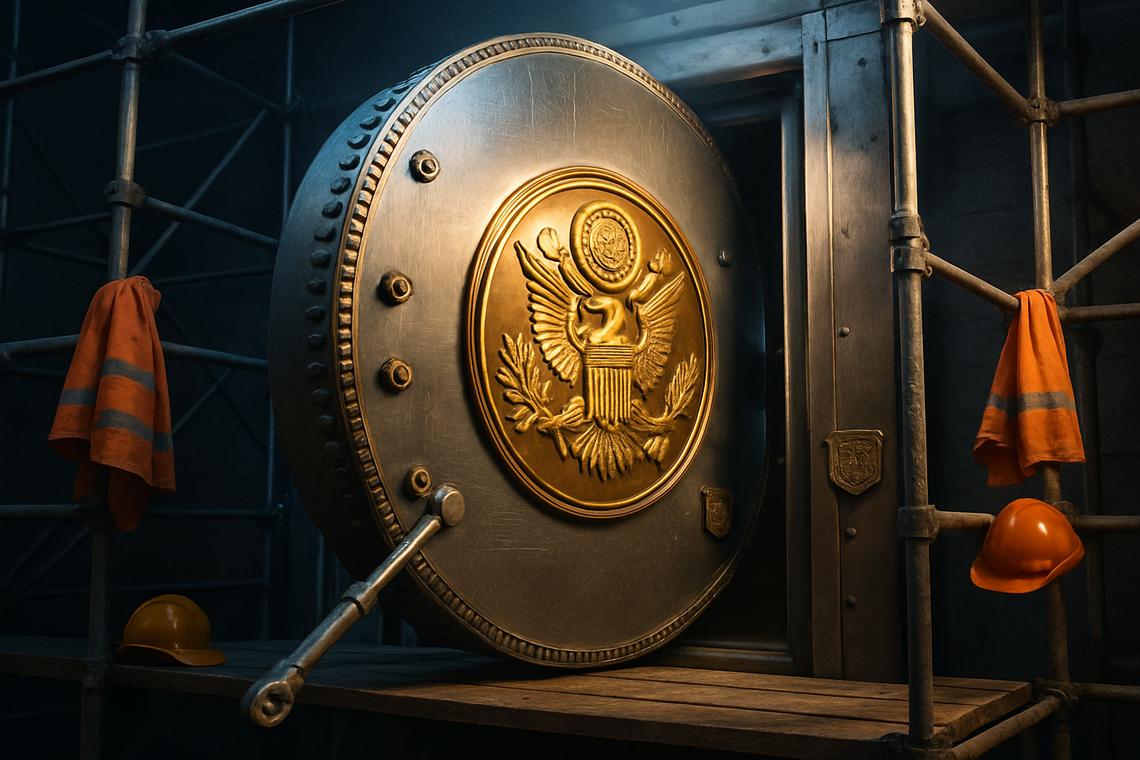
Regulatory momentum is accelerating for Coinbase federal charter efforts as the US banking watchdog conditionally backs a new trust entity.
OCC issues conditional green light for Coinbase National Trust Company
The Office of the Comptroller of the Currency (OCC) has granted Coinbase (COIN) conditional authorization to establish Coinbase National Trust Company, a federally chartered trust institution focused on digital assets.
However, this new federal trust charter is tightly scoped. It covers only custody operations and market infrastructure services. The crypto exchange will not accept retail deposits or operate as a traditional fractional reserve bank under this approval.
Describing the move, Greg Tusar, Co-CEO of Coinbase Institutional, said the clearance brings “federal regulatory uniformity to the custody and market infrastructure business we have been building for years.” Moreover, it aligns Coinbase more closely with long-standing financial-sector supervision.
From New York state trust charter to national trust status
Coinbase submitted its national trust charter application to the OCC in October of last year. At present, the platform operates under a limited-purpose trust charter from the New York Department of Financial Services (NYDFS), which enables digital asset custody services via Coinbase Prime, its institutional arm.
The federal designation does not replace this New York framework. Instead, Coinbase’s existing state trust charter and BitLicense remain fully in force, and Coinbase, Inc. continues its NYDFS supervision without interruption. That said, the national charter materially elevates the regulatory status of its institutional platform.
The upgrade is significant for market positioning. Tusar highlighted that Coinbase is already the custodian for over 80% of the world’s digital asset ETFs, yet many asset managers and hedge funds still prefer to face entities with a national trust charter. This new framework is designed to meet that expectation.
In practical terms, the coinbase federal charter opens access to institutional counterparties that require federal oversight as a precondition for engagement, going beyond what a single-state trust authorization can provide.
Institutional scale and market share
Coinbase’s institutional division reported $245.7 billion in assets under custody as of June 2025. According to figures cited in its charter filing, this represents roughly 7% of the entire cryptocurrency market, underscoring Coinbase’s current weight in institutional crypto custody.
Moreover, the newly granted crypto custody charter is expected to broaden that footprint. The federal framework is anticipated to appeal to large asset managers, hedge funds, and other professional investors that seek a clearer supervisory regime for counterparty risk.
Outstanding steps before full approval
Conditional authorization is not equivalent to full operational approval. Before Coinbase National Trust Company can launch, the firm must hold its inaugural board meeting, adopt corporate bylaws, and finalize internal governance structures.
In addition, Coinbase must implement its payment infrastructure and successfully pass a pre-launch examination conducted by the OCC. Only after these conditions are satisfied will the federal trust become fully functional. However, Coinbase has publicly committed to working closely with regulators to complete every requirement.
During this interim phase, Coinbase’s NYDFS BitLicense operations and New York trust charter remain active and unchanged. The company continues serving institutional and professional clients through Coinbase Prime while preparing the new federally supervised platform.
Competitive landscape for federal crypto charters
Coinbase is not alone in pursuing a national trust status for digital assets. Late last year, the OCC issued conditional approvals to several crypto-focused firms, including BitGo, Circle Internet Group, Fidelity Digital Assets, Ripple, and Paxos.
Additionally, EDX Markets—backed by Morgan Stanley and Citadel Securities—has submitted an application for a federal trust institution. World Liberty Financial, described as the Trump family’s largest cryptocurrency initiative, has also entered the process. Together, these applications signal a growing race to secure federally supervised institutional crypto custody licenses.
Broader market infrastructure and payment use cases
The federal charter framework does more than formalize custody. It lays the groundwork for new payment solutions, settlement rails, and adjacent financial services aimed at institutional partners and, over time, retail users who rely on secure crypto infrastructure.
While Congress has advanced certain market structure bills, federal oversight of crypto custody entities has remained fragmented. This OCC conditional approval helps fill that regulatory gap for large-scale institutional services, without waiting for final legislative outcomes in Washington.
Ultimately, the conditional charter for Coinbase National Trust Company marks a pivotal step in bringing federally supervised standards to a large share of institutional crypto activity, while leaving its existing New York operations fully intact.


Ayrıca Şunları da Beğenebilirsiniz
Dogecoin (DOGE) Price: ETF Inflows Hold Steady for Four Weeks as Price Tests Key Support

Chainlink Whale Activity Rises While Price Bleeds for 7 Straight Months
Chris Larsen’s $3.5B XRP Holdings See Fresh Blockchain Movement


Popüler Haberler
Daha fazla
