

New game: How CBN’s policies reshaped the Nigerian fintech landscape in 2025
The Central Bank of Nigeria and other agencies rolled out 14 policy changes in 2025, fundamentally altering how fintech operated across Africa’s largest economy.
From stricter agent banking rules to the continent’s first Open Banking framework, these regulations signalled a shift toward tighter oversight and standardisation in a sector that had largely operated with lighter touch regulation.
The year began with diaspora-focused policy. On January 10, CBN introduced the Non-Resident Nigerian Ordinary Account and Non-Resident Nigerian Investment Account schemes, allowing Nigerians abroad to remit foreign earnings and manage funds in both foreign and local currency.
The move directly affected remittance platforms and cross-border payment services, creating new infrastructure requirements for handling dual-currency accounts.
March brought the Treasury Management and Revenue System, contained in a February 28 circular, to replace Remita for government revenue collection. Payment platforms processing government transactions faced integration requirements with the new system, affecting everything from tax payments to licence renewals.
April marked a watershed moment. CBN officially approved Open Banking implementation, making Nigeria the first African country to do so.
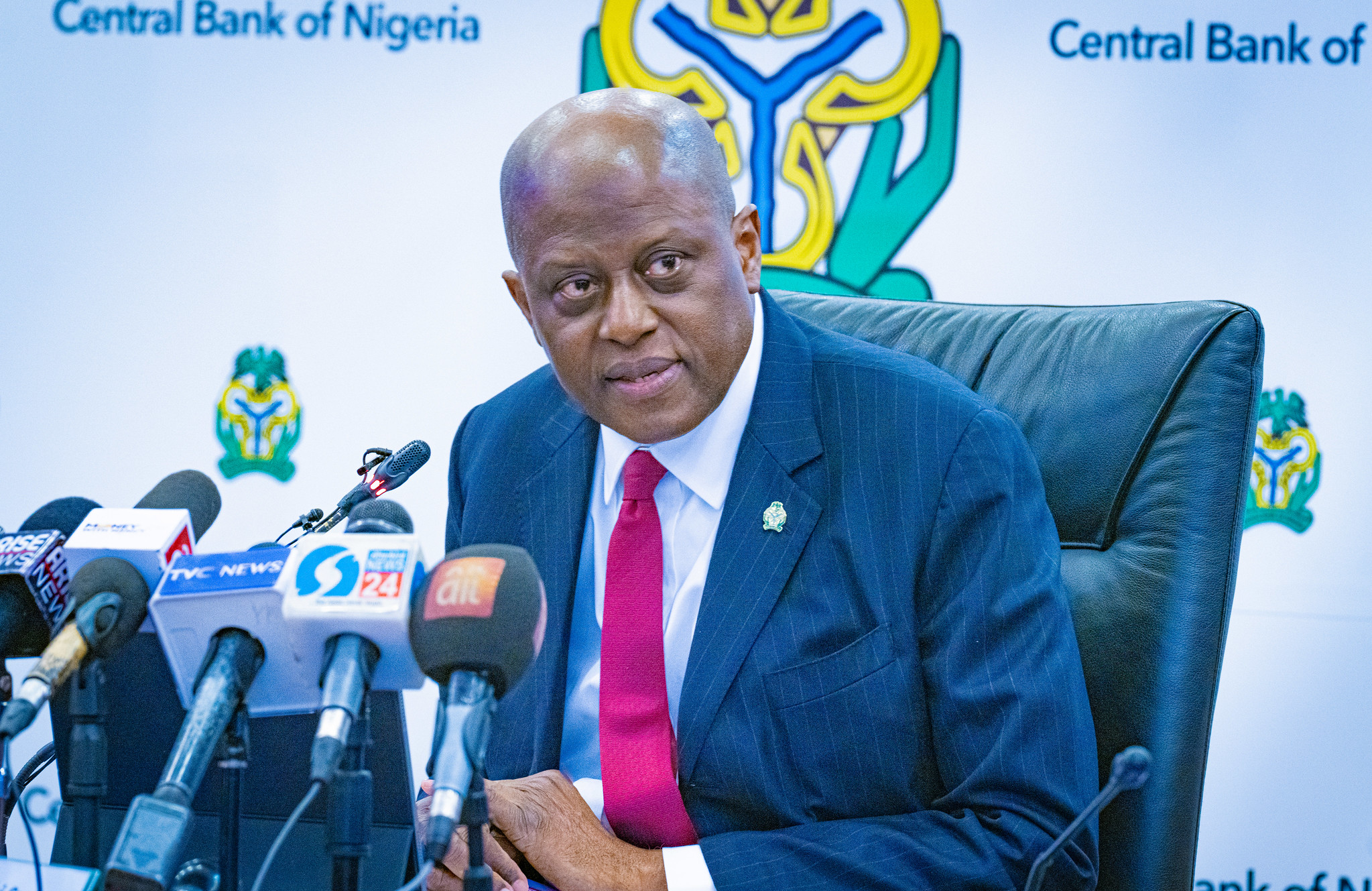 CBN governor, Olayemi Cardoso
Originally scheduled for August 1, the go-live date shifted to early 2026. The framework mandated standardised APIs across all banks but restricted access strictly to CBN-licenced and supervised entities.
This created both opportunity and exclusion, as unlicensed startups building financial products could not directly access banking data without partnering with licensed institutions.
And, yes, Technext’s Ifeoluwa wrote a comprehensive explainer on this here: How CBN’s Open Banking system will impact Nigerian fintechs: All you need to know
The regulator also eased cross-border payment documentation in April through Circular TED/FEM/PUB/FPC/001/006. For PAPSS transactions, individuals can now send up to $2,000 and corporates up to $5,000 using only basic KYC and AML documentation. Full forex documentation remains mandatory above these thresholds, but the simplified paperwork reduces friction for small intra-African remittances.
New CBN policies that affected fintech operations
August introduced geographic restrictions that hit agent banking operators hard. All POS terminals must now operate within a 10-meter radius of registered addresses, with mandatory geo-tagging.
The October 31 compliance deadline meant terminals operating outside approved locations risked deactivation. CBN justified this by pointing to 2023 fraud data showing POS channels accounted for 26.37% of all fraud incidents.
On this, Ifeoluwa wrote about the 5 big changes.
The same month saw the Federal Competition and Consumer Protection Commission (FCCPC) tackle digital lending abuses.
Released in July and taking effect in August, the Digital, Electronic, Online, or Non-Traditional Consumer Lending Regulations introduced fines between ₦50 million and ₦100 million, or 1% of annual turnover for companies breaching conduct rules.
Individual violators face penalties up to ₦50 million, with company directors risking sanctions for up to five years. The framework replaced previous enforcement methods of office raids and app delistings with standardised penalties.
Technext’s Bankole reported this.
Registration requirements carry high costs. Licence applications cost ₦100,000, with approval fees at ₦1 million for mobile money operators and existing digital lenders.
The 461 registered lenders as of early August can only cover two apps per approval, with additional apps costing ₦500,000 each and ownership capped at five.
Initial approvals expire after three years, requiring renewal by March 31 of the following year, then every 36 months thereafter. Annual levies of ₦500,000 are applied to all operators.
The regulations extended to airtime lending, bringing MTN’s ₦83.19 billion fintech revenue stream under FCCPC oversight.
powered by Advanced iFrame. Get the Pro version on CodeCanyon.
Only microfinance banks gained exemption, though they still needed waivers. Lenders faced new obligations: limiting advertising, ending unsolicited marketing, transparency on all fees, and approving loans only for creditworthy borrowers.
FCCPC gained authority to monitor interest rates and ensure they were not exploitative. Operators had 90 days to comply with audit requirements, biannual reporting, annual returns filing, and 48-hour document production on request.
October delivered the most disruptive change yet. Comprehensive agent banking guidelines released on October 6 included an exclusivity clause taking effect April 1, 2026.
POS agents can work with only one principal and one super agent simultaneously, ending the multi-provider model many agents relied on for income diversification.
Joshua wrote about this here.
Transaction limits now cap individual customers at ₦100,000 daily and ₦500,000 weekly, with agent daily limits at ₦1.2 million.
Super agents cannot directly provide agent banking services, and qualification criteria have been tightened to exclude anyone with a problematic BVN, recent bad loans, or a history of financial crimes.
Penalties include blacklisting and direct regulatory inspections.
The regulator aimed at marketing practices in November. A circular issued November 27 banned comparative, superlative, or de-marketing statements in advertisements.
More significantly, it prohibited all incentive-based marketing, including spin-to-win challenges, prize draws, and gamified elements. The rules apply to banks, Payment Service Banks, and Other Financial Institutions, forcing digital-first companies to overhaul social media strategies that rely heavily on viral campaigns and user acquisition contests.
December brought revised cash withdrawal policies effective January 1, 2026. While CBN removed all deposit limits and increased weekly withdrawal caps to ₦500,000 for individuals and ₦5 million for corporates, excess withdrawal fees remain at 3% for individuals and 5% for corporates.
Daily ATM limits stay at ₦100,000. The changes could reduce reliance on POS agents for cash access, potentially cutting transaction volumes for agent banking networks already facing exclusivity and location restrictions.
Rising compliance costs as CBN tightens oversight
Infrastructure requirements escalated throughout 2025.
The ISO 20022 migration mandate requires payment service providers to upgrade systems to the new messaging standard, with non-compliance risking fines, suspension, or licence withdrawal.
May’s exposure draft on automated AML solutions mandated real-time monitoring and instant alerts for high-risk transactions, including cross-border flows, large cash deposits, and crypto-related activity.
Lenders, payment startups, and banks must now maintain automated flagging systems, significantly raising compliance costs.
Draft guidelines on authorised push payment fraud introduced another layer of obligation. Victims must report within 72 hours, after which banks and fintechs have 16 working days to investigate and refund. The compressed timeline puts pressure on fraud detection and resolution systems.
powered by Advanced iFrame. Get the Pro version on CodeCanyon.
Ifeoluwa, again, wrote about this here.
The Corporate Affairs Commission added to the regulatory pile-up in December, threatening to blacklist and report POS operators who have not registered with the commission. Combined with CBN’s geo-tagging and exclusivity rules, agent banking faces a compliance gauntlet that smaller operators may struggle to navigate.
International Money Transfer Operator regulations, reviewed in 2024 and enforced in 2025, set minimum operating capital at $1 million for foreign IMTOs. Notably, banks and fintech entities cannot obtain IMTO licences directly and can only operate as agents, consolidating control over cross-border money movement.
The regulatory density of 2025 marks a clear inflexion point. Nigerian digital finance is moving from growth-at-all-costs toward standardisation, consumer protection, and fraud prevention.
The question heading into 2026 is whether smaller players can absorb compliance costs or if consolidation becomes inevitable as only well-capitalised platforms survive the new normal.
Ayrıca Şunları da Beğenebilirsiniz

Fed Makes First Rate Cut of the Year, Lowers Rates by 25 Bps


IP Hits $11.75, HYPE Climbs to $55, BlockDAG Surpasses Both with $407M Presale Surge!
