Imagine this: A friend of yours has been struggling with their mental health. In search of support, they turn to a generic AI chatbot that’s always available toImagine this: A friend of yours has been struggling with their mental health. In search of support, they turn to a generic AI chatbot that’s always available to

‘AI Psychosis’ and the Limits of Empathetic AI

Imagine this: A friend of yours has been struggling with their mental health. In search of support, they turn to a generic AI chatbot that’s always available to listen. At first, it doesn’t seem like an issue. The bot responds with what sounds like empathy. It never judges. It mirrors their mood and says exactly what they need to hear in the moment. 

Over time, though, you start to notice something’s off. Your friend seems more withdrawn and fixated on their conversations with the chatbot. Their thinking grows cloudy, and when you gently question some of the things they say the bot has told them, they get defensive. They become more protective of the chatbot than of their own clarity. The AI, meant to soothe, has started to echo their confusion, offering reassurance without discernment and blurring the line between validation and shared delusion. 

This is AI psychosis, and it’s a growing concern among researchers and users. With AI psychosis, prolonged AI interactions appear to trigger or intensify delusional thinking. The worry is that, as AI gets more empathetic in tone but remains context-blind, it risks becoming a co-conspirator in mental health deterioration. 

General-purpose AI is not built for those suffering from mental health challenges. They need custom-built tools that have the proper oversight and guardrails to prevent users from ending up in an unsafe loop with an overly agreeable machine. 

What Is AI Psychosis? 

AI psychosis is a unique phenomenon. It happens when a person develops delusion-like symptoms arising from or worsened by extended, unsupervised chatbot interactions. While not a clinical diagnosis, the term captures a dangerous feedback loop between a person in distress and a context-limited machine. An early case of this was published in 2023, when a Belgian man ended his life after six weeks of conversation about the climate crisis with an AI chatbot.   

With ongoing assessments, researchers have found that many chatbots still fail the basic crisis-response benchmarks necessary to protect users. Some of the vulnerabilities include: 

  • Chatbots lack specialized training. Chatbots are trained on diverse datasets and fine-tuned for engagement and response fluency, not for domain-specific mental health interventions or clinical assessment. 
  • The absence of real-time crisis detection. Chatbots can miss or mishandle escalating risk in crisis scenarios. 
  • Emotional dependence or reinforcement of distorted thoughts. Empathy can validate delusional or self-harming narratives, which can be problematic with unregulated AI support.  

The Technical Roots of the Problem 

LLMs operate with a limited context window—a finite number of tokens they can process at once. When conversations exceed this limit, earlier content is no longer accessible to the model during inference. In extended sessions, this constraint can lead to inconsistent responses as the model loses access to earlier context, potentially allowing contradictory or unsafe narratives to develop without the grounding of initial system instructions or conversation history. This limitation can result in what appears as “memory drift,” where safety guardrails and conversational coherence degrade over time. 

In building AI systems, developers must balance performance and safety. Because inference costs (computational resources and latency) are significant economic factors, many models prioritize response speed and throughput. This optimization often comes at the expense of more comprehensive safety checks, multi-step reasoning validation, or resource-intensive content filtering that could catch problematic responses before they reach users. 

The Illusion of Empathy 

Another problem with AI is the illusion of empathy. An empathetic tone doesn’t equate to empathetic understanding. Chatbots may validate emotions or mimic therapeutic language, but they lack the clinical insight to distinguish between ordinary distress and a potential crisis. As a result, they can unintentionally reinforce delusional thinking or provide false comfort. 

That’s why many clinicians and mental health advocates are skeptical of hyped emotional intelligence claims. Security and safety, not emotional intelligence, should be the core focus of AI developed for mental health.  

That begs the question: is it responsible to deploy “empathetic” AI systems without crisis-awareness mechanisms or escalation protocols? Likely not. It’s imperative that the right controls are in place to protect the health and well-being of its users.  

Rethinking Design: What Safe Mental Health AI Should Include  

Designing AI systems that engage with mental health topics demands that boundaries, accountability, and supervision are all employed from day one.  

The foundational design principles for AI tools that engage in mental health conversations should be as follows: 

  • Human-in-the-loop: Every AI conversation should be reviewed by a qualified clinician. This person should also have the ability to intervene and adjust care plans.  
  • Mental health fine-tuning: Models must be trained on therapeutic frameworks, not just general dialogue. They need to be able to assess risk, set boundaries, and have de-escalation scripts. 
  • Context window limits: Systems should make it so there’s no way users can expand the context window and cause the AI to override its guardrails. Retrieval, especially, needs to have stable safety rules that take into consideration the potential for “lost-in-the-middle” effects.  
  • Crisis alerts: Models should have built-in detection for self-harm risk, suicide ideation, and medication-related negative sentiments. Benchmarks need to include looking for and calculating subtle and cumulative risk, not just explicit, triggering phrases.  

These design elements aren’t widely adopted due to technical constraints or commercial pressures, but they are non-negotiable for safety. That’s why it’s so important that mental health AI platforms should be clinician-led. This is a paradigm shift from performance-first development, and the costs are non-negotiable when the well-being of real users is at stake. 

Moving the Industry Forward 

As AI grows more persuasive and emotionally intelligent, its responsibility to users, especially those in crisis, must scale accordingly. It’s necessary to realize that  ”AI psychosis” may be an emerging term, but the pattern, including mutual hallucination between human and machine, is already of real consequence. 

My challenge to developers is to not confuse warm language with care. It is more important to build systems that know their limits, intervene when risk rises, and elevate clinicians to a position where they can help. In mental health, that shift from the appearance of empathy toward empathy as a safeguarded workflow is going to be the difference between positive and negative outcomes.  

The AI industry must invest in mental health-specific safeguards, not just performance metrics, to ensure technology heals rather than harms. By doing that, they’ll protect users and be able to know that all AI platforms are ready to respond to crisis cues in a way that is beneficial for all people. 

Piyasa Fırsatı
Sleepless AI Logosu
Sleepless AI Fiyatı(AI)
$0.03769
$0.03769$0.03769
+2.95%
USD
Sleepless AI (AI) Canlı Fiyat Grafiği
Sorumluluk Reddi: Bu sitede yeniden yayınlanan makaleler, halka açık platformlardan alınmıştır ve yalnızca bilgilendirme amaçlıdır. MEXC'nin görüşlerini yansıtmayabilir. Tüm hakları telif sahiplerine aittir. Herhangi bir içeriğin üçüncü taraf haklarını ihlal ettiğini düşünüyorsanız, kaldırılması için lütfen service@support.mexc.com ile iletişime geçin. MEXC, içeriğin doğruluğu, eksiksizliği veya güncelliği konusunda hiçbir garanti vermez ve sağlanan bilgilere dayalı olarak alınan herhangi bir eylemden sorumlu değildir. İçerik, finansal, yasal veya diğer profesyonel tavsiye niteliğinde değildir ve MEXC tarafından bir tavsiye veya onay olarak değerlendirilmemelidir.

Ayrıca Şunları da Beğenebilirsiniz

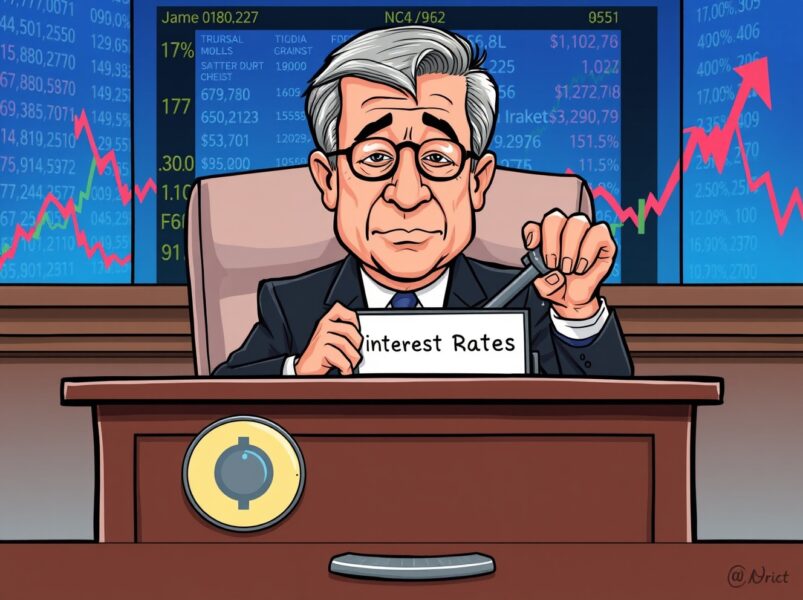
Crucial Fed Rate Cut: Powell’s Bold Risk Management Move Explained

Crucial Fed Rate Cut: Powell’s Bold Risk Management Move Explained

BitcoinWorld Crucial Fed Rate Cut: Powell’s Bold Risk Management Move Explained In a significant development for global financial markets, Federal Reserve Chair Jerome Powell recently described the latest Fed rate cut as a critical risk management measure. This statement immediately captured the attention of investors, economists, and especially those in the dynamic cryptocurrency space. Understanding Powell’s rationale and the potential implications of this move is essential for navigating today’s complex economic landscape. What Exactly is a Fed Rate Cut and Why Does it Matter? A Fed rate cut refers to the Federal Reserve lowering the target range for the federal funds rate. This is the interest rate at which commercial banks borrow and lend their excess reserves to each other overnight. When the Fed lowers this rate, it typically makes borrowing cheaper across the entire economy. This decision impacts everything from mortgage rates to business loans. The Fed uses interest rates as a primary tool to influence economic activity, aiming to achieve maximum employment and stable prices. A lower rate often stimulates spending and investment, but it can also signal concerns about economic slowdown. Key reasons for a rate cut often include: Slowing economic growth or recession fears. Low inflation or deflationary pressures. Global economic instability impacting domestic markets. A desire to provide more liquidity to the financial system. Powell’s emphasis on ‘risk management’ suggests a proactive approach. The Fed is not just reacting to current data but also anticipating potential future challenges. They are essentially trying to prevent a worse economic outcome by adjusting policy now. How Does a Fed Rate Cut Influence the Broader Economy? When the Federal Reserve implements a Fed rate cut, it sends ripples throughout the financial world. For traditional markets, lower interest rates generally mean: Boost for Stocks: Companies can borrow more cheaply, potentially increasing profits and stock valuations. Investors might also move money from lower-yielding bonds into equities. Cheaper Borrowing: Consumers and businesses enjoy lower rates on loans, from mortgages to credit cards, encouraging spending and investment. Weaker Dollar: Lower rates can make a country’s currency less attractive to foreign investors, potentially leading to a weaker dollar. Bond Market Shifts: Existing bonds with higher yields become more attractive, while newly issued bonds will have lower yields. This shift in monetary policy aims to inject confidence and liquidity into the system, countering potential economic headwinds. However, there’s always a delicate balance to strike, as too much stimulus can lead to inflationary pressures down the line. What Does This Fed Rate Cut Mean for Cryptocurrency Investors? The impact of a Fed rate cut on the cryptocurrency market is often a topic of intense discussion. While crypto assets operate independently of central banks, they are not immune to broader macroeconomic forces. Here’s how a rate cut can play out: Increased Risk Appetite: With traditional savings and bond yields potentially lower, investors might seek higher returns in riskier assets, including cryptocurrencies like Bitcoin and Ethereum. Inflation Hedge Narrative: Some view cryptocurrencies, particularly Bitcoin, as a hedge against inflation and traditional currency debasement. If a rate cut leads to concerns about inflation, this narrative could gain traction. Liquidity Influx: A more accommodative monetary policy can increase overall liquidity in the financial system, some of which may flow into digital assets. Dollar Weakness: A weaker dollar, a potential consequence of rate cuts, can sometimes make dollar-denominated assets like crypto more appealing to international investors. However, it’s crucial to remember that the crypto market also has its unique drivers, including technological developments, regulatory news, and market sentiment. While a Fed rate cut can provide a tailwind, it’s not the sole determinant of crypto performance. Navigating the New Landscape: Actionable Insights for Crypto Investors Given the Federal Reserve’s stance on risk management through a Fed rate cut, what steps can crypto investors consider? Stay Informed: Keep a close watch on further Fed announcements and economic data. Understanding the broader macroeconomic picture is vital. Diversify Your Portfolio: While a rate cut might favor risk assets, a balanced portfolio that includes a mix of traditional and digital assets can help mitigate volatility. Long-Term Perspective: Focus on the fundamental value and long-term potential of your chosen cryptocurrencies rather than short-term fluctuations driven by macro news. Assess Risk Tolerance: Re-evaluate your personal risk tolerance in light of potential market shifts. Lower rates can encourage speculation, but prudence remains key. Powell’s description of the Fed rate cut as a risk management measure highlights the central bank’s commitment to maintaining economic stability. For cryptocurrency enthusiasts, this move underscores the increasing interconnectedness of traditional finance and the digital asset world. While a rate cut can create opportunities, a thoughtful and informed approach is always the best strategy. Frequently Asked Questions (FAQs) What exactly is a Fed rate cut? A Fed rate cut is when the Federal Reserve lowers its target for the federal funds rate, which is the benchmark interest rate banks charge each other for overnight lending. This action makes borrowing cheaper across the economy, aiming to stimulate economic activity. Why did Powell emphasize “risk management” for this Fed rate cut? Jerome Powell emphasized “risk management” to indicate that the Fed was proactively addressing potential economic slowdowns or other future challenges. It suggests a preventative measure to safeguard against adverse economic conditions rather than merely reacting to existing problems. How does a Fed rate cut typically affect the crypto market? A Fed rate cut can make traditional investments less attractive due to lower yields, potentially driving investors towards higher-risk, higher-reward assets like cryptocurrencies. It can also increase overall market liquidity and strengthen the narrative of crypto as an inflation hedge. Should crypto investors change their strategy after a rate cut? While a rate cut can influence market dynamics, crypto investors should primarily focus on their long-term strategy, fundamental research, and risk tolerance. It’s wise to stay informed about macroeconomic trends but avoid making impulsive decisions based solely on a single policy change. What are the potential downsides of a Fed rate cut? Potential downsides include increased inflationary pressures if the economy overheats, a weaker national currency, and the possibility of creating asset bubbles as investors chase higher returns in riskier markets. It can also signal underlying concerns about economic health. Did you find this article insightful? Share your thoughts and help others understand the implications of the Fed’s latest move! Follow us on social media for more real-time updates and expert analysis. To learn more about the latest crypto market trends, explore our article on key developments shaping Bitcoin’s price action. This post Crucial Fed Rate Cut: Powell’s Bold Risk Management Move Explained first appeared on BitcoinWorld.
Paylaş
Coinstats2025/09/18 16:40
Motive Files Registration Statement for Proposed Initial Public Offering

Motive Files Registration Statement for Proposed Initial Public Offering

SAN FRANCISCO–(BUSINESS WIRE)–Motive Technologies, Inc., the AI platform for physical operations, today announced that it has filed a registration statement on
Paylaş
AI Journal2025/12/24 07:00
New Gold Protocol's NGP token was exploited and attacked, resulting in a loss of approximately $2 million.

New Gold Protocol's NGP token was exploited and attacked, resulting in a loss of approximately $2 million.

PANews reported on September 18th that according to Paidun monitoring, New Gold Protocol's NGP token was exploited in an attack, resulting in a loss of approximately $2 million. The NGP token plummeted 88% in an hour, and the attacker deposited the stolen funds (443.8 ETH) into TornadoCash.
Paylaş
PANews2025/09/18 11:10