Dapp

Dapps are digital applications that run on a P2P network of computers rather than a single server, typically utilizing smart contracts to ensure transparency and uptime. In 2026, Dapps have achieved mass-market appeal through Account Abstraction, allowing for a "Web2-like" user experience with the security of Web3. This tag covers the entire ecosystem of decentralized software—from social media and productivity tools to governance platforms and identity management.

5013 Articles
Created: 2026/02/02 18:52
Updated: 2026/02/02 18:52
Why Tier 2 & Tier 3 Cities Are the Next Poker Gaming Goldmine?

Why Tier 2 & Tier 3 Cities Are the Next Poker Gaming Goldmine?

While poker giants battle for dominance in Las Vegas, London, and Singapore, a $50+ billion opportunity sits virtually untapped in secondary and tertiary cities worldwide. These smaller cities house 60–70% of the global population but represent less than 30% of online poker penetration. While major metros reach saturation with competing platforms, secondary markets remain hungry, underserved, and remarkably profitable for operators who understand how to reach them. This is the defining growth frontier for online poker over the next decade. The Untapped Market: Understanding the Opportunity The Demographics Are Perfect Secondary cities worldwide contain billions of potential users with ideal characteristics for online poker growth. Smartphone penetration exceeds 70% even in developing regions. Affordable mobile data has made internet access universal. The rising middle class in these markets boasts increasing disposable income and an appetite for digital entertainment. The demographic profile is compelling: 60–65% of residents are under 35, digitally native, and entertainment-hungry. These populations leapfrogged directly to smartphones as their first internet device. They’re mobile-first, app-savvy, and increasingly comfortable with digital transactions. The Market Gap Is Massive Current penetration sits below 20% in most secondary markets. The gap exists not from a lack of interest but from inaccessible platforms. High entry fees exclude budget-conscious players. English-only interfaces alienate users. Metro-centric payment methods don’t match local preferences. Marketing campaigns use cultural references that don’t resonate. Card games, however, are culturally embedded globally. Online poker isn’t introducing something foreign; it’s digitizing something already beloved. The Numbers Demand Attention The global online poker industry exceeds $170 billion annually. Secondary markets show 25–35% annual growth rates versus 8–12% in mature metros. Conservative estimates suggest $40–60 billion in untapped secondary market revenue. Capture just 5% of potential players in these markets; that’s 50+ million users. At $100–200 average annual revenue per user, significantly lower than metros but compensated by volume, the market reaches $5–10 billion annually with trajectories doubling every 2–3 years. Competitive Advantages Are Extraordinary Customer acquisition costs run 50–70% lower than saturated metros. User retention exceeds metropolitan markets by 40% due to limited alternatives. Brand loyalty lasts longer in close-knit communities. Word-of-mouth marketing actually works where community trust matters. Marketing ROI significantly outperforms major city campaigns. Most importantly, first-mover advantages still exist in thousands of cities globally. Understanding Secondary Market Players Secondary market players bring a unique blend of social engagement, cautious play, and community orientation to online poker. Understanding their economic realities, technical constraints, and cultural context is key to designing experiences that resonate Who They Are These players are new to online poker but not to card games. They prefer social gaming with friends over competitive stranger matches. They have lower initial risk tolerance, wanting smaller stakes while learning. They’re community-oriented, responding to local leaderboards and regional tournaments. Economic Realities Lower disposable incomes require stake structures starting at $1–5, not $10–50. Price sensitivity is high; affordability often determines platform choice. Entertainment budgets are constrained. Bonuses, rewards, and loyalty programs influence behavior more than in affluent markets. Technical Constraints Budget smartphones with 2–4GB RAM are standard. Network connectivity varies — 3 G remains common, 4G growing, 5G rare. Data costs matter. Digital literacy ranges widely. Device sharing within families is common in many markets. Cultural Considerations Poker’s perception ranges from a skill game to stigmatized gambling by location. Social acceptability affects participation; community opinions matter. Gender dynamics vary across cultures. Religious considerations require thoughtful approaches. Local card game traditions present both challenges and opportunities. Building Platforms That Win Winning platforms adapt locally, simplify play, and build trust. They meet players where they are, with accessible stakes, smooth payments, and culturally relevant experiences. Beyond poker, operators can also build popular casino games like BlackJack 21 or Rummy DApp Games to diversify offerings and boost engagement.

  1. True Localization Go beyond translation. Provide native support for 15-20+ languages with culturally appropriate UI/UX. Include regional game variants alongside Texas Hold’em. Display local currency with real-time conversions. Offer voice support in regional languages. Provide customer service through preferred local channels like WhatsApp.
  2. Payment Infrastructure Redesign Integrate country-specific digital wallets — Paytm, GCash, bKash, M-Pesa, and others. Support alternative methods: bank transfers, mobile money, prepaid cards. Offer cash deposit options through agent networks in cash-heavy economies. Include cryptocurrency options, particularly stablecoins, for markets with currency restrictions. Provide instant withdrawals to build trust.
  3. Reimagined Stake Structures Create micro-stakes tables with $0.10-$1 buy-ins instead of $10–50 minimums. Run large-scale freeroll tournaments with real prizes. Implement progressive systems guiding players from free tables through real-money games. Offer time-limited games matching mobile habits. Enable social tournaments for friends and communities. Schedule daily and weekly events with frequent smaller tournaments.
  4. Technical Optimization Keep apps under 30–40MB versus typical 100MB+ sizes. Optimize bandwidth through compressed data and minimal server calls. Enable offline capabilities for practice and hand history. Ensure compatibility with budget Android phones. Optimize battery performance. Offer Progressive Web App versions, avoiding app store friction.
  5. Simplified User Experience Simplify interfaces, removing overwhelming complexity. Provide visual tutorials in regional languages. Guide new players step-by-step through the first games. Borrow familiar design patterns from popular regional apps. Use single-tap actions, minimizing gestures. Deliver clear visual feedback. Offer adjustable complexity, basic modes for beginners, and advanced for experienced players.
  6. Trust Building Display transparent RNG algorithms with user verification. Showcase real winners from the same regions. Prominently display regulatory compliance. Implement responsible gaming tools, including deposit and time limits. Communicate bank-level encryption clearly. Explain anti-collusion and anti-bot systems simply. Marketing Strategies That Work Grassroots Community Engagement Sponsor local card game tournaments and community events. Partner with gaming cafes where card games happen. Activate college campuses with student ambassadors. Collaborate with sports clubs. Work with regional influencers and content creators who command authentic influence. Traditional Media Still Matters Regional TV and cable advertising remains effective and affordable. Local radio sponsorships reach target audiences. Community newspapers build credibility. Cinema advertising captures engaged audiences. Transit advertising maintains visibility. Customized Digital Strategies Create social media content natively in local languages. Produce YouTube tutorials with regional creators. Run geo-targeted campaigns on Facebook, Google, and TikTok. Optimize SEO for regional language keywords. Use WhatsApp marketing through groups and status updates. Engineer Word-of-Mouth Implement aggressive referral programs with high-value incentives. Create community challenges sparking neighborhood competitions. Build local leaderboards tapping regional pride. Amplify success stories featuring local winners. Reward social sharing. Enable group play features, encouraging friends and family. Monetization for Volume Secondary markets require volume-based thinking over per-user maximization. Pricing Strategy Use lower rake percentages (3–5% vs 5–10%) to encourage volume. Focus on many small transactions. Offer freemium models with optional premium features. Implement battle pass systems with seasonal rewards. Provide low-cost subscriptions at $2–5 monthly. Diversified Revenue Tournament fees remain core. Add local business advertising through non-intrusive placements. Secure regional brand sponsorships. Sell poker-related merchandise. Offer premium educational content. Create affiliate programs where legal. Long-Term Value Focus Start users at free or low stakes, increasing gradually. Reward consistency through loyalty programs. Recognize high-volume players with VIP tiers. Run seasonal promotions during festivals and holidays. Overcoming Key Challenges Limited Digital Literacy: Provides extensive video tutorials, practice modes, and responsive customer support. Payment Hesitancy: Offer multiple trusted payment options, meeting users where they’re comfortable. Connectivity Issues: Build offline features and optimize for interrupted connections. Device Limitations: Optimize ruthlessly for low-end smartphones. Cultural Stigma: Reframe messaging emphasizing skill, community, and entertainment over gambling. Trust Barriers: Invest in local presence, transparent operations, and community testimonials. The Path Forward Secondary and tertiary cities hold the largest untapped opportunity in online poker, with a $40–60 billion potential. Success demands true localization, flexible payments, trust-building, technical optimization, and culturally relevant marketing. While metros are saturated, thousands of smaller cities await accessible poker platforms. A poker surge is currently taking place in Asia, Africa, Latin America, Eastern Europe, and other previously overlooked areas. Partnering with a leading Poker Game Development Company like GamesDapp ensures you capture this goldmine. By focusing on community engagement, micro-stakes accessibility, and customized digital experiences, operators can build lasting loyalty and scale rapidly. The question remains: will you be ready to claim your share of this growing market?
Why Tier 2 & Tier 3 Cities Are the Next Poker Gaming Goldmine? was originally published in Coinmonks on Medium, where people are continuing the conversation by highlighting and responding to this story

Author: Medium
Trump Ends Shutdown; Crypto Rebounds As Bitcoin Hyper’s Best Presale Gains Traction

Trump Ends Shutdown; Crypto Rebounds As Bitcoin Hyper’s Best Presale Gains Traction

Quick Facts: ➡️ The 43-day U.S. government shutdown ended with a 222–209 House vote and a presidential signature, easing macro headwinds for risk assets. ➡️ As traders priced back in, top cryptos saw a measured rebound. ➡️ The growing market optimism has also sent the $HYPER presale past $27M, with its upcoming Layer-2 solution fueling […]

Author: Bitcoinist
With Nearly $27M Raised, Bitcoin Hyper is Now One of 2025’s Crypto Presales

With Nearly $27M Raised, Bitcoin Hyper is Now One of 2025’s Crypto Presales

Quick Facts: ➡️ Bitcoin is undoubtedly the cryptocurrency to have in any trader’s portfolio, but it’s bogged down by some fundamental issues. ➡️ Its pain points, particularly speed, programmability, scalability, leave room for L2s that preserve security while enabling modern dApps and payments. ➡️ Bitcoin Hyper proposes a BTC-settled, SVM-powered Layer-2 with canonical bridging, ZK-based […]

Author: Bitcoinist
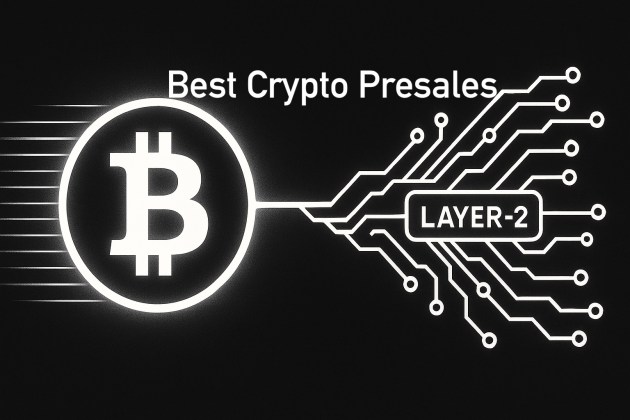
Next Crypto to Explode? Bitcoin Hyper Could Change Bitcoin with L2 Tech

Next Crypto to Explode? Bitcoin Hyper Could Change Bitcoin with L2 Tech

What to Know: Bitcoin’s constraints on throughput and programmability cap mainstream utility. A performant L2 with Bitcoin settlement is the logical unlock. Bitcoin Hyper pairs SVM-speed execution with ZK-verified settlement on Bitcoin, targeting fast, low-cost transactions and DeFi. The $HYPER presale is nearing $27M raised, signaling strong interest ahead of mainnet milestones and initial listings. Using the current $0.013265 price, our forecast for $HYPER goes to a 1.9x high in 2025 and 6.5x in 2026 if roadmaps land. Bitcoin still moves like a freight train: unstoppable over distance, painfully slow up close. Block space is scarce, fees spike when demand pops, and native programmability is minimal. That leaves everyday payments clunky and DeFi on Bitcoin mostly stitched together with workarounds. Those constraints are tolerable for a store-of-value narrative. They’re a drag on mainstream utility. For reference, Bitcoin ranks 22nd among the fastest blockchains by TPS, which is far below industry standards. Solana ranks second on the same list. Layer-2 solutions are the obvious release valve. Payment channels handle throughput but struggle with complex logic and liquidity routing. Sidechains help, then trade off security assumptions. The real unlock is an L2 that processes high-throughput transactions and settles back to L1 with strong guarantees. Builders get speed and programmability. Users get cheaper, near-instant finality without abandoning the Bitcoin security umbrella. This is the gap Bitcoin Hyper ($HYPER) is trying to close. The project proposes an L2 architecture that batches transactions, uses zero-knowledge proofs for validity, and periodically commits state to Bitcoin. Execution rides on a Solana-style virtual machine for throughput, with a canonical bridge to move $BTC in and out trustlessly. If it ships as planned, the stack aims to make Bitcoin programmable at scale – fast payments, convenient on-chain trading with staking flows, and full DeFi rails tied back to $BTC. Macro doesn’t hurt either. With Bitcoin hovering near cycle highs this year and institutional demand sticky, anything that expands $BTC’s utility surface tends to catch flows. A credible L2 narrative aligned to Bitcoin’s brand strength has a shot at outsized attention. Bitcoin Hyper: Solana-Speed Execution Meets Bitcoin-Grade Settlement Bitcoin Hyper’s ($HYPER) blueprint starts with a canonical bridge that verifies Bitcoin block headers and transaction proofs, then mints equivalent assets on the L2. The execution layer uses an SVM-compatible environment to push throughput while fees stay low. Hyper batches transactions, proven with ZK cryptography, and anchors the resulting state roots to Bitcoin for settlement. Withdrawals reverse the path and release $BTC on L1 after proof validation. The design targets three user wins: speed, cost, and programmability – without straying from Bitcoin’s security philosophy. If executed, this architecture invites real apps. Payments clear in seconds. Orderbooks and automated market markers operate without gas anxiety. Yield farming and structured products become feasible for $BTC holders who never wanted to leave the Bitcoin orbit. Developer momentum matters here: an SVM toolchain lowers friction for teams already fluent in that ecosystem, while $BTC settlement keeps the conservative crowd onside. That mix – familiar dev experience plus Bitcoin trust – is the project’s most pragmatic wedge. Competition exists. Lightning remains the OG for peer-to-peer payments. Other Bitcoin-adjacent stacks chase programmability with different compromises. But none of them offer the comprehensive solution that Hyper confidently pitches. Thinking about joining the ecosystem? Learn more about what Bitcoin Hyper does. Bitcoin Hyper is cleaner: keep settlement on Bitcoin, use a high-throughput Solana VM for execution, and prove correctness before committing. In a market where latency and user costs decide winners, that’s a sensible bet. Visit $HYPER’s website for more. Hyper’s Presale Economics and Realistic Upside Potential Momentum is there. The $HYPER presale is now at $26.99M, supported by a run of larger buys as the cycle grinds higher. That’s sizable traction for an early-stage L2 with a technical roadmap and a clear narrative tied to Bitcoin’s growth, which recommends $HYPER as one of the top crypto presales of 2025. The token price is now sitting at $0.013265 per $HYPER, with staking rewards at 43% . From that base, our price prediction for $HYPER maps two checkpoints: a potential 2025 high at $0.02595 if initial listings and early dApps land on schedule, and a 2026 high at $0.08625 if incentives and governance broaden participation. At today’s price, that implies 1.9x growth potential in late 2025 and 6.5x in 2026, respectively. Of course, crypto makes no guarantees. What could go wrong? Execution risk. Building a performant rollup and secure bridge on Bitcoin is not a trivial task. Other stacks chase the same mindshare. If $BTC chops for months, risk budgets thin across the board. Offsetting that, the thesis is simple: extend Bitcoin’s utility without diluting its core promise. If Bitcoin Hyper proves the tech and ships real apps, capital tends to follow utility. Hyper targets a Q4 2025-Q1 2026 listing window, so the presale train doesn’t have much fuel left. And based on the project’s value proposition and investor support, $HYPER could become the next crypto to explode in 2026. Get your $HYPER today. This isn’t financial advice. DYOR and manage risks wisely before investing. Authored by Aaron Walker, NewsBTC: https://www.newsbtc.com/news/next-crypto-to-explode-bitcoin-hyper-l2-could-change-bitcoin

Author: NewsBTC
Best Altcoins to Watch as Solana Whales Start Buying

Best Altcoins to Watch as Solana Whales Start Buying

What to Know: Solana’s order books show renewed whale demand while spot $SOL ETFs log a multi-day inflow streak, reinforcing risk appetite. SoFi’s crypto rollout adds a mainstream on-ramp for US retail, a structural tailwind for altcoin participation. Bitcoin Hyper ($HYPER), Best Wallet Token ($BEST), and SPX6900 ($SPX) align with throughput, utility, and liquidity narratives that typically lead early in rotations. Solana just lit up the order books. Fresh ‘smart money’ buy walls and block-sized prints show whales leaning in, with net spot inflows building across top venues. The flow tells a simple story: big players are scaling bids into weakness and front-running a potential trend shift. The backdrop helps. Spot Solana ETFs have now chalked up 10 straight days of net inflows, a rare streak during a choppy week for majors. That run, led by Bitwise’s $SOL fund, pushes the narrative toward persistent demand and strengthens the case for an alt rotation if risk stabilizes. Retail rails are opening too. SoFi Bank has rolled out in-app crypto trading to its millions of customers, becoming the first nationally chartered US bank to offer crypto buying and selling – with Bitcoin, Ethereum, and Solana at the forefront. Easier fiat on-ramps plus ETF flows and whale accumulation is the kind of three-piece puzzle that often precedes a broader alt rally. With that macro tailwind in mind, three tokens stand out due to their fundamentals and timing – two presales riding clear narratives and one listed memecoin with heavyweight liquidity. It’s a focused watchlist for anyone scouting the best altcoins to watch into the year-end. 1. Bitcoin Hyper ($HYPER) – BTC L2 Built With SVM Speed Bitcoin Hyper ($HYPER) takes a direct swing at the oldest pain point in crypto: slow and expensive $BTC transactions that negatively impact the ecosystem’s scalability. The design funnels transactions to a Bitcoin-settled Layer 2 and uses the Solana Virtual Machine for high throughput execution. The result aims for near-instant finality, ZK-assisted validity, and periodic L1 commitments to keep security anchored to Bitcoin. That’s serious design space for payments, dApps and even meme coins, with $BTC as the settlement bedrock. If $SOL ETF inflows are a proxy for demand for high-speed chains, then a Bitcoin-secured L2 using SVM could capture overflow interest from developers and traders looking for $BTC-native performance. Timing and numbers matter in presales. The token is priced at $0.013265 with the presale sitting at $26.99M raised. Based on the presale’s performance and Hyper’s utility proposition, a realistic price prediction for $HYPER puts it at $0.08625 by the end of 2026 and $0.253 by 2030.  From today’s prices, these numbers translate into an ROI of 550% and 1,807% respectively. Given that Hyper targets a Q4 2025 – Q1 2026 release window, the earlier you join the $HYPER train, the better. Make sure you read our guide on how to buy $HYPER first. Visit the official presale page and buy your $HYPER today. 2. Best Wallet Token ($BEST) – Utility-First Wallet Ecosystem Token $BEST is the native token for Best Wallet, a non-custodial, multi-chain wallet aiming to turn power-user features into default settings. Think cross-chain swaps via an autorouter across 300+ DEXs and 30 bridges, MPC security without seed phrases, real-world spending with the upcoming crypto card, and a token launchpad baked into the app. The token links to fee reductions, access, and ecosystem rewards across features that already map to daily crypto usage. Presale mechanics are straightforward. The token is live at $0.025935 with more than $17M raised. Our price prediction for $BEST outlines a potential 2026 high near $0.05106175, representing 96% gains. For a wallet token, utility density is the tell – on-ramp integrations, multi-chain coverage, and soon, in-app staking partners build a clear reason to hold through volatility. The tie-in to today’s flow: SoFi’s crypto rollout and $SOL ETF traction could nudge casual users to seek simple, secure self-custody with swap and bridge UX done right. $BEST plugs that gap natively. If you want in, make sure you read our guide on how to buy $BEST first. Then visit the presale page and buy your $BEST today. 3. SPX6900 ($SPX) – Meme Liquidity With Big-Cap Exchange Reach SPX6900 ($SPX) is a culture-driven meme asset with multi-chain reach and a simple message: internet-scale community meets exchange-grade liquidity. The token’s market cap sits above $615M, with $SPX sitting at $0.6609. As attention rotates, high-beta meme names with deep order books often act as liquidity barometers. They move first, they move fast, and they draw flow. Crucially, $SPX trades on Coinbase, which tends to boost retail access and tightens spreads for US users. That exchange reach matters when volatility returns and users want instant fills on familiar apps. Recent Coinbase pages and converters reflect live SPX markets and volumes on the platform, while aggregators show additional venues and pairs. If ETF and banking rails keep onboarding newcomers, liquid memes like $SPX can catch outsized bursts. And talking about bursts, $SPX showcases an all-time ROI of 25M%, which is literally a wealth-building performance. So, go to your favorite exchange and buy your $SPX today. Recap: Whales are scaling into $SOL, spot ETFs keep stacking inflows, and SoFi’s launch opens a bank-grade retail door. In that setup, Bitcoin Hyper ($HYPER), Best Wallet Token ($BEST), and SPX6900 ($SPX) each tap a live narrative – $BTC-secured speed, wallet-centric utility, and meme liquidity with top exchange access. This isn’t financial advice. Do your own research before investing. Authored by Aaron Walker, NewsBTC: www.newsbtc.com/news/best-altcoins-to-watch-as-solana-whales-start-accumulating

Author: NewsBTC
zClock.Money Wallet Integrates IOTA Blockchain Infrastructure to Deliver Compliant and Secure Web3 DApps

zClock.Money Wallet Integrates IOTA Blockchain Infrastructure to Deliver Compliant and Secure Web3 DApps

By integrating IOTA’s trust framework, zClock streamlines its enterprise multi-signature wallet for seamless navigation and interaction for institutional users.

Author: Blockchainreporter
Sui Network Launches USDsui: A Native Fiat-Backed Stablecoin for the Next Era of DeFi

Sui Network Launches USDsui: A Native Fiat-Backed Stablecoin for the Next Era of DeFi

The post Sui Network Launches USDsui: A Native Fiat-Backed Stablecoin for the Next Era of DeFi appeared on BitcoinEthereumNews.com. Sui Network has just taken a major leap forward in its mission to power real-world blockchain finance. The Layer-1 chain announced USDsui, a native fiat-backed stablecoin issued by @Stablecoin, a company under @Stripe. Built on Bridge’s Open Issuance platform, USDsui is fully compliant, interoperable, and optimized for Sui’s high-performance architecture. It’s designed to flow seamlessly across wallets, DeFi apps, and in-game economies, making it one of the most ambitious stablecoin launches of 2025. The goal is clear: to make USDsui the foundation of payments, DeFi, and real-world adoption across the Sui ecosystem. Sui unveils USDsui, a native stablecoin issued by @Stablecoin, a @Stripe company. Fiat-backed, GENIUS-ready, and yield-sharing – USDsui anchors the Sui economy, powering payments, DeFi, and real-world use cases across the network. pic.twitter.com/ehI7txlODL — Sui (@SuiNetwork) November 12, 2025 A Stablecoin Built for Sui’s Scale The timing couldn’t be better. Between August and September 2025, Sui processed over $412 billion in stablecoin volume—a staggering figure that highlights just how strong the demand already is for stable value onchain. Now, with USDsui stepping in, that demand has a homegrown anchor. Unlike bridged or wrapped stablecoins, USDsui is native to the Sui blockchain. That means faster execution, lower latency, and direct integration with the network’s underlying performance layer. The coin is built for scalability and compliance from day one, a key differentiator in a market where regulatory readiness increasingly defines adoption. Fueling Sui’s Next Growth Phase For months, Sui has been positioning itself as a high-performance blockchain ready for mainstream use. Its focus on parallel execution and low fees has already attracted developers and DeFi protocols looking to escape the congestion of Ethereum and Solana. Now USDsui adds the missing piece, a stable, fiat-backed currency that can move freely within the Sui ecosystem. It’s not just another stablecoin. It’s designed…

Author: BitcoinEthereumNews
The Protocol: Sweeping Uniswap Proposal ‘UNIfication’

The Protocol: Sweeping Uniswap Proposal ‘UNIfication’

The post The Protocol: Sweeping Uniswap Proposal ‘UNIfication’ appeared on BitcoinEthereumNews.com. Welcome to The Protocol, CoinDesk’s weekly wrap of the most important stories in cryptocurrency tech development. I’m Margaux Nijkerk, a reporter at CoinDesk. In this issue: Uniswap Proposes Sweeping ‘UNIfication’ With UNI Burn and Protocol Fee Overhaul Monad Unveils Tokenomics Ahead of Nov. 24 MON Token Airdrop Bitcoin DeFi Gets Another Institutional Boost Through Anchorage Digital Custody Injective Launches Native EVM, Promising Faster and Cheaper DeFi Network News SWEEPING UNISWAP PROPOSAL OVERHAUL: Uniswap Labs and Uniswap Foundation, two of the main firms that help steer the Uniswap protocol, are joining forces to propose a sweeping governance proposal that would completely change the way the ecosystem works. The proposal, called “UNIfication,” aims to align incentives across the Uniswap ecosystem and position the protocol as the default exchange for tokenized assets. It would do this by activating protocol fees, burning millions of UNI tokens and consolidating the project’s key teams under a single growth strategy, according to a blog post dated Nov. 11 and briefly published on Nov. 10. Under the proposal, which DAO members will vote on, the protocol would redirect a portion of trading fees to a UNI burn mechanism and fees from Uniswap’s layer-2 network, Unichain, would also flow into the burn. Uniswap Labs also proposed a retroactive burn of 100 million UNI from the treasury, which the team claims would equal the amount that might have been burned if protocol fees had been active since launch. The changes related to Uniswap’s tokenomics are not the only restructuring happening to the ecosystem. Uniswap Labs, which is the main developer firm that supports the Uniswap protocol, will absorb the Uniswap Foundation’s ecosystem teams. If passed, UNIfication would mark the most significant evolution of Uniswap’s governance and economics since its token launch in 2020. — Margaux Nijkerk Read more. MONAD TOKENOMICS…

Author: BitcoinEthereumNews
Web3 gaming, DeFi maintain lead amid digital asset decline

Web3 gaming, DeFi maintain lead amid digital asset decline

The post Web3 gaming, DeFi maintain lead amid digital asset decline appeared on BitcoinEthereumNews.com. Homepage > News > Business > Web3 gaming, DeFi maintain lead amid digital asset decline As the market capitalization of digital currencies tanked, a new report highlighted the rise of Web3 gaming and decentralized finance (DeFi) projects in October. According to DappRadar’s report, Web3 gaming accounted for 27.9% of all unique active wallets in the decentralized application (DApp) ecosystem. On-chain activity indicated that Web3 gaming’s market share spurred it to pull in over 4.5 million daily active wallets, representing a 1% increase from September. Analysts at DappRadar noted that only Web3 gaming experienced growth month-over-month, with the report attributing the ecosystem’s success to innovation and improvements in customer experiences. The report underscored the steady rise of non-fungible tokens (NFTs) via evolving use cases, with the cohort reaching a trading volume of $546 million in October. “Blockchain gaming continues to thrive, driven by the ability to keep users engaged through fresh experiences and consistent innovation,” read the report. Meanwhile, DeFi dApps represented 18.4% of the ecosystem with projects like Pump.fun and Jupiter Exchange racking 4.29 million and 1.93 million UAW, respectively. Analysts disclosed that DeFi maintained its respectable rankings, driven in part by the ongoing momentum around stablecoins, yield-oriented protocols, and real-world assets. The DeFi sector braved nearly a dozen hacks and exploits in October amid rising regulatory pressure from global authorities. DappRadar analysts disclosed that the combined effects triggered a slight decline in the sector’s total value locked (TVL) to $221 billion from September’s $235 billion. DeFi’s decline came on the heels of the October 10 market crash that wiped over $20 billion in leverage positions across several protocols. Described as the largest market crash in the history of digital currencies, DeFi is staging a comeback, underscored by an uptick in user activity in early November. A bird’s eye view…

Author: BitcoinEthereumNews
Explore Global Economy Insights at AdoptionCon Buenos Aires 2025 Event

Explore Global Economy Insights at AdoptionCon Buenos Aires 2025 Event

The post Explore Global Economy Insights at AdoptionCon Buenos Aires 2025 Event appeared on BitcoinEthereumNews.com. AdoptionCon Buenos Aires 2025 “html AdoptionCon Buenos Aires 2025 Location: HIT Polo, Av. Dorrego 3550, C1425GAZ, ArgentinaDate: Wed, Nov 19 – Wed, Nov 19, 2025Time: 08:00 AM – 03:00 PM (UTC-03:00 Buenos Aires)Event Type: Web3 EventOfficial Website: https://luma.com/adoptcon25 Event Overview AdoptionCon Buenos Aires is your go-to hub for diving deep into the next wave of the global economy – from stablecoins and tokenization to dapps and payfi. Hosted by Epic Web3, it is designed for Web3 builders to learn, build, and connect, featuring world-class speakers, interactive sessions, and networking opportunities. Why Attend? Learn from renowned leaders in the Web3 space. Engage in discussions about the latest trends in digital economy. Network with over 1,000 attendees from around the world. Experience the vibrant cultural atmosphere of Buenos Aires. Key Highlights Speakers: Includes Michael from Brevis, Eli Cohen from Centrifuge, and Franceso Andreoli from MetaMask among others. Sessions: Panel discussions, keynote speeches, networking sessions. Topics Covered: Stablecoins, Tokenization, Dapps, Payfi. Special Features: Rayls Hackathon and an official after-party featuring authentic Argentinian cuisine. FAQs What is AdoptionCon Buenos Aires 2025?An event focused on exploring the future of the global economy through Web3 technologies and innovations. When and where is it held?Wed, Nov 19 – Wed, Nov 19, 2025, 08:00 AM – 03:00 PM, at HIT Polo, Av. Dorrego 3550, C1425GAZ, Argentina. Who should attend?Developers, entrepreneurs, and enthusiasts in the Web3 and blockchain industry. What topics are discussed?Key themes include stablecoins, tokenization, decentralized applications (dapps), and payment solutions (payfi). “ Disclaimer: The text above is an advertorial article that is not part of Coincu.com editorial content. Source: https://coincu.com/blockchain-event/adoptioncon-buenos-aires-2025/

Author: BitcoinEthereumNews