Launchpad

Launchpads are decentralized platforms that facilitate early-stage fundraising for new Web3 projects through Initial DEX Offerings (IDOs). They provide investors with curated access to token sales while offering startups a community-driven capital injection. In 2026, launchpads have evolved into full-stack incubators, focusing on project quality and long-term sustainability. Follow this tag for the latest in token distribution models, tier-based participation, and the emergence of the next generation of "unicorn" protocols across various blockchain ecosystems.

2946 Articles
Created: 2026/02/02 18:52
Updated: 2026/02/02 18:52
Investors Rush In – 5 Best Cryptos to Buy Right Now for Massive Early-Stage Gains [October Edition]

Investors Rush In – 5 Best Cryptos to Buy Right Now for Massive Early-Stage Gains [October Edition]

The best cryptos to buy right now are turning heads as meme-inspired tokens evolve into serious contenders. The 2025 market […] The post Investors Rush In – 5 Best Cryptos to Buy Right Now for Massive Early-Stage Gains [October Edition] appeared first on Coindoo.

Author: Coindoo
YGG Play Teams Up with Proof of Play Ahead of Web3 Launchpad Debut

YGG Play Teams Up with Proof of Play Ahead of Web3 Launchpad Debut

YGG Play, the gaming division of Yield Guild Games (YGG) has announced a partnership with Proof of Play, the studio behind Pirate Nation, to expand its publishing network ahead of its Launchpad debut tomorrow, October 15th. The collaboration will bring Proof of Play Arcade, a platform hosting the updated version of Pirate Nation, into YGG Play’s publishing ecosystem.  YGG Play functions as a Web3 game publishing and distribution platform, designed to help developers launch, market, and monetize blockchain games using YGG’s global player network. The platform provides go-to-market support, community engagement, and smart contract–driven revenue sharing for partner studios.Continue reading on DailyCoin.

Author: Coinstats
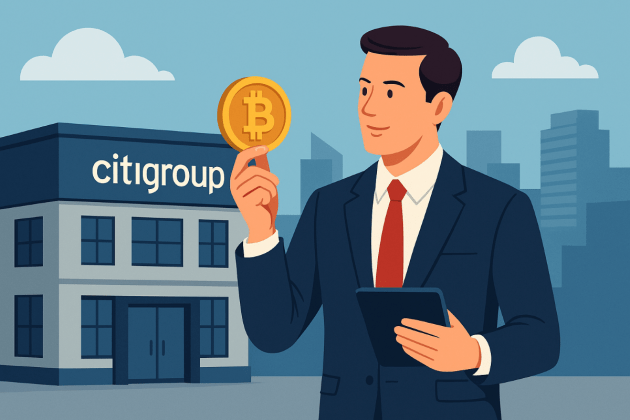
Citigroup Prepares Crypto Custody Service Debut Next Year – The Best Crypto Presales to Watch

Citigroup Prepares Crypto Custody Service Debut Next Year – The Best Crypto Presales to Watch

Quick Facts: 1️⃣ Citigroup is getting set to launch its very own crypto custody service next year. 2️⃣ The Web3 initiative comes after more TradFi institutions turn to DeFi following recent crypto-friendly US regulations. 3️⃣ Given that Citigroup serves over 200M customer accounts, it could significantly boost crypto adoption, possibly making now a good time […]

Author: Bitcoinist
Monad airdrop targets traders and NFT owners, including Phantom and Mad Lads

Monad airdrop targets traders and NFT owners, including Phantom and Mad Lads

The post Monad airdrop targets traders and NFT owners, including Phantom and Mad Lads appeared on BitcoinEthereumNews.com. Key Takeaways Monad is launching an airdrop for traders and NFT owners ahead of its mainnet. Eligibility includes users of Hyperliquid, Pump.fun, and holders of Phantom wallets, Mad Lads, SMB, and Pudgy Penguins. Monad, a high-performance blockchain project preparing for mainnet launch, today announced airdrop eligibility targeting traders and NFT owners, including holders of Phantom wallets, MadLads, and other prominent collections. The airdrop encompasses users of Hyperliquid, a decentralized perpetuals exchange, and Pump.fun, a meme coin launchpad on Solana. NFT holders from Mad Lads, SMB (Solana Monkey Business), and Pudgy Penguins are also eligible for the distribution. Source: https://cryptobriefing.com/monad-airdrop-nft-traders-phantom-madlads/

Author: BitcoinEthereumNews
AvalonX Price Prediction: What is AVLX Token?

AvalonX Price Prediction: What is AVLX Token?

The post AvalonX Price Prediction: What is AVLX Token? appeared on BitcoinEthereumNews.com. AvalonX is a new cryptocurrency that powers an RWA platform involving the transformation of real estate property into fractions to make partial ownership possible. The crypto is currently undergoing its presale and has raised over $140K at the time of writing. It seems that for utility-centric crypto seekers, AvalonX could be a good buy. However, will the current level of traction impact the AvalonX price positively in the long run? What is AvalonX? The official website describes AvalonX as a “revolutionary platform that integrates blockchain technology with real-world assets.” According to the platform, it presents a new way to bridge crypto and real-world assets together. The standout factor about AvalonX is reportedly the fact that it has been certified by Certik, which essentially means the project could be trustworthy in the eyes of investors. As for what the project actually does, that is explained in the “vision” section, which highlights that AvalonX can democratize real estate investments through fractional ownership. Central to the AvalonX ecosystem is the AVLX token, which can be used to buy assets, earn rewards, and access staking opportunities. Furthermore, the project offers three investment tiers based on the amount users invest in the project. These are Gold, Diamond, and Platinum tiers. Entering these tiers allows users to receive raffle entries, additional bonuses, and other unique services. These include discounts on properties, stays at Avalon properties, priority services, and discounts on future developments. AvalonX Tokenomics and Roadmap AvalonX has a total supply of 2 billion tokens divided properly among the following: 60% is allocated to the presale 15% is for the staking pool 7% is for the burn 5% is for liquidity 3% is for the team and founders 10% is for marketing When it comes to the project’s roadmap, the first stage, the presale, has already…

Author: BitcoinEthereumNews
Intellex and Aurora Labs CEOs on Building Enterprise AI and Launching the Next Generation of Cross-Chain Projects

Intellex and Aurora Labs CEOs on Building Enterprise AI and Launching the Next Generation of Cross-Chain Projects

The post Intellex and Aurora Labs CEOs on Building Enterprise AI and Launching the Next Generation of Cross-Chain Projects appeared on BitcoinEthereumNews.com. Intellex is developing the ‘immutable memory layer’ for enterprises and AI agents. Its technology enables secure collaboration, shared enterprise and industry-specific memory, and secure multi-agent collaboration. Drawing from real enterprise use cases and partnerships with major brands, Intellex is helping organizations move from simple automation to true agentic collaboration. Supporting this evolution is Aurora Labs, the team behind Calyx, a new multichain launch platform built to simplify how projects raise and deploy capital. Through Calyx, Intellex can launch its token across major blockchains in a single transaction, using NEAR Intents for seamless cross-chain execution. In this joint interview, Intellex CEO Eric Hillerbrand and Aurora Labs CEO Alex Shevchenko discuss how their projects work together, what makes Calyx different from other launch platforms, and how these technologies are shaping the next phase of AI and Web3 adoption. What inspired the creation of Intellex, and how does the project’s background shape its vision today? Our team has worked extensively with business enterprises and seen the problems that businesses encounter and how these problems will only worsen in the agentic world.  I as CEO worked at one point for the US Army building agentic solutions and watched how collaboration was brought to a standstill because there was not a universal agreement about the definition of the word ‘dead’ meant.  Imagine with recent generative AI capabilities how agents will actually lie, cheat and steal to avoid appearing ignorant and suffering the consequences.  Since that time we have worked with global brands such as Absolut, Ahold, Bridgestone, and seen these problems repeat themselves over and over. Intellex calls itself the “immutable memory layer” for enterprises and AI agents — what does that mean in practice? Intelligence is the ability to solve problems in new contexts.  Memory is the personal knowledge you bring to solving those…

Author: BitcoinEthereumNews
MetaDao skyrocketed 10 times, what other projects are worth participating in?

MetaDao skyrocketed 10 times, what other projects are worth participating in?

On October 12th, MetaDao, the Solana blockchain launchpad, launched its latest ICO round: AVICI, LOYAL, ZKSOL, and PAYSTREAM. Just a week prior, while the BSC blockchain was caught up in a meme coin frenzy, MetaDAO's popularity within the Solana ecosystem continued to climb. Its platform token, META, saw its value more than triple during the National Day holiday, becoming one of Solana's most prominent assets. Its ICO project, UMBRA, launched on October 6th, soared from a pre-sale price of $0.30 to $2.10, achieving a 700% return. This series of data not only reflects MetaDAO’s strong ability to generate revenue as an on-chain fundraising engine, but also indicates that the speculative enthusiasm for the Solana ecosystem is returning in full force. MetaDAO may become the core narrative of the Solana ecosystem in the next stage. From “Voting” to “Betting”: MetaDAO’s Market-Based Governance Experiment MetaDAO operates in a completely different way from previous launchpads or ICO platforms. Its logic is simple: let the market determine the fate of the project. When a project raises funds on MetaDAO, all USDC raised doesn't go directly into the team's accounts. Instead, it goes into an on-chain treasury governed by the market. If a team wishes to use funds, issue additional tokens, modify parameters, or even adjust product direction, they must submit a proposal. The approval of a proposal is determined not by voting but by transactions—this is MetaDAO's core governance mechanism, Futarchy. This mechanism is similar to a prediction market, where investors aren't "voting" but "betting." If they believe a proposal will increase token value, they buy into the "Approve" market; if they believe it's harmful, they buy into the "Reject" market. Ultimately, market price itself becomes the basis for judgment—the party with the higher value wins, and the proposal is implemented. This design completely breaks away from the "most votes, most decisions" structure of governance and directly ties every decision to token value. This mechanism has two significant advantages. First, it prevents project owners from "rugging." In the traditional ICO model, once a project successfully raises funds, investors have virtually no leverage, and funds could be misappropriated or disappear at any time. In MetaDAO, all USDC raised is held in an on-chain vault, and any spending or token minting is subject to market verification. If the project team leaves or the market value falls below the stated funds, anyone can initiate a proposal to redeem the funds. Governance no longer relies on "trusting the team" but on "trusting the mechanism." Secondly, incentives are tied to long-term value. MetaDAO's ICO model utilizes a highly volatile and transparent issuance method. Investors receive tokens proportional to their investment, while the founding team's earnings are locked into a "performance package" tied to price performance. The team unlocks corresponding incentives every time the token price reaches 2x, 4x, 8x, 16x, and 32x. All unlocks are subject to an 18-month lock-up period and a three-month time-weighted average price verification. This means that the team can only cash in on returns when the project continues to grow and the token truly gains market recognition. This "delayed gratification" structure redefines the boundary between short-term speculation and long-term development. What projects are worth paying attention to? @UmbraPrivacy UMBRA is Solana's privacy protocol, built on ArciumHQ. Its goal isn't simply to enable "private transactions," but rather to provide a compliant, auditable privacy infrastructure for the entire on-chain financial system. By building an auditable, anonymous transfer system, UMBRA enables transactions to be verified on-chain without exposing any critical details, enabling the coexistence of privacy and trust. UMBRA's governance is fully decentralized—fundraising, tokens, and the treasury are all controlled by the community. The team and early backers have allocated a total of 13.5 million tokens, which will be gradually unlocked after an 18-month lockup period, with returns linked to token performance. @AviciMoney Avici is a crypto neobank built on Solana, aiming to create a global internet banking system that is user-hosted and trustless. Users can open a stablecoin Visa card in minutes, spend directly with crypto assets, and deposit funds through a virtual account. Avici also plans to launch an on-chain credit score, replacing traditional credit reporting with zero-knowledge proofs, allowing users to obtain fairer credit services while protecting their privacy. The platform currently boasts over $1 million in spending, a 70% retention rate, and over 9,000 users. Avici will launch an ICO on MetaDAO on October 14th, issuing an Ownership Coin. @loyal_hq Loyal is a decentralized intelligent inference protocol built on Solana and MagicBlock infrastructure, aiming to rebuild a private and open-source intelligent network. It allows users to securely call AI models and conduct private conversations on-chain. The user's wallet generates a PDA (Program Derived Address), which both records conversations and serves as a payment settlement node. AI inference fees are automatically distributed to computing nodes, developers, and the protocol itself, creating a fully decentralized incentive loop. The project will launch an ICO on MetaDAO on October 18th, with a total supply of 10 million tokens and a minimum fundraising amount of $500,000. 28% of the team's tokens will be locked for 18 months and unlocked in batches based on price multiples (2x, 4x, 8x, 16x, and 32x). @ZKLSOL ZKLSOL is the first protocol on Solana to combine privacy protection with yield generation. Traditional mixers require long periods of locked funds to enhance anonymity, but this means assets sit idle. ZKLSOL, on the other hand, relies on liquidity staking, earning interest on deposited SOL, allowing users to earn income while waiting for privacy mixing. ZKLSOL's yield model has a clear flywheel logic: users deposit SOL → generate ZKLSOL → generate yield from staking → pay a small fee upon withdrawal and transfer → fees and yield are combined into a reward pool, driving up APY, attracting more depositors, and further enhancing anonymity and fund security. The project will launch its ICO on MetaDAO on October 19th, with all funds raised going toward security audits, expanding LPs, and implementing regulatory compliance. @Paystreamlabs Paystream is a DeFi lending protocol that combines peer-to-peer matching and liquidity aggregation, aiming to maximize the efficiency of on-chain capital utilization. It achieves efficient capital circulation and maximized returns through a two-tiered structure: a P2P matching engine and a smart liquidity pool (LLP). At its core, Paystream's matching engine directly matches lenders and borrowers, ensuring the best interest rate for both parties. When the market temporarily lacks a match, the system automatically routes idle funds to the underlying yield pool, allowing the funds to continue generating returns. Protocol revenue primarily comes from two sources: a share of the matching spread and lending interest; and fees collected from users when borrowing, making leveraged markets, or withdrawing funds. The project will launch its ICO on MetaDAO on October 23rd. Summarize The recent rise of MetaDAO bears resemblance to the once-popular Believe ecosystem. The former reshapes fundraising tools with its "anti-rug" ICO mechanism, while the latter ignites investor sentiment with its Launchpad platform. Together, these two initiatives have driven Solona's alignment with the ICM (Internet Capital Market) ecosystem, gradually transitioning from MEME to sustainable speculation. Against the backdrop of the emergence of hot sectors like privacy, payments, and AI, MetaDAO may be becoming a key pillar in Solana's ecosystem recovery.

Author: PANews
How to buy memecoin Little Pepe (LILPEPE) in October 2025

How to buy memecoin Little Pepe (LILPEPE) in October 2025

The post How to buy memecoin Little Pepe (LILPEPE) in October 2025 appeared on BitcoinEthereumNews.com. In October 2025, an opportunity exists for those seeking high-upside crypto exposure to join the presale of Little Pepe (LILPEPE). The presale momentum that has seen it rise more than 100% since inception and structural design suggest that Little Pepe may offer asymmetric returns compared to more mature cryptocurrencies. The following walkthrough explains how to participate this month and why the upside logic may point toward 100x potential. Why Little Pepe (LILPEPE) looks like the memecoin to beat More than hype, LILPEPE is pushing a narrative of utility and scalability. The project roadmap includes deployment on a purpose-built Ethereum-compatible Layer-2 chain, zero transaction tax, anti-sniper bot protections, and a meme-centric launchpad for future projects. A completed CertiK audit bolsters security credibility. Because LILPEPE is starting from a minimal effective market cap, the ceiling for potential gains remains very high.  Analysts and media outlets have published speculative forecasts that multiply presale gains manyfold. Some sources suggest LILPEPE could rally by thousands of percent after listing, assuming ecosystem growth, exchange listings, and sustained community adoption. One article cites up to 12,044% upside from the current price under favorable conditions. That degree of scale is speculative by nature, yet it underscores the multiplier narratives that often drive memecoin breakouts. How to buy LILPEPE today You need to have an ERC-20 wallet like MetaMask or Trust Wallet. Then fund that wallet with ETH (or USDT on Ethereum) to cover the cost of tokens plus gas. Proceed to the official LILPEPE site for a direct wallet connection. Once connected, select the token quantity and confirm. After the presale ends, investors will claim their tokens via the same portal.  It is urgent to act before the presale fully closes. Stage 13 is already over 94% sold. Waiting may force entry at a higher stage price or…

Author: BitcoinEthereumNews
Umbra’s 200-fold oversubscription reveals the innovation of MetaDAO’s financing mechanism

Umbra’s 200-fold oversubscription reveals the innovation of MetaDAO’s financing mechanism

By Karen Z, Foresight News Last week (October 10th), the privacy protocol Umbra completed a community sale on the MetaDAO platform. This public sale attracted over 10,000 participants, with a total subscription amount of nearly $155 million, 200 times the project's planned minimum financing amount. After the sale ended, the project party set the actual financing limit at US$3 million. In the end, each subscribing user only received about 2% of the subscription amount, and the remaining funds were returned in the same way. More notably, even amidst a significant correction in the broader crypto market, the UMBRA token price has demonstrated strong resilience: its current price ($1.50) has quadrupled from its initial offering price ($0.30). This performance not only demonstrates market confidence in the privacy sector but also underscores the appeal of MetaDAO's unique financing model. At the same time, MetaDAO platform token META was not to be outdone, with its market value exceeding US$200 million today, setting a record high, and its increase so far this month has exceeded 4 times. As a privacy protocol within the Solana ecosystem built on Arcium technology, Umbra's popularity is inseparable from the explosive growth of the privacy sector. However, while the market's attention is focused on Umbra itself, its MetaDAO platform may hold even greater opportunities. This allegedly rug-proof financing tool and its market-based governance are paving a new path for token issuance in crypto projects. MetaDAO: From Zero VC to Paradigm Backing MetaDAO's starting point was not the luxurious financing start of traditional crypto projects, but rather the exploration of solutions to the pain points of financing in the crypto industry. Traditional ICOs have long suffered from three major pain points: founders lack motivation to continue working after receiving a fixed token allocation, early investors "fleet" and sell off quickly, and the community lacks engagement, leading to projects easily falling into the trap of "early hype but long-term lack of growth." MetaDAO was designed to address these issues. Its core logic replaces single token voting with market-driven governance and fixed token allocations with performance-based incentives. Birth and Initial Development : In October 2022, founder Proph3t (@metaproph3t) began developing this organization focused on Futarchy governance (also known as the "market decision-making system," which will be explained in detail later). It was officially established in November 2023. Initially, it was launched by airdropping tokens to approximately 65 people and using $10,000 as an initial treasury fund. Milestone Financing : In August 2024, MetaDAO achieved a key breakthrough—a $2.2 million seed round led by crypto venture capital giant Paradigm. Paradigm's preference for MetaDAO stemmed from its Futarchy governance model's strong alignment with Paradigm's prediction market strategy. At the time, CoinDesk quoted MetaDAO's anonymous founder, Proph3t, as saying that Paradigm would hold 3,035 META tokens, representing 14.6% of the total supply, making it the largest single holder of META. Approximately 30 angel investors purchased an additional 965 META tokens, bringing the total raised to $2,229,950. A lean team : According to a recent proposal on MetaDAO, the team is relatively small, with core members consisting of Proph3t, co-founder and engineer Kollan, a part-time designer, and an intern responsible for Twitter operations. MetaDAO currently has approximately $1.8 million in cash reserves, which can support approximately 24 months of operations at its current scale. Note: Proph3t's recent proposal to sell $6 million in META tokens at a discount to expand the team and increase operating reserves was rejected by the community. MetaDAO operating mechanism Simply put, MetaDAO is not just a "financing tool"; it also allows project founders and investors to transform from "short-term profit seekers" to "long-term co-builders." It not only allows founders to obtain start-up capital, but also ensures through mechanisms that they must complete the project in order to obtain more returns; it also gives investors the opportunity to participate in early-stage projects while avoiding "losing all their capital" through transparent rules. MetaDAO has evolved into a Solana-based launchpad platform and governance system, with the core goal of addressing pain points such as "rug" risk and misaligned incentives in traditional cryptocurrency financing. The new MetaDAO platform will officially open to the public on October 6, 2025, initially supporting the financing of five projects. Anti-Rug ICO: Building “Security” into the Mechanism If you choose to issue on MetaDAO, the project team needs to accept some restrictions that seem unusual in the traditional world. For example, MetaDAO locks in risks in the following dimensions: Funds are locked in the "Futarchy Governance Treasury" : The USDC raised will not be given directly to the founders, but will be deposited in a treasury controlled by Futarchy. Every large expenditure must be verified by the market (that is, the expenditure will only be approved if the trader believes that it can increase the value of the token). IP ownership is physicalized : The core assets of the project (domain names, software, social media accounts, etc.) will be transferred to a dedicated legal entity rather than the founder personally, preventing the founder from "taking away core assets." The founders' income is tied to the success of the project : Founders will not receive a large number of tokens at the beginning, but will obtain rewards through a "performance grading mechanism" - tokens will be unlocked in 5 batches, corresponding to token prices reaching 2 times, 4 times, 8 times, 16 times, and 32 times the ICO price, and the earliest unlocking time will not be earlier than 18 months after the ICO. Budget constraints : Teams must commit to a set budget limit (no more than one-sixth of the minimum raised amount), and spending above this amount requires approval from governance. How to set up the ICO mechanism? MetaDAO's ICO mechanism is well-designed, taking into account the interests of both project owners and investors to a certain extent: Sales Process : Founders must submit information such as minimum funding, monthly team budget, and performance tiering. Only after a successful application can they be listed on MetaDAO. Investors have four days to subscribe to project tokens using USDC. Regarding the team incentive mechanism : The team may choose to allocate up to 15 million tokens (50% of the initial supply) to a price-based performance mechanism. This performance mechanism will be divided into five equal tranches: unlocked at 2x, 4x, 8x, 16x, and 32x the ICO price, with the earliest unlocking time no earlier than 18 months after the ICO (founders can extend the lock-up period). Post-sale arrangements : If a project fails to reach the minimum funding threshold, investors' USDC will be refunded. If the sale is successful, the founders will announce the amount of funds they choose to receive (there is no upper limit during the sale), which officials claim will provide everyone with a fair opportunity to participate. The quota will be distributed proportionally, and any remaining funds will be refunded. All USDC will be deposited into the market governance treasury, which will also transfer the authority to mint new tokens. The treasury will provide 20% of the USDC and 5 million tokens to the liquidity pool. Note: On the evening after the Umbra sale ends, all sales tokens will be unlocked and distributed directly to user wallets, and any remaining funds will be refunded. Futarchy Governance: Let the Market Make Decisions, Not Voting MetaDAO does not adopt the "token voting" of traditional DAOs (which is easily manipulated by large holders), but instead uses Futarchy to determine the direction of the project - this is a governance model that allows "traders to vote with their funds", that is, using prediction markets to guide decision-making. The core logic of this governance is based on the idea of economist Robin Hanson: people "bet" on the potential impact of proposals on the value of project tokens through transactions, thereby aggregating collective wisdom and ensuring that only those proposals that the market believes can increase value are adopted. The core logic of MetaDAO’s Futarchy governance is: Proposal Creation and Activation : For a proposal (e.g., "Remove 1 million USDC from the treasury to develop new features," "Issue a new token," "Increase/decrease liquidity," etc.), token holders must stake tokens to activate the proposal. By default, a proposal requires a stake of 50,000 tokens (5% of the total ICO amount) to be listed. Staking is used solely for anti-spam purposes and carries no risk of lock-up or slashing. Only one proposal can be active at a time. Trading Phase : Once the staking conditions are met, the project will extract half of the liquidity from the spot market and transfer it to the proposed conditional market. Traders can conduct conditional trades within three days. If you believe the proposal will increase the token's value, you buy the "pass market" token; otherwise, you buy the "fail market" token. Ultimately, the "lagging time-weighted average price" (TWAP) is used to determine whether a proposal is worthy of approval. To ensure a more prudent approval process, MetaDAO has set a passing threshold, making it slightly harder to pass than to fail (a 1.5% threshold). The core logic of this process is to use the "lagging TWAP" to filter manipulation, the "1.5% threshold" to ensure consensus strength, and ultimately, to let the true judgment of market capital determine whether a proposal aligns with the long-term value of the project. summary At a time when "short-term profit-seeking" is prevalent in the crypto industry, MetaDAO's innovation lies in: using "mechanism design" to lock in a certain degree of security, replacing "zero-sum game" with "interest binding", hoping to form a "community of interests" between founders and investors. For founders who want to get down to business, MetaDAO provides a path to fair financing without relying on VCs. For investors seeking security, MetaDAO reduces the risk of being “rugged” through multi-dimensional rules. However, it should be noted that the cryptocurrency market is highly volatile, and no mechanism is a "panacea": even with a protective mechanism, the price of a project token may still plummet due to factors such as the broader market, business progress, and the full unlocking of public sales. At the same time, governance can only prevent "malicious team behavior" and cannot guarantee the inevitable success of a project - investors still need to make a comprehensive judgment based on the project fundamentals and the prospects of the track. In the next article, I will focus on new projects that plan to launch public sales on MetaDAO in the near future.

Author: PANews
Could MoonBull Be the Best Crypto to Buy in 2025? Solana (SOL) and Chainlink (LINK) Bulls Think So

Could MoonBull Be the Best Crypto to Buy in 2025? Solana (SOL) and Chainlink (LINK) Bulls Think So

Solana (SOL) and Chainlink (LINK) are leading in October 2025 with strong market moves. The total crypto market cap has […] The post Could MoonBull Be the Best Crypto to Buy in 2025? Solana (SOL) and Chainlink (LINK) Bulls Think So appeared first on Coindoo.

Author: Coindoo