Lending

Lending protocols form the backbone of the decentralized money market, allowing users to lend or borrow digital assets without intermediaries. Using smart contracts, platforms like Aave and Morpho automate interest rates based on supply and demand while requiring over-collateralization for security. The 2026 lending landscape features advanced permissionless vaults and institutional-grade credit lines. This tag covers the evolution of capital efficiency, liquidations, and the integration of diverse collateral types, including LSTs and tokenized RWAs.

14541 Articles
Created: 2026/02/02 18:52
Updated: 2026/02/02 18:52
Is Doge Still The Best Crypto Investment, Or Will Pepeto Make You Rich In 2025

Is Doge Still The Best Crypto Investment, Or Will Pepeto Make You Rich In 2025

The post Is Doge Still The Best Crypto Investment, Or Will Pepeto Make You Rich In 2025 appeared on BitcoinEthereumNews.com. Crypto News 18 September 2025 | 13:39 Is Dogecoin actually running out of gas, after making people millionaires overnight? As investors hunt for the best crypto to buy now and the best crypto to invest in 2025, Dogecoin still owns the meme spotlight, yet its upside looks capped according to today’s Dogecoin price prediction. Focus is shifting toward projects that marry community with real on chain utility. People searching best crypto to buy now want shipped products, audits, and transparent tokenomics. That frames the honest matchup for this cycle, Dogecoin versus Pepeto. Meet Pepeto, an Ethereum based meme coin built with live rails, PepetoSwap for zero fee trading and Pepeto Bridge for smooth cross chain moves. By blending story with tools people can touch today, and speaking directly to crypto presale 2025 demand, Pepeto puts utility, clarity, and distribution first. In a market where older meme coins risk drifting on sentiment, Pepeto’s delivery gives it a credible seat in the best crypto investment debate. First, here is why Dogecoin may be fading. Dogecoin Price Prediction Is Dogecoin Losing Momentum Remember when Dogecoin made crypto feel effortless. In 2013, Doge turned an internet joke into money and a movement that welcomed everyone. A decade later the market is tougher and the relentless tailwind is gone, sentiment is choppier and patience matters. With Doge near $0.268, the setup reads bearish to neutral for the next few weeks. If the $0.26 shelf holds on daily closes, expect choppy range trading toward $0.29 to $0.30 where rallies keep stalling. Lose $0.26 and momentum often slides into $0.245 with risk of a deeper probe toward $0.22 to $0.21. Close back above $0.30 and the downside bias is likely neutralized, opening room for a squeeze into the low $0.30s. Beyond the price view, Dogecoin still centers…

Author: BitcoinEthereumNews
Dogecoin Price Prediction: Is Doge Still The Best Crypto Investment, Or Will Pepeto Make You Rich In 2025

Dogecoin Price Prediction: Is Doge Still The Best Crypto Investment, Or Will Pepeto Make You Rich In 2025

Focus is shifting toward projects that marry community with real on chain utility. People searching best crypto to buy now […] The post Dogecoin Price Prediction: Is Doge Still The Best Crypto Investment, Or Will Pepeto Make You Rich In 2025 appeared first on Coindoo.

Author: Coindoo
Sneak peek: blockchain meets contemporary art at Tezos Berlin

Sneak peek: blockchain meets contemporary art at Tezos Berlin

This November, Berlin will host a three day showcase featuring over 200 digital artists showcasing their art from some the largest marketplaces on the Tezos blockchain. Here are some highlights you can look forward to from the exhibition. Art on…

Author: Crypto.news
Careers in Metaverse: Your Guide to the Future Economy

Careers in Metaverse: Your Guide to the Future Economy

The post Careers in Metaverse: Your Guide to the Future Economy appeared on BitcoinEthereumNews.com. If you are looking for a job in the metaverse, you are not alone. The metaverse is no longer just a concept or an experiment. Over the past three years, it has grown into a thriving part of the digital economy. Today, millions of people use it daily for work, communication, learning, and entertainment. Deeply connected to Web 3.0 and the spatial web, Metaverse was earlier described as the “next version of the internet.” The platform has now become a mainstream reality, combining advanced technologies like blockchain, artificial intelligence, augmented reality (AR), virtual reality (VR), and 3D graphics into a sigle interactive world. In 2025, the metaverse is shaping industries, creating new professions, and offering income opportunities that did not exist a few years ago. Yet, it is still evolving. The people building it today will shape its future. That means there is still room for early adopters to make a big impact. Whether you are a developer, designer, marketer, educator, or entrepreneur, there are multiple entry points into the metaverse job market. But before you apply, you need to understand the skills, branding, and opportunities available in 2025. Experience and Skills Required in 2025 Working in the Metaverse is not a herculean task if you have the required skills. While some roles are technical, others are creative or strategic. The most in-demand technical skills include AR/VR development, blockchain programming, smart contract creation, and 3D game design.  Creative skills include storytelling, virtual architecture, and user experience (UX) design. In addition, marketing, community management, and event planning skills are in demand to help brands connect with audiences in the virtual space. At this juncture, a question arises over the role of education in the Metaverse. However, you don’t need a full university degree to break into the field. Online courses, specialized…

Author: BitcoinEthereumNews
Crypto Credit, Borrowing to Drive Next Big Wave: Bitwise CEO

Crypto Credit, Borrowing to Drive Next Big Wave: Bitwise CEO

The post Crypto Credit, Borrowing to Drive Next Big Wave: Bitwise CEO appeared on BitcoinEthereumNews.com. Key Highlights:  Bitwise CEO Hunter Horsley predicts that credit and borrowing in crypto could explode in the next few months.  Turning U.S. stocks into tokens could let people borrow on the blockchain even with small amounts of shares. This will make credit much easier to access.  Industry data confirms strong growth in on-chain lending and staking.  The crypto industry has survived various waves of innovation, from the rise of Bitcoin and Ethereum to decentralized finance taking over, NFTs, and the anticipated surge of spot exchange-traded funds (ETFs). But according to Bitwise CEO Hunter Horsley, the next big shift might not come from these areas, but it could come from crypto credit and borrowing. Speaking on the evolving role of digital assets in traditional capital markets, Horsley projected that credit markets built on crypto and tokenized assets will see explosive growth in the next few years. He also suggested that this transformation could come through within the next 6-12 months and it will reshape how crypto market works. Bitwise CEO talks about the next big thing in crypto The Two Vectors of Growth Horsley in his post on X (formerly known as Twitter) highlighted two major forces that might be converging in the near future: The first reason is the size of the crypto market. As of now, there’s almost $4 trillion worth of cryptocurrency in circulation worldwide and as we can see the number is growing day by day. Due to this growth, many investors do not want to sell their coins, but they still need cash sometimes. According to the Bitwise CEO, borrowing against crypto makes more sense because instead of selling coins, people can instead use them as collateral for loans. In this way, the investors get the money that they want, and their investment in crypto also…

Author: BitcoinEthereumNews
US Federal Reserve Cut Rate; BTC Price and ETH Price Commence Upticks

US Federal Reserve Cut Rate; BTC Price and ETH Price Commence Upticks

The post US Federal Reserve Cut Rate; BTC Price and ETH Price Commence Upticks appeared on BitcoinEthereumNews.com. The US Federal Reserve cut lending rate by 25 bps. BTC price and ETH price noted an increase in their respective values over the last 24 hours. Spot Bitcoin ETF and Spot Ether ETF are expected to correct yesterday’s outflow. The US Federal Reserve has cut lending rates, signaling that two more cuts could happen by the end of the year. Rate cuts have come amid a softening job market, rising inflation, and political pressure. BTC price and ETH price surged in the last 24 hours, hinting that earlier corrections could be reversed in the days to come. Rate cuts have also triggered anticipation for inflows into Spot BTC ETF and Spot Ether ETF. Rate Cut by the US Federal Reserve According to a report by Financial Express, the US Federal Reserve has cut lending rates by 25 bps. This is the first time in 2025 that the US Fed has slashed the rate to bring it within the range of 4.0 – 4.25%. Jerome Powell, Federal Reserve Chair, has hinted that two more cuts of 25 bps are on the table by year-end. Rate cut by the US Federal Reserve has come due to softening of the job market, which has pointed out a rise in unemployment. Also, the US inflation reached 2.92% as of August 31, 2025, up from 2.70% as of July 31, 2025. Reportedly, the US Federal Reserve decided to cut the lending rate after the political pressure strengthened from the Trump Administration. Upticks in BTC Price and ETH Price The impact of rate cut is seen on BTC price and ETH price, with both increasing over the last 24 hours. BTC price is $117,426.34, slightly up by 0.89%. It further reflects a rise of 2.88% in the last 7 days, with a significant surge of…

Author: BitcoinEthereumNews
DBS Bank teams up with Franklin Templeton and Ripple on tokenized fund solutions

DBS Bank teams up with Franklin Templeton and Ripple on tokenized fund solutions

DBS Bank has collaborated with Franklin Templeton and Ripple to develop trading and lending solutions using tokenized money market funds and the RLUSD stablecoin.

Author: Coinstats
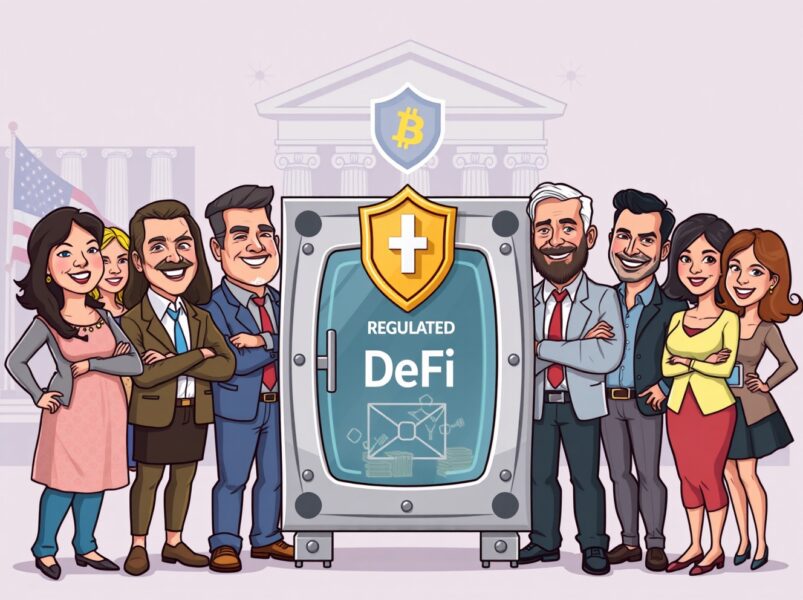
4 in 10 Americans Ready for Regulated DeFi: A Pivotal Survey on DeFi Regulation

4 in 10 Americans Ready for Regulated DeFi: A Pivotal Survey on DeFi Regulation

BitcoinWorld 4 in 10 Americans Ready for Regulated DeFi: A Pivotal Survey on DeFi Regulation The world of decentralized finance, or DeFi, is often seen as a frontier, exciting but perhaps a little wild. However, a groundbreaking survey from the DeFi Education Fund reveals a surprising truth: a significant portion of Americans are ready to embrace DeFi regulation. This isn’t just a niche interest; it’s a clear signal that mainstream adoption hinges on establishing clear, thoughtful rules for this innovative financial ecosystem. What’s the Buzz Around DeFi Regulation? Imagine a financial system that’s open, transparent, and accessible to everyone, everywhere. That’s the promise of DeFi. Yet, for many, the lack of established guidelines has been a major hurdle. The recent survey sheds light on this hesitation, indicating that nearly half of all Americans are willing to dive into DeFi, but only if it operates within a regulated framework. Key Finding: 42% of respondents would use DeFi under a regulated framework. This figure highlights a strong desire for security and clarity. Payment Services Potential: Among those willing, a remarkable 84% expressed readiness to try DeFi-based payment services. This suggests a massive untapped market for innovative payment solutions. This data points to a crucial intersection where innovation meets consumer protection. It suggests that appropriate DeFi regulation could unlock a new era of financial services for millions. Why Are Americans Eyeing Regulated DeFi? It’s not just about curiosity; there’s a deeper reason behind this willingness to engage with regulated DeFi. The survey also uncovered a significant lack of trust in existing financial systems. Only 29% of respondents believe the current U.S. financial system is truly safe. This sentiment is powerful. It indicates that people are actively seeking alternatives that offer greater transparency, security, and fairness. DeFi regulation, when done right, can provide the assurance needed for individuals to confidently explore these new avenues. It’s about building bridges of trust between cutting-edge technology and everyday users. Consider the benefits: enhanced consumer protection, reduced fraud risks, and a level playing field for all participants. These are the pillars upon which a trusted financial system, traditional or decentralized, must stand. The Promise of Regulated DeFi Payments The enthusiasm for DeFi isn’t limited to just financial products like lending or borrowing. A significant portion of the surveyed group expressed a strong interest in using DeFi for everyday transactions. The idea of regulated DeFi-based payment services is particularly appealing. Faster Transactions: Imagine sending money globally in minutes, not days. Lower Fees: Bypassing traditional intermediaries can significantly reduce costs. Greater Control: Users maintain more direct control over their funds. These advantages, combined with the security provided by clear DeFi regulation, could revolutionize how we think about and use money daily. It’s about creating more efficient, inclusive, and user-centric payment experiences. Navigating the Path to Mainstream DeFi Regulation While the demand for regulated DeFi is evident, the path to achieving it is complex. Regulators face the challenge of understanding a rapidly evolving technology while simultaneously protecting consumers and fostering innovation. This isn’t a simple task, but the survey provides a clear mandate for action. Key Considerations for Effective DeFi Regulation: Clarity: Establishing clear definitions and legal frameworks for DeFi protocols and assets. Consumer Protection: Implementing safeguards against scams, hacks, and financial exploitation. Innovation: Crafting rules that don’t stifle technological advancement and growth. Global Coordination: Harmonizing regulations across different jurisdictions to prevent arbitrage and ensure market stability. The future of finance could very well be decentralized, but its widespread adoption depends heavily on thoughtful and effective DeFi regulation. It’s a collaborative effort between innovators, users, and policymakers to build a financial system that serves everyone. Summary: A Clear Call for Action The survey from the DeFi Education Fund delivers a compelling message: Americans are ready for DeFi, but they want it to be safe and sound. The willingness of 4 in 10 respondents to engage with regulated DeFi, coupled with the strong interest in payment services, underscores the immense potential of this technology. It also highlights a critical opportunity for regulators to step up and provide the clarity and oversight necessary to unlock DeFi’s full promise. The future of finance is evolving, and DeFi regulation will be a cornerstone of its mainstream success. Frequently Asked Questions About Regulated DeFi Q1: What is DeFi? A1: DeFi, or decentralized finance, refers to financial services built on blockchain technology. These services, like lending, borrowing, and trading, operate without traditional intermediaries such as banks, using smart contracts instead. Q2: Why do Americans want DeFi to be regulated? A2: Americans desire regulation for DeFi primarily for security and trust. Many are wary of unregulated financial systems due to potential risks like fraud, hacks, and lack of consumer protection. Regulation can provide a framework of safety and legitimacy. Q3: What benefits could regulated DeFi offer? A3: Regulated DeFi could offer several benefits, including enhanced consumer protection, reduced risks of scams, greater transparency, potentially faster and cheaper financial services (especially payments), and increased trust, leading to broader adoption. Q4: How does DeFi regulation compare to traditional finance regulation? A4: Traditional finance operates under well-established, comprehensive regulatory frameworks. DeFi regulation is still evolving and aims to apply similar principles of consumer protection and market integrity to a decentralized, blockchain-based environment, often requiring new approaches due to its unique technological characteristics. Q5: What are the challenges in implementing DeFi regulation? A5: Challenges include the decentralized and global nature of DeFi, which makes enforcement difficult; the rapid pace of technological innovation; defining which entities are responsible for compliance; and ensuring regulations foster innovation rather than stifling it. Found this article insightful? Share it with your friends, colleagues, and anyone interested in the future of finance and the exciting potential of regulated DeFi! Your shares help spread awareness and foster important conversations. To learn more about the latest crypto market trends, explore our article on key developments shaping DeFi institutional adoption. This post 4 in 10 Americans Ready for Regulated DeFi: A Pivotal Survey on DeFi Regulation first appeared on BitcoinWorld.

Author: Coinstats
Ripple Partners Trillion-Dollar Manager Franklin Templeton and DBS to Launch Tokenized Finance Solutions

Ripple Partners Trillion-Dollar Manager Franklin Templeton and DBS to Launch Tokenized Finance Solutions

Ripple, Franklin Templeton, and DBS have joined forces to advance tokenized finance through a new collaboration. The three firms signed a partnership to develop lending and trading tools using tokenized money market funds and Ripple’s new stablecoin, Ripple USD (RLUSD).Visit Website

Author: The Crypto Basic
DBS, Ripple, and Franklin launch tokenized loans 24/7 on XRPL

DBS, Ripple, and Franklin launch tokenized loans 24/7 on XRPL

A new strategic alliance between DBS, Franklin Templeton, and Ripple brings tokenized lending into the institutional perimeter.

Author: The Cryptonomist