NFT

NFTs are unique digital identifiers recorded on a blockchain that certify ownership and authenticity of a specific asset. Moving past the "PFP" craze, 2026 NFTs emphasize utility, representing everything from IP rights and digital fashion to RWA titles and event ticketing. This tag explores the technical standards of digital ownership, the growth of NFT marketplaces, and the integration of non-fungible tech into the broader Creator Economy and enterprise solutions.

13490 Articles
Created: 2026/02/02 18:52
Updated: 2026/02/02 18:52
Only 11 Networks Cross $100K Weekly Threshold

Only 11 Networks Cross $100K Weekly Threshold

The post Only 11 Networks Cross $100K Weekly Threshold appeared on BitcoinEthereumNews.com. Did you know that only a handful of blockchain networks are truly profitable? Recent data reveals a startling truth about blockchain fee revenue – just 11 public chains managed to generate over $100,000 in weekly fees. This exclusive insight comes from crypto analytics firm Nansen, highlighting the concentrated nature of blockchain economic activity. Which Blockchains Dominate Fee Revenue? The blockchain fee revenue landscape shows clear winners and surprising gaps. Among the elite group, six chains stood out by crossing the $1 million mark in weekly fees. This demonstrates how blockchain fee revenue becomes increasingly concentrated among top performers. Let’s examine the top blockchain fee revenue generators: Tron (TRX): $6.16 million Ethereum: $3.87 million Solana: $2.94 million BNB Chain: $2.65 million Bitcoin: $1.78 million Base: $1.13 million Why Does Blockchain Fee Revenue Matter? Blockchain fee revenue serves as a crucial health indicator for any network. It reflects real usage and economic activity rather than speculative interest. When blockchain fee revenue remains consistently high, it signals strong network utility and user adoption. Moreover, sustainable blockchain fee revenue supports network security and development. This revenue funds protocol improvements and ensures long-term viability. Therefore, tracking blockchain fee revenue provides valuable insights into which networks are actually being used versus those merely generating hype. What Challenges Affect Blockchain Fee Revenue? Several factors influence blockchain fee revenue generation. Network congestion, transaction volume, and fee structures all play significant roles. Some networks optimize for low fees to attract users, while others prioritize security through higher fee models. The concentration of blockchain fee revenue among few networks raises important questions about decentralization. However, it also demonstrates market efficiency – users naturally gravitate toward networks providing the best value and utility. Actionable Insights from Blockchain Fee Revenue Data This blockchain fee revenue report offers valuable guidance for investors and…

Author: BitcoinEthereumNews
Animoca Brands to Expand Beyond Gaming into AI, NFTs, DeFi and Stablecoins

Animoca Brands to Expand Beyond Gaming into AI, NFTs, DeFi and Stablecoins

The post Animoca Brands to Expand Beyond Gaming into AI, NFTs, DeFi and Stablecoins appeared on BitcoinEthereumNews.com. In a CNBC interview, Keyvan Peymani, Animoca Brands Chief Strategy Officer, signaled a strategic pivot to widen the firm’s reach. He cited plans to grow the existing portfolio of about 600 companies and push into adjacent sectors in the year ahead, with emphasis on diversification beyond core gaming exposure. The targeted sectors include artificial intelligence, NFTs, DeFi, gaming, and stablecoins, signaling a multi-vertical approach designed to capture upside across frontier tech and digital assets while maintaining prudent risk controls. Despite diversification, gaming remains the dominant pillar, accounting for roughly 230 of 628 investments, underscoring the firm’s foundational ecosystem while the strategy aims to broaden exposure to new growth vectors. Source: https://en.coinotag.com/breakingnews/animoca-brands-to-expand-beyond-gaming-into-ai-nfts-defi-and-stablecoins

Author: BitcoinEthereumNews
Cronos Launches x402 PayTech Hackathon to Boost AI-Native On-Chain Payments

Cronos Launches x402 PayTech Hackathon to Boost AI-Native On-Chain Payments

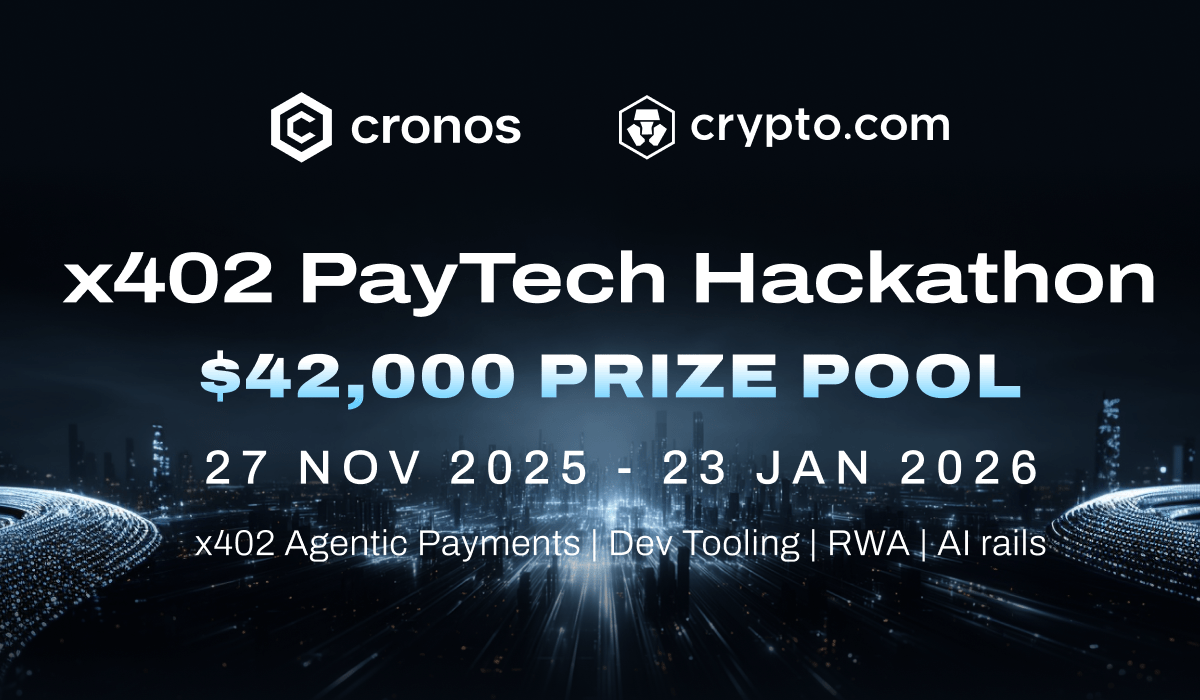
The post Cronos Launches x402 PayTech Hackathon to Boost AI-Native On-Chain Payments appeared on BitcoinEthereumNews.com. After the hackathon, high-potential teams could also be given consideration for funding, incubation, or further ecosystem involvement. DoraHacks is already accepting registrations, and the build phase will begin in early December and end in late January. In order to spur innovation in AI-native, on-chain payments, Cronos has introduced the x402 PayTech Hackathon, a worldwide builder challenge with a $42,000 USD prize pool. Developers are invited to explore new applications powered by the Crypto.com AI Agent SDK, x402 agentic payments, and developing infrastructure across the Cronos and Crypto.com ecosystem. As Cronos moves closer to its larger goal of developing into a high-performance hub for institutional tokenization and AI-powered financial infrastructure, the hackathon gets underway. Cronos is now one of the most production-ready environments for intelligent on-chain systems because of recent upgrades that have lowered gas fees by ten times, boosted daily transactions by 400%, and cut block times to less than one second. Automated settlement processes, AI-driven wallet activities, RWA integrations, interactions with the Crypto.com ecosystem, and new developer tools for AI agents will all be available for builders to test out. Developers may access real-world payment and asset infrastructure with integration pathways across the Cronos and Crypto.com ecosystem, potentially reaching millions of users worldwide. “The x402 PayTech Hackathon represents the first wave of real-world experimentation where AI agents don’t just compute, but exchange value. With Cronos’ recent performance gains and its growing suite of AI-native tooling, teams now have the infrastructure they need to turn agentic applications into reality. We look forward to seeing builders transform these capabilities into practical applications that advance the industry,” said Mirko Zhao, Head of Cronos Labs. Technical assistance, seminars, office hours, and an expanding collection of developer tools including Cronos EVM, x402 programmatic payments, and the Crypto.com AI Agent SDK will all be made available to participants. After the hackathon, high-potential teams could also be…

Author: BitcoinEthereumNews
Minara Debuts AI-Powered Digital Finance Assistant for Bitcoin and Global Assets—No-Code, One-Click Executable Agents

Minara Debuts AI-Powered Digital Finance Assistant for Bitcoin and Global Assets—No-Code, One-Click Executable Agents

The post Minara Debuts AI-Powered Digital Finance Assistant for Bitcoin and Global Assets—No-Code, One-Click Executable Agents appeared on BitcoinEthereumNews.com. Minara has officially launched, introducing the first intelligent agent in digital finance to deliver a complete ‘analysis-decision-execution’ loop. Users converse in natural language to perform market analysis, strategy evaluation, stablecoin trading, and one-click generation of executable intelligent agents, all without coding. Watchlist monitoring and alerts are included. Powered by multi-source real-time data and an advanced financial analysis system, Minara promises faster, more accurate, and personalized guidance across assets—including stocks, gold, commodities, Bitcoin, tokens, NFTs, DeFi, and RWAs—through a unified digital financial operation portal. By lowering entry barriers via a conversational interface, Minara connects users to the global 24/7 open financial network in the most natural way, enabling accessible participation in digital markets. This launch marks a shift toward AI-assisted trading workflows that integrate analysis, decision, and execution in a chat-driven experience, with potential impacts on risk management and liquidity discovery in crypto and broader markets. Source: https://en.coinotag.com/breakingnews/minara-debuts-ai-powered-digital-finance-assistant-for-bitcoin-and-global-assets-no-code-one-click-executable-agents

Author: BitcoinEthereumNews
Dogecoin, Shiba Inu & More

Dogecoin, Shiba Inu & More

The post Dogecoin, Shiba Inu & More appeared on BitcoinEthereumNews.com. Meme coins now command a combined valuation of $60 billion, sparking new waves of excitement across the crypto market. Explosive 100x pumps over short timeframes, increased whale activity, and surging retail interest have fueled this momentum. With attention shifting back to meme assets, here are the top six meme coins positioned for major upside, starting with the standout project leading the charge: Little Pepe (LILPEPE). Little Pepe (LILPEPE): The Top Meme Coin to Watch in This Bull Run Little Pepe stands out as the most compelling meme coin for 2024 and 2025. It is powered by its own Layer 2 blockchain using the LILPEPE token as gas. The focus is on low fees, strong speed, and a meme-centric ecosystem built for culture-driven projects. There are no taxes, no complicated tokenomics, and no artificial barriers. The team is working on launching a meme launchpad on their chain, giving creators a direct path to build and grow. The project’s ongoing presale highlights its growing attention. Stage 13 is active, with the token priced at $0.0022 and over $27.19 million raised to date. The early price gives buyers an opportunity to secure allocations before its expected listings on two major centralized exchanges, followed by an attempt to list on the biggest exchange globally. With plans already prepared, this roadmap is generating strong anticipation. The combination of culture, technology, and strong demand positions Little Pepe as a standout choice for those looking at meme coins with substantial upside potential. Dogecoin Building Strength as Macro Liquidity Rises Trading near $0.176, Dogecoin saw a 6.46% gain, edging closer to the $0.1815 resistance level. Short term charts reveal EMAs holding steady as support, while an inverse head and shoulders pattern hints at a possible breakout. With increasing liquidity across crypto and DOGE’s strong community, the asset is…

Author: BitcoinEthereumNews
Sony Takes the Baton in Asia’s Entertainment–Web3 Convergence

Sony Takes the Baton in Asia’s Entertainment–Web3 Convergence

The post Sony Takes the Baton in Asia’s Entertainment–Web3 Convergence appeared on BitcoinEthereumNews.com. Soneium, a Layer-2 blockchain platform by Sony Block Solutions Labs, announced a partnership with IRC APP, the official app for one of Japan’s largest idol and fashion festivals, Idol Runway Collection (IRC). The collaboration will bring the IRC onto Soneium’s AI-powered IPFi infrastructure to transform global fan engagement through measurable, rewarding on-chain contributions. Asia’s entertainment industry has become a trailblazer in fan participation, a trend that is now taking hold in Western markets. Sponsored Sponsored Sony’s Blockchain Infrastructure for Entertainment The IRC, Japan’s largest idol and fashion hybrid festival, is hosted by YOAKE entertainment and has expanded its scale through a collaboration with Tokyo Girls Collection (TGC). IRC has already established itself as a success, attracting approximately 11,800 attendees and 107 idol groups to its 2025 event.  The core goal of the partnership is redefining fan engagement by valuing and rewarding measurable on-chain contributions across the J-Pop fandom. This collaboration will unlock the creative community’s economic potential, starting with the world’s second-largest music market. The core of fan engagement is within the IRC mobile app. This AI-powered app evaluates positive, consistent, supportive posts made by fans on platforms such as X (formerly Twitter). The measured engagement is converted into “IRC Score,” which is automatically claimed to fans’ on-chain wallets without gas fees. The first wave of IRC 2026 performers, including Nogizaka46, has been announced by YOAKE Entertainment. Source: YOAKE Entertainment This accumulated score determines a user’s Membership rank—Regular, Bronze, Silver, or Gold—with each tier offering progressively enhanced real-world benefits for IRC 2026, scheduled for March 15, 2026, in Tokyo, including early ticket access, priority entry, and premium venue invitations. It also enables the on-chain Fan Vote, which directly shapes tangible aspects of the IRC 2026 event. This measurable fandom contribution system will expand beyond idol culture into new creative frontiers such as…

Author: BitcoinEthereumNews
AINFT Joins Forces with MEXC Listings to the Global Accessibility for NFT

AINFT Joins Forces with MEXC Listings to the Global Accessibility for NFT

AINFT teams with MEXC to expand global access to NFT and to enhance liquidity, security, and user opportunities across AI-powered blockchain ecosystems.

Author: Blockchainreporter
Top 7 Crypto to Invest In Before 2026 – Blazpay, Bitcoin, Ethereum, Solana, Cardano, Avalanche, TRON

Top 7 Crypto to Invest In Before 2026 – Blazpay, Bitcoin, Ethereum, Solana, Cardano, Avalanche, TRON

The cryptocurrency market in November 2025 is experiencing renewed activity, as tokens across DeFi, multichain ecosystems, and presale projects gain traction. Investors are increasingly focused on platforms offering perpetual trading, gamified rewards, and unified services, while early-stage presales provide opportunities for high upside. Among these, Blazpay’s Phase 4 presale has emerged as a standout project, […] The post Top 7 Crypto to Invest In Before 2026 – Blazpay, Bitcoin, Ethereum, Solana, Cardano, Avalanche, TRON appeared first on TechBullion.

Author: Techbullion
From "whoever pays, gets paid" to "only the right people": The next generation of Launchpad is poised to reshape the landscape.

From "whoever pays, gets paid" to "only the right people": The next generation of Launchpad is poised to reshape the landscape.

Article by: Nishil Jain Article compiled by: Block unicorn Foreword ICOs are back, and launchpads are flocking to them, all wanting a piece of the pie. In October, Coinbase acquired Echo and launched its token sale platform earlier this month; in September, Kraken partnered with Legion. Meanwhile, Binance has a close relationship with Buildlpad, and PumpFun is attempting to issue utility tokens through Spotlight. These developments come at a time when investor interest and trust in ICOs are recovering. Umbra Privacy raised $156 million on MetaDAO with a $750,000 funding goal, while Yieldbasis was oversubscribed 98 times in less than a day on Legion. Aria Protocol was oversubscribed 20 times on Buildpad, attracting more than 30,000 participants. As ICOs begin to raise funds at several times their offering price, filtering out the noise becomes especially important. In our previous article, "Capital Formation in the Cryptocurrency Sector," Saurabh explained how capital formation in the cryptocurrency space has evolved. He explored how new financing structures, such as Flying Tulip's investment model and MetaDAO's ICO, attempt to resolve potential conflicts of interest among teams, investors, and users. Each new model claims to offer a better balance of interests among the parties involved. While the success of these models remains to be seen, we are seeing various Launchpads attempting to resolve the conflicts between investors, users, and teams in different ways. They are achieving a more selective investor cap by allowing project teams to choose their own investors during public token sales. In today's article, I will guide you through the reasons and methods of investor screening. Selected holders will be given priority. Between 2017 and 2019, ICO investments mostly adopted a first-come, first-served model, attracting a flood of investors attempting to enter at low valuations, typically aiming for quick profits in the early stages of a project. Research data from over 300 ICO projects shows that 30% of investors exited within the first month of the project's launch. While quick returns are always tempting to investors, project teams are not obligated to accept every wallet asking for money. Truly visionary teams should be able to select their ICO participants, filtering out investors committed to long-term growth. The following is Ditto from Eigencloud discussing the shift from a first-come, first-served (FCFS) sales model to a community-centric sales system. The problem with this round of ICOs is that it ultimately fell into a "lemon market" dilemma. Too many ICO projects emerged, many of which were scams or traps, making it difficult for people to distinguish between high-quality and low-quality projects. Launchpad's inability to rigorously vet all projects led to low investor trust in ICOs. Ultimately, the number of ICOs surged, but the available funding to support them was insufficient. Now it seems that the situation is starting to change again. Cobie's Echo fundraising platform has raised $200 million for over 300 projects since its launch. Meanwhile, in some independent fundraising events, we've seen millions of dollars disappear in just minutes. Pump.fun successfully completed its ICO, raising $500 million in less than 12 minutes; Plasma raised $373 million in its public offering of XPL, targeting a $50 million goal. This shift is evident not only in token issuance but also in Launchpad itself. Emerging platforms like Legion, Umbra, and Echo promise greater transparency, clearer mechanisms, and more robust architectures for founders and investors. They are eliminating information asymmetry, enabling investors to distinguish between good and bad projects. Today, investors can clearly understand a project's valuation, funding amount, and related details, thus better mitigating the risk of being trapped in a losing investment. This led to a return of capital to ICO investment, with project subscriptions far exceeding expectations. The new generation Launchpad is also working to build an investment community that aligns with the project's long-term vision. Following its acquisition of Echo, Coinbase announced the launch of its own token sale platform, emphasizing a user-platform fit screening process. Currently, they achieve this by tracking users' token selling patterns. Users who sell tokens within 30 days of the sale's start will receive a lower allocation, and more fit metrics will be announced soon. This shift towards a community-centric distribution philosophy is clearly demonstrated in the meticulously designed airdrop program of Monad and the ICO distribution program of MegaETH, both of which are centered on community members. MegaETH was oversubscribed by approximately 28 times. The project required users to link their social media profiles and wallets with their on-chain history in order to filter out a list of token holders they believed best aligned with the project's philosophy. This is the shift we're seeing: when funds from ICOs become abundant again, project teams need to choose who to allocate those funds to. The new generation of Launchpad was created to address this problem. Next-generation Launchpad Currently, platforms such as Legion, Buildlpad, MetaDAO, and Kaito are emerging, representing a new type of launchpad. The first step is to vet ICO projects to ensure investors' trust in the launchpad platform; the next step is to vet participating investors to ensure that fund allocation complies with project standards. Legion adheres to a performance-based distribution philosophy and provides the most comprehensive community member ranking system. The platform has successfully completed 17 token offerings, with the most recent offering experiencing an oversubscription rate of approximately 100 times. To ensure that tokens reach the right people in an oversubscribed sale, each participant is assigned a Legion Score, which takes into account their on-chain history and activity across protocols, developer qualifications (such as GitHub contributions), social impact, network reach, and qualitative statements about their intended contributions to the project. Founders launching products on Legion can choose to assign weighted metrics, such as developer engagement, social influence, KOL (Key Opinion Leader) engagement, or community education contribution, and allocate weight accordingly. Kaito takes a more targeted approach, allocating a portion of its resources to "speakers" who actively participate in Twitter discussions. Engagement is weighted based on a user's voting credibility and speaking influence, the amount of $KAITO staked, and the rarity of the genesis NFT. Project teams can choose from these preferred supporter types. Kaito's model helps projects attract influential social media participants as early-stage investors. This strategy is particularly useful for projects that heavily rely on initial exposure. Buildlpad's core concept is based on the allocation of funds. The more funds a user stakes, the more tokens they receive when participating in the token sale. However, this also means that only wallets with funds can participate. To balance this capital-based system, Buidlpad introduced a "team system" that awards leaderboard points and extra rewards based on community activities such as content creation, educational outreach, and social media promotion. Of the four launchpads, MetaDAO is the most unique. Funds raised through the MetaDAO ICO are placed in an on-chain vault and governed by a market-based mechanism called Futarchy. Futarchy is essentially a futures market for the underlying tokens, but trading is based on governance decisions rather than price. All funds raised are held in an on-chain vault, and every expenditure is validated by a conditional market. The team must propose a plan for how the funds will be used, and token holders bet on whether these actions will create value. A transaction can only be completed when the market reaches a consensus. MetaDAO's ICO was permissionless and completely open to investor participation, with each investor receiving a token allocation based on their invested capital. However, community building and alignment of interests among token holders occurred after the ICO. Each proposal served as a marketplace within Futarchy, allowing traders to sell or buy more tokens upon proposal approval. Consequently, the token holder community evolved based on the final decision. While this article focuses on curated allocation schemes, from a project team's perspective, many other factors need to be considered before deciding to launch an ICO, such as project selection criteria, founder flexibility, platform fees, and post-launch support. The following comparison table can help you understand all these factors at a glance. Web3 can bring together users, traders, and contributors through incentive mechanisms based on verifiable reputation systems. Without mechanisms to weed out bad actors or attract suitable participants, most community token sales will remain immature, filled with a mixed group of believers and non-believers. The current Launchpad provides the team with an opportunity to improve the token economy and take the right first steps. The project needs tools to identify suitable users within the ecosystem and reward their tangible contributions. This includes influential users with active communities behind them, as well as founders or builders who create useful applications and experiences for others. These user groups play a vital role in driving the ecosystem's growth and should be incentivized for long-term retention. If the current momentum continues, the next generation of Launchpad may help solve the community launch problem in the cryptocurrency space, a problem that airdrops have failed to address.

Author: PANews
Ethereum Doubles Its Gas Limit to 60M as Developers Embrace a New “Empirical” Scaling Strategy

Ethereum Doubles Its Gas Limit to 60M as Developers Embrace a New “Empirical” Scaling Strategy

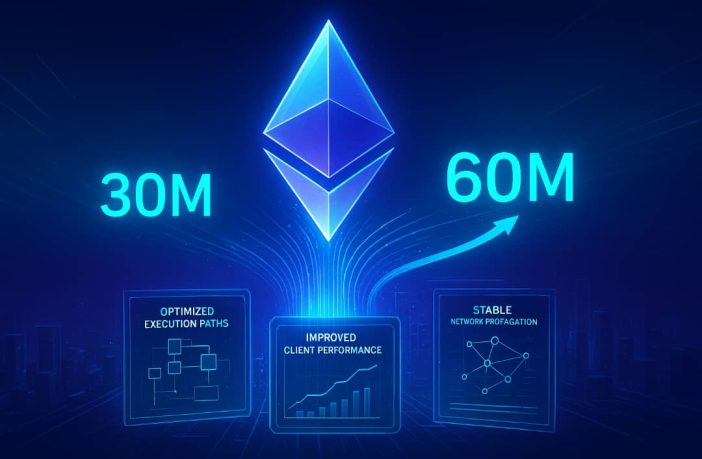
Ethereum quietly crossed a major milestone this week. The network’s mainnet Gas Limit has been officially raised to 60 million, a full 2× increase from where it stood at the start of the year. For nearly four years, Ethereum maintained a cautious ceiling around 30 million, holding the limit steady while prioritizing stability over throughput. [...]

Author: Null TX