NFT

NFTs are unique digital identifiers recorded on a blockchain that certify ownership and authenticity of a specific asset. Moving past the "PFP" craze, 2026 NFTs emphasize utility, representing everything from IP rights and digital fashion to RWA titles and event ticketing. This tag explores the technical standards of digital ownership, the growth of NFT marketplaces, and the integration of non-fungible tech into the broader Creator Economy and enterprise solutions.

12885 Articles
Created: 2026/02/02 18:52
Updated: 2026/02/02 18:52
What is Play-to-Earn Gaming? Unlocking New Possibilities

What is Play-to-Earn Gaming? Unlocking New Possibilities

The post What is Play-to-Earn Gaming? Unlocking New Possibilities appeared on BitcoinEthereumNews.com. The Play-to-Earn (P2E) model is playing a key role in the advancement of the crypto industry. Users are able to earn crypto by playing games and get involved with global communities of gamers, creators, and developers. In this article, we’ll explore the functionalities of P2E gaming, its core features, potential risks, benefits, legal issues, and highlight some of the most impactful games shaping the Web3 gaming frontier.  What is Play-to-Earn Gaming? As its name implies, you gain rewards for playing the game. Players in Play-to-Earn games get involved with blockchain networks and can receive crypto assets or NFTs as prizes. The assets you acquire can be sold, traded or kept as an investment to see if their value rises. In Axie Infinity, players gathered and combated Axies, which are fantastical creatures. The game gave players SLP, a coin that works the same as money and could be traded for fiat currencies or other coins. Due to its success, it has grown into a more advanced and eco-friendly economy on current gaming platforms. How P2E Works? Most P2E gaming relies on Ethereum and Layer 2 networks, including Immutable, Ronin, and Base. Users are given both tokens and NFTs for accomplishing various game goals, such as: Completing missions or winning battles Trading or crafting in-game items Participating in tournaments or community events Staking assets or voting in DAOs The main difference between P2E games and traditional ones is that players can truly own what they earn in the game. Weapons, land, avatars, and resources on the Web3 game are tokenized, enabling you to trade or transfer them elsewhere. For example, users in Decentraland are able to purchase virtual land as NFTs, set up experiences and earn money from events or the services they provide. They are different from other items since they…

Author: BitcoinEthereumNews
Bitcoin $123K Prediction as Poland Launches First Bitcoin ETF, Bitcoin Hyper Nears $17M, and More…

Bitcoin $123K Prediction as Poland Launches First Bitcoin ETF, Bitcoin Hyper Nears $17M, and More…

The post Bitcoin $123K Prediction as Poland Launches First Bitcoin ETF, Bitcoin Hyper Nears $17M, and More… appeared on BitcoinEthereumNews.com. Live Bitcoin Hyper Updates Today: Bitcoin $123K Prediction as Poland Launches First Bitcoin ETF, Bitcoin Hyper Nears $17M, and More… Sign Up for Our Newsletter! For updates and exclusive offers enter your email. Leah is a British journalist with a BA in Journalism, Media, and Communications and nearly a decade of content writing experience. Over the last four years, her focus has primarily been on Web3 technologies, driven by her genuine enthusiasm for decentralization and the latest technological advancements. She has contributed to leading crypto and NFT publications – Cointelegraph, Coinbound, Crypto News, NFT Plazas, Bitcolumnist, Techreport, and NFT Lately – which has elevated her to a senior role in crypto journalism. Whether crafting breaking news or in-depth reviews, she strives to engage her readers with the latest insights and information. Her articles often span the hottest cryptos, exchanges, and evolving regulations. As part of her ploy to attract crypto newbies into Web3, she explains even the most complex topics in an easily understandable and engaging way. Further underscoring her dynamic journalism background, she has written for various sectors, including software testing (TEST Magazine), travel (Travel Off Path), and music (Mixmag). When she’s not deep into a crypto rabbit hole, she’s probably island-hopping (with the Galapagos and Hainan being her go-to’s). Or perhaps sketching chalk pencil drawings while listening to the Pixies, her all-time favorite band. This website uses cookies. By continuing to use this website you are giving consent to cookies being used. Visit our Privacy Center or Cookie Policy. I Agree Source: https://bitcoinist.com/bitcoin-hyper-live-news-september-19-2025/

Author: BitcoinEthereumNews
Top Crypto Presales Of 2025: Tapzi, Lyno, BlockDAG & MetaVault Compete For Spotlight

Top Crypto Presales Of 2025: Tapzi, Lyno, BlockDAG & MetaVault Compete For Spotlight

Tapzi leads 2025’s top crypto presales with $48M+ raised, skill-based Web3 gaming, and mass-market appeal. Lyno, BlockDAG, and MetaVault add balance for diversification.

Author: Blockchainreporter
Hype for Best Wallet Token

Hype for Best Wallet Token

The post Hype for Best Wallet Token appeared on BitcoinEthereumNews.com. PayPal’s PYUSD Expands to Nine New Blockchains: Hype for Best Wallet Token Sign Up for Our Newsletter! For updates and exclusive offers enter your email. Leah is a British journalist with a BA in Journalism, Media, and Communications and nearly a decade of content writing experience. Over the last four years, her focus has primarily been on Web3 technologies, driven by her genuine enthusiasm for decentralization and the latest technological advancements. She has contributed to leading crypto and NFT publications – Cointelegraph, Coinbound, Crypto News, NFT Plazas, Bitcolumnist, Techreport, and NFT Lately – which has elevated her to a senior role in crypto journalism. Whether crafting breaking news or in-depth reviews, she strives to engage her readers with the latest insights and information. Her articles often span the hottest cryptos, exchanges, and evolving regulations. As part of her ploy to attract crypto newbies into Web3, she explains even the most complex topics in an easily understandable and engaging way. Further underscoring her dynamic journalism background, she has written for various sectors, including software testing (TEST Magazine), travel (Travel Off Path), and music (Mixmag). When she’s not deep into a crypto rabbit hole, she’s probably island-hopping (with the Galapagos and Hainan being her go-to’s). Or perhaps sketching chalk pencil drawings while listening to the Pixies, her all-time favorite band. This website uses cookies. By continuing to use this website you are giving consent to cookies being used. Visit our Privacy Center or Cookie Policy. I Agree Source: https://bitcoinist.com/paypal-pyusd-goes-multichain-best-wallet-surges/

Author: BitcoinEthereumNews
BlockDAG vs BlockchainFX vs Snorter – Which Top Crypto Presale Will Make Millionaires In 2026

BlockDAG vs BlockchainFX vs Snorter – Which Top Crypto Presale Will Make Millionaires In 2026

Crypto markets thrive on moments of conviction. The investors who backed Solana at pocket change or Ethereum before staking rewards became mainstream didn’t just chase hype — they recognized momentum before the crowd did. In late 2025, three presales are commanding that same level of attention: BlockchainFX, BlockDAG, and Snorter. Each is pulling capital, but […] The post BlockDAG vs BlockchainFX vs Snorter – Which Top Crypto Presale Will Make Millionaires In 2026 appeared first on Live Bitcoin News.

Author: LiveBitcoinNews
Base coin issuance: a long-planned conspiracy?

Base coin issuance: a long-planned conspiracy?

Author: cole Produced by: Vernacular Blockchain In the crypto world, launching a new coin always sets the market on fire. When Coinbase, the industry's most compliant "regular force," incubated its Layer 2 network, Base, shifted its stance from "never launching a coin" to "exploring the future," everyone knew a major drama was about to unfold. This isn't just another token launch; it's a calculated strategic move by Coinbase, aiming to transform Base from a traffic gateway into a self-sustaining economic hub. Will this yet-to-be-launched token be the rocket fuel that ignites a bull market, or another "launch-and-reach" capital story? To answer this question, we must delve into the fabric of Base and analyze the vulnerabilities behind its glamorous data. 01. From “NO” to “YES” — Why does Base have to issue a token? Once upon a time, Base was a breath of fresh air in the Layer 2 world, with its leadership repeatedly stating that it had "no plans to issue a coin." However, the tide has turned. Base founder Jesse Pollak and Coinbase CEO Brian Armstrong have now publicly stated that the team is "exploring the issuance of a native token," believing it to be an excellent tool for accelerating decentralization and ecosystem growth. The official justification is grand and politically correct: achieving complete decentralization of the network. Currently, Base's core sorter remains centrally controlled by Coinbase. Issuing tokens can attract independent node participation through incentive mechanisms, a necessary step towards true decentralization. This technology-driven rhetoric aligns with the spirit of the crypto world and provides a "compliance" shield against regulatory scrutiny. However, the data reveals a harsher reality: Base is facing severe capital outflows. Data shows that over the past three quarters, Base has experienced a net outflow of $4.6 billion, with the majority of funds flowing back into the Ethereum mainnet. This suggests that while Base has successfully attracted a large number of users thanks to Coinbase's traffic, particularly during the meme coin and SocialFi (social finance) boom, it lacks user stickiness. Capital, like mercenaries, comes and goes with impatience. Base faces the risk of becoming a mere low-cost transit point. Meanwhile, competitors Arbitrum and Optimism have already built strong economic moats using tokens. Therefore, Base's token issuance is more a survival imperative than a philosophical evolution. Its core economic goal is a single one: anchoring capital. Through token incentives, Base aims to transform speculative "tourists" into long-term "residents," creating a self-reinforcing economic closed loop. 02. A Song of Ice and Fire: A Panoramic Scan of the Base Ecosystem To understand the power of the Base token, we must first understand its current state. On-chain data paints a picture of both ice and fire: user activity is in full swing, but capital depth is relatively calm. Judging by the data, Base is undoubtedly a top player. Its TVL exceeds $5 billion. But what's most astonishing is its transaction processing capacity, with an average TPS of 148.77, far exceeding Arbitrum's 22.49. The network has nearly one million daily active addresses, and annualized network revenue is projected to reach $75 million. These data clearly reveal Base's uniqueness: while it is an undisputed giant in user activity, it remains a laggard in terms of capitalization. Base has already solved the "how to attract people" problem; now it needs to use its token to solve the "how to retain people" problem. Base's application ecosystem exhibits a unique "leverage structure." On one end are multi-chain giants like Uniswap and Aave, which contribute the majority of TVL. On the other end are vibrant meme coins. Of greatest strategic value, however, are the "native protocols" sandwiched in the middle—they are Base's true moat and the core goal of future token incentives. DeFi: In the decentralized finance sector, Aerodrome Finance, Base's native automated market maker (AMM), is rising at an astonishing rate, with its TVL exceeding $1.1 billion, aiming to become Base's central liquidity hub. In the lending market, the native protocol SeamlessFi has also made a name for itself. SocialFi: This is Base's unique trump card. The phenomenal emergence of Friend.tech not only brought a massive amount of traffic to Base but also pioneered a new on-chain social monetization model. Furthermore, the decentralized social protocol Farcaster is also thriving here. Games and NFTs: This sector is still in its early stages, with no blockbuster hits yet. However, Base's low gas fee environment is ideal for the development of on-chain games, and its native token can serve as a catalyst to attract top game studios. 03. Redistribution of wealth - who will be the biggest winner? The issuance of Base tokens will be a redistribution of wealth on an unprecedented scale. Ecosystem protocols: For native protocols such as Aerodrome and SeamlessFi, Base tokens will be their ammunition to compete head-on with multi-chain giants. Users and community: Issuing coins will bring about a wealth effect, and tokens will also give the community the power of governance and cultivate a deep sense of "ownership". Base Network: The token treasury will free Base from its dependence on Coinbase and become a self-sustaining and self-developing public product. Coinbase: This might be the most exciting part. Currently, Base directly contributes less than 1% of Coinbase's total revenue. However, the fully diluted valuation (FDV) of a single Base token could reach tens of billions of dollars. This means that Coinbase is performing a brilliant financial trick: giving up a negligible amount of operating income in exchange for a massive asset potentially worth tens of billions of dollars. By issuing tokens and decentralizing the platform, Coinbase not only mitigates regulatory risk but also transforms a small profit into a massive asset. 04. Summary Base's exploration of issuing a token is a deliberate strategic necessity. It marks Base's official transition from a successful "traffic acquisition machine" to a self-sustaining "on-chain economy." Will Base's coin launch, like Arbitrum's, use a "big bang" launch to generate hype but potentially trigger a catastrophic sell-off? Or will it be like Optimism, using a phased, narrative-heavy approach to steadily guide the market and direct the community's attention to long-term development? Considering Base's close ties with Coinbase and its "compliance first" stance, the latter seems more likely. Regardless of which path it chooses, Base holds a trump card: the massive retail user base brought by Coinbase and the unique SocialFi ecosystem. For all participants in the crypto world, this drama is worth your close attention.

Author: PANews
Web3 vs Web2 : What’s the Difference?

Web3 vs Web2 : What’s the Difference?

The post Web3 vs Web2 : What’s the Difference? appeared on BitcoinEthereumNews.com. The Internet has come a long way since its early days. What started as a collection of simple, static web pages has evolved into the rich, interactive, and social platforms we use daily. Now, we’re on the brink of another big shift, from Web2 to Web3, and it’s all about putting power back into the hands of users. In Web2, we got social media, video sharing, and instant communication, however, it also gave major companies the power to access and sell our private information. Web3, by contrast, promises a more decentralized internet where users can own their data, control their digital identities, and actively participate in building value through blockchain and tokens. Understanding this difference is key to seeing why the internet’s future looks so different. A Quick History of the Web Web1: The “Read-Only” Web (1990s to Early 2000s) Web1 is a digital library, wherein websites were simple and static, like basic HTML pages that only show information and are not of much use. People were mostly consumers, not creators. There were no social networks, no commenting, and very little interaction. This era was decentralized in the sense that many servers hosted websites independently, but content creation was limited to a select few, usually companies or skilled developers. Web2: The Social and Interactive Web (2004 to Present) With the evolution of Web2, anyone could create content, connect with others, and engage in real-time conversations. Social media platforms like Facebook, X, and YouTube exploded, empowering users to share photos, videos, and opinions instantly. Smartphones made the web personal and always accessible. But while users got tools to create and connect, major corporations took control behind the scenes. They owned the servers, controlled the data, and made money by collecting and selling user information through targeted advertising. This centralization sparked concerns…

Author: BitcoinEthereumNews
Top 5 Best Crypto Tokens For 2025 – XRP, AVAX And MAGACOIN FINANCE Named High-Upside Picks

Top 5 Best Crypto Tokens For 2025 – XRP, AVAX And MAGACOIN FINANCE Named High-Upside Picks

Analysts highlight XRP, AVAX, and MAGACOIN FINANCE among the top 5 crypto altcoins for 2025 with high-upside potential.

Author: Blockchainreporter
Siemens Patent Mentions IOTA for Renewable Energy NFT Certificates

Siemens Patent Mentions IOTA for Renewable Energy NFT Certificates

Siemens has referenced IOTA as a solution for a computer-implemented method and system focused on temporal correlation. Recently, Echo Protocol launched a native Bitcoin bridge to the IOTA network, introducing the first native Bitcoin asset in the IOTA network. A recent post on X by user Wonderer has drawn attention to a new patent from [...]]]>

Author: Crypto News Flash
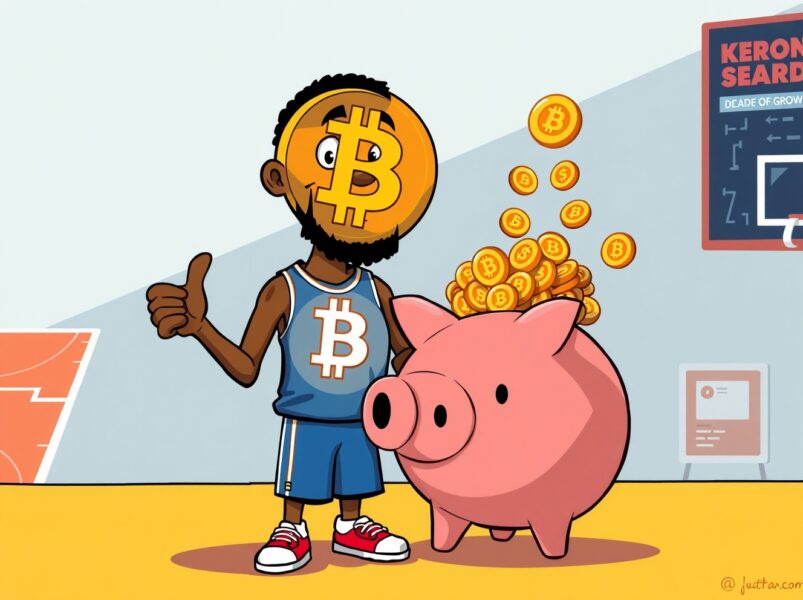
Astonishing Kevin Durant Bitcoin Fortune: A Decade-Long Hold Yields 195-Fold Return

Astonishing Kevin Durant Bitcoin Fortune: A Decade-Long Hold Yields 195-Fold Return

BitcoinWorld Astonishing Kevin Durant Bitcoin Fortune: A Decade-Long Hold Yields 195-Fold Return Imagine logging into an old account and discovering a fortune! That’s exactly what happened to NBA superstar Kevin Durant. His decade-old, forgotten Coinbase account, which held an early Kevin Durant Bitcoin investment, has now resurfaced, revealing an incredible 195-fold return. This remarkable story highlights the immense potential of long-term cryptocurrency holdings and serves as a fascinating example for anyone interested in digital assets. The Accidental ‘Hodl’: How Kevin Durant’s Bitcoin Investment Skyrocketed The journey of Kevin Durant’s Bitcoin investment began in 2016. He encountered Bitcoin, then priced at a modest $600, during a birthday celebration for venture capitalist Ben Horowitz. Intrigued, Durant decided to invest, setting up a Coinbase account. However, as many early adopters can attest, managing digital assets in the nascent crypto landscape wasn’t always straightforward. Durant subsequently misplaced his Coinbase login credentials, leading to an involuntary long-term hold – a phenomenon affectionately known as "HODL" (Hold On for Dear Life) in the crypto community. This accidental strategy proved to be a stroke of pure luck. After a decade, with assistance from Coinbase and a thorough identity verification process, Durant successfully recovered his account. While the exact amount of BTC remains undisclosed, the outcome is clear: a staggering 195-fold return on his initial investment. Initial Investment: Bitcoin at $600 in 2016. Accidental Strategy: Lost login details led to an unintentional "HODL." Recovery: Coinbase assisted with identity verification. Return: A remarkable 195-fold increase in value. Beyond Personal Gains: Kevin Durant’s Broader Crypto Engagement This isn’t Kevin Durant’s first foray into the world of digital assets, nor is it his only connection to the industry. Long before this incredible recovery, Durant had already demonstrated a positive and forward-thinking stance toward cryptocurrency. His engagement extends beyond just holding assets; he has actively participated in the crypto ecosystem. Durant previously partnered with Coinbase, one of the leading cryptocurrency exchanges, showcasing his belief in the platform and the broader potential of digital currencies. He has also ventured into the realm of Non-Fungible Tokens (NFTs), purchasing digital collectibles and exploring this evolving sector. These actions underscore his understanding and acceptance of crypto’s growing influence. His continued involvement helps bridge the gap between mainstream culture and the crypto world, bringing increased visibility and legitimacy to digital assets. The story of his Kevin Durant Bitcoin recovery only adds another layer to his impressive crypto narrative, inspiring many to consider the long-term prospects of digital investments. Valuable Lessons from Kevin Durant’s Bitcoin Journey Kevin Durant’s story offers compelling insights for both seasoned investors and newcomers to the crypto space. It powerfully illustrates the potential rewards of a patient, long-term investment approach, even if accidental. While not everyone will forget their login details for a decade, the principle of "HODLing" through market volatility can yield significant returns. However, it also subtly highlights the importance of proper security and record-keeping. Losing access to an account, even if eventually recovered, can be a stressful experience. Here are some actionable takeaways: Embrace Long-Term Vision: Bitcoin’s history shows substantial growth over extended periods. Patience often outperforms short-term trading. Secure Your Assets: Always keep your login details, seed phrases, and recovery information in multiple, secure locations. Consider hardware wallets for significant holdings. Understand the Volatility: Crypto markets are volatile. Investing only what you can afford to lose and being prepared for price swings is crucial. Stay Informed: While Durant’s hold was accidental, continuous learning about the crypto market can help make informed decisions. His experience reinforces the idea that strategic, even if involuntary, patience can be profoundly rewarding in the world of cryptocurrency. The Kevin Durant Bitcoin story is a testament to this. The tale of Kevin Durant’s forgotten Coinbase account and his astonishing 195-fold return on a decade-old Bitcoin investment is nothing short of extraordinary. It’s a vivid reminder of the transformative power of early adoption and the incredible growth potential within the cryptocurrency market. Beyond the personal windfall, Durant’s continued engagement with crypto, from partnerships to NFTs, reinforces his role as a prominent figure in the digital asset space. His accidental "HODL" has become a legendary example, inspiring many to look at long-term crypto investments with renewed optimism and a keen eye on future possibilities. Frequently Asked Questions About Kevin Durant’s Bitcoin Investment Here are some common questions regarding Kevin Durant’s recent crypto revelation: Q: How much did Kevin Durant initially invest in Bitcoin?A: The exact amount of Bitcoin Kevin Durant initially invested has not been disclosed. However, it was purchased around 2016 when Bitcoin was priced at approximately $600. Q: How did Kevin Durant recover his forgotten Coinbase account?A: Coinbase assisted Kevin Durant in recovering his account after he completed a thorough identity verification process, confirming his ownership of the decade-old account. Q: What does "195-fold return" mean?A: A "195-fold return" means that the value of his initial investment multiplied by 195 times. If he invested $1,000, it would now be worth $195,000. Q: Has Kevin Durant invested in other cryptocurrencies or NFTs?A: Yes, Kevin Durant has shown a friendly stance toward cryptocurrency beyond Bitcoin. He has partnered with Coinbase and has also purchased Non-Fungible Tokens (NFTs) in the past. Q: Is Kevin Durant’s story typical for Bitcoin investors?A: While the 195-fold return is exceptional, the principle of significant gains from long-term holding (HODLing) is a common theme in Bitcoin’s history. However, not all investments yield such high returns, and market volatility is always a factor. Did Kevin Durant’s incredible crypto journey inspire you? Share this astonishing story with your friends and followers on social media to spark conversations about the future of digital assets and the power of long-term investing! Your shares help us bring more fascinating crypto news to a wider audience. To learn more about the latest Bitcoin trends, explore our article on key developments shaping Bitcoin’s institutional adoption. This post Astonishing Kevin Durant Bitcoin Fortune: A Decade-Long Hold Yields 195-Fold Return first appeared on BitcoinWorld.

Author: Coinstats