Bitcoin has revolutionized finance since its creation, reaching record highs above $123,000 in 2025. As the world's first cryptocurrency, Bitcoin continues reshaping how we think about money and financial sovereignty. This comprehensive guide covers everything from Bitcoin's fundamental technology to investment strategies, helping you navigate the Bitcoin ecosystem confidently whether you're a beginner or experienced investor.
Key Takeaways
Bitcoin reached new all-time highs above $123,000 in 2025, driven by institutional adoption and Bitcoin ETF approval in January 2024.
The cryptocurrency operates on a fixed supply of 21 million coins with current mining rewards at 3.125 BTC per block following the April 2024 halving.
- Strategy (formerly MicroStrategy) alone holds over 650,000 BTC as of December 2025
Bitcoin ETFs have attracted record-breaking inflows, making the cryptocurrency accessible through traditional brokerage accounts.
Layer 2 solutions like Lightning Network are expanding Bitcoin’s utility beyond store of value to enable fast, low-cost payments and micropayments.
Bitcoin is a decentralized digital currency operating without banks or governments. Created in 2008 by Satoshi Nakamoto, it solved the double-spending problem through peer-to-peer technology. Bitcoin runs on a distributed network of computers called nodes, with transactions verified through mining. Its revolutionary blockchain technology creates a public, immutable ledger recording every transaction. This transparency combined with cryptographic security enables direct transactions without intermediaries, fundamentally changing how we transfer value globally.
- Curious about the acronym? Learn what BTC stands for and its various meanings
- Explore Bitcoin's complete journey from 2008 whitepaper to global phenomenon.
- Bitcoin's first price: from $0 to global phenomenon.
- Bitcoin in 2009: the complete early price history.
- Bitcoin in 2014: crisis and recovery.
- When did Bitcoin blow up? Complete price timeline.
- When was Bitcoin launched and at what starting price?
- Learn about Satoshi's mysterious holdings worth over $100 billion today.
- See how BTC is used in everyday text and online slang.
- Discover the full story behind Satoshi Nakamoto and Bitcoin's creation.
- New to crypto? Learn how Bitcoin relates to cryptocurrency.
Bitcoin has a hard cap of 21 million coins, making it inherently scarce and deflationary. Unlike fiat currencies that central banks can print indefinitely, this mathematical scarcity creates digital gold properties. Current circulating supply approaches 19.8 million, with new coins released through mining until approximately 2140.
- Learn what happens when all Bitcoin is mined and its impact on the network.
- See how many Bitcoin have been mined so far.
- Find out how much Bitcoin remains to be mined.
- Complete breakdown of Bitcoin's supply and circulation.
No single entity controls Bitcoin. Thousands of nodes worldwide maintain the network, ensuring resilience against censorship and single points of failure. This distributed architecture makes Bitcoin virtually impossible to shut down or manipulate by any government or organization.
- Can Bitcoin's blockchain be hacked? Security analysis.
Bitcoin transactions are public on the blockchain, but users are identified only by wallet addresses, not personal information. While not completely anonymous, Bitcoin offers pseudonymous transactions that balance transparency with privacy, making it suitable for legitimate financial activities.
- For maximum privacy, learn how to buy Bitcoin anonymously.
- Complete guide to Bitcoin security and investment risks.
- Can Bitcoin transactions be traced? Find out here.
- Protect yourself: 7 warning signs of Bitcoin scams.
- Is Bitcoin a scam or legit? The truth revealed.
Bitcoin operates 24/7 globally, enabling instant transfers anywhere regardless of banking hours or international borders. Anyone with internet access can send or receive Bitcoin, providing financial inclusion to the unbanked and underbanked populations worldwide.
Bitcoin's blockchain functions as a digital ledger copied across thousands of computers worldwide. Each new block builds upon previous ones, creating an unchangeable historical record. This distributed architecture ensures no single point of failure while maintaining complete transaction transparency.
- For a deeper technical explanation, see our complete guide on how Bitcoin works.
Bitcoin mining creates new bitcoins and verifies transactions. Miners use powerful computers to solve complex mathematical puzzles, with the first successful miner adding a new block and earning rewards. Currently, miners receive 3.125 BTC per block following the April 2024 halving event.
- Get the complete mining breakdown including equipment, costs, and setup in our Bitcoin mining guide.
When sending Bitcoin, your transaction broadcasts to the network for verification. Miners verify digital signatures and sufficient funds before bundling transactions into blocks. The network processes blocks approximately every 10 minutes. Most services consider transactions final after six confirmations, typically taking one hour.
Bitcoin's proof-of-work system ensures security by making attacks extremely expensive. Mining difficulty automatically adjusts every 2,016 blocks to maintain the 10-minute average block time regardless of network hash rate, ensuring consistent block production.
- What truly backs Bitcoin's value? Understanding the foundation.
Bitcoin reached new all-time highs above $123,000 in 2025, driven by institutional adoption and regulatory clarity. Major corporations like Strategy hold over 650,000 bitcoins as treasury assets. Bitcoin ETF approval in January 2024 brought massive institutional inflows, making cryptocurrency accessible through traditional brokerage accounts.
- Understand the key factors driving Bitcoin price increases in our detailed analysis.
- Is Bitcoin still going up? Expert analysis and predictions.
- See Bitcoin's complete all-time high price history.
- Why is Bitcoin so expensive? The real reasons explained.
Historically, Bitcoin follows four-year cycles tied to halving events: accumulation phase during price declines, growth phase with increasing interest, euphoria phase reaching new highs, and correction phase beginning new cycles. However, 2025 may break traditional patterns as ETF approval front-ran typical post-halving price discovery.
- When corrections happen, understand the factors behind price drops.
- During corrections, explore recovery factors and market outlook.
- Timeline analysis: when will Bitcoin recover?
- The last Bitcoin halving: date and full market impact.
- When is the next Bitcoin halving? Everything explained.
- Learn about the Bitcoin Rush market phenomenon.
Conservative technical analysis suggests key support and resistance levels throughout 2025. Optimistic projections predict significant upward potential by year-end. Long-term forecasts toward 2030 range from $145,000 to $500,000, though these require skepticism given market volatility and unpredictable macro factors.
- Worried about downside risk? Read our expert crash scenario analysis.
- Explore mathematical price models: Bitcoin Power Law predictions to 2030.
- Will Bitcoin keep rising? Key factors for investors.
- Expert predictions: how high could Bitcoin go?
- Deep dive: Bitcoin 2030 price predictions from top experts.
Verify your contact method by entering the 6-digit verification code sent to you
Enable two-factor authentication (2FA) via Google Authenticator or SMS for enhanced security
Navigate to "Buy Crypto" section and choose your preferred purchase method
Select Bitcoin (BTC) and enter your desired purchase amount in local currency or BTC
Review transaction details including fees and exchange rate, then confirm your order
Complete payment using your selected method - cards process instantly, bank transfers take 1-3 days
Once confirmed, Bitcoin credits to your MEXC spot wallet, ready for trading or withdrawal
Consider transferring to a personal hardware wallet for maximum long-term security
Read More:
- For Indian investors, see our specific guide: How to Buy Bitcoin in India.
- 6 proven methods to acquire Bitcoin beyond exchanges.
- Read our detailed beginner's guide to buying Bitcoin.
- Explore legitimate ways to earn free Bitcoin.
- Learn the safest methods to buy Bitcoin as a beginner.
- Compare platforms: where to buy Bitcoin in 2026.
- Learn about Bitcoin ATMs and how they work.
- How to use a Bitcoin ATM: fees, limits, and instructions.
Proper Bitcoin storage is crucial for security. The cryptocurrency community emphasizes "not your keys, not your coins," highlighting the importance of controlling your private keys rather than leaving Bitcoin on exchanges. Hot wallets are internet-connected software wallets offering convenience for frequent transactions, including mobile apps like BlueWallet or desktop software like Electrum. Cold wallets provide offline storage solutions offering maximum security for long-term holdings, with popular hardware wallets like Ledger or Trezor. Paper wallets are physical documents containing Bitcoin addresses and private keys, offering air-gapped security but requiring careful handling. Multi-signature wallets require multiple signatures to authorize transactions, ideal for businesses or high-value holdings requiring additional security layers and shared control.
- First, understand the basics: What is a Bitcoin Wallet Address?
- Step-by-step: get your own BTC wallet address.
- Learn how to safely transfer: How to Send Bitcoin to Another Wallet.
- Complete guide to sending Bitcoin transactions.
Bitcoin mining serves two critical functions: securing the network through computational work and distributing new bitcoins into circulation. Mining involves using specialized computers to solve complex mathematical puzzles, with miners competing to find solutions first. Winners earn the right to add new blocks to the blockchain and receive block rewards. This process requires significant computational power and electricity, creating real-world costs that secure the network. Mining difficulty automatically adjusts every 2,016 blocks (approximately two weeks) to maintain 10-minute block times regardless of total network power. Modern mining has evolved into a sophisticated industry dominated by professional operations with access to cheap electricity and specialized ASIC hardware. The industry increasingly focuses on renewable energy sources including solar, wind, and hydroelectric power, addressing environmental concerns while maintaining network security.
- Wondering about timeframes? See how long it takes to mine 1 Bitcoin.
- Is mining worth it? Calculate potential returns in our profitability analysis.
- Can you still mine Bitcoin profitably in 2026?
- What is a Bitcoin miner and how does it work?
- Check Bitcoin mining legality in your country.
Many investors view Bitcoin as "digital gold"—a hedge against inflation and currency debasement. This perspective is supported by mathematical scarcity (21 million cap), superior portability compared to physical gold, infinite divisibility into satoshis, and absolute durability when properly stored.
- Dive deeper into Bitcoin's value proposition and what makes it valuable.
- Understand the fundamentals behind Bitcoin's value.
- See our detailed comparison: Bitcoin vs Gold - which is the better store of value?
- Bitcoin vs stablecoins: key differences explained.
- Learn about Bitcoin's smallest unit: the satoshi.
- 5 practical ways people use Bitcoin today.
Forward-thinking companies add Bitcoin to balance sheets as treasury assets. Strategy holds over 650,000 bitcoins, demonstrating corporate confidence. Tesla and Block (formerly Square) have experimented with Bitcoin payments and treasury holdings. Metaplanet actively acquires Bitcoin for corporate reserves. - Curious about Elon's holdings? Read Does Elon Musk Own Bitcoin.
- Who owns the most Bitcoin in the world? Top holders revealed.
- Full breakdown: MicroStrategy's massive Bitcoin holdings.
- Major players buying Bitcoin now: full analysis.
- Top Bitcoin holders and largest owners ranked.
Bitcoin enables fast, cost-effective international transfers. Transactions settle within hours compared to days for traditional banking. Network fees often beat traditional remittance services. Bitcoin provides financial access to anyone with internet, regardless of banking infrastructure, with complete transaction transparency.
- What can you buy with Bitcoin? Electronics, travel, and more.
- Which companies and retailers accept Bitcoin payments?
Layer 2 solutions like Lightning Network enable instant, low-cost micropayments previously impossible with traditional Bitcoin transactions. This unlocks new use cases including content creator payments, streaming services, gaming economies, and machine-to-machine payments for IoT applications.
Bitcoin focuses on being digital money and store of value, while Ethereum operates as a programmable blockchain platform. Bitcoin processes approximately 7 transactions per second using Proof-of-Work, while Ethereum handles 15 TPS with Proof-of-Stake consensus. Bitcoin excels as a store of value; Ethereum powers DeFi and NFTs.
- In-depth analysis: Bitcoin vs Ethereum - which cryptocurrency is right for you?
- Full comparison: Bitcoin vs USD, Ethereum, gold, and stocks.
Solana positions itself as high-performance blockchain processing 3,000+ transactions per second. Bitcoin uses Proof-of-Work; Solana uses Proof-of-History consensus. Bitcoin maintains higher decentralization prioritizing security, while Solana prioritizes speed and scalability. Bitcoin has 15+ years of perfect uptime; Solana has experienced network outages.
XRP was designed specifically for cross-border payments and banking institutions. Bitcoin serves as digital gold; XRP targets banking and remittances. Bitcoin capped at 21 million; XRP has 100 billion total supply. Bitcoin transaction fees vary ($1-50); XRP fees consistently low (~$0.0002). Bitcoin fully decentralized; XRP faces centralization concerns.
Cardano emphasizes academic research and peer-reviewed development. Bitcoin prioritizes security and proven technology; Cardano focuses on research-driven development. Bitcoin has limited programmability; Cardano offers advanced smart contracts. Bitcoin has informal governance; Cardano features structured on-chain governance. Bitcoin prioritizes energy security; Cardano designed for sustainability.
Feature | Bitcoin (BTC) | Ethereum (ETH) | Solana (SOL) | XRP |
Primary Purpose | Digital Gold | Smart Contracts | High-Speed DeFi | Banking Payments |
Consensus | | Proof-of-Stake | Proof-of-History | Federated |
Transaction Speed | ~7 TPS | ~15 TPS | ~3,000+ TPS | ~1,500 TPS |
Max Supply | 21 Million | Unlimited | Unlimited | 100 Billion |
Decentralization | Highest | High | Medium | Low |
Read More:
- Understand Bitcoin's market position through our dominance analysis.
- BTC dominance vs altcoins: trading opportunities.
Bitcoin ETFs are investment funds tracking Bitcoin's price without requiring investors to directly hold cryptocurrency. These funds purchase and custody Bitcoin on behalf of shareholders, offering several advantages. ETFs operate under established financial regulations with professional custody eliminating the need to manage private keys. They may offer more favorable tax treatment compared to direct ownership and are accessible through standard brokerage accounts without specialized cryptocurrency exchanges. Major providers include BlackRock (IBIT), Fidelity (FBTC), Grayscale (GBTC), and VanEck (HODL). Since launching in January 2024, Bitcoin ETFs demonstrated remarkable success with massive inflows, record weeks seeing over $2.9 billion in net inflows. ETF demand contributed significantly to Bitcoin's 2025 price appreciation, enabling traditional financial advisors to recommend Bitcoin exposure to clients and helping legitimize Bitcoin as an institutional asset class. - See exactly how much Bitcoin BlackRock holds through their iShares ETF.
- Complete guide: Bitcoin ETFs and how to invest.
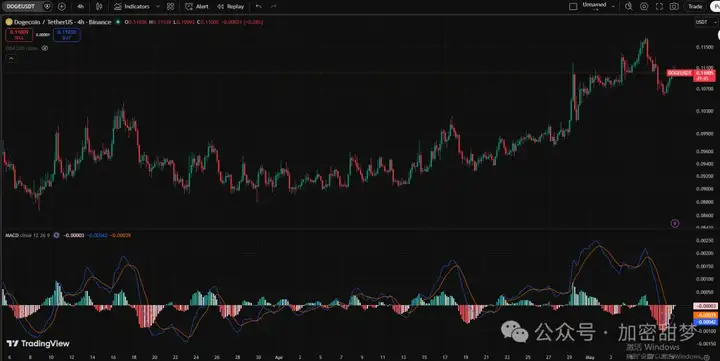
Bitcoin chart analysis helps investors make informed decisions and identify trading opportunities. Essential patterns include support and resistance levels where Bitcoin finds buying or selling pressure, trend lines connecting price highs or lows indicating market direction, moving averages smoothing price data to identify trends and reversals, and volume analysis confirming price movements and trend strength. Popular technical indicators include Relative Strength Index (RSI) measuring overbought or oversold conditions, Moving Average Convergence Divergence (MACD) identifying trend changes and momentum shifts, Bollinger Bands showing price volatility and potential breakouts, and the Fear and Greed Index indicating market sentiment extremes. Bitcoin-specific metrics provide unique insights into network health and adoption, including hash rate measuring total computational power securing the network, network difficulty indicating mining complexity, active addresses showing unique Bitcoin addresses used daily, and exchange inflows/outflows indicating whether investors are accumulating or distributing.
- Visual analysis tool: Bitcoin Rainbow Chart for cycle timing and entry points.
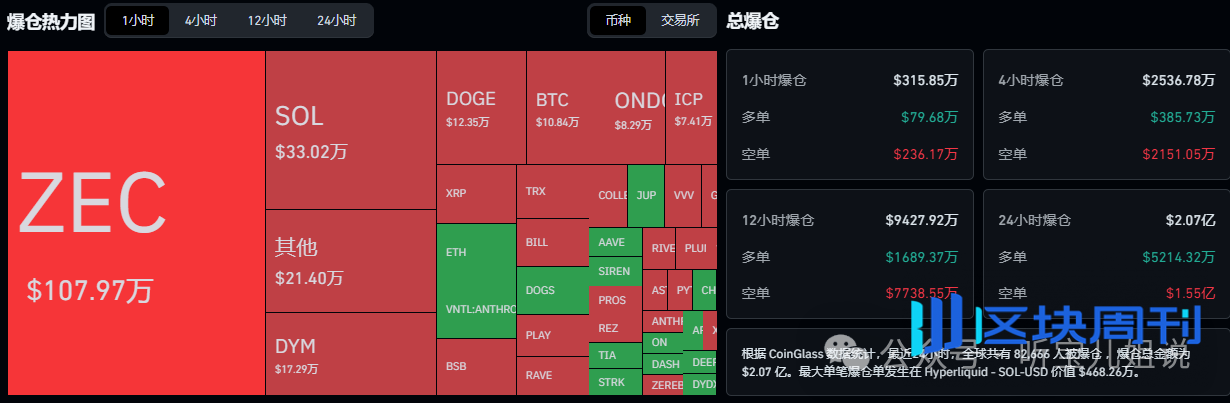
- Read BTC liquidation maps for smarter trading decisions.
Lightning Network represents Bitcoin's primary scaling solution, fundamentally changing transaction volume handling and costs. This second-layer technology creates payment channels allowing multiple transactions between parties without blockchain confirmation for each transfer. Lightning enables previously impossible use cases, particularly streaming micropayments for digital content and services. Despite Ethereum's DeFi dominance, Bitcoin increasingly integrates into Web3 applications through innovative bridging technologies. Wrapped Bitcoin (WBTC) and similar protocols allow Bitcoin holders to participate in Ethereum-based DeFi protocols, unlocking liquidity and yield opportunities. Cross-chain bridges enable Bitcoin interaction with multiple blockchain networks. The Bitcoin mining industry undergoes significant transformation toward environmental responsibility. Mining operations worldwide transition to renewable energy sources including solar, wind, and hydroelectric power. Innovative projects utilize waste heat from mining operations for greenhouse agriculture and residential heating systems. Major mining companies commit to carbon-neutral operations. - Looking beyond BTC? Top crypto investments to watch.
Dollar-cost averaging (DCA) involves purchasing fixed dollar amounts of Bitcoin at regular intervals regardless of current price. This strategy reduces volatility impact by spreading purchases over time, eliminating need to time market perfectly. DCA removes emotional decision-making, avoiding common pitfalls of buying during euphoria or panic-selling during downturns.
- Evaluate market conditions: Is now a good time to buy Bitcoin?
- Practical guide: should you invest in Bitcoin now?
HODLing represents long-term strategy focused on Bitcoin's multi-year appreciation potential, requiring minimal trading activity and reducing fees and tax complications. Active trading attempts profiting from short-term price movements through frequent buying and selling. Most retail traders underperform buy-and-hold strategies due to transaction costs and timing difficulty.
- Think you missed the boat? See why it may not be too late.
- Learn how to short Bitcoin and profit from price drops.
Position sizing ensures Bitcoin investments never exceed amounts investors can afford to lose completely. Diversification maintains Bitcoin as only a portion of well-balanced investment strategy. Security measures require proper wallet security protocols and backup procedures protecting against theft or loss. Tax planning helps investors understand transaction implications in their jurisdiction.
- Full analysis: is Bitcoin a good investment for you?
- How to sell Bitcoin and convert it to cash.
- 5 easy methods to convert Bitcoin to cash.
Global Bitcoin adoption and legal status vary significantly across jurisdictions. El Salvador became the first country adopting Bitcoin as legal tender in 2021, followed by Central African Republic in 2022. The United States developed increasingly supportive regulatory environment, highlighted by Bitcoin ETF approval in January 2024 and growing institutional adoption. Germany treats long-term Bitcoin holdings as tax-free after one year, creating favorable conditions for investors. Switzerland established itself as global "Crypto Valley," attracting blockchain companies with comprehensive regulatory frameworks balancing innovation and consumer protection. Discussions about strategic Bitcoin reserves gain momentum among governments considering adding Bitcoin to national treasuries. Many central banks develop Central Bank Digital Currencies (CBDCs), creating interesting dynamics with decentralized cryptocurrencies like Bitcoin. The relationship between CBDCs and Bitcoin appears likely to be coexistence rather than direct competition, with government digital currencies competing for certain use cases while Bitcoin offers financial sovereignty and censorship resistance. - Discover El Salvador's Bitcoin experiment and its real-world impact.
- See the U.S. policy shift: How Much Bitcoin Does Trump Own and his crypto stance.
- Global stats: how many people own Bitcoin?
- How much Bitcoin does the US government hold?
- Check Bitcoin legality in your country: complete guide.
- China's Bitcoin ban: regulations and what's still legal.
- Islamic perspective on Bitcoin: is it haram?
- What Islamic scholars say about Bitcoin being halal.
Bitcoin has fundamentally transformed how we think about money, financial sovereignty, and digital ownership. From experimental beginnings to globally recognized store of value, Bitcoin challenges traditional financial systems with its fixed supply, decentralized nature, and transparent blockchain technology. As institutional adoption accelerates and regulatory clarity improves, Bitcoin continues building foundations for more open, inclusive financial future. Whether viewed as digital gold, payment network, or revolutionary technology, Bitcoin has proven resilience over more than a decade. Understanding the technology, risks, and investment strategies remains essential for investors considering exposure to this transformative asset.
- Is Bitcoin dead? The truth about Bitcoin's survival.
Important Disclaimer: This article is for educational purposes only and does not constitute financial advice. Bitcoin investing involves significant risk, including potential loss of principal. Always conduct your own research and consult qualified financial advisors before making investment decisions.